
About Spirittea
After drinking Spirittea, a newcomer can see the spirits unsettling a mountain village. Help each spirit recover its lost identity, then restore and operate an old bathhouse where seasonal affinities, friendships, food, heat and clean towels shape each visit. Between shifts, explore the town, build relationships and investigate supernatural disturbances.
Spirittea begins with a move to a small fictional town whose ordinary routines have been disrupted by spirits that people have stopped remembering. Drinking a special tea grants the newcomer sight of those unseen residents, while the spirit guide Wonyan explains that forgotten beings are causing trouble around the settlement. The protagonist is also an aspiring writer trying to finish a book, but that goal becomes entangled with the local supernatural problem: the old bathhouse on the mountain can give spirits a place to rest and help them recover who they are. The setting draws on a blended East Asian cultural influence rather than presenting itself as a precise depiction of one country. The town is both a social space of shops, homes and familiar routines and a landscape where stories from the past persist in objects, locations and recurring disturbances. The narrative moves through individual spirit problems and villagers’ concerns, so the larger mystery is approached through small cases rather than a single combat campaign.
Finding a spirit is an investigative process tied to the village map and its daily life. Once tea vision reveals the supernatural layer, the player follows clues and learns what a particular lost spirit needs in order to remember itself. Requests can involve locating a food item, such as a specific bowl of noodles, or searching for a possession that has been mislaid; the answer depends on the spirit’s own history rather than a universal sequence of errands. The game’s brochure and notebook preserve discoveries and progress, helping turn observation into a record of which spirits and tasks have been encountered. Some hauntings intersect with recognizable village places and routines, which gives exploration a purpose beyond collecting resources. The mountain, town streets and local venues all become part of the search area. Resolved spirit stories change the role of these characters: after remembering themselves, they can visit the bathhouse as customers. This connects narrative progress directly to the management system, since each solved problem can add a new personality, preference and bathing requirement to the business.
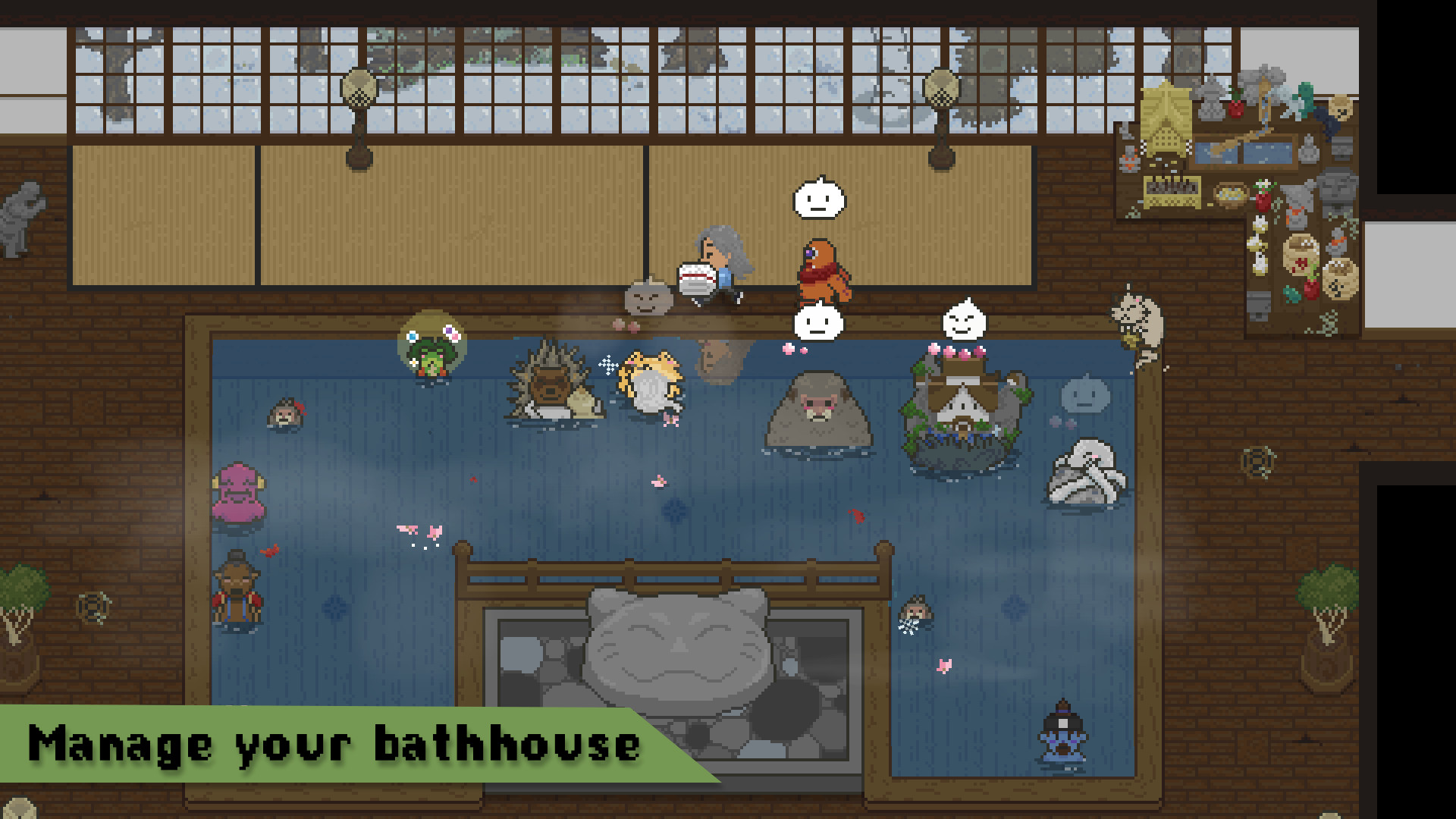
The bathhouse is a working management space that begins in poor condition, with dirt and cobwebs to clear and only limited facilities ready for use. During a shift, the player gathers and washes used towels, dries them, sweeps the rooms and cuts wood to keep the boiler heating the water. Spirits arrive as customers and must be guided into baths, turning movement through the building into a sequence of service decisions. They have preferences about company: spirits associated with the four seasons are more comfortable beside compatible seasonal neighbors and dislike being placed next to the opposite season. A poor seating arrangement does not necessarily end a shift, but it reduces how content the guests are and therefore how much they pay. The player learns those relationships over time by watching results and recording information, then uses that knowledge to plan seating more deliberately. Income from successful service feeds back into repairing and upgrading the building, so the operational loop links cleanliness, heat, guest satisfaction and future capacity.
Service becomes more involved as the bathhouse develops. Guests may need a scrub, a snack from the kitchen or water adjusted with a suitable elixir, adding separate tasks to the basic work of keeping towels and rooms in order. The correct response depends on the customer rather than on one fixed routine, and the player has to notice requests while moving between the boiler, baths and work areas. Certain unusual spirits bring additional bathing behaviors that complicate placement; the developer has described spirits that can move through the water and disrupt neighboring arrangements. This means the seating puzzle is not only about choosing a compatible initial spot, because a guest’s movement may alter who sits beside whom. Upgrades open further rooms and amenities, while later help from villagers can take over some recurring chores. That assistance is tied to the town relationship system, allowing time spent getting to know people to ease the workload of a growing supernatural business. Decorating and furnishing also let the player shape the repaired building and home as the town gradually becomes more familiar.
Outside the bathhouse, the village operates as a life simulation built around schedules, personal interests and recurring activities. Residents have their own likes, dislikes and hobbies, and friendship grows through conversation and shared pastimes as well as by addressing spirit troubles that affect them. The player can join activities such as karaoke, where a rhythm minigame follows the song, or drinking games that reward careful pours. Fishing, bug catching and treasure hunting add other ways to spend time and find useful objects. The day has a finite rhythm, so choosing between a bathhouse shift, a search for a clue and a social visit creates a practical planning question. Progress is not restricted to combat milestones; it comes from knowing the town, finding equipment and opening additional activities. Relationships can also lead to practical support at the bathhouse, giving social play a concrete connection to business management. The result is a repeating cycle in which exploration discovers new problems, friendships reveal more of village life, and successful shifts provide resources for repairs and services.
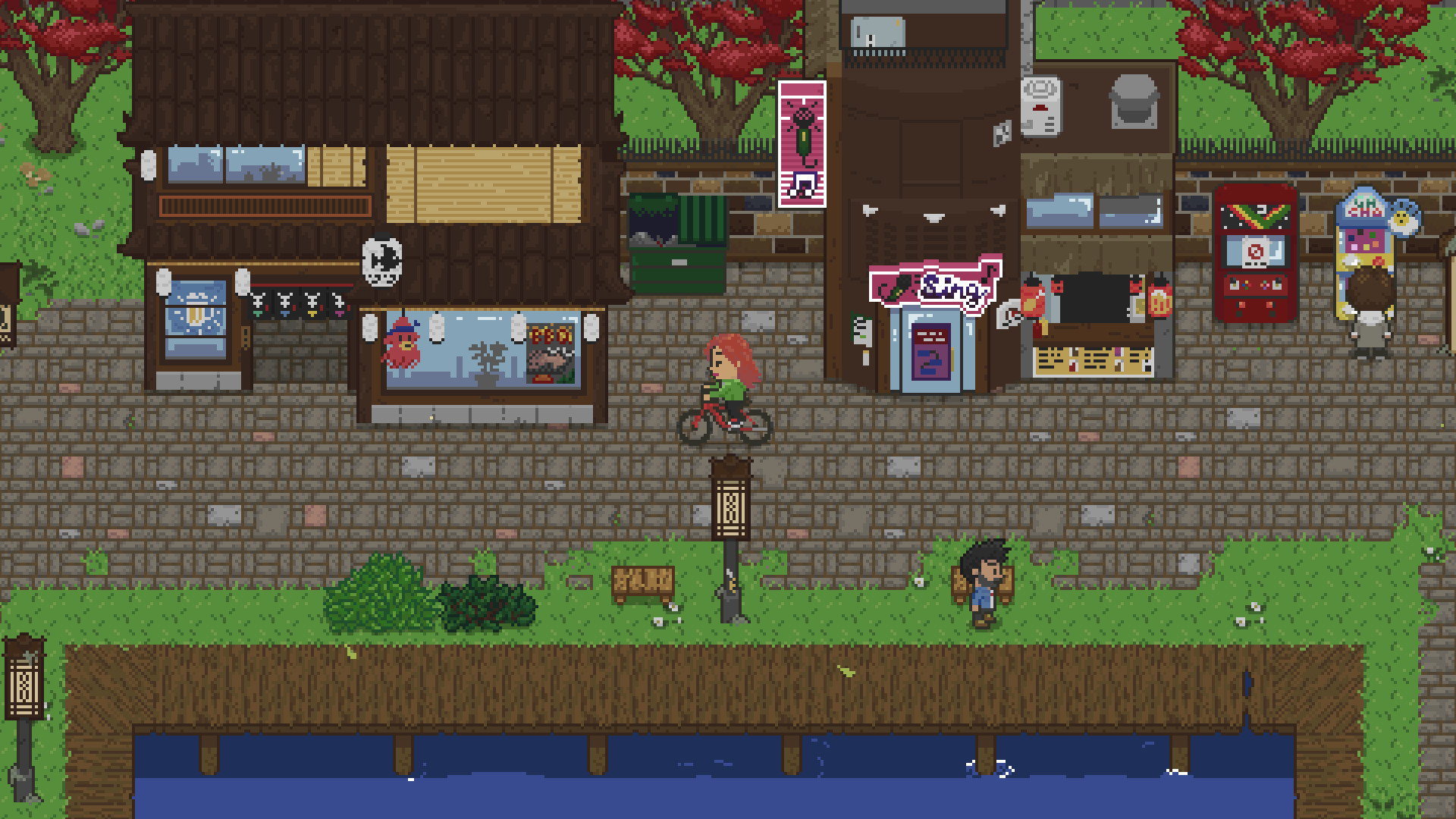
Movement and presentation support that town-scale routine. Spirittea uses a top-down pixel-art view that keeps homes, pathways, shops and the mountain bathhouse legible as connected places to revisit. The player travels between these spaces on foot and, as equipment becomes available, can use tools for activities such as fishing and treasure hunting. Seasonal changes matter to the calendar and the collectible life around town, while music and minigames give particular venues their own character. The game is single-player and combines role-playing, life-simulation and management elements; there is no conventional combat system to master. Instead, progress comes from observation, task completion, service work, relationship building and facility upgrades. The bathhouse’s daily chores provide a tactile core, while the spirit investigations and town routines create reasons to leave it. The full game scope includes the connected town, mountain, spirit stories, social activities and management progression, rather than a standalone bathhouse scenario. Spirittea is listed for PC, Xbox and Nintendo Switch, with the Steam release identifying Cheesemaster Games as developer and No More Robots as publisher.
The bathhouse also gives the game a distinctive form of progression because its customer roster and its physical layout develop together. Early work is centered on a small number of service areas, but earnings can be put back into restoring additional rooms and improving what the business can offer. Each improvement changes the practical shape of a shift: more space creates new capacity, while additional preparation and service options introduce decisions about how to spend time and resources. The player is not simply accumulating money for an abstract score; revenue represents the means to repair an old communal building that has been neglected. At the same time, adding spirits through investigation makes the service puzzle broader, since a new guest may bring fresh social preferences or a special request. This creates a two-way progression loop: caring for customers funds improvements, and improvements make it possible to care for a larger or more varied group. Cleaning, heating, seating and guest care remain connected rather than becoming unrelated minigames.
Two named support features make the town’s investigation loop easier to resume when a lead becomes unclear or an item goes missing. Wonyan can provide hints for certain quests, giving the player another way to recover direction while still leaving the underlying problem to solve. The Recovery Shrine offers a separate safeguard for quest-related objects that have been lost, so an essential item can be retrieved instead of forcing the player to abandon that thread. These features address two different points in the same process: guidance helps identify what kind of clue or action may matter, while recovery deals with an object needed to continue. They sit alongside the brochure and notebook, which track discoveries, and complement the open structure of following spirit disturbances around town. The game’s official update history also records additions such as bathhouse ducks and seasonal mechanics, extending the management side with further features. Such additions sit within the same single-player town life: investigations, records, support tools and bathhouse work all help the player make progress at an individual pace.
- Developer
- Cheesemaster Games
- Genre
- Adventure, role-playing, life simulation and management