

About Spirit of the North
An ordinary red fox wakes a spirit companion beneath an ancient glacier and follows her through a ruined, Iceland-inspired world. With no dialogue to explain its history, the journey uses environmental clues, spirit abilities and puzzles built around the land to reveal the bond between the fox, its guide and the Northern Lights.
Spirit of the North begins with an ordinary red fox entering the depths of an ancient glacier and discovering a slumbering Spirit Fox. After the fox wakes her, the two travel together beneath red-stained skies and through the remains of an older civilization. The Guardian of the Northern Lights is another fox, and the connection between the pair emerges through their presence in the world and the changes that follow. The player controls the red fox in a single-player, third-person adventure. Its central direction is to move through the landscape alongside this spirit guide, find a way through environmental obstacles and gradually piece together why the land is in ruins. The game leaves the fox unnamed and does not establish a spoken cast or named factions, keeping attention on the two foxes and the traces of the civilization around them.
The setting is a fictional world shaped by Icelandic landscapes and Nordic folklore, rather than a literal traversal of Iceland. Glaciers, basalt stone, black sand, geysers, moss, meadows, bare mountains, hot springs and waterfalls shape its varied environments. Those settings place contrasting materials side by side: dark basalt and black sand stand against snow, while moss and meadows break up bare highlands. Water is also part of the route, appearing among hot springs and waterfalls; the fox can swim and later use Spirit Form to cross water differently. These contrasts give the journey varied terrain: the fox moves between open ground, water, snow and enclosed ancient spaces, while ruined structures and murals place the natural scenery beside signs of former inhabitants. A Finnish folktale links a fox brushing its tail against rocks with sparks that rise to form the Northern Lights. The game also draws on broader Nordic folklore without turning it into a spoken mythology lesson. Instead, red-stained skies, the spirit fox and the remains of the lost civilization supply recurring visual clues. Murals throughout the game offer insight into the past while leaving room for different readings. The world therefore communicates through visible relationships among landscape, ruin and light; it does not confirm every detail of the civilization's history in dialogue or text.
The journey follows a linear story across eight chapters, each functioning as a level, and the spaces remain open enough to encourage looking around. Progression follows a guided sequence of connected areas, despite that local freedom. Within that structure, the player can leave the most direct line to inspect nearby spaces and notice environmental clues. Chapter 5 has room to roam, and later portions open up as new abilities become available. This progression connects exploration to the fox's growing supernatural capabilities. A barrier or gap that limits movement early on can become approachable after an ability changes what the fox can do, so revisiting the logic of a space matters even while the chapter order remains authored. Exploration serves both practical and narrative purposes: it helps locate the flowers and objects needed to solve obstacles, and it gives the player time to examine the murals, ruined architecture and terrain that carry the story. Puzzles are a significant part of play, slowing movement and drawing attention to the surroundings rather than interrupting travel with detached riddles.
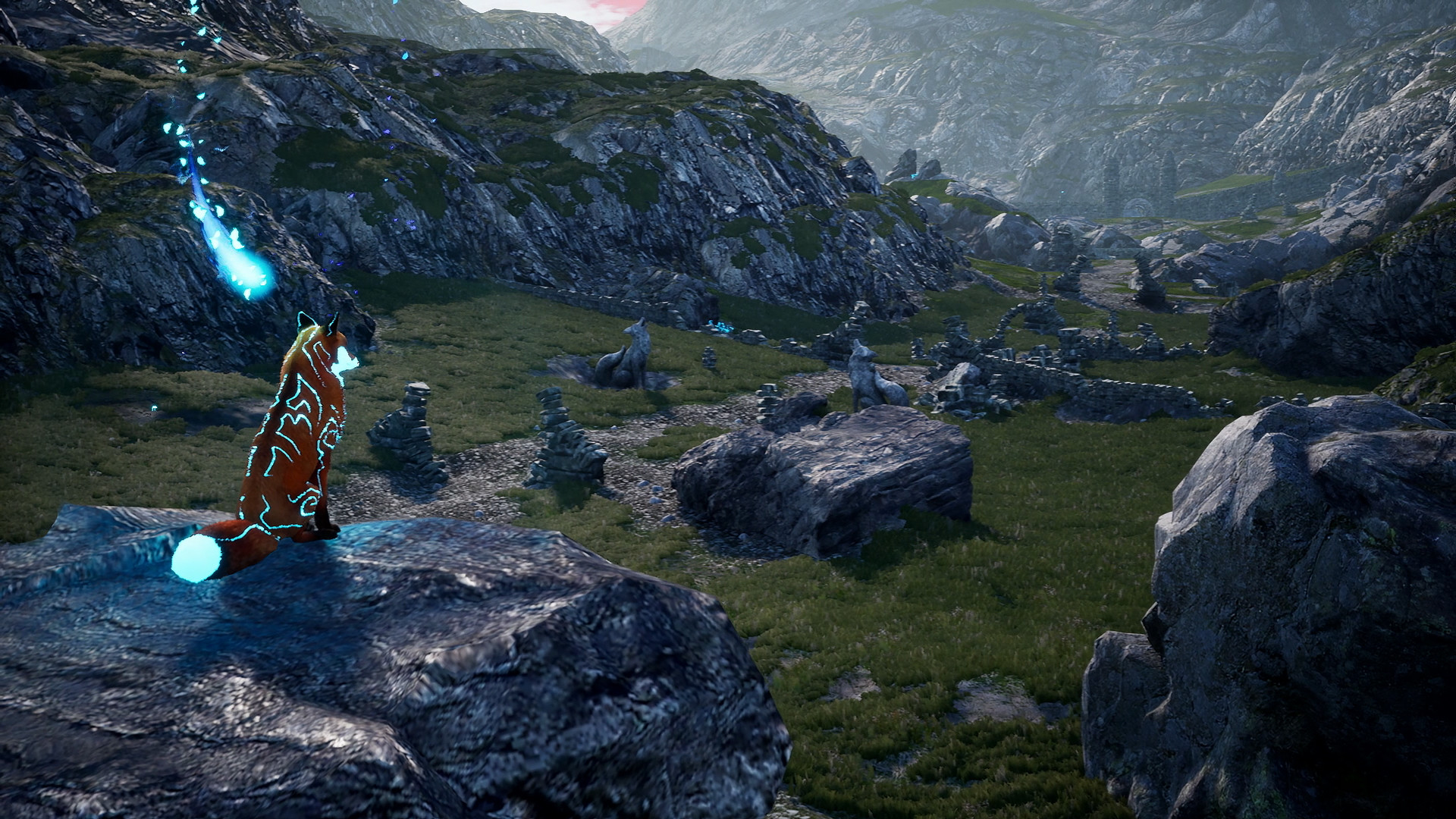
The fox's ordinary movement supplies the foundation for those spaces. Running, jumping and swimming are the fox's basic abilities, which let the player cross natural terrain and negotiate gaps, slopes and water before spirit powers enter the picture. In third-person view, reading the terrain and the shape of the route is part of movement. As the journey progresses, additional abilities expand the distances and obstacles the fox can handle. Unlocking abilities in the middle and later parts of the game opens up the play spaces further, linking new traversal options with a less constrained feel in those chapters. Movement is therefore not a separate action challenge layered over the story: reaching a stone, crossing a body of water or getting to a higher route can be part of understanding how an area works. The ordinary fox body remains important even after the supernatural abilities arrive, because some puzzles require combinations of normal movement and spirit actions. Navigation, jumps and spatial problem-solving are central to how the fox moves through these spaces.
A recurring puzzle pattern uses Spirit Bloom flowers and standing stones. The fox gathers pure energy from Spirit Bloom flowers and infuses it into standing stones. The stone interaction can alter the environment, making the terrain itself part of the mechanism that opens a route. This gives the player a readable sequence: find a source of energy, understand which stone or obstacle can use it, then observe how the surroundings change. The flowers are not only scenery, because their energy also supports the supernatural abilities used in later puzzles. Environmental puzzles use ancient powers granted by the guardian to change the world. These interactions sit alongside other puzzle demands rather than defining every obstacle; puzzles work in several ways and require attention to the space around them. Murals and visual arrangements help establish context, but the game does not spell out each answer in text. Solving a challenge depends on noticing the relationship between the fox's abilities, the available energy, an interactable stone and the path that the environment makes possible.
The Spirit Fox and a Wisp also shape how the player approaches puzzles. Both are important to gameplay, and some abilities depend on them. Spirit Form lets the fox leave its body and do things its physical form cannot, such as walking on water or passing over a pressure plate without triggering it. These are rule changes that matter to spatial puzzles, rather than merely a second animation for the same movement. The player may need to consider whether a surface, trigger or obstacle responds to the living fox or to its spirit form, and how the available powers can be combined. The Wisp chirps near objectives and can lead the way, giving it a navigational role. Together, the companion and Wisp support the fox without replacing the player's observation: guidance can point toward an objective, while the player still has to interpret the terrain and work out how to use each ability in context.
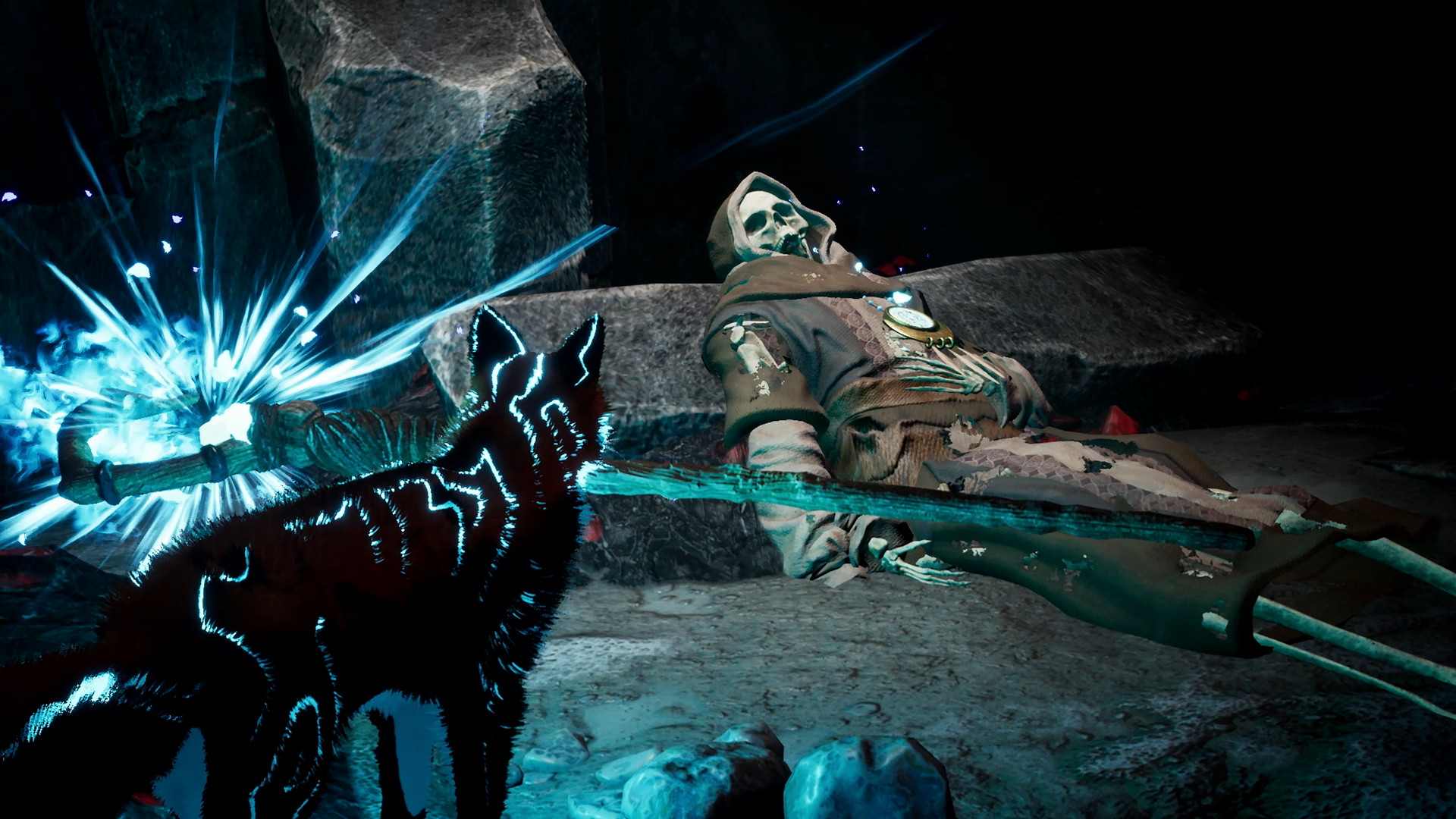
With no spoken dialogue or narration, the game's environmental storytelling carries unusually much of the narrative work. The landscapes hold the player's attention, with very little text appearing during play. Murals give glimpses of past events, while ruined places, red light and the recurring presence of the spirit companion provide visual threads to follow. The account of the lost civilization is therefore assembled from what the player sees and does, rather than delivered as a sequence of conversations. Music supports that approach through an orchestral soundtrack of fourteen original compositions; environments and music carry most of the story and atmosphere. The fox's movement through quiet natural spaces and ancient remains gives the player time to look, but the scenery also contains practical information about the next puzzle or route. The same environment can function as setting, story clue and navigation problem. This design leaves some meaning open to interpretation, a quality reflected in the different readings that the murals can invite. The game establishes its central relationship and ruined world through these repeated visual and musical cues without assigning a definitive spoken explanation to every image.
- Developer
- Infuse Studio
- Genre
- Single-player third-person adventure with environmental puzzle and platforming elements