
About Spelunky
Spelunky is a platform adventure about an explorer descending through randomized underground levels filled with treasure, creatures and traps. The caves can be reshaped with limited-use bombs, while ropes help cross dangerous drops and reach higher ledges. Gold funds shop purchases, rescues can restore health, and each run turns route choices into lasting consequences.
Spelunky casts the player as a cave explorer moving through a changing underground world. The Steam release associated with this entry is the 2013 game developed and published by Mossmouth; its levels are generated anew, so the arrangement of passages, treasure, enemies and traps changes between attempts. The route begins in the Mines, an abandoned network of narrow rocky passages and deep shafts, before the broader journey can continue through areas such as the Jungle, Ice Caves and Temple. Each level asks the explorer to find a way through the terrain and reach its exit while deciding how much of the cave to investigate. Gold and jewels reward detours, but carrying treasure is only one goal among several: hazards, limited supplies and the next descent make every extra route a decision about risk.
Movement and terrain shape how the explorer approaches a level. The caves are fully destructible, so a route may be crossed as generated or changed with tools. Bombs are scarce single-use items. The explorer begins with four, and an explosion can destroy blocks and kill enemies. Removing a wall may open a direct path, expose treasure or alter the position from which a hazard can be approached, but the blast also threatens anything nearby. Ropes solve a different problem. A placed rope can be climbed to reach an upper ledge or lowered from a ledge to descend a deep pit safely; each one is used once and cannot be retrieved. Since the starting supply is also four, spending a rope to bypass one obstacle means having fewer for a later climb or fall. These tools make vertical layout and resource planning part of the same navigation problem.
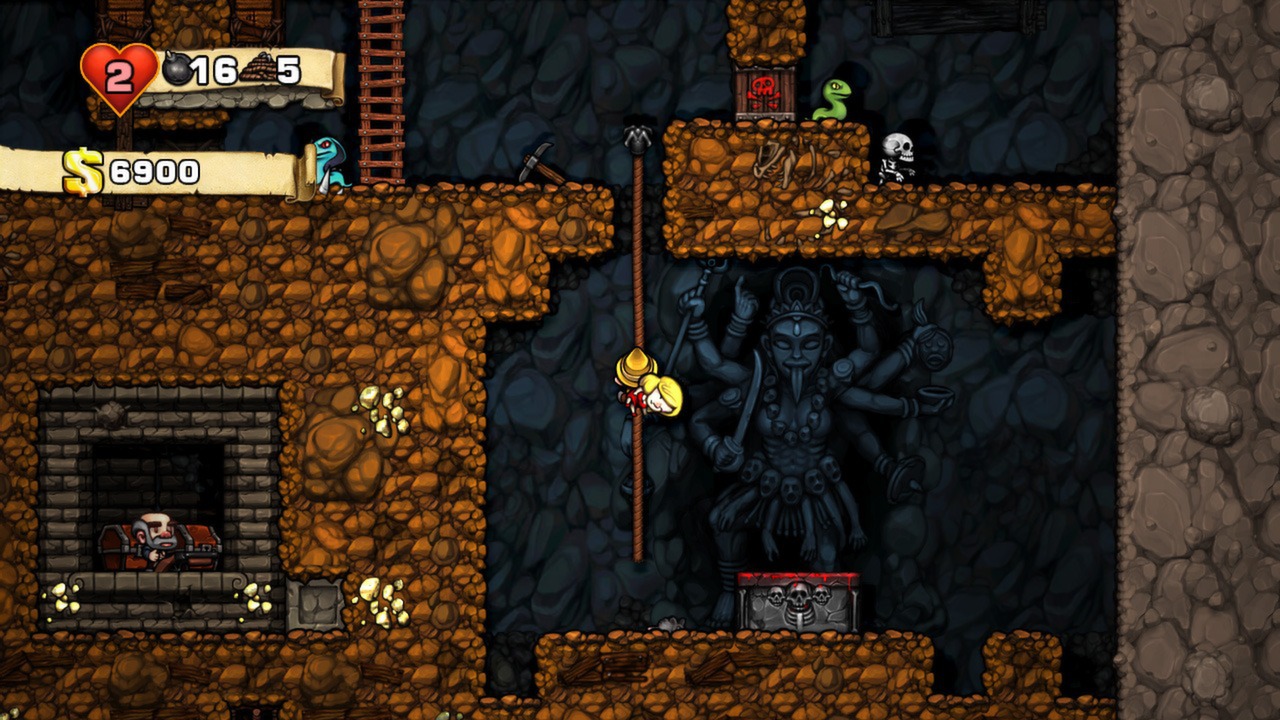
The Mines show how the random layout mixes routes with rewards and threats. Their four levels contain rocky corridors, ladders, man-made structures, treasure chests, pushable blocks and webs, while gold or jewels can be hidden inside walls. Snakes, bats, spiders, skeletons and cavemen share space with hazards such as spikes and arrow traps. A pot may conceal a monster, and a chest can itself be rigged, so an object that looks useful may also create danger when disturbed. Bombs and a mattock can open walls for treasure, but breaking terrain can reveal a route or bring an enemy and trap into play at the same time. The Mines lead onward to the Jungle; other area transitions introduce distinct surroundings as the explorer descends. Because a level is newly generated for a run, familiarity helps the player recognise types of danger without revealing exactly where the next one will appear.
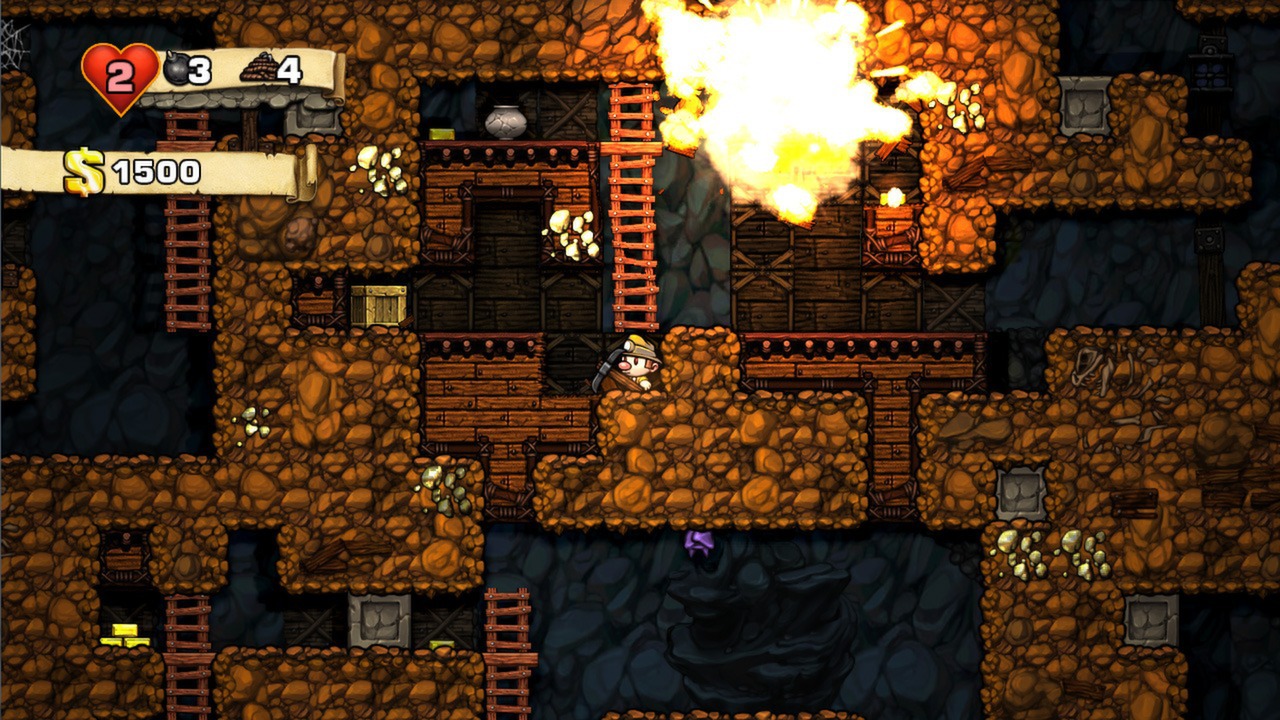
Treasure gives detours a practical purpose because shops sell equipment and services for gold found in the caves. Ordinary shops offer a changing selection of items, while special shops provide different services or stock. Spending money on extra bombs or ropes can expand the available ways to cross terrain, while other equipment can change movement or combat options. Shopkeepers make the choice consequential: taking merchandise without paying or damaging the shop turns them hostile, removes ordinary access to later purchases and can bring armed shopkeepers into subsequent exits. The player can also choose to leave a shop alone and preserve the funds for a later visit. Prices rise as the expedition advances, so treasure gathered earlier and supplies bought earlier have a different value from the same choices deeper into the run. Shops therefore connect exploration, resource conservation and the possibility of creating a new threat.
Rescue gives the player another reason to explore a level instead of heading straight for the exit. A damsel may be found in the caves or in a shopkeeper's kissing parlor; carrying one alive to the level exit restores one point of health. Reaching the exit with that character can require moving through hazards while carrying them, and the caves' physics still matter: a dropped or thrown damsel can be stunned, then panic and run blindly into nearby terrain. The decision to rescue, leave, or put that character at risk happens within the same limited-resource route as finding treasure and avoiding enemies. A safe-looking shortcut may make a rescue difficult, while spending a bomb or rope can help open a path at the cost of equipment needed later. The game lets the explorer weigh these aims without making each level a simple combat corridor.
Spelunky's structure also supports play beyond a solo descent. The Steam edition includes local co-op for up to four players, where companions can help one another through a cave or interfere with each other's movement and plans. Deathmatch provides unlockable arenas for play against friends or bots, while the Daily Challenge generates a shared set of levels for one attempt each day. A journal records discoveries and progress, and a roster of explorers includes characters that can be unlocked. These modes use the game's platforming and hazard systems for different purposes: a co-op party navigates the same dangerous spaces together, an arena focuses on competing, and the Daily Challenge gives players the same generated route to compare. They add separate ways to engage with Spelunky's caves while leaving the individual run centred on traversal, treasure, and the consequences of using limited tools.
- Developer
- Mossmouth
- Genre
- Platform adventure with randomized levels