
About South of the Circle
Cambridge academic Peter survives a crash in Cold War Antarctica and sets out through the snow to find help. His journey keeps slipping into memories of fellow lecturer Clara, their relationship and the promises entangled with his career. South of the Circle tells this story through emotional dialogue choices, environmental detail and motion-captured performances.
Peter has survived a crash, but survival on the Antarctic ice is only the first question South of the Circle asks of him. He is a Cambridge academic stranded during the Cold War, far from the people and institutions that shaped his life. Finding help means moving through a hostile landscape in which a distant building, a working radio or another person can matter enormously. Yet the journey continually draws Peter back to Cambridge and to Clara, a fellow lecturer with whom he formed a personal and intellectual bond. Their relationship developed alongside his professional ambitions, the expectations placed on him and the political interests circling his work. The game moves between the emergency in Antarctica and memories of conversations, promises and pressure before he travelled south. Peter does not simply recall a neat series of explanations. A physical sensation or visual detail in the snow can carry him into an earlier moment, and that recollection may change how the player understands the predicament he is trying to escape. The polar crisis and the Cambridge story are not independent campaigns. They are two ways of looking at the decisions that brought one person to a place where escape suddenly seems uncertain.
The time and setting give those decisions a larger frame. During the 1960s, research in Antarctica took place against international suspicion and limited communications, while academic careers could be shaped by institutional power and unequal recognition. Peter's work, his attachment to Clara and the promises he makes are vulnerable to pressures beyond a private romance. State of Play's director Luke Whittaker has described the Cold War's global power struggles as a mirror for smaller contests over whose work matters and who is allowed to act freely. The game does not need to turn every conversation into a lecture on geopolitics to make that parallel felt. A question about a paper, an opportunity or a journey can carry very different weight depending on what Peter stands to gain and what someone else might lose. Antarctica heightens this concern with power by stripping away comfortable options. Mid-century expeditions were isolated, reliant on fragile equipment and often unable to summon quick assistance. The world Peter remembers had its own constraints; the world outside the crashed aircraft makes them impossible to ignore.
South of the Circle gives the player an unusual role in Peter's speech. Instead of choosing a fully written response and then discovering how an actor delivers it, the player selects a symbol representing an emotional approach to a conversation. Peter may respond out of concern, uncertainty or conviction, and the actual sentence follows that tone. Whittaker has explained the logic: a printed line can conceal whether it will be spoken gently or angrily, whereas a sign of emotional intent puts the player closer to the character's immediate state of mind. Conversation can therefore feel like an impulse arising within a scene rather than a detached menu of carefully rehearsed arguments. The choice system helps the player inhabit Peter's memories, including moments in which he wants several incompatible things. It should not be mistaken for a promise that every exchange produces a completely separate plot. The story is concerned with how a person experiences and remembers decisions already made. Selecting a tone lets the player participate in that emotional account while the larger narrative keeps examining the distance between intention, memory and consequence.
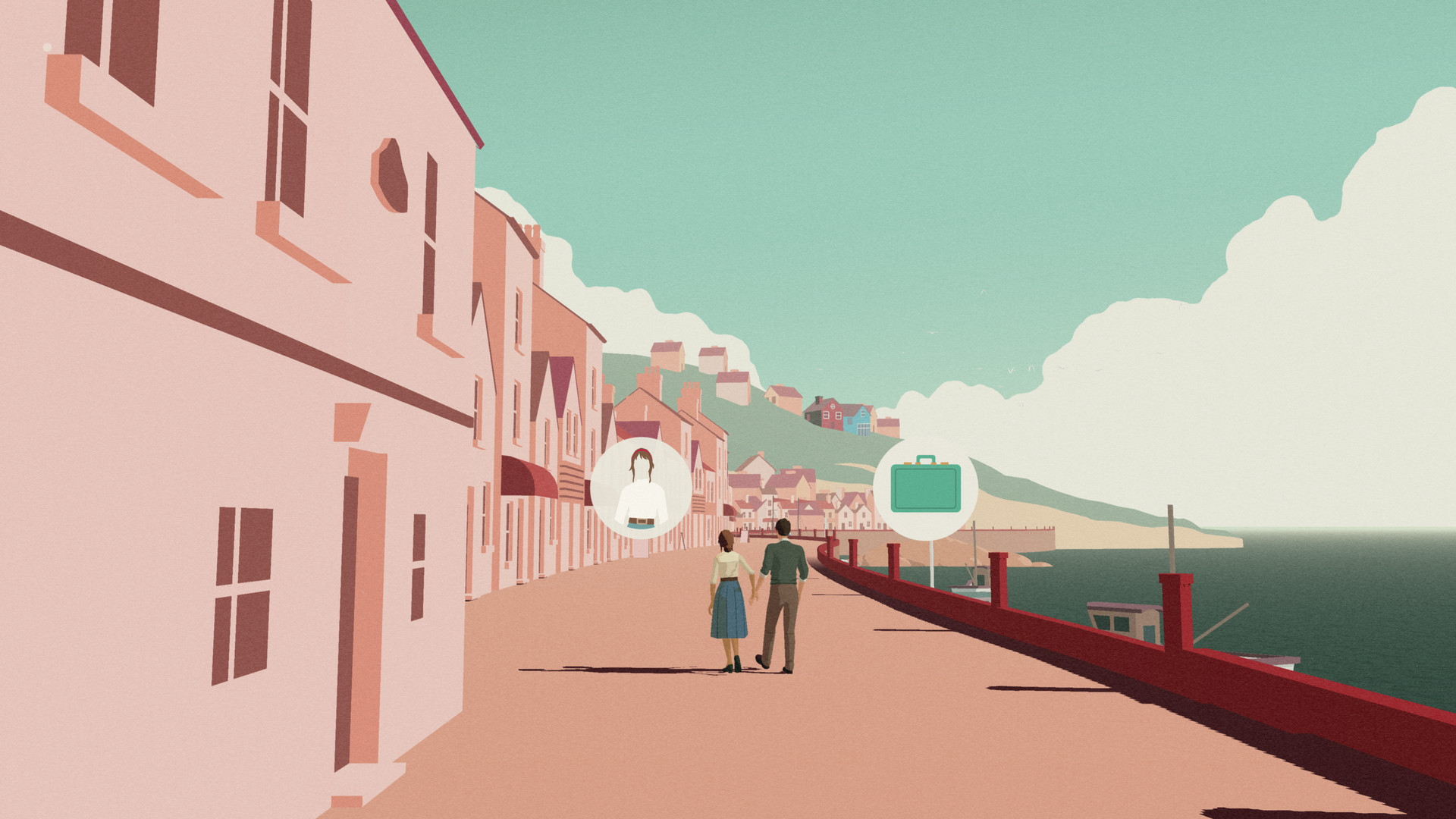
Much of the physical journey is modest in mechanical scale: Peter moves through snowbound places and inhabited spaces, searches for help and responds to the people and objects he meets. It is a narrative adventure, not a survival simulation built around meters, crafting recipes or combat encounters. That focus lets a station doorway, a vehicle or a radio acquire significance through the circumstances of an isolated expedition. The studio used photographs and memories supplied by a former member of the British Antarctic Survey, then sent artists to Antarctica to observe the light, terrain and working conditions directly. One small vehicle in the game was informed by the track-converted Mini used in polar conditions, an example of people adapting limited technology to a difficult place. The early British base drew on period images of Station F rather than an invented generic outpost. These details are not there solely to pass a historical accuracy test. They make the landscape feel worked in and inhabited, so Peter's search for safety takes place among traces of actual human effort rather than across anonymous white scenery. Whittaker's research also included a voyage south with another artist, who made drawings and photographs during landings. His interviews with a former polar researcher supplied stories of plane trouble, sick colleagues and radio contact. That combination of first-hand observation and period testimony helps explain why the stations and improvised transport have a particular texture, even though Peter's personal plot is fictional.
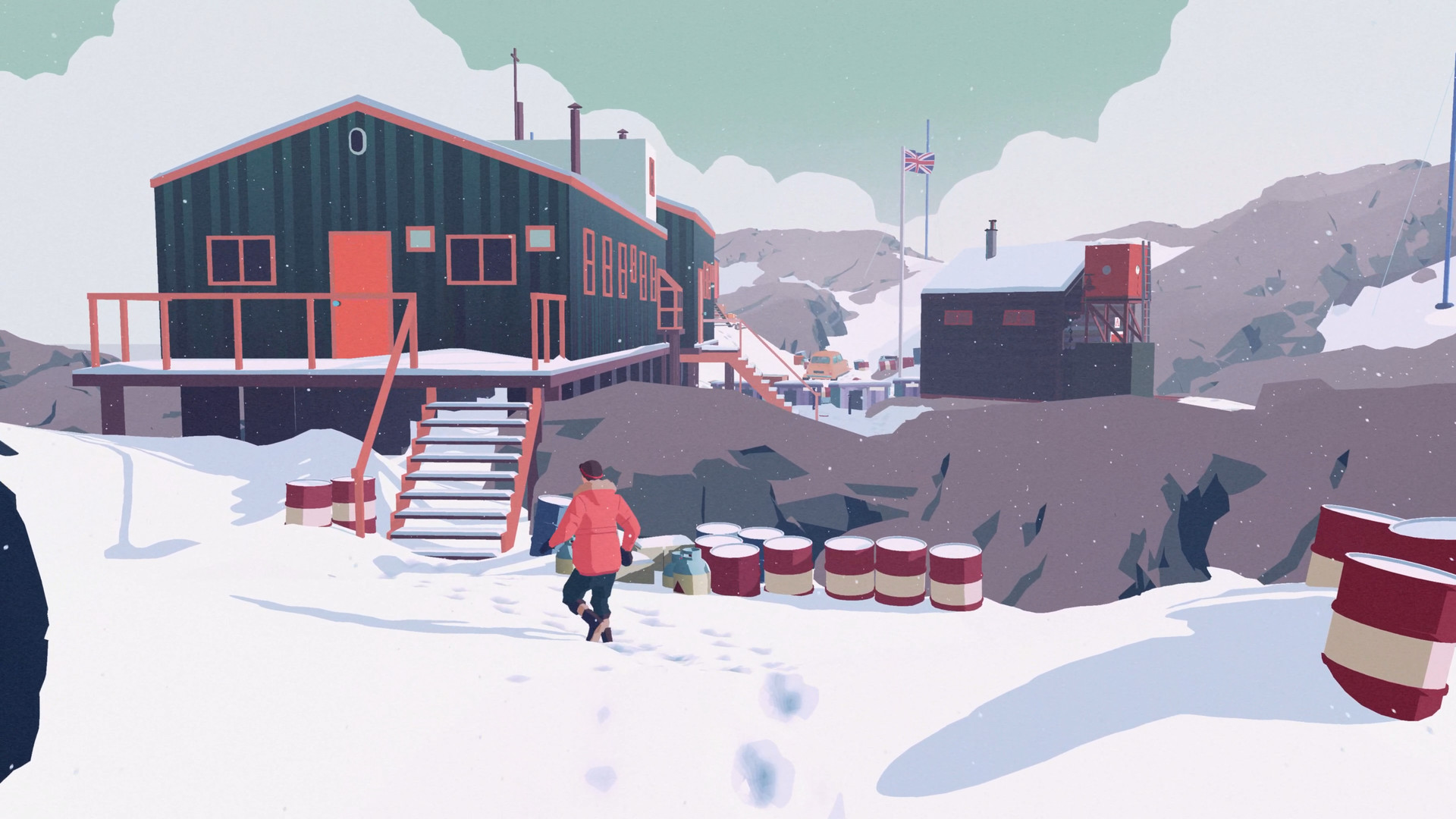
The visual language connects the academic past and the polar present without aiming at photographic realism. State of Play looked to screen printing, mid-century illustration and restricted colour palettes for a look suited to the period. Against those simplified backgrounds, actors' faces and body language carry much of the emotional detail. The team captured movement, expression and speech together, giving scenes the continuity of performed exchanges rather than assembling every gesture independently. Director Luke Whittaker also uses transitions that behave like memory. An action in Antarctica can match an earlier movement in Cambridge; a light or sound can gradually become the entrance to another place. Peter remains the point of connection even when the scene changes around him. The sound design draws on Antarctic field recordings, including the spaciousness and force of shifting ice, while Ed Critchley's score threads personal themes through the two periods. Clara's musical motif, for example, can return as a memory does, joining an intimate recollection to the larger journey. Image, performance and sound all help the player feel that Peter is carrying his past through the snow rather than pausing one plot to watch another. The restraint of the palette is also practical storytelling. It lets a red signal, a dark ridge or a chair at a Cambridge table command attention without loading every surface with detail. The shifts between places can occur through visual resemblance rather than explanatory captions, so the player keeps interpreting Peter's memories while remaining oriented to the danger in front of him.
The performances are central to that design. Gwilym Lee and Olivia Vinall are among the actors in the motion-captured cast, with Peter and Clara's scenes dependent on pauses, shifts of expression and the tone chosen in conversation. The game asks how a person later describes a choice made under pressure, especially when career, affection and political circumstances were never cleanly separable in the first place. That makes the Antarctic journey a search for more than a physical exit. Peter has to confront the account he has given himself of how he came there, and the player is invited to recognise the difference between a promise remembered and a promise kept. State of Play developed South of the Circle, and 11 bit studios published its 2022 PC and console release after the earlier mobile version. The base game is the same narrative adventure; a Deluxe package adds digital material such as its soundtrack and a director's e-book, not a second campaign. Its distinctive interaction is the effort to choose how Peter meets a moment emotionally while the story moves between the cold expanse around him and the warmer, more complicated rooms of his past.
- Developer
- State of Play
- Genre
- Cinematic narrative adventure