
About South of Midnight
After a hurricane tears through Prospero, Hazel searches for her missing mother and discovers she is a Weaver, able to work with the threads connecting people and places. This third-person adventure blends traversal, puzzles and combat with Southern folklore, family history and a storybook presentation shaped by stop-motion-inspired art and lyrical music.
South of Midnight begins with a hurricane that devastates Prospero, a fictional town in the American Deep South. Hazel’s mother is swept away, and Hazel sets out to find her. In the storm’s aftermath, the familiar landscape becomes a place where reality and folklore overlap. Hazel encounters Catfish, a huge talking creature trapped in a tree, and learns that she is a Weaver: someone able to see and shape the threads connecting lives and the world. That discovery turns a search for her mother into a journey through family history, regional stories and the forces that have left Prospero wounded. The adventure is framed as a modern folktale, with Hazel’s immediate goal providing direction through its stranger encounters.
Weaving is the foundation of Hazel’s abilities and connects several parts of play. She can pull, push and weave during combat, using those powers to interrupt enemies, draw them closer or create openings for follow-up attacks. The abilities also serve exploration: Hazel can conjure earlier forms of objects and use them to cross gaps or reach places that the hurricane has altered. Puzzles ask her to apply those powers to barriers and environmental details, making the same supernatural skill set useful outside a fight. Rather than treating combat magic and traversal as unrelated systems, the game builds them from Hazel’s capacity to interact with the invisible threads of the world. Her growing command of that power accompanies the narrative as she learns what being a Weaver means.
The story’s creatures draw on Southern folklore, including figures such as Huggin’ Molly and the Rougarou, while the world also includes original beings created for the game. The folklore is adapted into Compulsion’s fictional setting rather than presented as a documentary account of regional traditions. Hazel encounters Haints and other dangerous creatures whose stories connect to trauma and the damage woven through Prospero. Her role includes confronting and subduing those threats, but the framing also gives her a way to understand what consumes them. Encounters connect action with a broader theme of restoring broken bonds. The myths make the landscape feel inhabited by stories passed between generations, while Hazel’s family history gives the adventure a personal path through this folklore-rich world.

Prospero and its surrounding regions gather several Southern-inspired environments. Prospero combines flooded countryside, swamps and Appalachian mountain areas, giving Hazel a journey through distinct landscapes rather than one continuous town setting. These places contain locals and creatures, and their conditions shape how she moves through them. Water, height, barriers and damaged structures provide contexts for traversal powers and environmental puzzles. The changing terrain also lets the game move between quieter discovery and direct confrontation. Although the world combines different inspirations into a fictional county, its atmosphere is tied to the complex history of the American South. The setting is presented through a Gothic lens, where beauty and decay sit together and the supernatural emerges from the history embedded in place.
The narrative uses a storybook structure, with chapters guided by a dynamic narrator. This framing gives the adventure the quality of a tale being opened and continued, while keeping Hazel’s journey at its center. Its concerns include family, history, legacy and identity: Hazel is trying to bring her mother home while learning how her family’s past fits into the world she now sees. The format supports movement between personal memory and folklore, allowing regional tales and family revelations to coexist within one journey. The narrator and chapter presentation distinguish this from a naturalistic account of a storm’s aftermath. The game makes clear that its world is deliberately fantastical, even as its emotions and cultural inspirations are grounded in real places and inherited stories.
Visual and musical choices reinforce that folktale approach. Character animation draws inspiration from traditional stop-motion puppets, giving figures a handcrafted, maquette-like quality. That treatment is intended to make characters and movement feel distinct, complementing the crafted environments of Prospero. Music draws on styles and instruments associated with the American South, with lyrical songs connected to characters and the story. Rather than serving only as background, music helps shape the game’s sense of place and emotional register. The combination of animated figures, Gothic landscapes and regionally inspired sound gives the setting a coherent identity, while storybook narration links those choices to Hazel’s path through memory and myth.
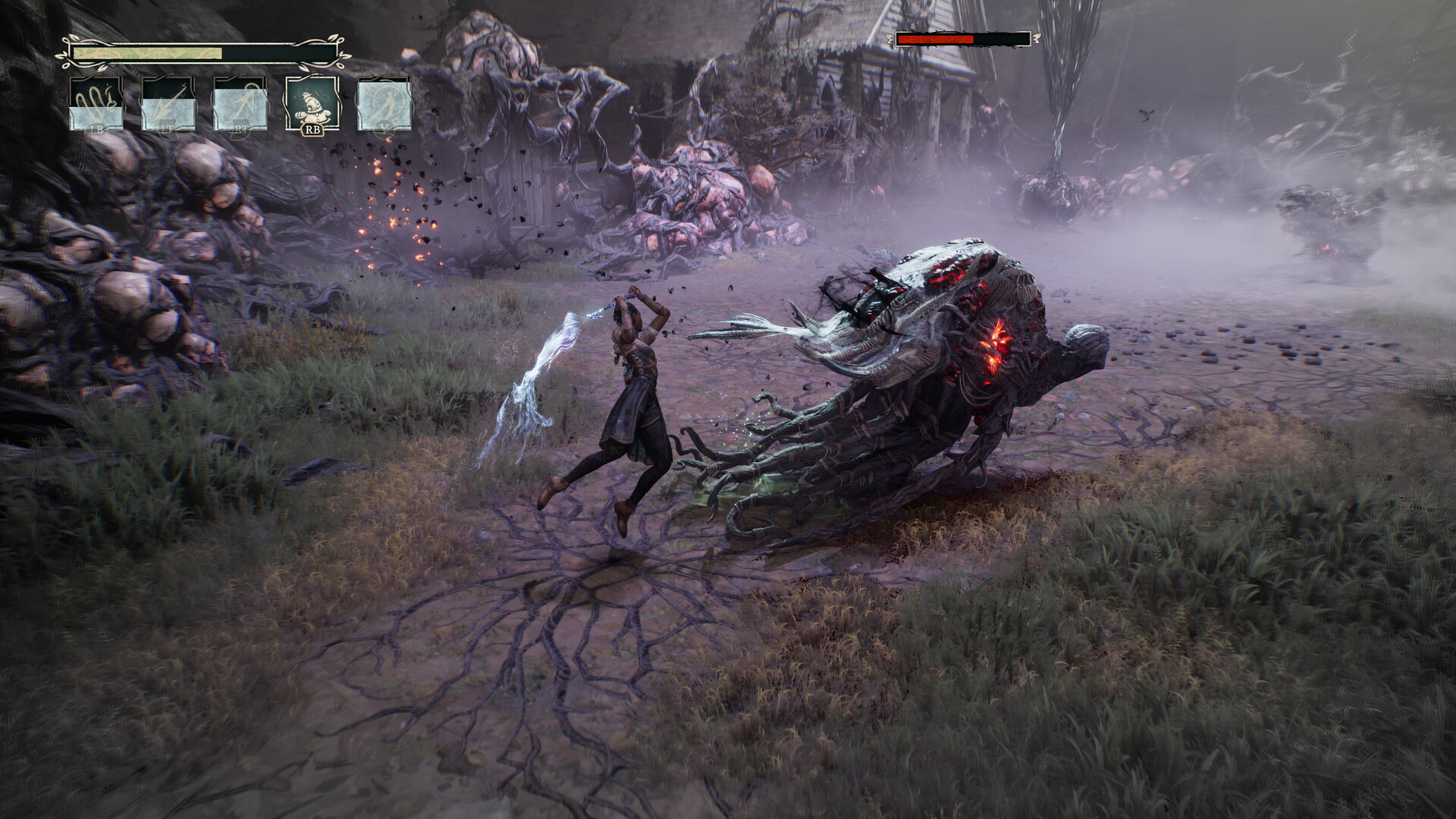
The range of folklore figures gives Hazel’s journey different kinds of encounters. Huggin’ Molly is imagined as a spider-like woman whose patchwork dress is made from children’s clothes and red yarn; the Rougarou appears as a shapeshifting were-owl associated with a dark forest near the mountains. These designs translate familiar Southern tales into creatures suited to Prospero’s own fictional history, alongside original beings such as Benjy the Tree. Hazel’s Weaver powers expand as the story unfolds, letting her move from conjuring objects and manipulating space toward a fuller set of combat abilities. The adventure links this progression to her changing understanding of family and identity, so new powers and new stories are both part of learning how she belongs in a world shaped by inherited connections.
- Developer
- Compulsion Games
- Genre
- Third-person action-adventure