
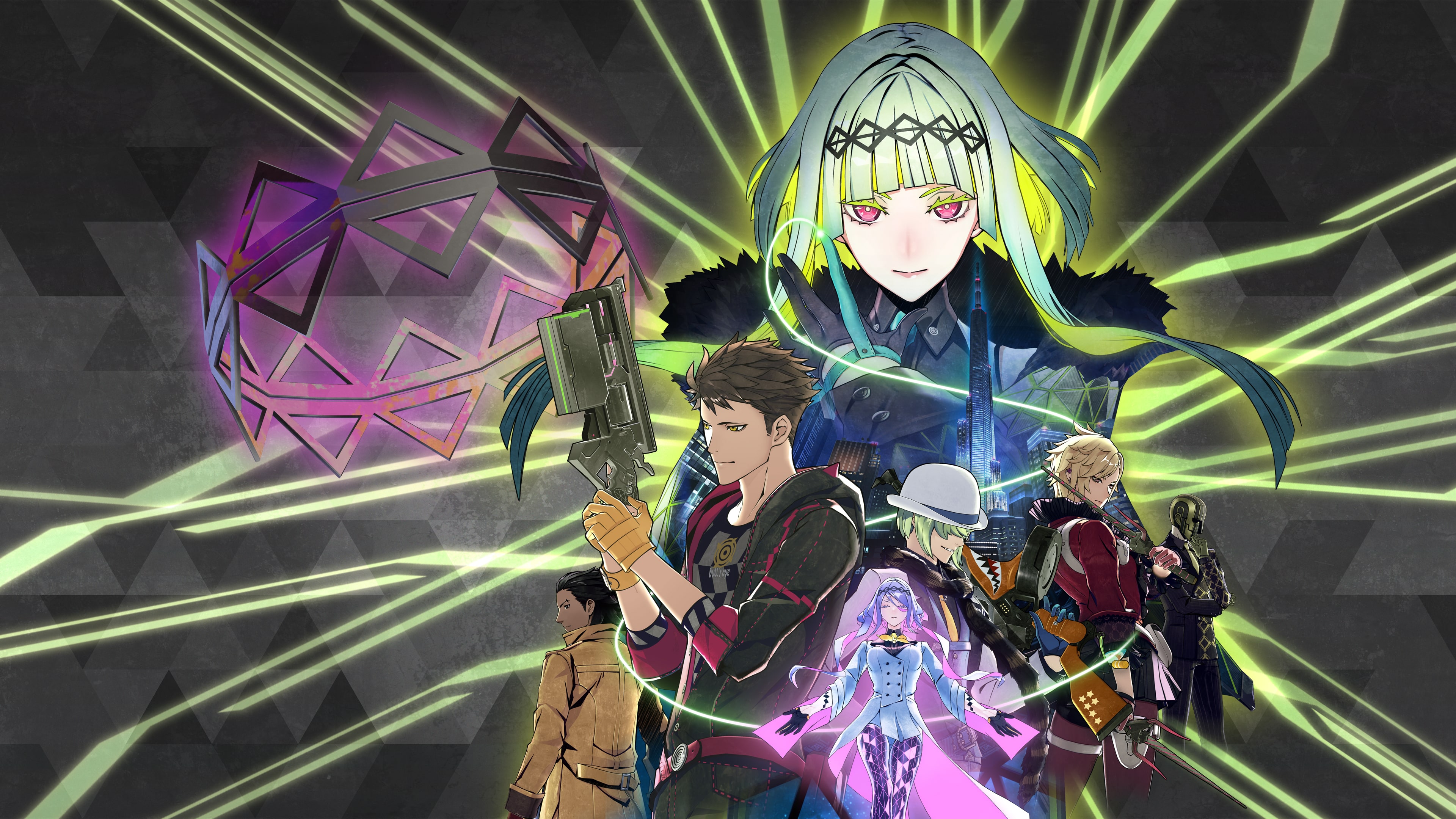
About Soul Hackers 2
In a near-future Japan where Devil Summoners wield demons through COMP devices, the digital intelligence Aion sends Ringo to avert an apocalypse. She works with Arrow, Milady and Saizo, investigating a conflict between Yatagarasu and the Phantom Society through turn-based battles, demon fusion and explorations of her allies’ memories.
Soul Hackers 2 is a supernatural role-playing game set in a neon-lit, technologically advanced Japan. Behind ordinary commercial life, Devil Summoners make contracts with demons and use them to address paranormal threats. Two groups, Yatagarasu and the Phantom Society, are locked in a conflict, while a separate danger threatens the world as a whole. Aion, a digital intelligence born from humanity’s data, predicts an impending catastrophe and creates Ringo and Figue to intervene. The player controls Ringo, who enters the human world with her own consciousness and curiosity about people. Her task takes her into contact with summoners whose deaths and unfinished business are bound up with the approaching crisis. Ringo can use Soul Hack, an Aion ability that reaches into a person’s soul and memories; early in the story, she uses it to restore summoners who are needed to prevent the disaster. They include Arrow, a member of Yatagarasu, Milady, who belongs to the opposing Phantom Society, and the independent summoner Saizo. Their conflicting affiliations and personalities give the team its central tension. The game’s plot follows this small group as they investigate the forces threatening humanity and learn more about the people around them. It uses the Devil Summoner premise of contracted demons and hidden occult activity, while framing the crisis around Aion’s intervention and Ringo’s growing understanding of human bonds.
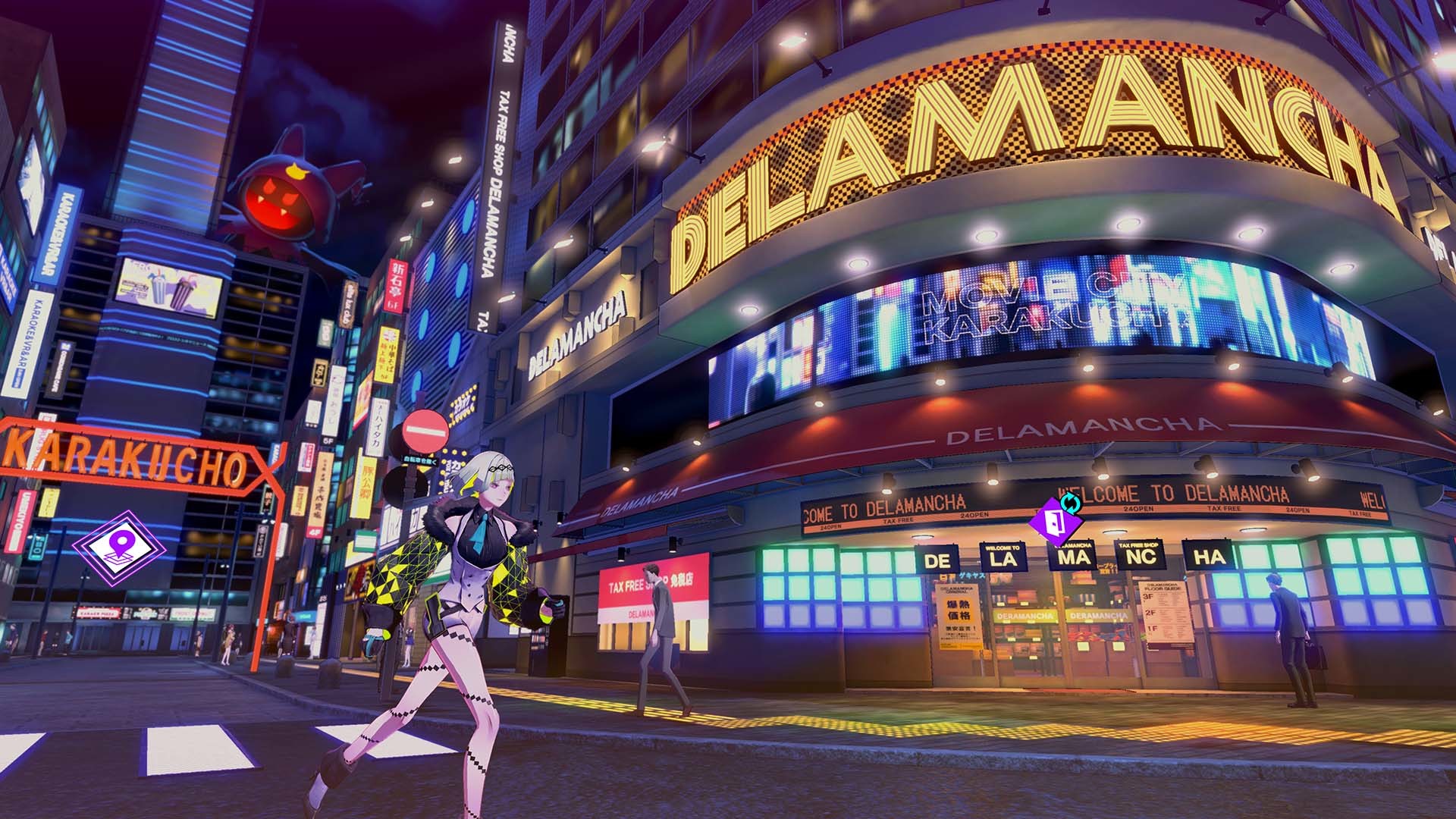
The city has two overlapping faces. Most residents see a modern metropolis of commerce and technology, unaware that demons and summoners operate in its shadows. Summoners can enter Realms, concealed districts where demons mingle with them and specialist facilities support demon fusion, COMP modification and information gathering. These locations make the supernatural community feel like a parallel infrastructure embedded in the city rather than a separate fantasy kingdom. Ringo’s companions also represent different positions within that hidden society. Arrow is tied to Yatagarasu, Milady to the Phantom Society, and Saizo works independently; their alliances and individual histories do not disappear when they join the same party. Figue, Ringo’s fellow Aion operative, provides analysis and support from outside the frontline group. The Safehouse is the team’s base for resting, sharing meals and talking, while a bar offers personal events in which Ringo and her companions learn about each other. The Soul Matrix, reached through Aion’s Axis, turns those relationships into explorable spaces: each of the three summoners has a linked dungeon that represents aspects of their mental state. Deeper access depends on raising Ringo’s Soul Level with that character. Exploring these spaces can reveal past experiences through Vision Quests and grant opportunities to strengthen the party. The plot’s crisis and the personal histories of its four central summoners therefore advance through related but distinct locations.
Dungeon exploration combines navigation with choices about which encounters to initiate. Enemy symbols move through the corridors and can notice Ringo; colliding with one after it spots her may give the enemy an advantage. Ringo can slash a visible enemy with her sword before contact to knock it down and begin a more favourable fight, or pass a downed symbol to avoid combat. A successful opening can also trigger a Bonus Attack, letting the party strike before the regular battle begins. Demons assigned to Ringo’s COMP spread through a dungeon to scout. They can be found again along the route and may supply items, restore health or introduce an enemy demon that can be negotiated with and recruited. This makes checking in with the party’s scouts useful both for preparation and for expanding the roster. Ringo can switch between normal movement and a faster dash; a direct City Map shortcut can also take the player to shops. Outside dungeons, city facilities serve different purposes, from gathering requests at Club Cretaceous to modifying COMPs, buying accessories and fusing demons. Requests give the team additional assignments, while materials found during play can be exchanged for useful items or invested in equipment improvements. The result is a recurring movement between investigation in the city, dangerous routes where demons scout and enemies patrol, and safe or specialist spaces where the party can recover and prepare.
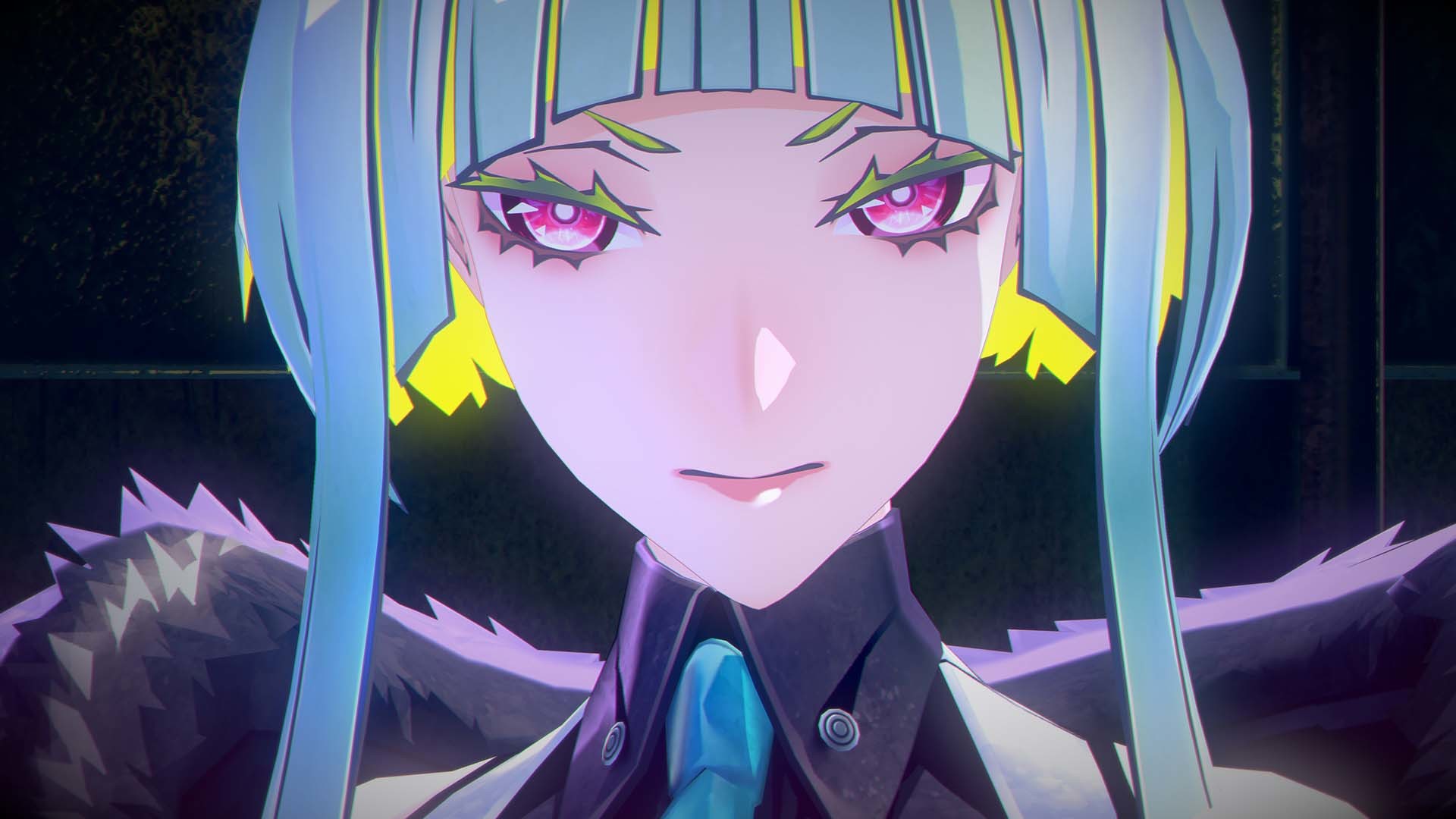
Combat is turn-based and rewards matching attacks to enemy weaknesses. Demons stored in a character’s COMP provide the skills used in battle, so the equipped demon changes both the available attacks and aspects of the user’s attributes. Hitting an enemy weakness calls additional allied demons into a stack; at the end of the turn, Ringo can order those demons to launch a Sabbath, a group assault whose strength grows with the number stacked. Some demons learn follow-up skills that may add effects such as healing the party, inflicting an ailment or taking an item during that assault. The team’s own skills and COMP upgrades add further options. Ringo can gain Commander Skills by modifying her COMP, including abilities that strengthen a Sabbath or change demons without using a normal turn, though such skills have timing or turn-based limits. These tools encourage the player to consider how one weakness hit can set up a larger end-of-turn attack, and how to preserve resources for the right moment. A stack can contain up to sixteen demons, but the strategy remains rooted in selecting appropriate damage types and building around the demons available in the current party. Accessories and COMP modifications can improve attack, defence, MP efficiency or exploration effects. As a result, demon selection affects the team’s offensive coverage and equipment planning, not just the names of its summoned allies.
Demons are recruited through negotiation and developed through battle. As they gain experience, they raise their stats and learn additional skills, including, for some, a follow-up ability that can activate during a Sabbath. Once a demon has learned all of its skills, it may give Ringo a gift; certain gifts are Mystiques that can be installed in a COMP to strengthen an elemental skill, reduce MP cost or grant access to a particular ability. Fusion at the Goumaden combines demons to create a new one. The game offers ordinary two-demon fusion, special fusion recipes and search tools that can list possible results or recommend combinations from the current stock. Most skills can be inherited through fusion, giving the player a way to shape a new demon around the party’s needs. Character development links back to the Soul Matrix: as Ringo’s Soul Level with Arrow, Milady or Saizo rises, she can explore further into that companion’s area and acquire Summoner Skills, which can increase attributes or raise the maximum Sabbath stack. Personal Events at the bar and story progress raise Soul Levels, while Vision Quests provide insight into a companion’s past. These systems make exploration and conversation matter to power growth. The Safehouse also lets the group eat meals bought in the city; different meals provide temporary stat increases or benefits for dungeon exploration. Before a run, the player can therefore adjust the party through fusion, equipment, Soul Matrix progression and meal effects.
The game presents its occult conflict through a contemporary city palette of neon, signage and compact urban spaces, set against the strange imagery of demon encounters and the Soul Matrix’s constructed mental landscapes. The soundtrack and character presentation support the mixture of modern city life and hidden supernatural activity. Soul Hackers 2 is a single-player RPG developed by Atlus and published by Sega. Its base campaign follows Ringo and her team through the main apocalypse investigation, with demon negotiation, COMP systems, Soul Matrix exploration and party development. Separate add-ons include the Bonus Story Arc: The Lost Numbers, item and demon packs, costumes and BGM packs, and a free useful-item and extra-difficulty pack. Those are distinct content additions; the main campaign remains separate from that add-on story. The game is available for PlayStation 4 and 5, Xbox One and Series X|S, Windows and Steam PC.
- Developer
- ATLUS
- Genre
- Single-player supernatural role-playing game with turn-based combat