
About Sonic Racing: CrossWorlds
Sonic and a cast of Sega characters race across shifting circuits linked by Travel Rings. Choose a vehicle, equip Gadgets and adapt to courses that change between land, sea, air and other worlds in solo Grand Prix or ranked online competition.
Sonic Racing: CrossWorlds is a character-based racing game built around fast circuit competition and sudden changes of setting. Sonic and other racers travel through courses that span land, sea and air, with Travel Rings carrying the field into different CrossWorlds during a race. The changing routes turn each event into more than a repeated set of laps: racers have to handle shifting surfaces, obstacles and track layouts while trying to maintain speed and position. The game draws characters from the Sonic and wider Sega universes, and the vehicle system lets racers choose machines rather than tying every character to a single ride. Its central activity is clear—race to the finish—but the route and the machine can both change how that contest unfolds.
Travel Rings are the defining course mechanic. During a race, the leading racer selects which CrossWorld the competitors will visit on the second lap, taking the whole group to a different environment. That decision changes the course in the middle of the event and can affect how each driver approaches the next section. The CrossWorlds are described as as containing surprises, obstacles and large creatures, while the course description notes that the final lap returns to the first track with other course details altered. The ring works as a transition and a strategic choice: position at the front can shape the next environment, and every racer must adapt once the route shifts. Familiarity with the opening lap helps, but it does not make the rest of the race identical from one run to another.
Courses move across land, water and air, and the vehicles transform to handle those different spaces. This changes the driving challenge as a lap progresses: racers must respond to the surface and track shape, manage their line through obstacles and preserve momentum as the environment changes. Course details describe the CrossWorld routes as having surprises around turns, including large monsters and obstacles, rather than as simple visual swaps. Players race through a sequence of related but changing sections, balancing speed with the need to react to the route in front of them.
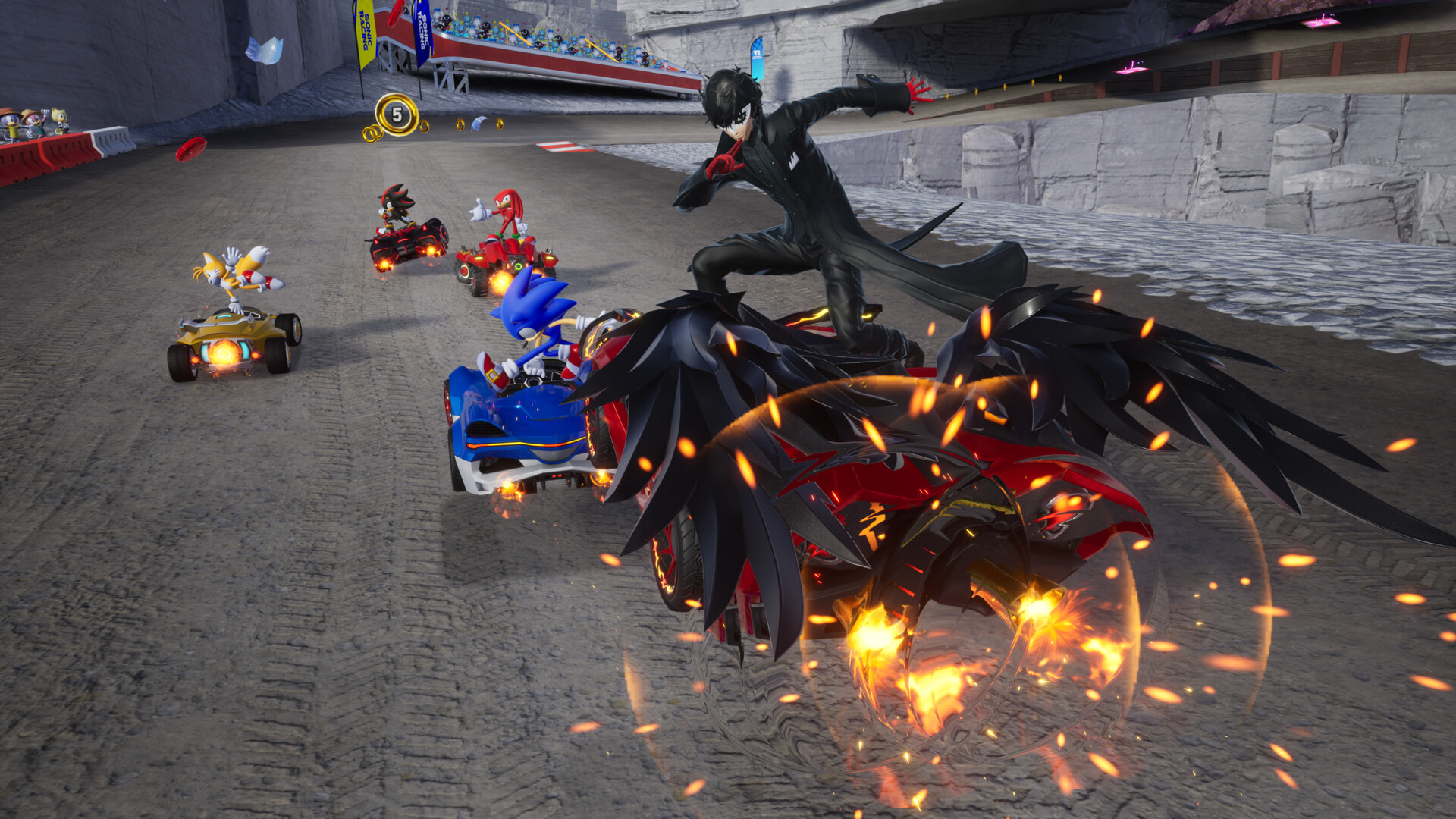
Vehicle choice gives players another way to shape a race before the starting signal. Characters are not locked to one vehicle, and the game offers five broad machine types: Speed, Acceleration, Handling, Power and Boost. Those categories emphasize different performance qualities, so selecting a machine can reflect whether a player wants stronger top speed, quicker starts, easier steering, force or boost potential. Vehicles can also be built from parts drawn from different machines, then personalized with colors, decals, textures, an aura and a horn. The garage is both cosmetic and functional: a racer can create a recognizable look while matching machine characteristics to preferred driving habits. Extreme Gear hoverboards return as another boost-based way to race, adding a distinct vehicle style alongside the customizable machines.
Gadgets let players tune their strategy with abilities equipped before a race. More than 70 are available, and racers can combine them to change how they use items, build boost or manage other advantages. A stronger Gadget can occupy more slots, so a player has to weigh the power of an individual effect against how many other abilities will fit in the loadout. The collection grows through progression: play unlocks additional slots and stronger Gadgets, while World Match rank increases also award new equipment. This creates a continuing customization loop around the races themselves. A setup that helps one player compensate for drifting difficulty may differ from a build focused on carrying or using more items. Machine and Gadget combinations let racers adjust their approach before returning to courses that demand different responses.
Grand Prix is a single-player mode with seven competitions, with computer-controlled rivals to beat. World Match is the ranked online mode, where players race against competitors around the world and move through ranks from E to A, with Legend at the top. Race results and rank progression give online play a continuing goal, while SEGA describes new Gadgets as rank-up rewards. These modes frame the same core task in different ways: Grand Prix organizes solo competition across a set of events, and World Match measures performance against online racers over time. The course-changing Travel Rings, vehicle selection and Gadget loadouts remain important in either setting because each race still asks players to navigate shifting terrain, avoid hazards and reach the line ahead of the field.
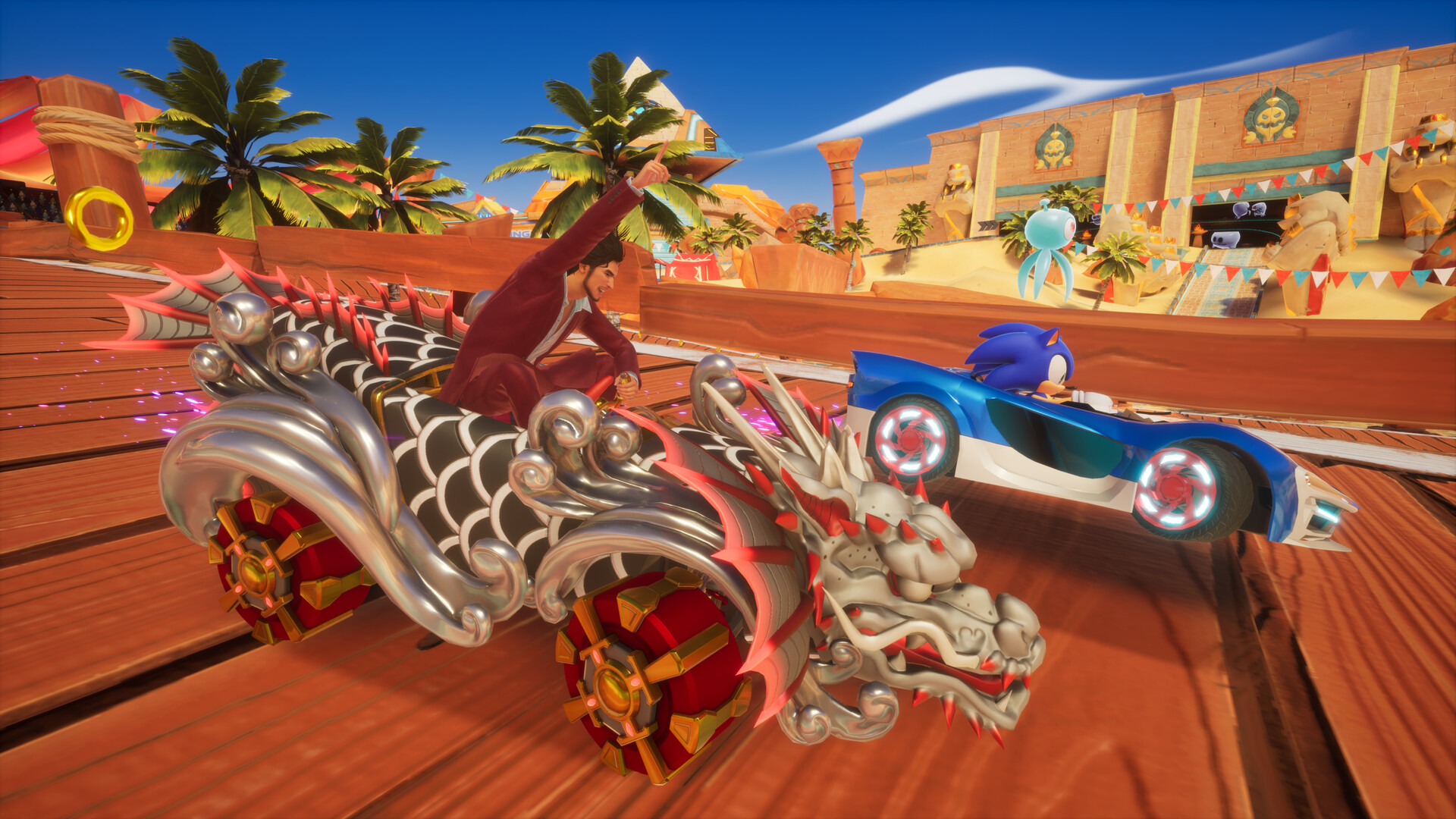
Course themes connect the new dimensional routes with places familiar from earlier games. The courses include both original tracks and locations from Sonic history reimagined for racing, including Metal Harbor from Sonic Adventure 2. That approach gives a race two kinds of reference: a CrossWorld transition can take the field somewhere unexpected, while a returning location can draw on a recognizable setting reimagined for racing. The playable cast also reaches beyond Sonic characters to other Sega properties, so the same circuit can bring together racers associated with different series. These choices make the competition a crossover as well as a driving challenge, with the route and the character lineup helping define each event.
- Developer
- Sonic Team; published by SEGA
- Genre
- Racing