
About SOMA
SOMA is a first-person science-fiction horror game set in PATHOS-II, a research facility beneath the Atlantic. As Simon Jarrett moves through damaged stations, he searches for answers among isolated inhabitants, locked terminals and machines behaving in unsettling ways. Exploration, machinery puzzles and evasion carry the story forward; combat is not an option.
SOMA follows Simon Jarrett into PATHOS-II, a research facility beneath the Atlantic whose connected sites have fallen into disorder. The station is not an empty maze: scattered signs point to the people who maintained its labs, communications systems and living spaces, while the few inhabitants Simon encounters reveal that the crisis has affected human beings and machines in unsettling ways. His contact with Catherine gives the journey a continuing voice and a practical objective, but the story avoids making every question immediately clear. Players piece together where they are and what has happened through what Simon does as much as through what he is told.
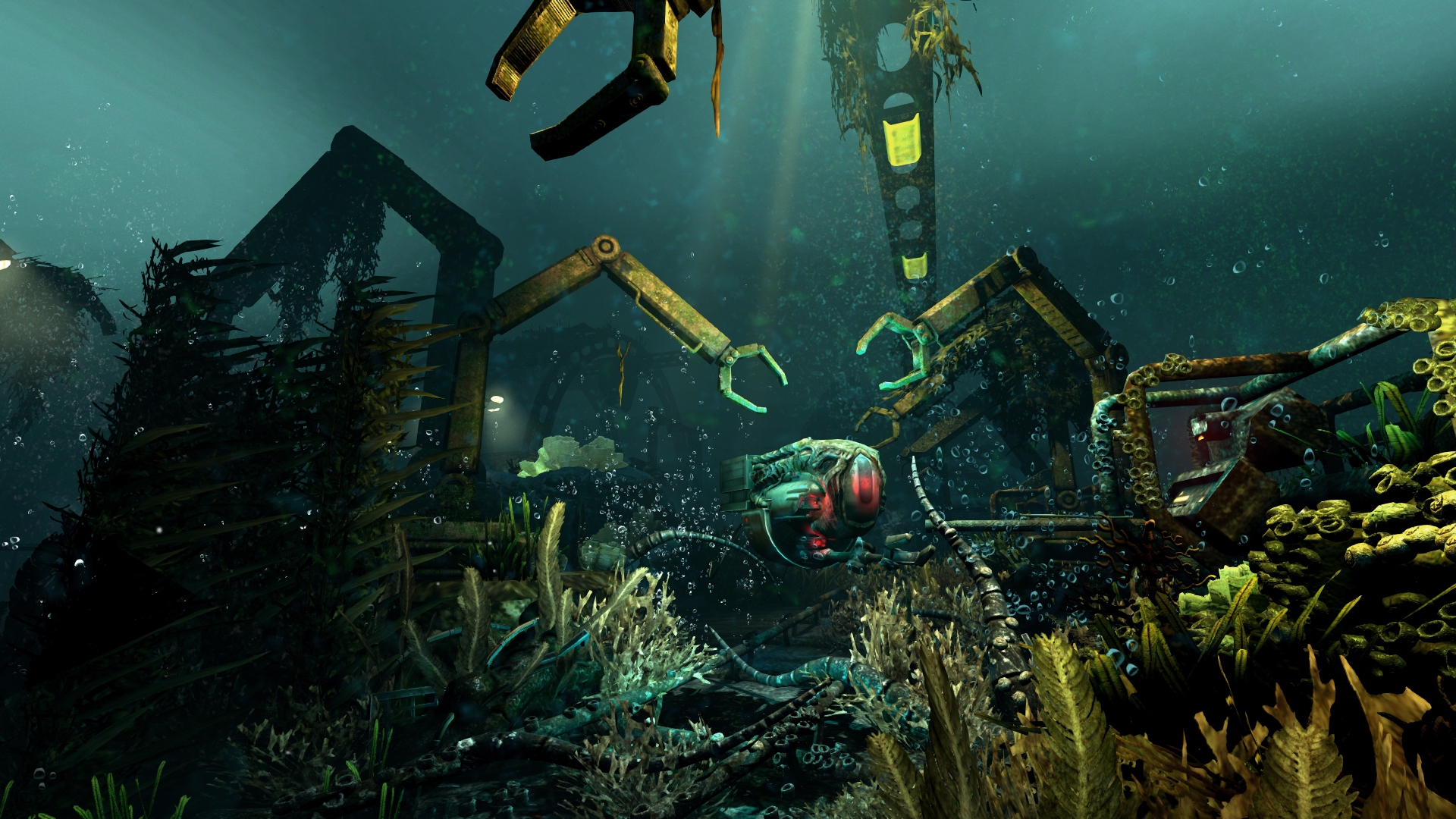
PATHOS-II provides several distinct kinds of space rather than a single repeated corridor. Inside, metal passageways, control rooms and work areas contain consoles, doors and equipment that still have recognizable functions even when damaged or overgrown. At intervals Simon leaves the station structure and crosses the ocean floor, where visibility, sound and the scale of the environment change. The contrast between cramped industrial interiors and open underwater routes gives movement a different rhythm: a bulkhead or service passage can feel close and navigable, while the seabed makes the surrounding depth and isolation part of the task. The route links separate sites, so each transition also reveals another fragment of the facility’s layout.
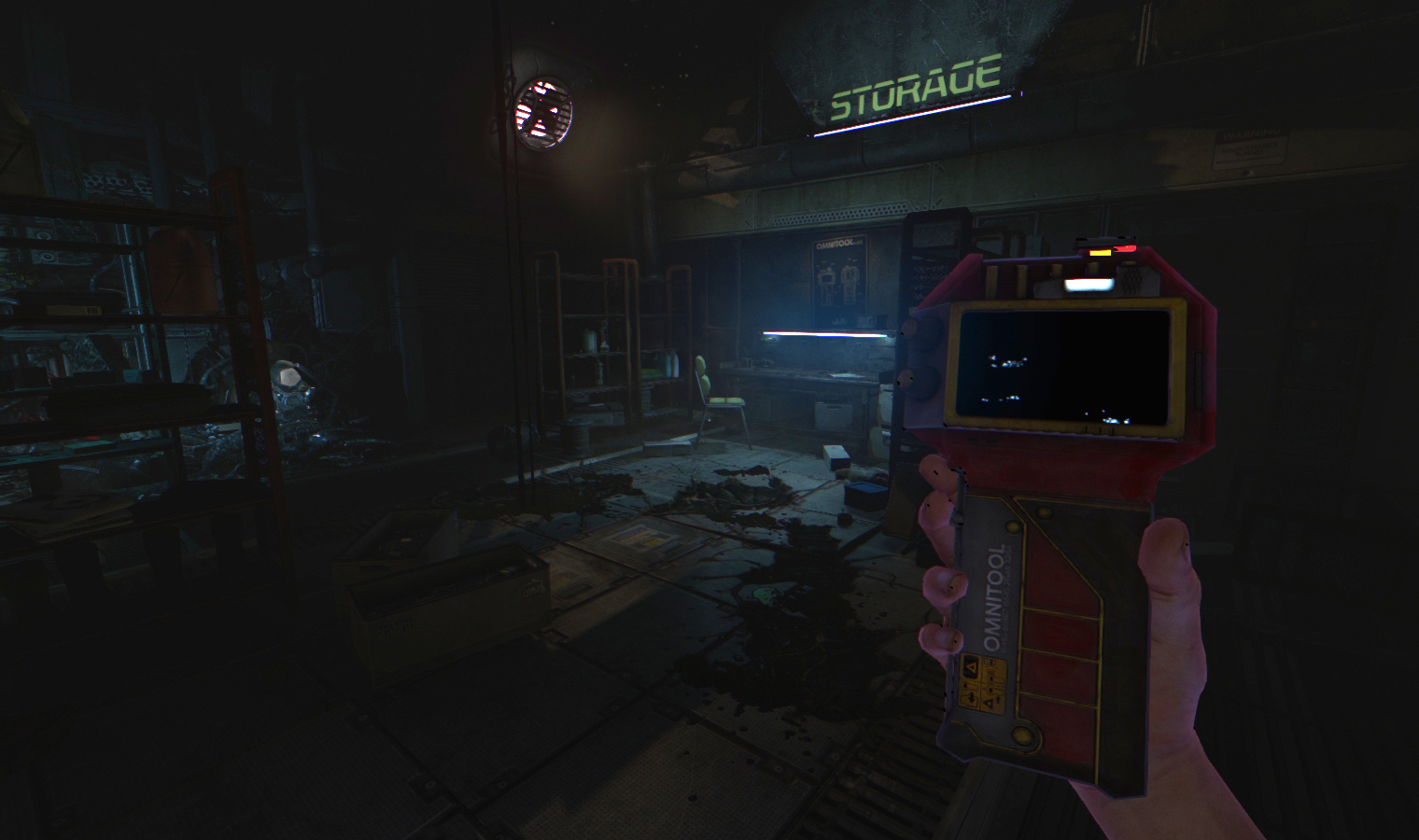
Progress depends on operating the environment by hand. Doors can be pulled open, switches and levers must be moved, objects can be picked up or shifted, and computer terminals provide access to station functions and information. These actions use a tactile first-person interaction style, so machinery is something Simon physically handles rather than a menu of abstract objectives. A blocked route may require locating a working console, tracing a connection between devices or getting power to the right system. The controls themselves are not a separate tool kit with weapons or upgrades; instead the room’s fixtures and equipment form the practical vocabulary for making a route forward.
The machinery puzzles are tied to the station’s immediate needs. A door and a communications device can draw on the same power supply, so restoring one function affects the other and makes the engineering task part of the story situation. Other objectives involve activating damaged hardware or working out how to reach a system through consoles and locked terminals. As the journey advances, puzzles ask the player to keep track of more elements and offer less direct guidance. The work remains grounded in physical equipment—switches, power, access panels and computers—rather than shifting into a detached sequence of abstract riddles. Some repairs also involve choosing whether to hurt a machine or accept the risks described in old staff warnings, tying the practical solution to questions about the beings inhabiting PATHOS-II.
When hostile beings enter the route, SOMA changes from careful inspection to evasion. The game has no combat response: Simon cannot fight the corrupted people, creatures or malfunctioning machines that pursue him, so the player must work out how to avoid them, find a way around, or run when the situation demands it. The threats do not all respond alike; observations of their reactions can matter, and a cramped hall or a noisy interaction may make passage riskier. One creature reacts to being looked at, while a blind pursuer responds to sound, so there is no single stealth habit that applies to every encounter. Growls, shrieks and movement in nearby vents can indicate that something is close before it is clearly visible. Encounters interrupt exploration without replacing investigation as the main progression loop.
The past of PATHOS-II is available through optional evidence as well as the events Simon experiences directly. Notes, pictures, computer records, audio and the arrangement of objects can reveal how the station was used and what its former staff were doing. Inspecting a body can also expose a short audio fragment from its final moments, making this a distinct way of finding history rather than simply reading another document. These backstory details are mostly optional: players can sample terminal records or intercom fragments, investigate a room closely, or keep moving with the central story. Even the placement of a book or picture on a desk can carry information about a space, so its props can function as evidence rather than decoration. The world still conveys the main route through active events, while additional reading and observation give context to individual sites.
SOMA also offers Safe Mode, a second way to approach the same story and puzzle sequence. It is selected when starting a new game; creatures remain present, but their behavior is redesigned so they will not attack, and the player cannot die. All puzzles and events remain, while sneaking past enemies is no longer required. That changes the practical rhythm of a room: players can inspect terminals, objects and machinery without treating every movement as a stealth risk. The station retains its unsettling setting and themes even when pursuit pressure is removed, giving this alternative mode its own tension through discoveries and encounters.
- Developer
- Frictional Games
- Genre
- First-person science-fiction horror adventure