
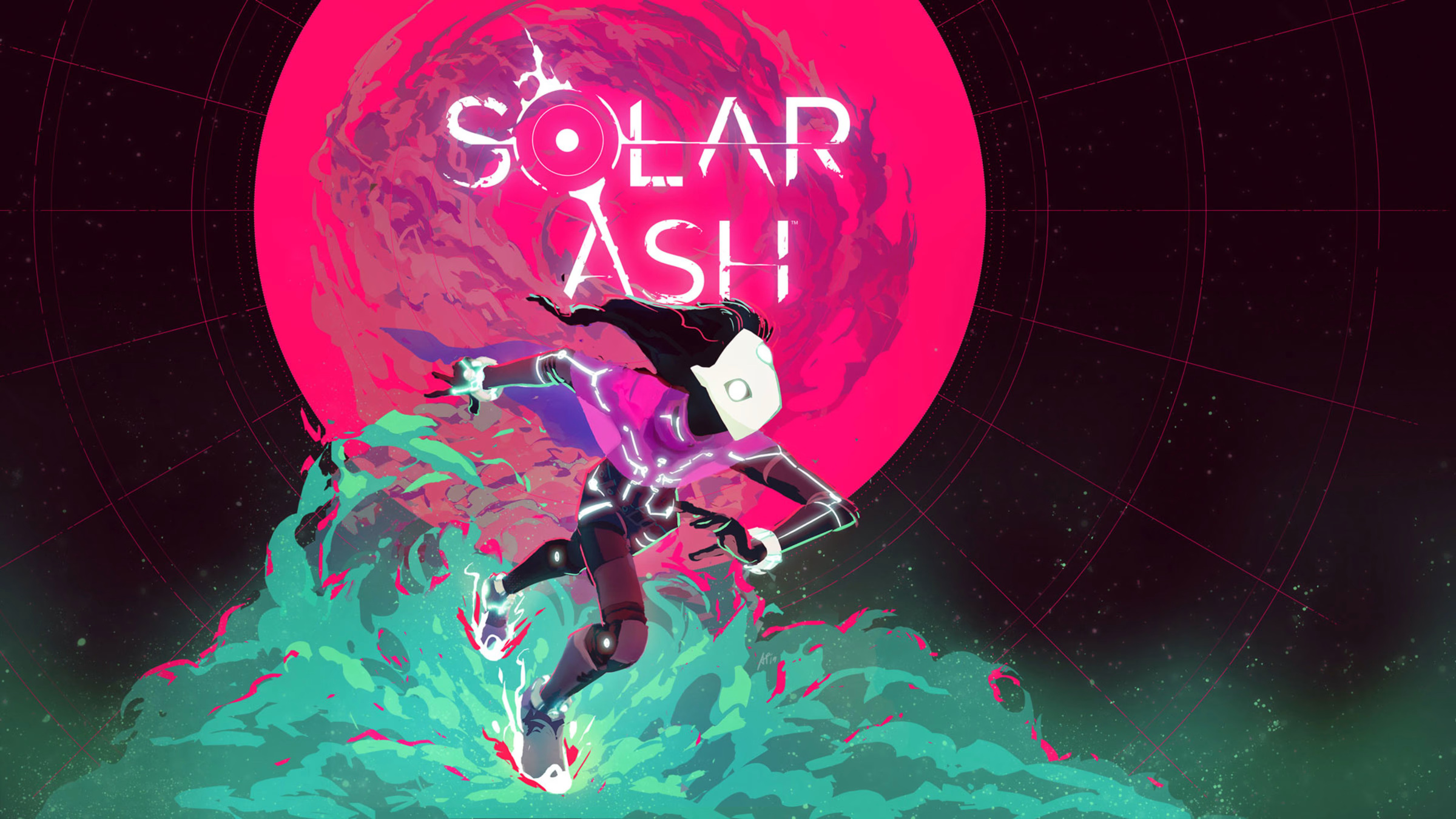
About Solar Ash
Rei, a Voidrunner, enters the Ultravoid to prevent the destruction of her home world. She surfs across surreal landscapes, explores ruins of civilizations swallowed by the void, and confronts immense creatures called Remnants. Solar Ash is a third-person action platformer built around fast traversal, precision platforming, and movement-driven encounters.
Solar Ash follows Rei, a Voidrunner who enters the Ultravoid in an effort to save her home world from being consumed. The Ultravoid is a vast cosmic anomaly that has swallowed other worlds, leaving their environments suspended as fragments within its reach. The landscapes are not one continuous planet: Rei travels through distinct regions marked by their own terrain, ruins and hazards. The premise gives the journey two linked scales. Rei’s urgent objective concerns the fate of her home, while the spaces she crosses reveal traces of worlds and peoples already lost. The game keeps its central mystery focused around the Starseed, Echo and the enormous creatures moving through this place, allowing the environment and encounters to disclose more about the Ultravoid as Rei advances. Its story is told through Rei’s progress and conversations as well as through remnants of earlier civilizations, so exploration supplies context alongside the main objective.
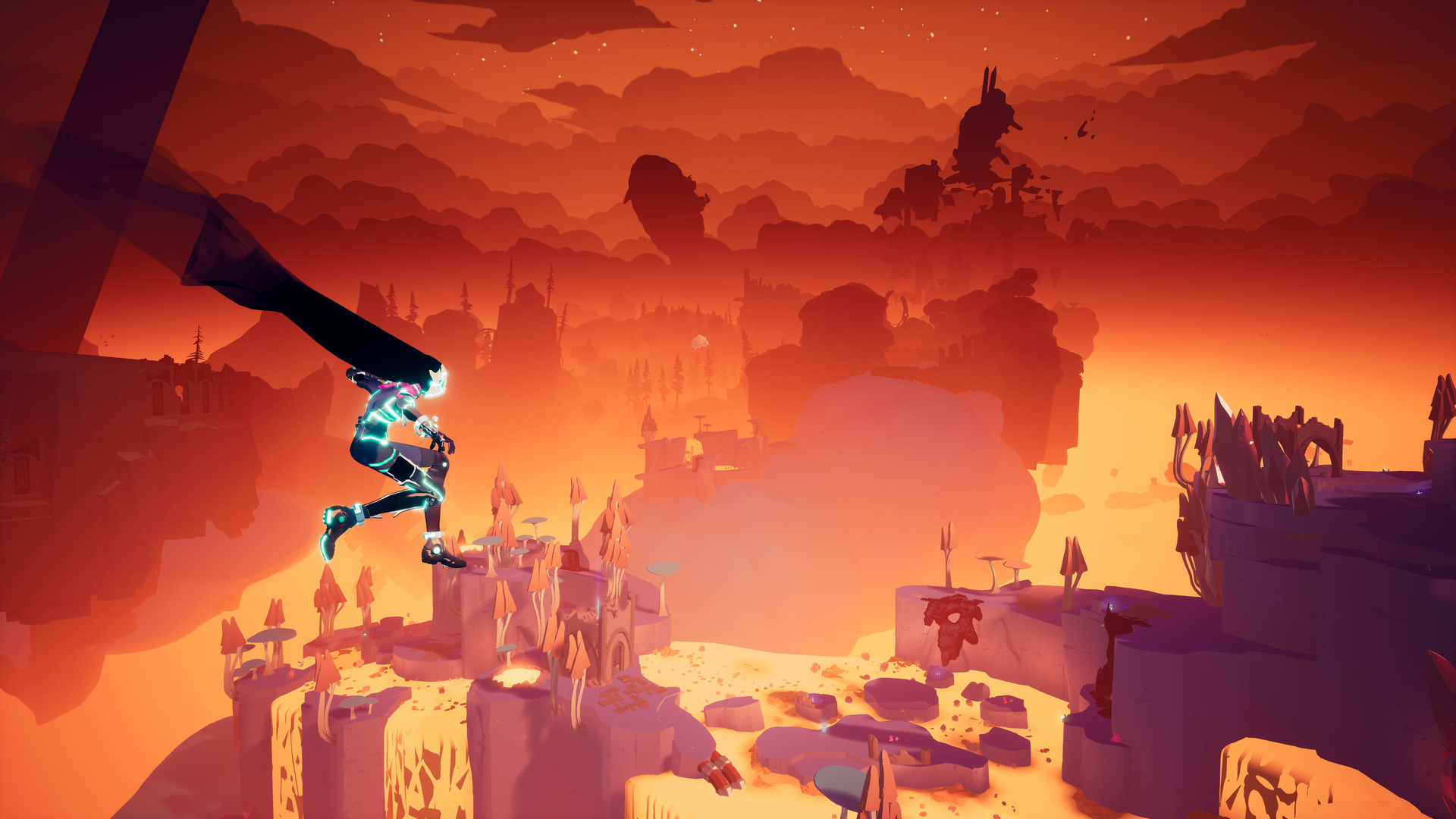
Movement is the central verb. Rei moves over ashen cloud surfaces with a fast skating or surfing glide, then chains jumps, air movement, grapples and rail grinding to cross gaps and gain height. The controls preserve momentum: a path may lead from open ground onto a rail, up a vertical face or across a broad shelf without reducing the journey to disconnected platforms. Grappling reaches distant points and can pull Rei through vertical spaces; rails act as routes through the landscape and sometimes lead to tucked-away places. The third-person camera frames both Rei and the immense spaces around her, while the player steers and adjusts their view to read routes and hazards. Timing matters because the terrain often asks for a quick transition between glide, jump, grapple and landing. The challenge is to recognize a line through the space and keep Rei moving as that line changes. Successful traversal also depends on anticipating where momentum will carry Rei after a landing, since the next rail or grapple point may sit above or beyond the apparent endpoint of a jump. Looking ahead and adjusting the camera helps reveal these transitions.
Each region combines broad travel with local obstacles and points of interest. Sunken cities, water shelves, lava zones, abandoned structures and open cloudscapes give the Ultravoid distinct silhouettes and practical differences in how Rei moves through them. Rails, elevated ledges and grapple targets can form visible routes, while hidden or difficult-to-reach spaces reward looking beyond the direct path. Environmental hazards, including dangerous lava, make route choice consequential: a leap must land on a safe surface or carry Rei toward the next usable connection. Small enemies also occupy these spaces, and some can be approached from positions that turn an encounter into a traversal opportunity. Exploration is folded into movement. Rei can follow the required route toward the next major objective while diverting to investigate ruins, collect materials or reach objects tied to a region’s history. The layout makes verticality and distance part of the ordinary act of crossing each area. The open areas leave room to approach some landmarks from different directions, but their landmarks and traversal structures still guide progress toward local objectives. The contrast between open surfaces and narrow passages changes how carefully each movement must be aimed.
Combat follows the same forward motion. Against smaller creatures Rei uses a straightforward melee strike and a grapple attack, while maintaining movement through spaces shaped by slopes, rails, platforms and walls. Enemies can pressure her with attacks that make standing still costly; a grapple can close distance quickly, and some wall-mounted foes can function as points from which Rei pulls herself toward a higher or less accessible route. These exchanges connect attack, evasion and navigation instead of separating combat into a fixed arena. Before a major encounter, short timed platforming challenges ask Rei to move through a sequence of targets or obstacles under pressure. The player’s task is to learn the timing and route well enough to complete the sequence, then carry that command of movement into the larger fight. Ordinary opponents are part of the space’s rhythm: they interrupt a route, draw attention to a feature or require a change of direction, while the game reserves its biggest confrontations for roaming Remnants. This makes a fight readable through spatial cues as well as enemy behavior: the player can respond to an incoming projectile by dodging across the terrain, then use the attacker itself as a way forward. The action stays tied to where Rei needs to go.
Remnants are enormous creatures encountered across the regions, and their bodies become moving routes as well as targets. An encounter begins with Rei grappling onto a creature; from there, the player crosses its surface, follows a constrained path and reaches vulnerable points. The creature’s movement and the surrounding landscape keep the fight in three dimensions, so the player must judge direction, height and timing while staying aboard. The design is built around successive runs across the beast and grapples to its weak points, rather than repeatedly striking from one safe position. Each Remnant has its own shape and movement, which changes the route the player follows. Some float, some walk, and their bodies incorporate platforms and surfaces that function like level geometry. Their scale is also communicated through the open landscape and camera framing: the creature remains part of the surrounding world rather than becoming an isolated arena. These battles make Rei’s movement skills directly useful for story progress. Reaching a weak point requires following the creature’s moving surface rather than treating it as static scenery, and successful timing is part of the route. The large scale remains visible during these sequences, linking their close platforming to the region below.
Exploration also feeds a collection and upgrade loop. Plasma is scattered through the world and can be used to improve Rei’s shields, giving optional detours a practical survival benefit. Hidden pieces of gear contribute suit parts; gathering enough parts allows Rei to assemble suits that provide bonus powers. The reward structure encourages players to scan ledges, side routes and hard-to-reach spots while moving through a region, then decide whether a detour is worth the added risk or time. Investigatable objects, small discoveries and items tied to side quests add background about places consumed by the Ultravoid and the people who lived there. Rei also encounters characters such as Ahrric, whose dialogue and poem connect local customs to the world’s older history. These encounters create quieter pauses between high-speed sequences without replacing the main objective. Progression combines movement through regions and Remnant encounters with optional collection, shield improvements, suit bonuses and narrative discoveries. Suit bonuses complement the shield improvement by changing Rei’s capabilities, while Plasma addresses the durability resource directly. This gives optional exploration two distinct kinds of payoff: a defensive upgrade and powers attached to completed suit sets.
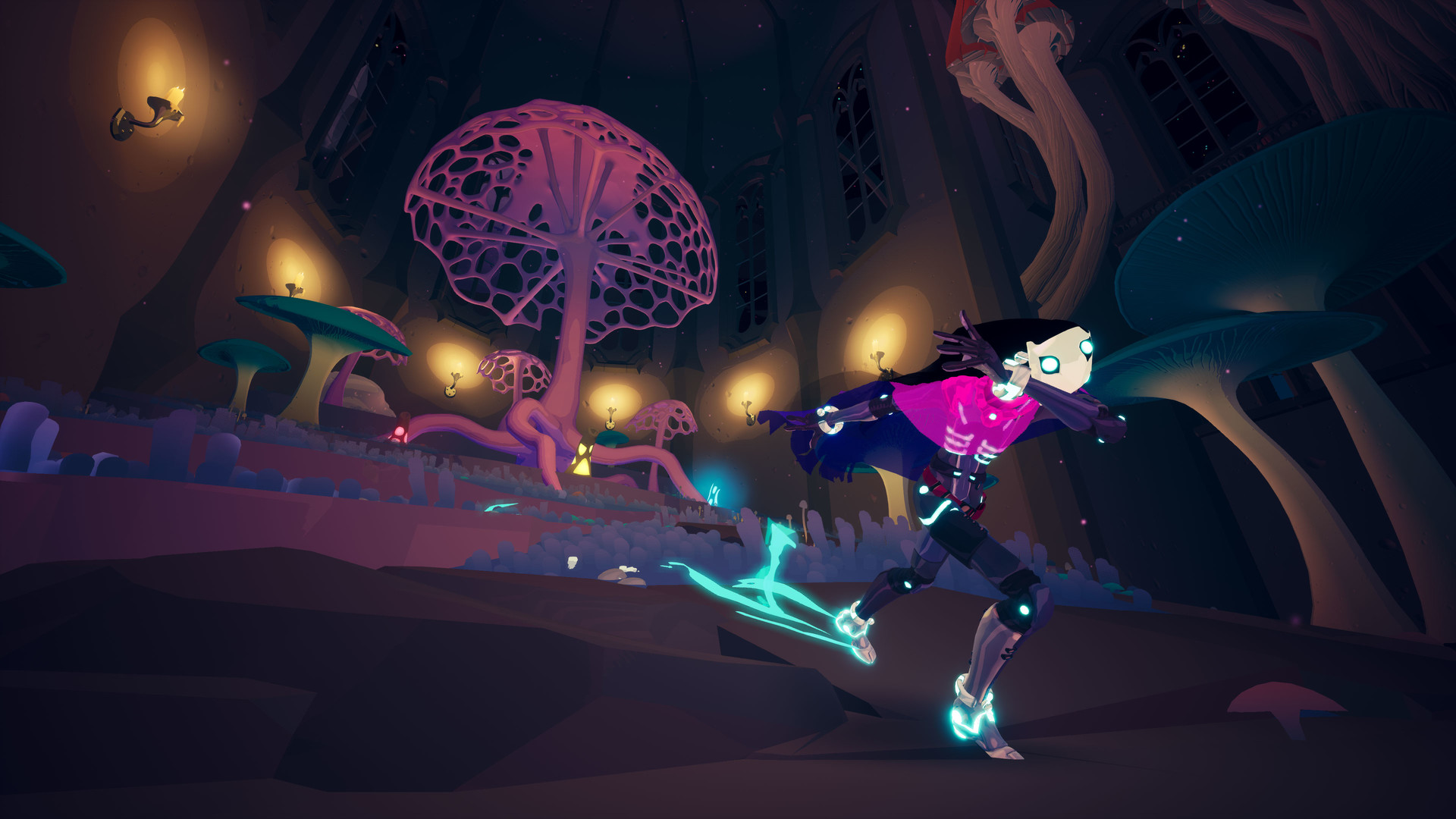
The presentation pairs saturated color and luminous cloud forms with abandoned architecture, alien creatures and the scale of the Ultravoid. Its third-person view keeps Rei small against broad environments and makes surrounding terrain legible as a place to traverse, while close encounters shift attention to the next grapple point or route across a creature. Dialogue and written text support the story, and environmental objects let players find regional history at their own pace. Solar Ash is developed by Heart Machine and published by Annapurna Interactive. Solar Ash is also available on PlayStation 4, PlayStation 5 and other platforms. Although Heart Machine describes it as sharing a wider universe with Hyper Light Drifter, the developer has said the stories are not directly connected, and Solar Ash has its own characters, movement system and identity.
- Developer
- Heart Machine
- Genre
- Third-person action platformer / action-adventure