
About SnowRunner
SnowRunner is an off-road driving and hauling simulation set across remote wilderness regions. Take contracts for local businesses, scout routes, deliver cargo and recover stranded vehicles while managing fuel, vehicle damage and traction. Build a fleet suited to different jobs, improve trucks with upgrades, and gradually open access to new areas, vehicles and equipment.
SnowRunner places the player in the role of a driver working across remote regions where businesses need transport and practical help. The base game’s starting territories include Michigan, Alaska and Taymyr, each spread across several maps and filled with routes that can be reached by road, trail or difficult open terrain. There is no central cast of named protagonists driving a scripted plot; the progression comes from taking jobs, exploring the region and growing a fleet able to handle heavier or more specialised assignments. The map offers contracts, one-off tasks, optional challenges and places to discover, so a session can be planned around a paid delivery or diverted by an opportunity found on the way. Completing work rewards the player and gradually opens more of the world’s vehicles, buildings and upgrades.
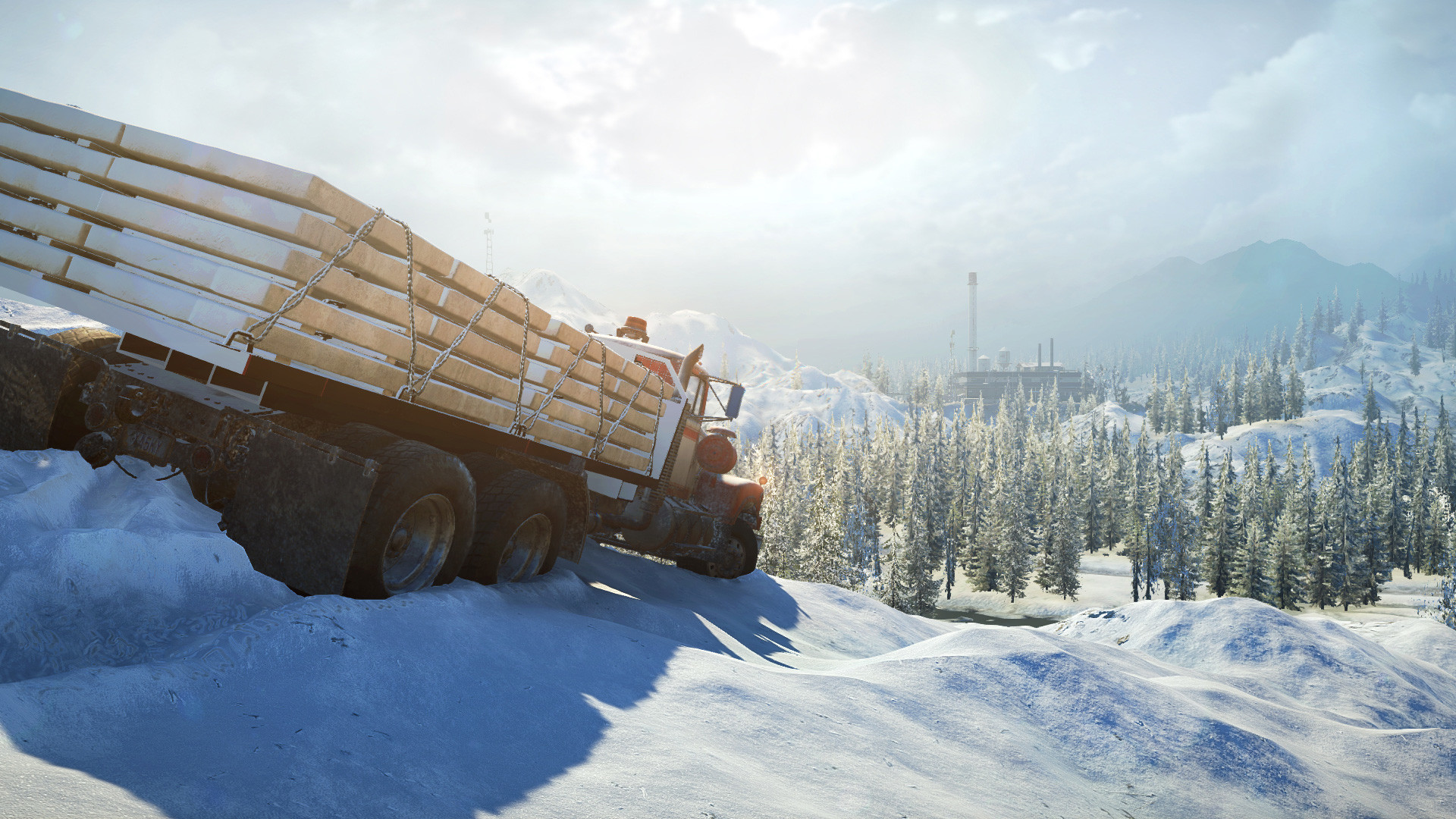
Driving is built around terrain that responds to a vehicle’s weight, speed and momentum. Mud can slow a truck and wheelspin can dig it deeper; water, snow, frozen lakes, slopes and forests each ask for a different approach to the route. The challenge is therefore not simply to point a powerful engine toward the destination. A loaded vehicle may struggle where a scout can pass, while excess speed or an unsuitable line can turn a short crossing into a recovery problem. Gear selection, steering and throttle matter when traction is scarce: easing forward in a lower gear can preserve grip where accelerating hard only churns the surface. The player reads the land, considers what the truck is carrying and changes pace or path when the ground changes. Terrain physics makes route choice a working part of the haul rather than a decorative backdrop.
Contracts are the region’s larger cargo jobs. A business requests goods at a named destination, and some contracts depend on completing another requirement first. Once a map area is revealed, its available contracts can be reviewed there; deliveries may cross between maps within the same region. Tasks are discovered as the player travels and cover different forms of work, including rescuing a stuck vehicle, searching for oil, reaching a location or bringing supplies to repair infrastructure and buildings. These repairs can change how a region is approached by providing access to restored structures or routes. Optional contests add timed objectives, sometimes with conditions such as travelling at night, using first-person view or avoiding vehicle damage. Taken together, these activities let players choose between cargo logistics, practical recovery work, exploration and a more constrained driving challenge.
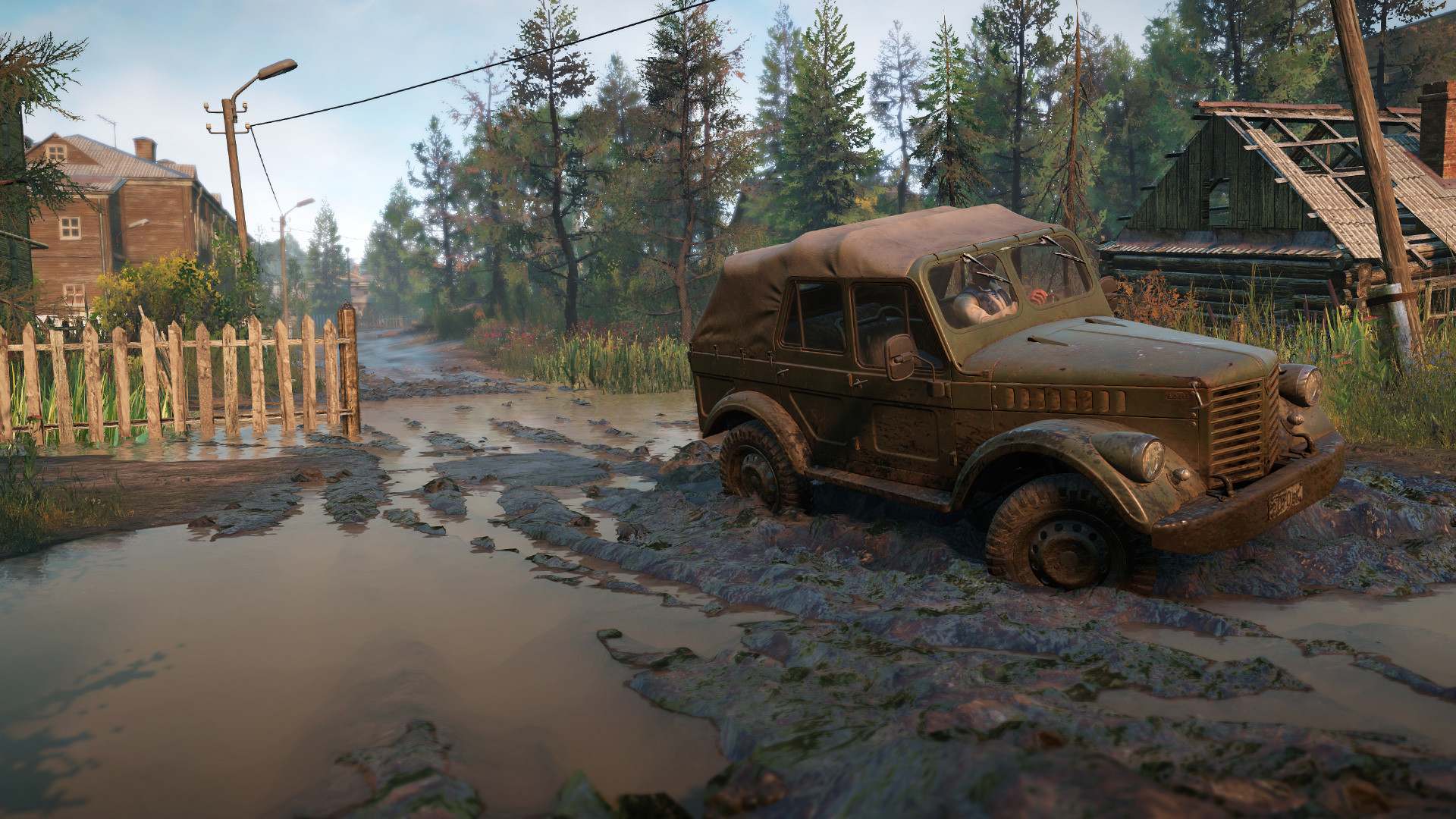
A garage is where the fleet can be shaped around those assignments. Contract and activity rewards can be spent to buy vehicles, improve their parts and customise their appearance. Engines and wheels alter a truck’s capability, while equipment such as a snorkel helps it handle deeper water. Scouts are useful for moving through rough areas and revealing the map; larger trucks can carry heavier loads or take specialised add-ons for a job. Choosing a vehicle is a matter of matching its equipment and capacity to the route, because a heavy truck with a useful load may still be difficult to manoeuvre through deep mud or narrow ground. Truck Storage also lets the player move owned vehicles between maps and regions, enabling a preferred vehicle to join a new operation. Garage choices connect money earned in the field to a growing range of transport options.
Fuel and recovery tools make preparation part of each trip. Longer contracts can span several maps, and a fuel trailer provides more independence when the route leaves stations behind; alternatively, the driver can plan a path that passes available fuel stops. All-Wheel Drive sends power to every wheel and can help on slopes, but it increases fuel use, so its activation has a cost. Differential Lock makes wheels on an axle turn together, improving traction when a vehicle needs to crawl through difficult ground, while leaving it unlocked allows wheels to rotate at different speeds for turning. The winch can pull a vehicle or object and can haul the truck out of trouble; it draws power from the engine, which also affects fuel use. These systems reward measured choices: the same upgrade that helps cross one obstacle can consume resources or compromise handling somewhere else.
Exploration builds a working picture of each map. Reaching a watchtower reveals a large area and places discovered buildings, upgrades and some tasks on the map, helping the player plan routes before committing a loaded truck. Other vehicles, trailers and upgrades can also be found during travel, so scouting may improve later hauling even when it is not part of a delivery. Driver rank tracks completed work and unlocks access to additional trucks and add-ons, while the driver profile records progress across maps and the wider game. Players can tackle contracts and tasks solo or with up to three friends; cooperative driving allows a group to work through the same difficult terrain together. With each job, the player can earn resources, discover more of the region and expand the fleet’s capabilities, turning individual deliveries into a broader effort to make remote places more accessible.
- Developer
- Saber Interactive
- Genre
- Adventure; simulation