
About Slay the Spire
Slay the Spire is a single-player deckbuilding roguelike from Mega Crit. Choose one of four characters and climb a shifting tower through branching floors, turn-based battles, events and campfires. Add cards, collect relics and shape a deck during each attempt, then face the act’s boss and continue the ascent.
A run begins with a character setting out to climb the Spire, a strange tower filled with hostile creatures and uncertain encounters. After an opening choice from Neow, the player enters a map of connected rooms and selects a route upward. The broad journey is divided into three acts: the Exordium, the City and the Beyond, each ending in a boss battle. Reaching a boss is not simply a matter of moving through a fixed sequence, because the floor layout, enemies, card rewards, relics and boss can differ between attempts. The map makes the climb a series of route decisions: a path can pass through ordinary fights for rewards, take a detour to a shop or event, or risk an elite encounter for a stronger prize. The tower’s framing gives the game a clear destination, while most of its moment-to-moment story comes through the rooms, creatures and brief event choices encountered along the way.
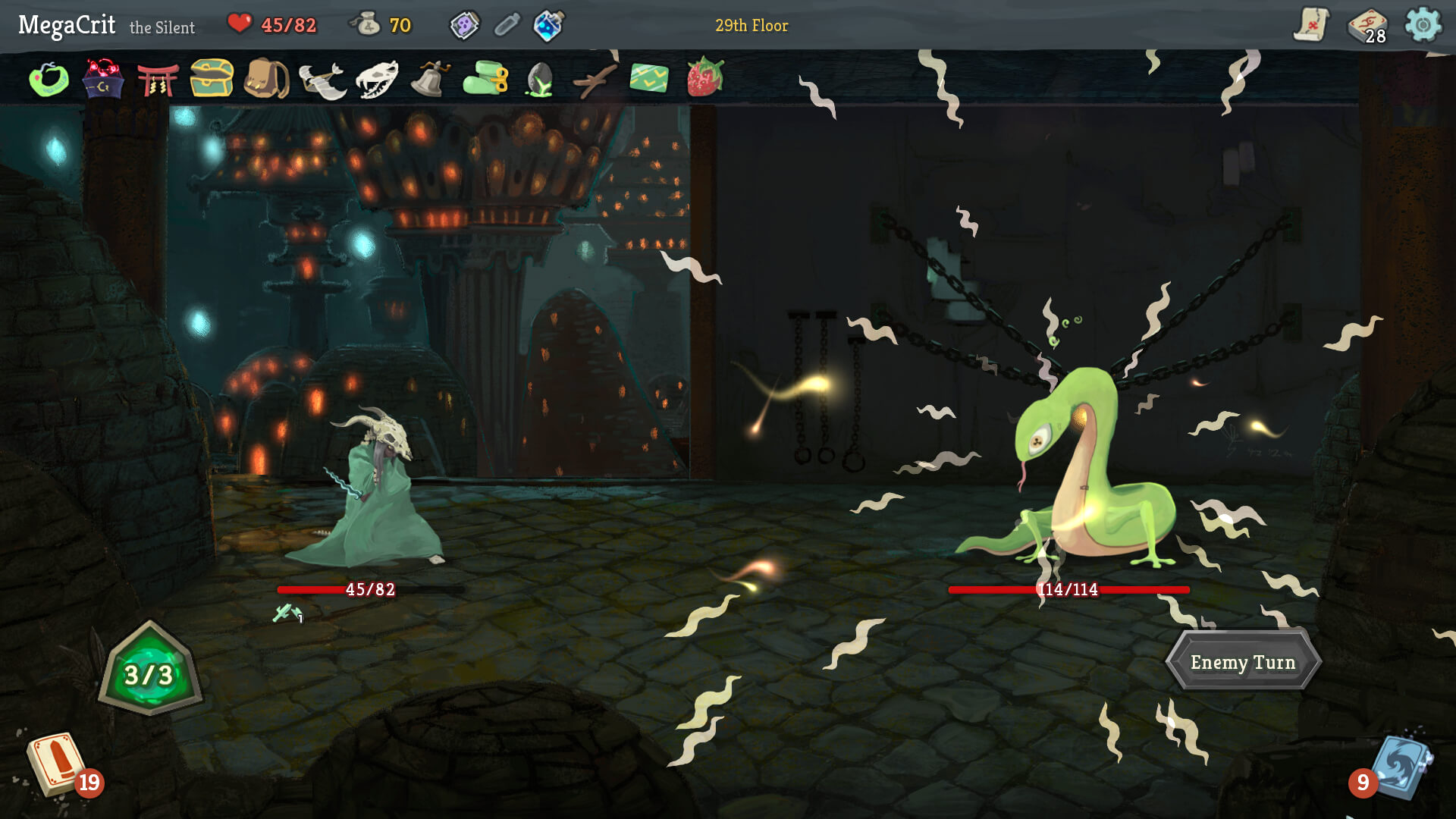
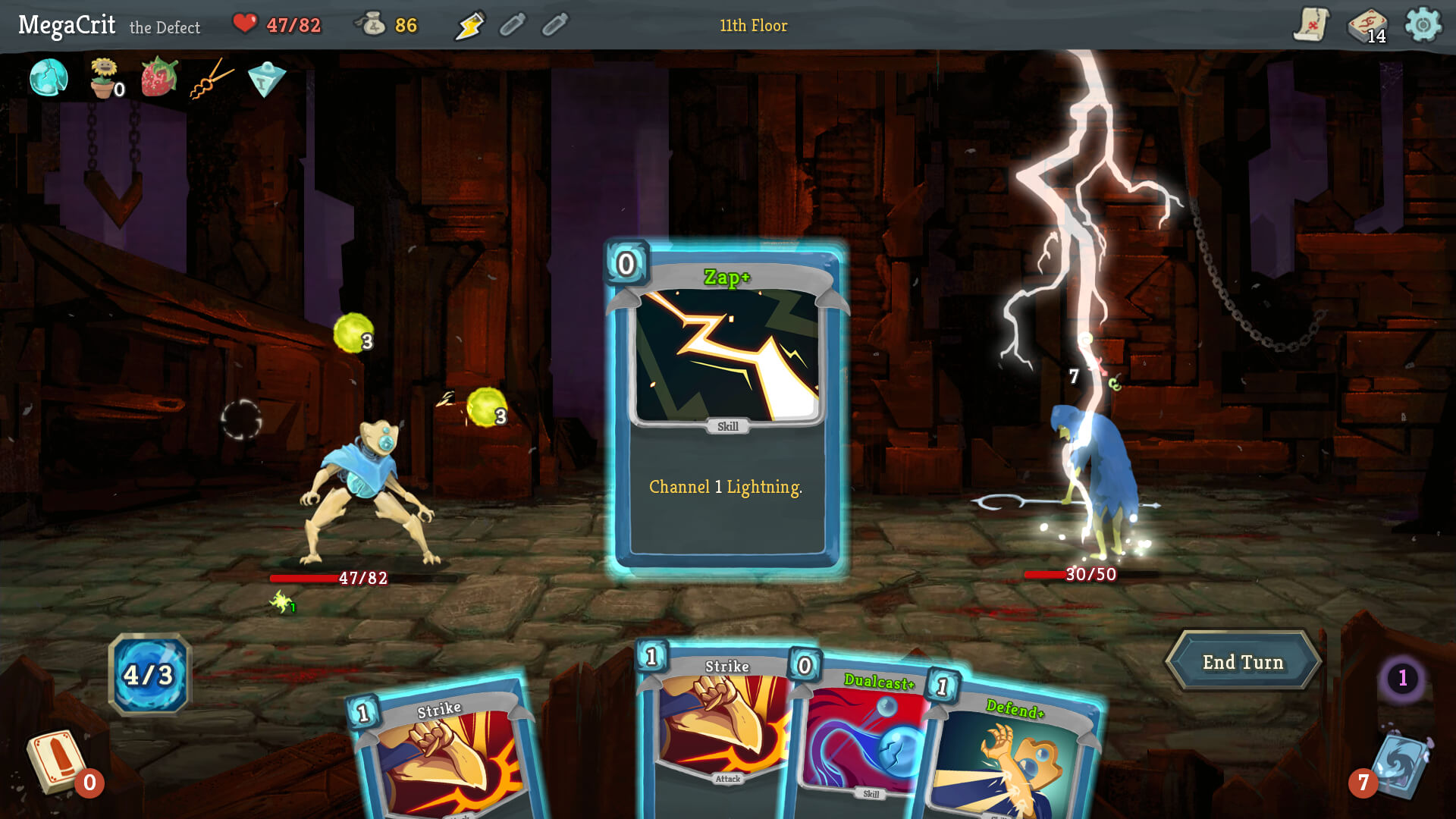
The four playable characters have separate card pools and distinct starting equipment. The Ironclad is a warrior who restores a little health after combat and can use cards that treat health as a resource; some of his attacks and powers also interact with exhausted cards. The Silent has poison and Shiv attacks, with many ways to draw and discard cards in order to keep a hand moving. The Defect is a damaged automaton whose orb system can provide passive damage or defence, then evoke an orb for a more immediate effect. The Watcher changes stances: Calm can store energy for a later shift, while Wrath increases both the damage she deals and the damage she receives. Her cards also make use of retaining and inspecting upcoming draws. Choosing a character changes more than an illustration or starting health: it changes the opening deck, the rules available during combat and the combinations that can form as new cards are found.
Combat plays out through cards, energy and visible enemy intentions. At the start of a turn, the player draws a hand and receives energy to spend on card costs; attacks deal damage, skills provide effects such as Block or card draw, and powers generally remain active for the rest of the battle. Enemies display what they intend to do, so a turn involves weighing that forecast against the hand and energy available. Block absorbs incoming damage for the turn, while effects such as Weak reduce an enemy’s damage and Vulnerable makes it take more from attacks. Played cards usually move into the discard pile and return to circulation after the draw pile empties and is shuffled. Some cards exhaust after use, leaving the combat cycle. These rules make sequencing matter: applying Vulnerable before an attack, for example, changes the damage that attack can deal, while a card that draws more cards may reveal options but still compete for the turn’s limited energy.
After battles, the player chooses whether to add an offered card to the deck or pass. This gradual construction is central to a run: a new card is useful when it contributes to a plan, and every addition also changes what can appear in later hands. Cards can support direct attacks, defence, status effects, draw, energy or persistent powers, with each character offering different ways to connect them. Shops provide purchases and a service that removes a card from the deck; campfires offer a choice between recovering health and upgrading a card. The upgrade changes the selected card’s printed effect, so the player trades immediate recovery for stronger future turns. Relics add passive rules that can reshape these choices across an entire run. Some are found in chests or as rewards, and elite enemies are a dangerous route to relics. Gold, remaining health, upcoming encounters and the deck’s current gaps all matter when deciding whether to expand, refine or preserve the build.
The map ties those decisions together. Its branching lines let the player choose among combat rooms, elite fights, campfires, shops, treasure chests and question-mark events, with the visible route showing which floors can be reached next. Ordinary enemies can supply gold and card rewards; elite encounters are tougher and pay out relics, making them a deliberate risk rather than a required fight on every route. Question-mark rooms may lead to an event with a choice, a fight or another encounter, and their outcomes can help or harm the climb. At the end of an act, the boss tests the accumulated deck before progression continues into the next region. Because the boss is shown on the map, its identity can inform preparations: cards, purchases and upgrades made on the way may address particular demands. Health carries between rooms, so damage taken on an earlier floor can alter whether a later campfire is used to rest or improve a card.
A run’s relics, potions and challenge options add further layers to the changing climb. Relics remain active without being played from the hand, allowing their effects to combine with cards or with one another; some powerful relics come with a cost or condition, so acquiring one can change the way a deck operates. Potions are single-use items that can be saved for a difficult fight, and carrying capacity makes replacing one a choice. The base climb can also lead into higher Ascension levels, which add cumulative difficulty modifiers as they are unlocked for a character. Daily Climbs set a shared run with modifiers and a leaderboard, while Custom mode lets players mix run modifiers. These modes use the same central activity—navigating a changing map, fighting with a developing deck and managing limited health and resources—but give repeat attempts different constraints. The distinct card sets, random room layouts and reward choices mean a later ascent can require a different route and a different deck from the one before it.
- Developer
- Mega Crit
- Genre
- Single-player roguelike deckbuilder