
About SILENT HILL f
In 1960s Japan, high school student Shimizu Hinako finds her mountain hometown of Ebisugaoka transformed by fog. She searches its altered streets, follows clues about its people and history, solves puzzles, and survives close-range encounters using a stamina-based melee system that asks her to balance attacks, evasions and limited supplies.
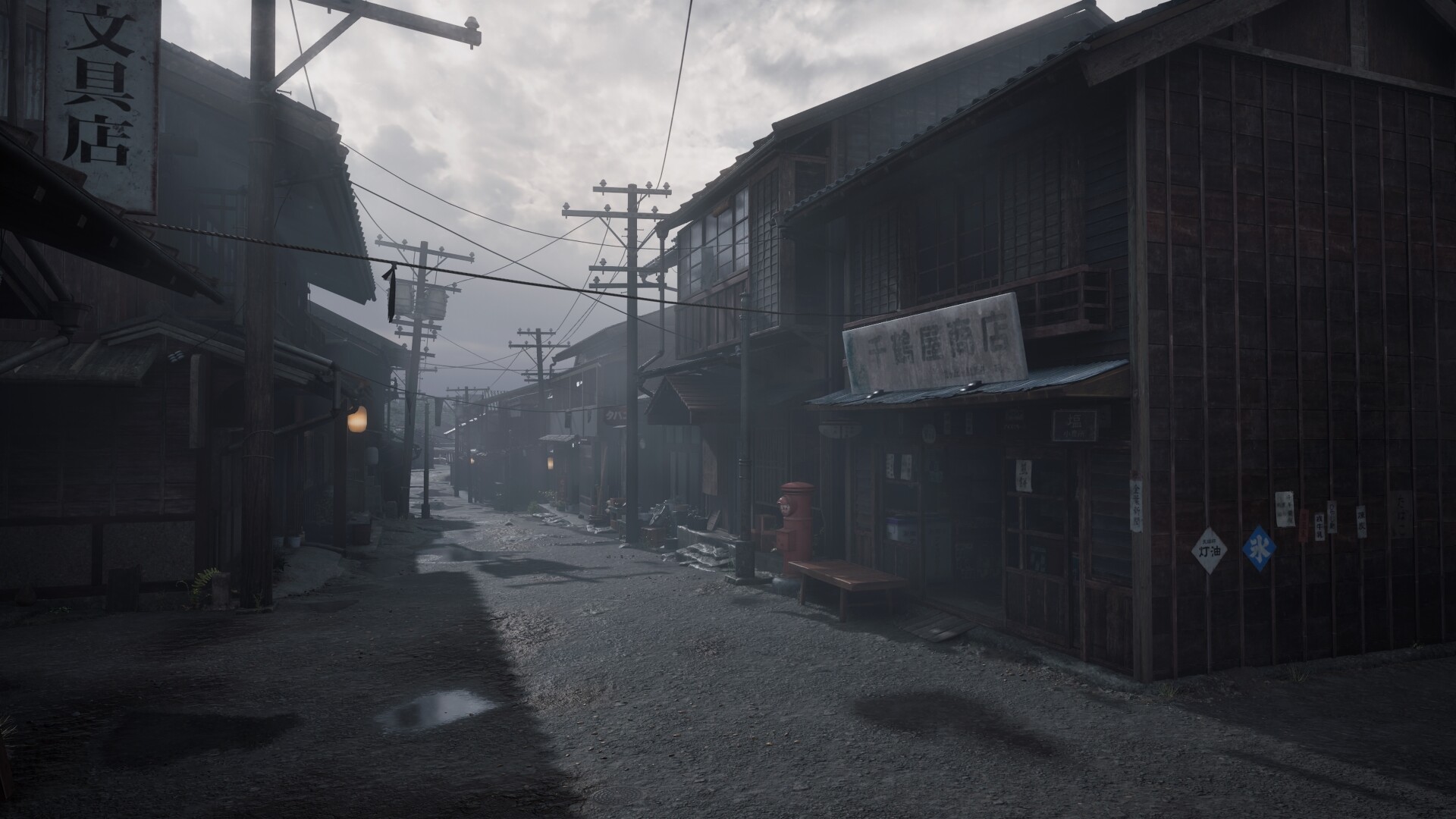
SILENT HILL f moves the series’ psychological horror to 1960s Japan. Shimizu Hinako is a high school student in the mountain town of Ebisugaoka, where the arrival of a thick fog changes familiar streets and buildings into an unsettling landscape. She is surrounded by relationships and expectations that shape the pressure of her ordinary life, including her friends Shu, Rinko and Sakuko. As the town changes, Hinako has to navigate places she knows while confronting strange creatures and uncertainty about the people around her. Konami frames the experience around psychological horror, mystery and decisions that affect Hinako’s fate; the premise establishes those themes without requiring the player to know earlier Silent Hill stories.
Ebisugaoka is explored as a connected place with streets, houses, school buildings and paths that can hide notes, useful objects and side routes. Progress often follows a clear objective, but obstructions and narrow passages make the local map something to interpret rather than a simple route marker. Searching a side area can uncover a key or document that clarifies where to go next, while letters and records add context about the town’s inhabitants, customs and history. Details in the environment help link places to the people who lived or studied there, so exploration supplies both practical clues and narrative fragments. The shifting town gives familiar architecture a second role: places are landmarks for navigation and part of the story Hinako is piecing together.
Puzzles are woven into the spaces rather than presented only as detached riddles. Hinako may need to read a note, inspect a symbol or connect an object to a detail found elsewhere before she can pass an obstruction. A puzzle can draw on the history and relationships documented in nearby rooms, giving the solution a narrative context as well as a mechanical one. Exploration can supply the missing clue, so reading documents and looking around are practical parts of progress. The game offers separate settings for action and puzzle difficulty, allowing the player to adjust the pressure of encounters independently from the challenge of interpreting clues. This keeps investigation distinct from fighting: a blocked route asks for attention to the environment and collected information, while an enemy encounter asks for timing and resource control. Moving between those tasks creates breathing space before the next threatening stretch.
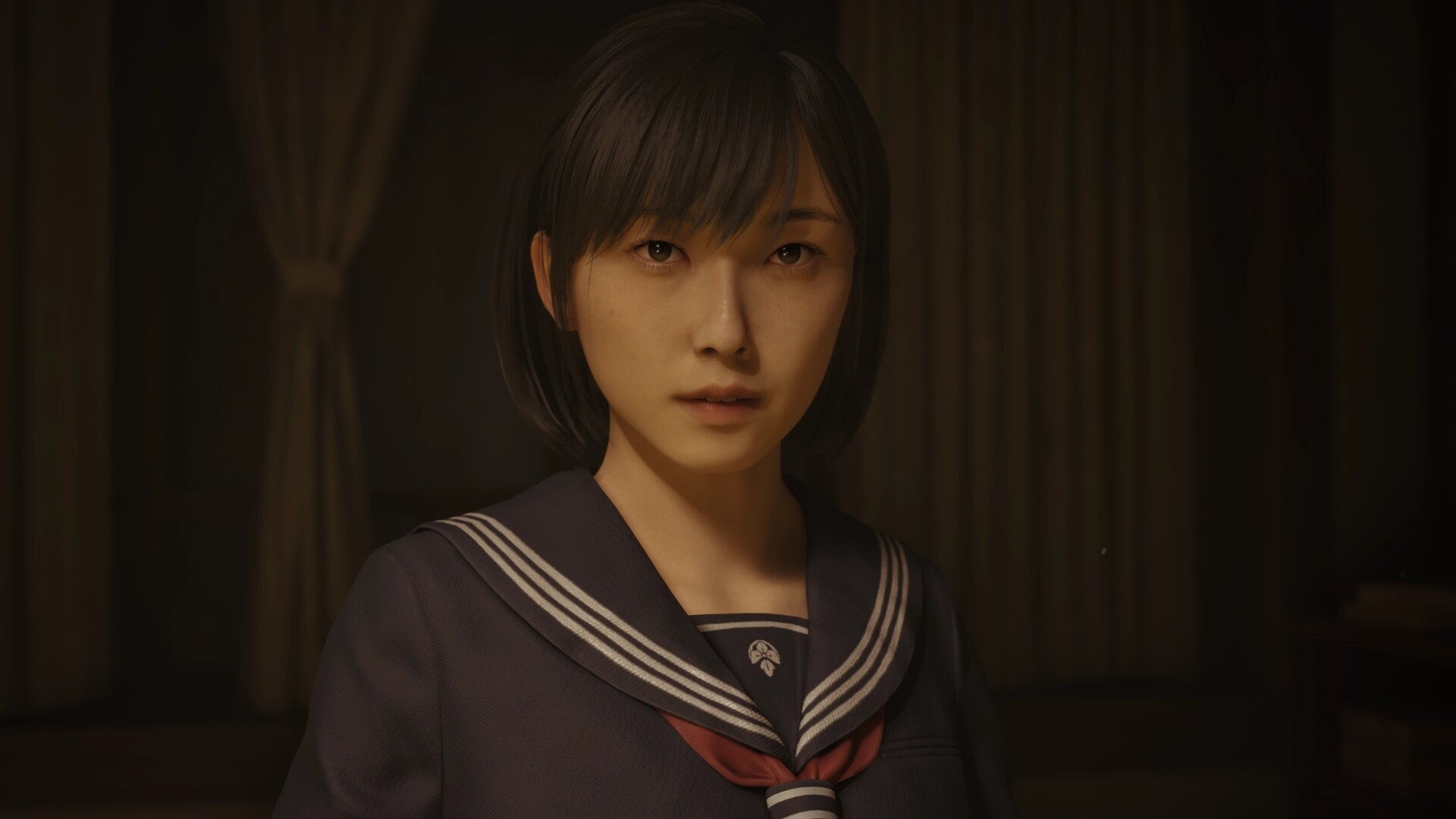
Combat uses melee weapons and asks the player to manage stamina across attacks and evasive movement. Light and heavy strikes have different commitment and impact, while dodging spends stamina that may also be needed to attack or respond again. Charging forward with a string of swings can leave Hinako without enough energy to evade, so a safer pattern is to watch an enemy’s movement, choose a brief opening and reset distance when necessary. A well-timed dodge can avoid a hit and restore stamina, rewarding attention to the timing of an incoming blow. Not every encounter has to be treated as a fight to finish immediately: awareness of the space and an available route can matter as much as the weapon in hand. The result is a close-range system where movement, stamina and the decision to commit to a strike work together, rather than a sequence of unrestricted attacks.
Hinako’s Sanity resource adds another decision to encounters. Focus slows the moment and helps her read an enemy’s attack, creating an opening for a stronger counter or charged strike, but using it consumes Sanity. The meter is also connected to the game’s psychological presentation, so it represents more than a second combat bar. Holding Focus for too long can leave less capacity for later use, and the player must weigh that cost against the advantage of a controlled opening. Ordinary attacks and dodges depend on stamina, while Focus draws on Sanity; the two resources create separate limits on how aggressively Hinako can respond. Health, stamina and Sanity restoratives found during exploration support this loop, and deciding when to spend or preserve them is part of carrying supplies from one danger to the next. The interface’s meters make that tradeoff visible while the fog and enemy behavior keep the player attentive to the scene itself.
Weapons wear down through use, so finding a useful melee tool does not remove the need to search for replacements or repair supplies. The durability display communicates how close a weapon is to breaking, and a broken weapon can leave Hinako exposed until she reaches another one. Toolkits can repair a weapon before it is completely exhausted, which makes timing relevant: using a repair too early or waiting until the weapon has already failed changes the value of that item. Different weapons also vary in speed, reach and stamina demands, giving the player reasons to choose based on the encounter rather than assuming every new object is a direct upgrade. The player can keep space, evade or use a limited supply item rather than spend durability on every threat. This makes scavenging part of combat preparation, and turns each weapon into a temporary resource tied to route planning and the next likely danger.
Hokora shrines provide a hub for saving and longer-term character development. Offerings found while exploring can be presented at a shrine to gain Faith, which can then be spent on Omamori charms or upgrades. Omamori provide passive effects when equipped, while praying uses Faith together with Ema to improve attributes or expand charm capacity. Those choices let the player shape Hinako’s strengths around a preferred approach, such as emphasizing survival resources or the effects of a charm. Because the same Faith has several possible uses, each visit asks the player to decide whether an immediate passive benefit or a lasting stat improvement is more valuable. Shrines also serve as save points, anchoring progress between expeditions into the town and its altered spaces. These persistent upgrades complement the moment-to-moment systems: exploration gathers offerings, shrine decisions turn them into abilities, and those abilities influence how the next stretch of investigation and combat can be handled.
- Developer
- NeoBards Entertainment
- Genre
- Psychological horror / survival horror