
About SILENT HILL 2
James Sunderland returns to Silent Hill after receiving a letter from Mary, his deceased wife, asking him to meet her at the place they shared. This 2024 remake of the 2001 game follows his search through fogbound streets and decaying interiors, combining exploration, environmental puzzles and deliberate survival-horror combat.
SILENT HILL 2 is a remake of the 2001 PlayStation 2 game, developed by Bloober Team and published by KONAMI. It follows James Sunderland, who travels to Silent Hill after receiving a letter from Mary, his wife, although he understands her to have died. The town is a place the couple once visited, but James finds it emptied, fogbound and inhabited by dangerous creatures. His search leads him through streets, buildings and encounters with people who have their own reasons for being there. Mary and Maria are central to the premise, while Angela, Eddie and Laura appear along James’s route. The story presents its mysteries gradually; the remake keeps the same core narrative while expanding locations and adding scenes, so this is a distinct modern production rather than a reissue of the original game.
The town’s streets form a connected route through South Vale and toward larger locations, with blocked roads, locked doors and obstacles directing James into side streets and buildings. Exploration involves checking cars, shop interiors, corridors and rooms for keys, supplies, notes and puzzle objects. The remake expands several areas and makes interiors larger and more involved than their earlier counterparts, giving the player more paths to inspect. James marks his map as he encounters useful details: notes record clues, symbols call attention to important objects or destinations, and doors can be marked when they remain locked. This map supports navigation without solving every problem automatically. Revisiting a marked room after finding a key or mechanism turns earlier dead ends into practical routes and encourages a careful sweep of each space.
Puzzles are woven into movement through apartments, institutions and other sealed-off places. Rather than appearing as detached quiz screens, they ask James to examine documents, objects and environmental arrangements, then connect information to a lock, mechanism or route forward. Some puzzles return in reworked form from the original; others are new to the remake. The clues can involve several steps, such as finding an object that changes how another object can be used, while the map helps preserve discoveries for later. The puzzle sequence adds a slower investigative rhythm between encounters, and looking through optional rooms can reveal additional notes, supplies and context about the people who passed through the town.
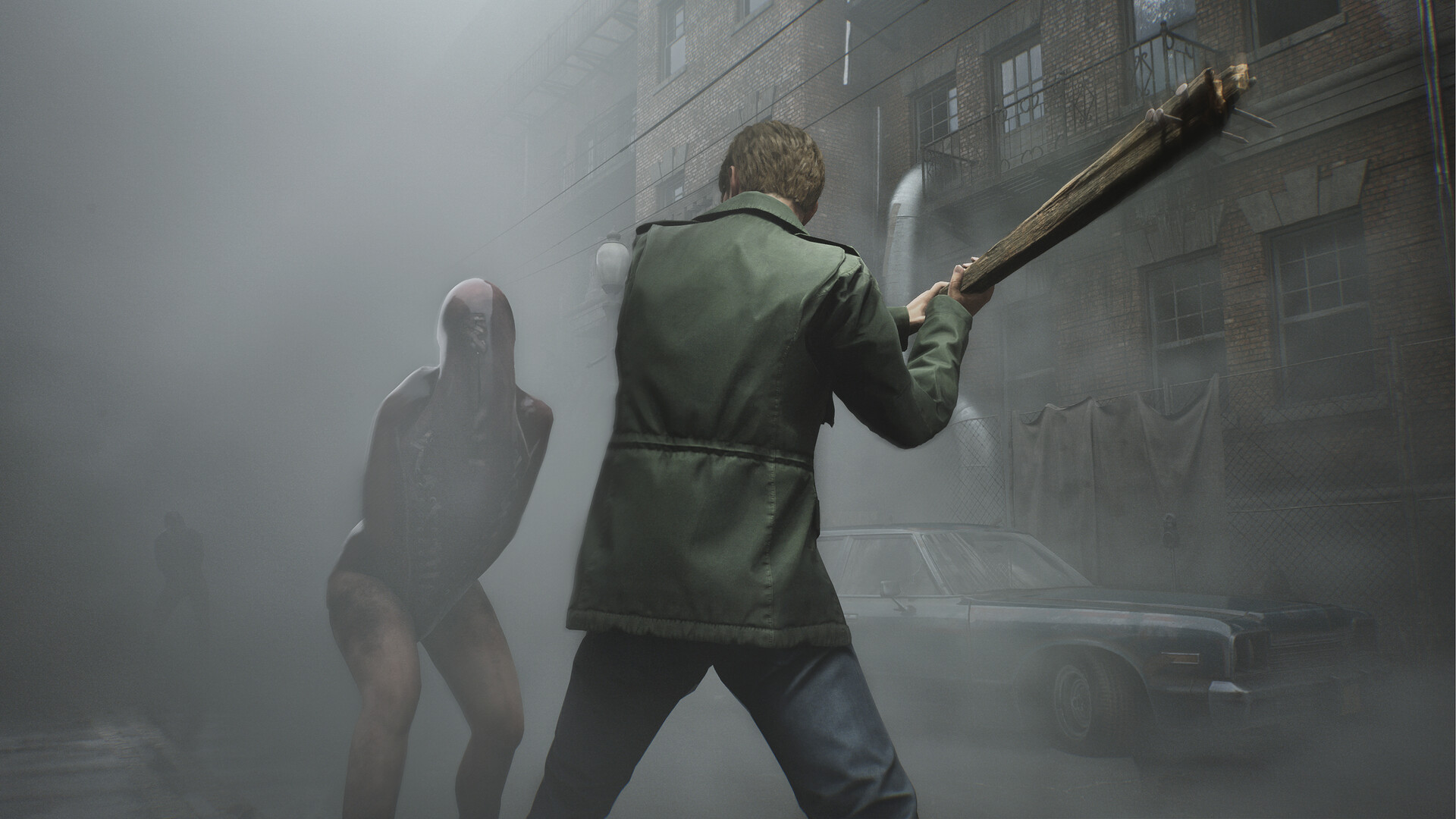
The remake shifts the original’s fixed camera views to an over-the-shoulder camera, placing James close to the space he is navigating and to the creatures that enter it. The third-person framing applies during both exploration and combat, so movement through a narrow hallway can change quickly into a close encounter. Sound also contributes information and uncertainty: scraping, footsteps, whispers and other noises can suggest activity nearby without confirming exactly what is waiting around a corner. The flashlight reveals details within its beam but does not make the surrounding darkness safe. This combination means that checking a room is a practical decision: the player can search drawers and corners for useful objects, but doing so may bring James close to an enemy or keep him in a tense space longer.
Combat offers both firearms and improvised melee weapons. James begins with a wooden plank and later can use a steel pipe; a handgun and other firearms give him a way to attack from a distance. The remake adds a dodge that lets him evade incoming attacks, and enemies use tells and attack patterns that the player can learn. Melee requires getting close, watching an enemy’s movement and choosing when to strike or move away. Guns require aiming and ammunition, so firing quickly under pressure can waste scarce shots. An enemy falling does not always mean it is permanently out of the encounter, which can make choosing whether to keep attacking part of resource management. The design keeps James vulnerable and his fighting awkward enough to maintain tension, rather than turning him into a trained action hero.
Searching thoroughly helps James prepare for what lies ahead. Health items and ammunition can be found in rooms and side areas, while documents and notes preserve details that may clarify a puzzle or add context to an encounter. Because combat can consume supplies, the player balances a direct route against exploring optional spaces. The map’s markings make it easier to remember blocked doors, useful objects and unresolved clues, while the inventory lets James carry what he has found and inspect items for relevant details. Some objects can be examined from different angles or combined with others when a puzzle calls for it. This loop of searching, recording clues and applying objects links the town’s physical layout to progression: advancement comes from understanding what a place contains as well as surviving its threats.
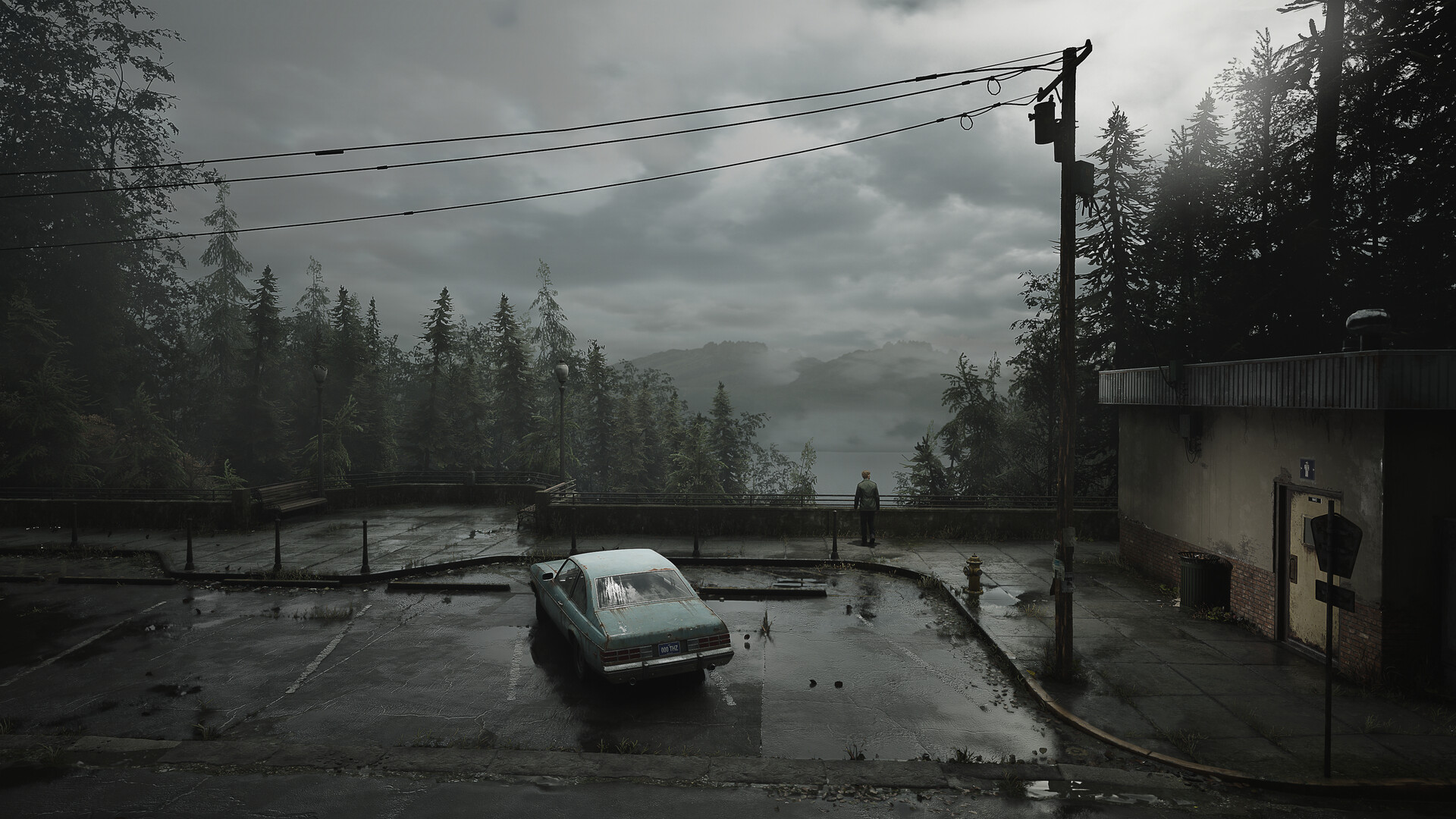
The remake revisits major story locations from the 2001 original, including apartments, a hospital, a prison and a hotel, while expanding some of their layouts. These settings shift from recognizable civic spaces into dark, maze-like interiors that provide room for new paths, puzzles and encounters. James’s meetings with Maria, Angela, Eddie and Laura punctuate the journey, but their conversations do not immediately explain why each person has come to Silent Hill or how their experiences relate to his. Akira Yamaoka returned to provide music, while the sound team built detailed environmental audio for the remake. Together, the locations, performances and audio shape a route that alternates between searching for a way forward and reacting to sudden danger. The focus remains on James’s investigation and the town’s psychological-horror atmosphere, without reducing its mysteries to a straightforward monster hunt.
- Developer
- Bloober Team SA
- Genre
- Action; adventure; psychological survival horror