
About Signs of the Sojourner
After her mother’s death, a young merchant takes over the family shop and travels a climate-stressed landscape to bring home goods. Conversations are played as a card-matching system: the deck changes with each journey, shaping which people the merchant can understand and the paths their relationships take.
Signs of the Sojourner begins with a practical responsibility and a personal absence. The player takes the place of a young merchant who inherits her mother’s shop after her death, then sets out along routes her mother once travelled to find goods the hometown can use. The wider world is recognizable but strained by climate change, and travel between communities is difficult. Each town offers a different slice of local life: people have work, family ties, hopes and frustrations that extend beyond the protagonist’s immediate errand. The shop gives the journey a material purpose, while conversation gradually fills in what the protagonist does not know about her mother, the town and the people who once crossed these roads. The story moves through these encounters rather than through combat or a conventional sequence of missions. The player is free to be curious, to look for useful stock, and to decide which relationships deserve attention, but a trip away from home is still a finite span of time with more possible meetings than can be fitted into it.
A conversation is a small cooperative puzzle built from cards. Each card has a symbol at both ends; the player and the other character take turns placing cards so the next symbol connects with the one that came before. The objective is to build a complete sequence, and the number of links required varies by encounter. A successful chain keeps the exchange moving and can reveal information or provide an item. A mismatch registers as a social stumble, and each conversation can absorb only a limited number of those before it breaks down. The system does not ask the player to select a line of dialogue from a menu. Instead, the card symbols stand for ways of communicating, so deciding whether a hand can match the other person’s pattern becomes the decision about how to meet them. Some cards also bend the rules: Clarify can insert a card earlier in the sequence, while Chatter lets the player put down more than one card together. These abilities provide tactical flexibility, but the basic puzzle remains about finding a connection between different approaches.
The available cards make the protagonist’s changing outlook tangible. After conversations and events, the player may be offered a new card and asked to replace one already in the deck. There is no separate experience bar that records personal development; instead, past encounters alter the tools available in the next one. A symbol or communication style that helps with one group may match poorly with people from another community. As the deck moves away from its starting patterns, conversations on the road can become easier while familiar exchanges at home become less comfortable. This effect is not framed as a simple upgrade path. Choosing a new card helps express what the protagonist has learned, but the finite deck means carrying that learning also displaces an older habit. The player is not selecting a universally best conversation strategy so much as shaping the kinds of connections the merchant can readily make. Successful exchanges may produce new cards or open routes and opportunities; difficult ones can leave some information or goods out of reach without ending the journey outright.
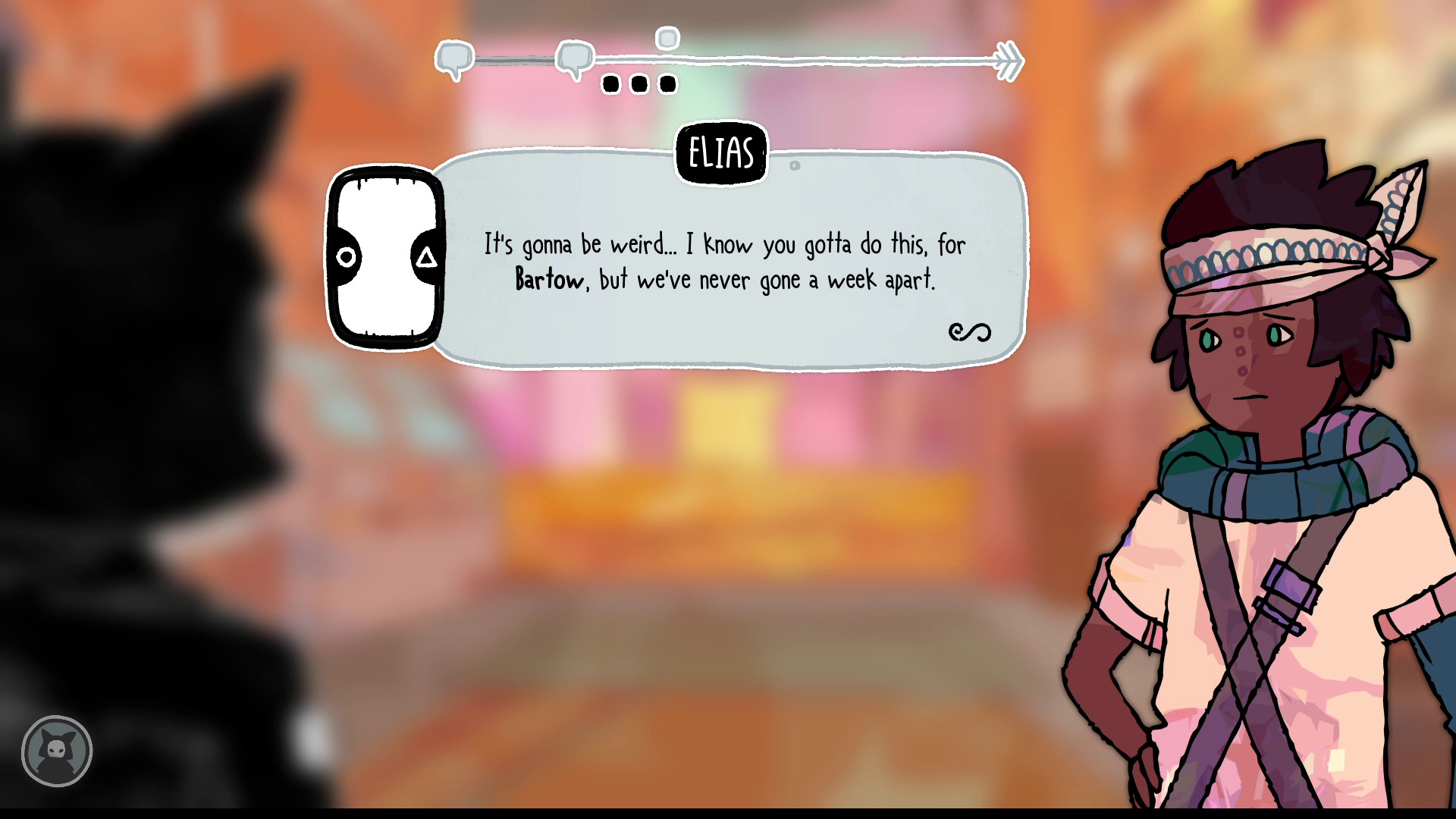
Travel links these social encounters to the town’s place in a larger network. The merchant moves between stops on a route, gathering goods for the shop and meeting people whose lives are connected to other settlements. Locations have their own character and local communication patterns, and the schedule advances whether or not the player is present for every event. That calendar structure makes the map more than a checklist: arriving somewhere means joining a moment already in progress, while choosing one meeting can mean missing another. Conversations can lead to new routes or help the player understand what has changed since a previous visit. Locals may also talk about events the protagonist did not witness, so absence does not make every missed detail permanently unknowable. Still, time on the road is limited, and the game does not promise that every person, story or destination will fit into one pass. The player must balance the practical search for merchandise with an interest in the people who make each place distinct.
The card rules let the same encounter communicate both rapport and friction. A successful chain does not guarantee that everyone agrees or that a relationship becomes uncomplicated; it represents a conversation that can continue. Conversely, a failed sequence does not necessarily condemn either participant as hostile. It marks a point where the player’s available style and the other person’s style do not line up. That distinction is central to how the game treats social outcomes: understanding someone can require attention and adaptation, yet accommodation has limits and does not erase difference. The small hand of cards creates visible constraints around that idea. The player may recognize the pattern an encounter calls for but lack a matching symbol, or hold a special card that can rescue a sequence at a cost to future flexibility. Because the exchange takes place turn by turn, the player can see the conversation becoming easier or more strained as it unfolds. The dialogue and the mechanical result then provide different kinds of context for what that meeting meant.
The shop and its stock keep the merchant’s social life grounded in the journey’s economic purpose. The player seeks regional goods and treats to bring back to the hometown business, so conversations and travel connect to the shelves the merchant is trying to fill. Items acquired on the route can be useful beyond their role as collectibles: they help the hometown remain part of the network of travelling trade. At the same time, pursuing goods competes for attention with the chance to learn about residents and their connections. The game’s events can also introduce social complications among characters, including friendships, rivalries and the possibility of helping people connect with each other. These situations are encountered through the same conversation system rather than through a separate relationship meter or combat mode. The player can take an interest in the people around the route, focus on the store’s needs, or try to do some of both, while accepting that a short visit cannot resolve every problem.
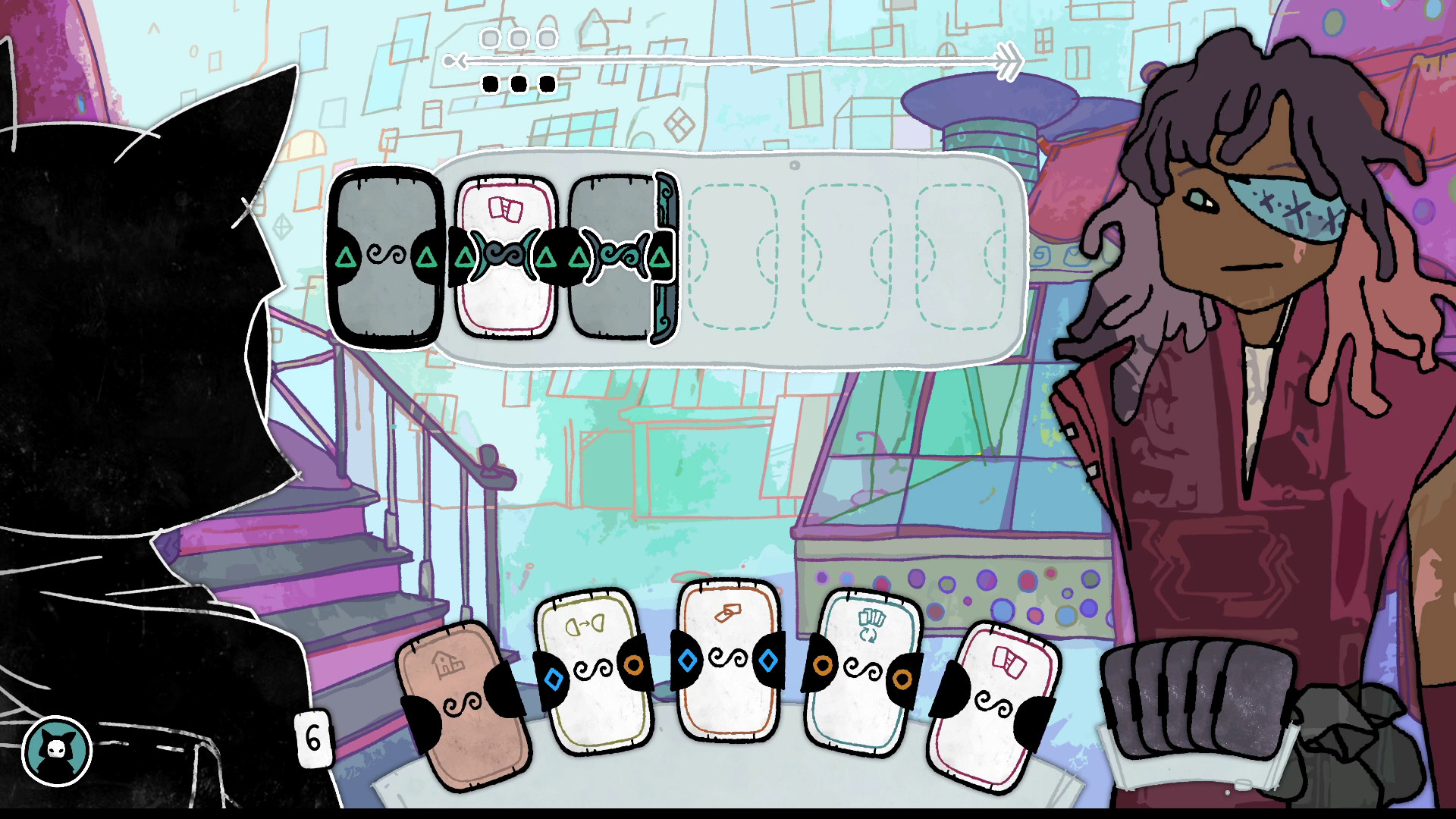
The journey is organized around several expeditions away from home, giving the story a repeating rhythm of departure, discovery and return. On the road, fatigue accumulates as empty cards enter the deck; they have no matching symbols and make later conversations harder to sustain. Returning home clears that travel burden as the goods are brought back to the shop, but the interpersonal changes recorded by the rest of the deck remain. This contrast gives each return a double meaning: it restores the merchant’s ability to travel again while exposing how much their communication has shifted. The player can start another run through the route and make different choices about whom to meet or which cards to keep, opening alternative narrative paths and possible endings. The presentation supports this changing perspective through colorful locales, short character exchanges and a world shaped by environmental pressures without reducing its residents to those pressures. The lasting question is not simply what the merchant can collect, but which ways of relating to others will still feel like home after the road has changed them.
- Developer
- Echodog Games
- Genre
- Narrative card game