
About Sifu
Sifu follows a young martial artist seeking revenge on the five people who killed their family. Fight through crowded clubs, galleries and offices with Pak Mei kung fu, reading enemy attacks and breaking their stance. A pendant lets you rise after defeat, but each death advances your age and makes every later mistake more costly.
Sifu opens with a family murder and follows the surviving child, now grown, on a hunt for the five people responsible. The journey crosses a modern Chinese city, starting in the Squats’ run-down apartments and drug warehouse before moving to The Club, a separate nightclub, then a gallery and an office tower. The route is built around rooms and passages where several opponents can close in at once, so the space matters as much as the person in front of you. Furniture, doorways, ledges and throwable objects can change an encounter: a table can interrupt a rush, a bottle can stagger someone at range, and a narrow entrance can stop a group from surrounding you. The story stays focused on this revenge pursuit and the search for its targets, while the spaces themselves set the pace of each fight.
Combat asks you to manage your own Structure while pressuring the enemy’s. Blocking attacks builds your Structure gauge; if it fills, your guard breaks and you are briefly exposed. Timed parries can deflect a blow, damage an opponent’s Structure and create an opening, while a successful Structure break lets you perform a powerful takedown. You can also avoid high and low strikes by changing your level, then answer with a counter. This gives defense an active role: a clean read can keep a fight moving in your favor, while holding guard through everything risks leaving you unable to respond. The game’s Pak Mei techniques combine quick strikes, sweeps, throws and follow-ups, letting you turn an opening into a sequence rather than trading single hits. Against groups, keeping track of attacks arriving from different directions is part of the same timing challenge.
Focus builds as you fight and is spent on targeted techniques that slow the action while you select a vulnerable point. These attacks can disable or badly hurt an opponent, and skill unlocks add further Focus moves for situations you want to handle differently. You are not limited to bare-handed combinations: weapons picked up in a level, bottles and other loose objects can interrupt enemies, while the surroundings provide ways to leap over tables or knock someone off balance. A weapon changes the reach and pressure of your attacks, but it is another resource to manage during a room rather than a permanent loadout. The combination of Focus, ordinary strikes, defensive reads and objects means that an encounter can turn on positioning and choice of tool as much as raw attack speed.
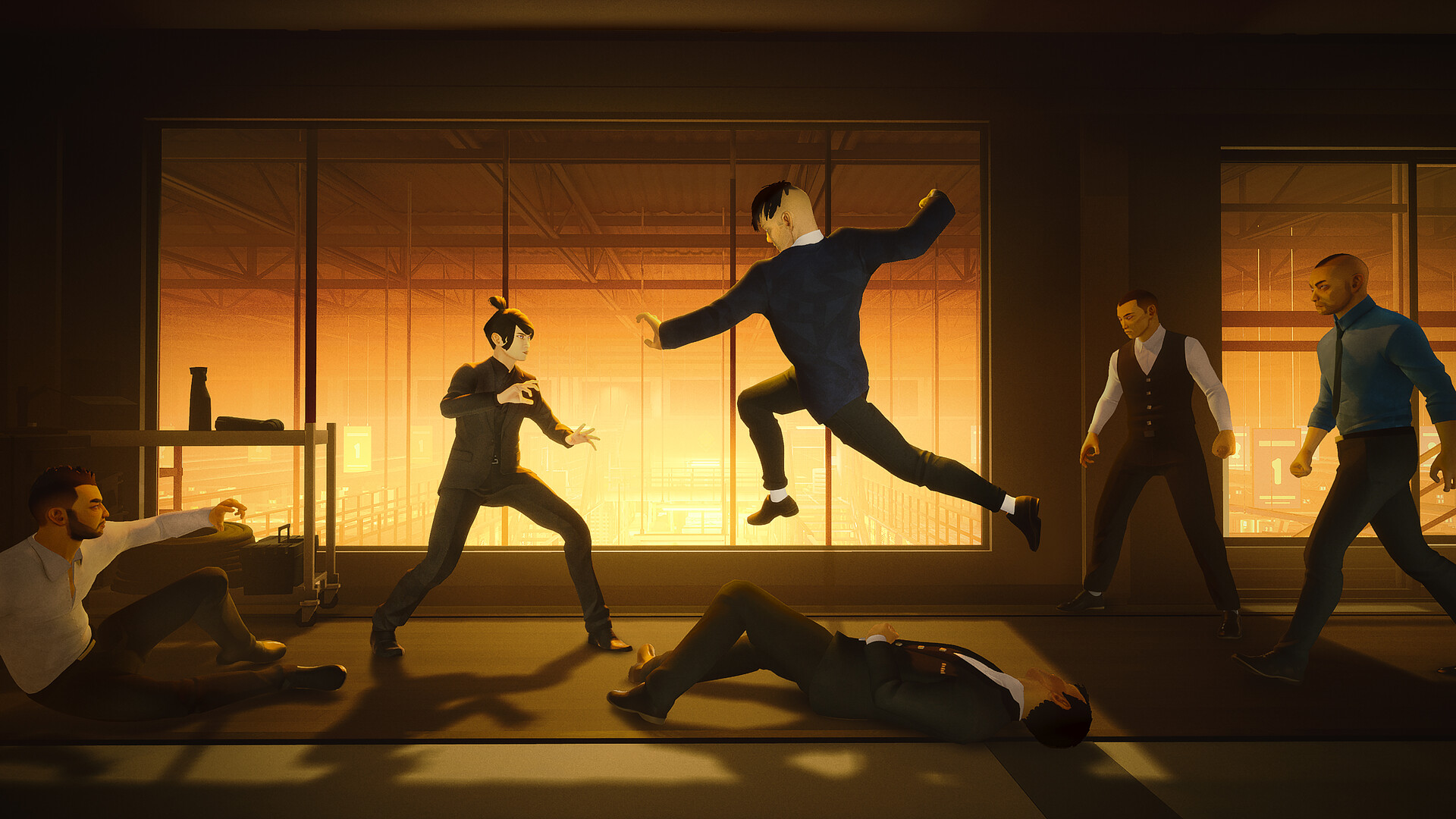
The pendant makes defeat part of the run’s cost. When the character falls, they can rise again, but their age increases according to a death counter that grows with repeated deaths. The older fighter has less room for another recovery, and eventually a final defeat ends the run. Shrines and certain enemy encounters can reduce the counter; finishing a chapter resets it, though the age reached at that point carries forward. Each completed chapter creates a save point at the age you reached, from which you can continue forward or replay that hideout to improve your performance. The death counter reset, saved age and permanent skill unlocks all serve different roles: one clears the accumulated death penalty, one records a chapter checkpoint, and one keeps a move available across attempts.
Between and during missions, the Wuguan and Shrines provide places to build skills and shape a run. Experience unlocks moves such as new combos and counters; paying additional experience to complete an unlock makes that skill permanent for later attempts. Shrines offer a choice of upgrades with different costs or requirements, including boosts to health, Focus capacity, Structure or weapon durability. These upgrades shape the current attempt, and finishing a level saves its Shrine rewards; a game over before completing the level still loses the current-run upgrades. Permanent skill unlocks work separately, broadening the move set across attempts. Your execution and chapter age determine how strong a particular run is, while moves such as counters and follow-ups expand how you can answer an enemy’s pattern. Learning a boss’s timing can matter as much as buying a move, because each new attempt still asks you to recognize the attack and respond at the right moment.
Exploration is woven into the revenge route through the Detective Board, which records clues and keeps track of discoveries such as shortcuts, hidden rooms and doors opened along the way. These findings persist across a game over, giving later attempts a clearer route through places you have already searched. That makes revisiting an early level useful for more than improving combat: you can investigate a branch you missed, find a way through a locked section, or reduce the number of rooms between the entrance and a difficult encounter. The board also gathers information connected to the five targets, so exploration feeds the investigation as well as navigation. You still have to fight through the people guarding each path, but knowing where a shortcut leads can change the length and risk of a return trip.
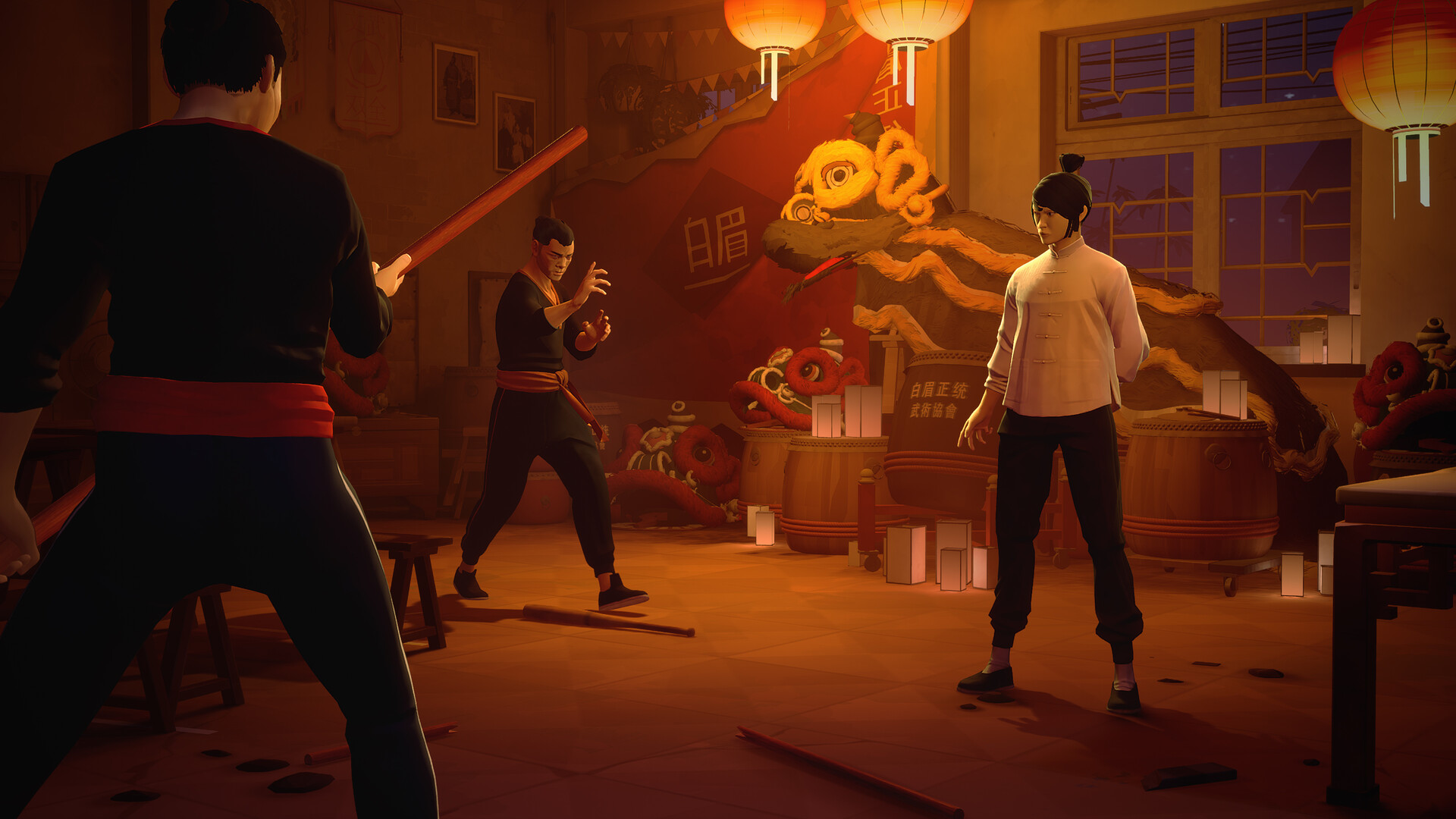
The base campaign is a single-player action brawler built around five story chapters, crowded close-quarters encounters and boss fights. Its rhythm alternates between advancing through a level, learning how a group attacks, and meeting a more demanding opponent at the end of the route. The free Arenas expansion adds a separate challenge suite with five modes, fifteen locations and 120 challenges. These are combat trials outside the revenge campaign, not additional story chapters; the challenge conditions and opponents give the same move set a different test.
- Developer
- Sloclap
- Genre
- Single-player third-person action brawler / martial arts action