
About Sid Meier's Civilization V
Guide a historical civilization from its first settlement toward the modern age in a turn-based strategy campaign. Explore a hex-map, develop cities, research technologies, shape policy, negotiate with rival leaders and city-states, and command armies whose positioning matters. The base game’s strategic framework is expanded by separate Gods & Kings and Brave New World add-ons.
Civilization V begins with a settler and a small military escort on an unexplored map. The player chooses where to found a capital, then directs that society across successive eras, from early technologies toward the space age. The map is divided into hexagonal tiles holding terrain, natural features, and resources. Scouts uncover the fog of war, while settlers establish further cities and workers improve surrounding land. A city claims nearby tiles over time, and its population works them for food, production, gold, science, and other yields. The practical rhythm is a chain of linked decisions: where a city can grow, which resources it can use, what it should build, and how much land can be defended.
Cities turn terrain and population into the infrastructure of an empire. Food supports growth; production completes units, buildings, and wonders; gold supports maintenance and purchases; and science advances research. The technology tree opens successive options, from basic improvements and early military forces to advanced infrastructure, ships, aircraft, and spaceflight. Workers construct improvements such as farms, mines, and roads on appropriate tiles, while a city’s production queue selects the next building or unit. Luxury resources help manage empire-wide happiness, and strategic resources such as iron or horses enable particular military units when connected and available. Because the most useful tiles and resources are spread across the map, expansion is a question of access and logistics as well as city count.
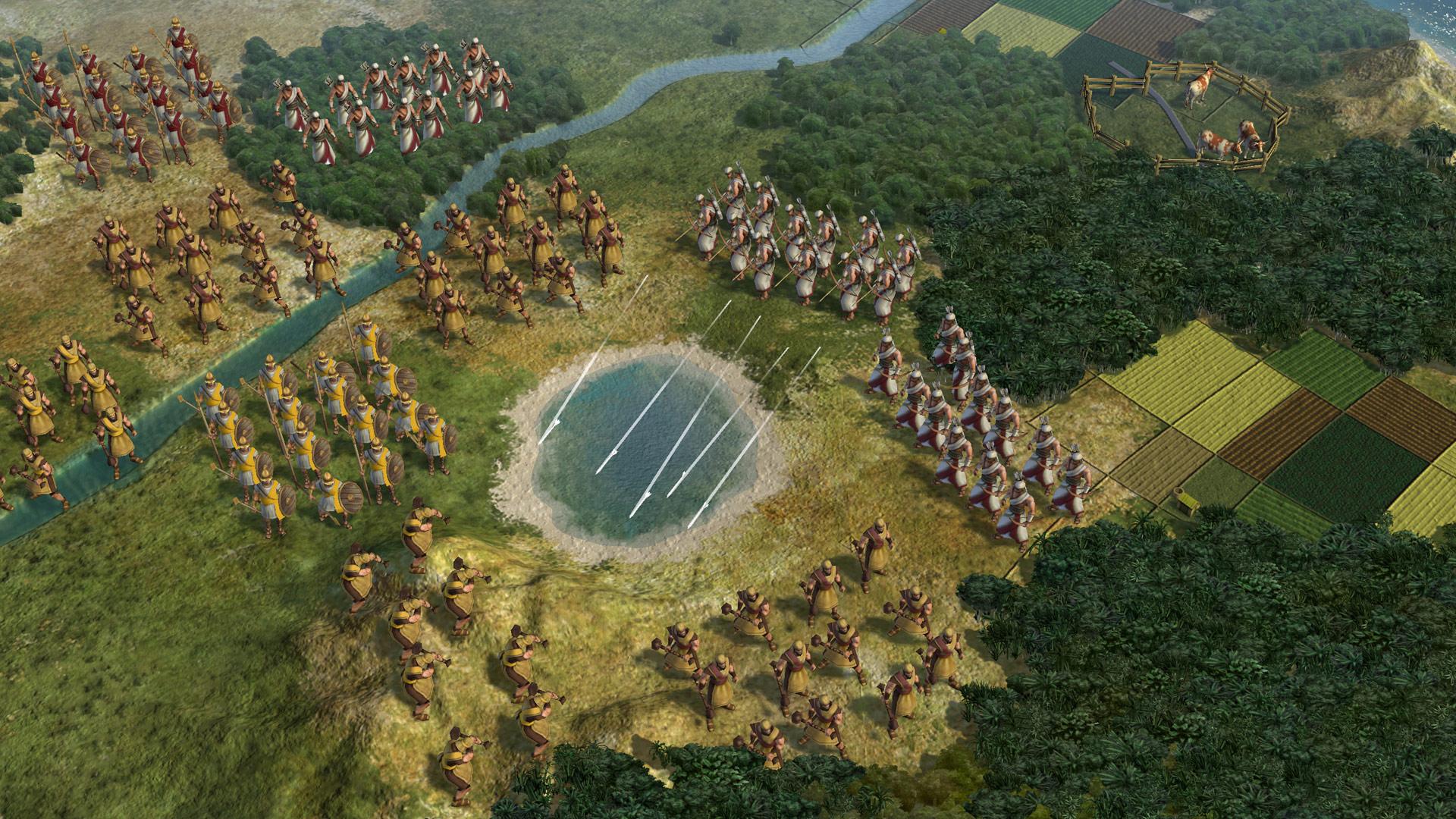
Warfare takes place across the same hexes used for exploration and development. Civilization V’s one-military-unit-per-tile rule means an army cannot simply stack its forces into a single marching column: units block one another, so routes, fronts, and firing positions have to be arranged. Melee units engage enemies at close range, while archers and other ranged forces can attack from a distance if terrain and line of sight permit. Hills, forests, promotions, and nearby supporting units can change a battle’s strength. Cities also defend themselves, and can bombard threats in range. The result is a conflict fought through movement, positioning, and the choice of targets, with damaged units needing time and safety to recover before they can resume a campaign.
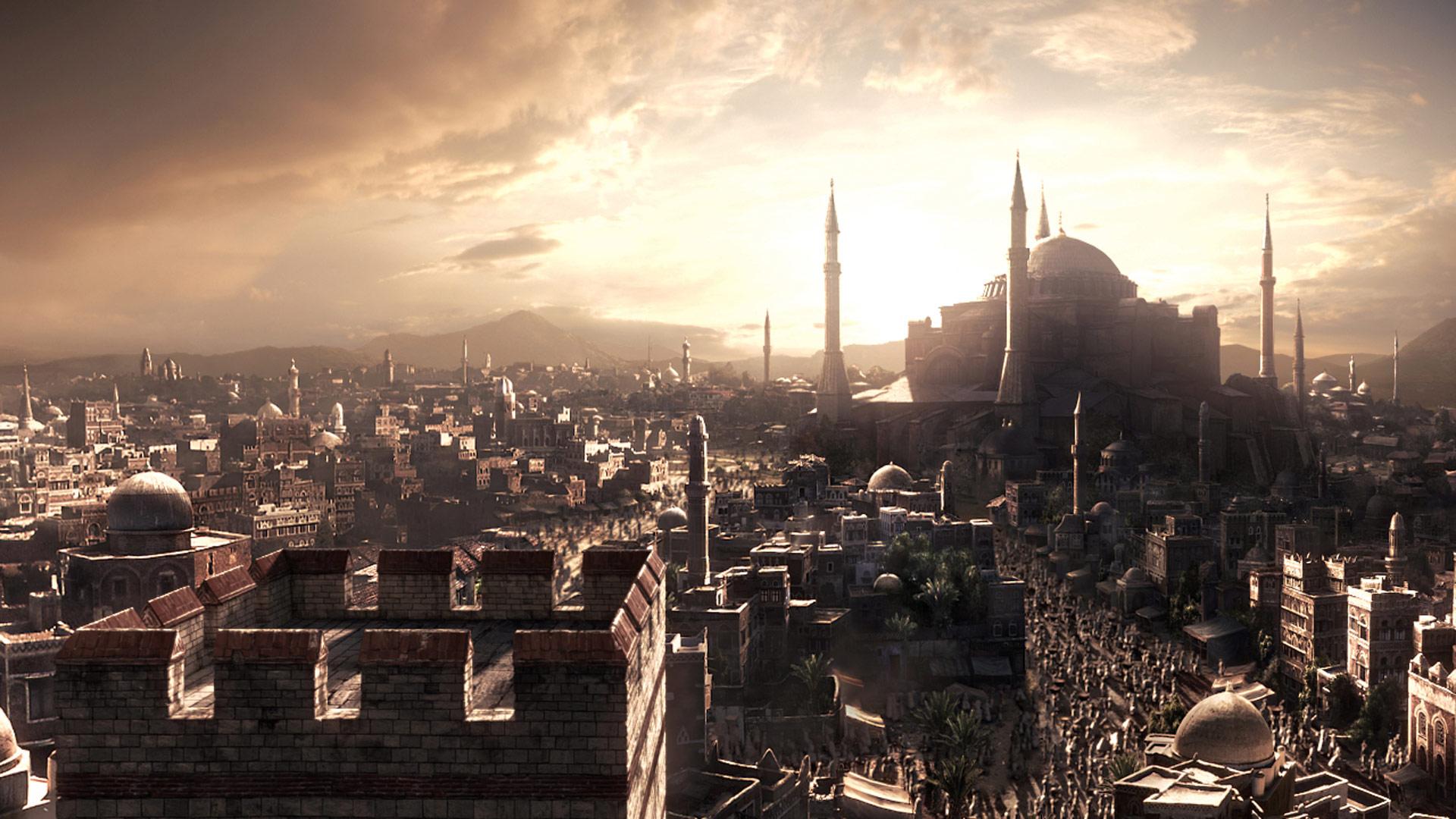
The world contains other historical civilizations, each represented by a named leader, as well as independent city-states. Diplomacy lets leaders exchange messages and negotiate matters such as peace, research agreements, and resource trades. City-states are smaller neighbors rather than full rival empires: gold gifts and requests they issue can affect a player’s influence, while friendship or alliance can bring rewards such as units or resources. Their locations can matter as much as their diplomacy, since a city-state may sit beside a valuable resource, narrow passage, or contested border. Rival leaders also pursue their own agendas, so agreements, competition, and war develop alongside the player’s domestic research and production choices.
Culture provides another progression track through social policies. As the civilization accumulates culture, the player adopts policies from branches such as Tradition, Liberty, Honor, Piety, or Patronage. These are lasting choices with different effects: Tradition supports a compact realm, Liberty helps a growing network of cities, Honor shapes military development, and Patronage improves relations with city-states. Culture accumulates in the empire and unlocks the next policy when enough is generated. Science and military power offer different paths to victory, while diplomatic outcomes involve international support. The precise victory systems change in later content, so the expansion distinction matters when describing the late game. For instance, completing Liberty grants a Great Person, whereas completing Tradition improves growth across its cities; the choice helps frame an empire around wider settlement or a stronger core.
The title’s roster pairs familiar historical figures and civilizations with distinctive national units and abilities. For example, Egypt is led by Ramesses II and Greece by Alexander; their identities are expressed through their starting abilities and available unique units rather than a separate campaign story for each. A standard game is generated around a map and a set of competing powers, with the player balancing city development against scouting, defense, and diplomacy. Single-player play can include computer-controlled rivals, and multiplayer lets human players contest the same strategic landscape. The changing arrangement of terrain, resources, city-states, and opponents gives each match a different sequence of expansion and conflict.
The base game should be distinguished from its two major expansions. Gods & Kings adds religion and espionage, alongside new civilizations and changes including enhanced naval warfare; those systems are not part of the original base rules described here. Brave New World adds international trade routes, ideologies, a World Congress, and a revised cultural victory built around tourism, great works, and archaeology. Its trade routes are also separate from the base game’s ordinary resource and diplomatic exchanges. Both expansions extend the underlying turn-based city, technology, and map systems, but references to religion, spies, tourism, archaeology, ideologies, or the World Congress describe added content rather than features of the base game alone.
- Developer
- Firaxis Games
- Genre
- Turn-based strategy