
About Shardlight
In a bomb-scarred city ruled by the Aristocrats, mechanic Amy Wellard takes a dangerous government job for a chance at the vaccine she needs to survive Green Lung. A message found in the ruins leads her beyond the lottery system and into a search for a cure, bringing her face to face with the people and beliefs shaping the city.
After the bombs fall, Shardlight’s city is organized around scarcity. Disease, hunger and damaged infrastructure shape ordinary life, while the ruling Aristocrats control essential resources and hold authority without meaningful challenge. Green Lung is a deadly illness, and a vaccine is distributed through a lottery for people who cannot simply obtain regular doses. Amy Wellard is a young mechanic with the disease who takes government work to qualify for that chance. She also believes a cure may exist and is prepared to search for one. The adventure’s opening brings her into a dangerous job among the ruins, where completing practical work exposes her to a message that sends her toward a much wider conflict. Amy’s needs remain personal even as the world around her becomes political: finding treatment is not an abstract mission when each decision concerns her own survival. Rather than ask the player to manage a settlement or a faction, the game follows Amy’s path through places and relationships. She questions residents, searches for useful materials and tries to understand who benefits from the system that governs them.
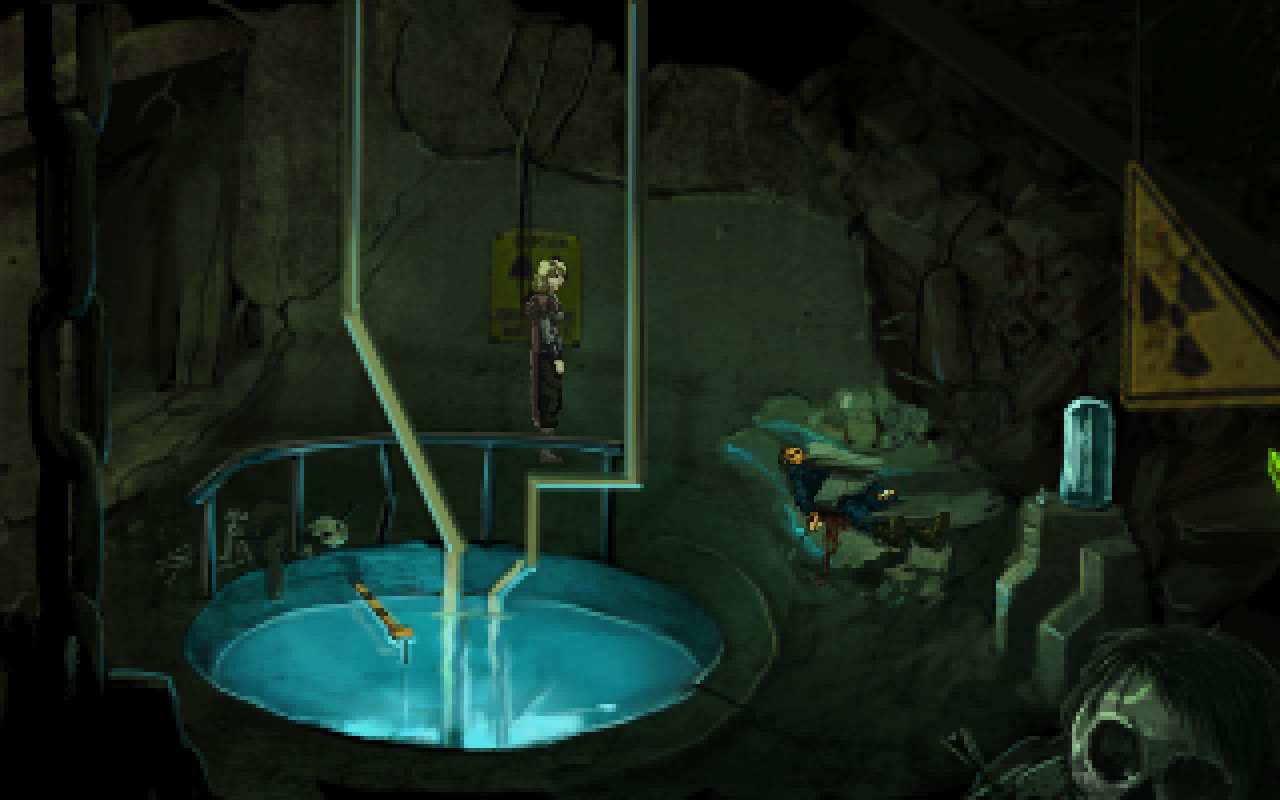
Amy’s first assignment makes the game’s survival economy concrete. Her lottery job sends her below the city to restore a generator in a sewer, where she encounters a man trapped by fallen masonry. His request that she deliver a letter gives the task a second purpose: the job that was meant to secure a chance at a vaccine becomes an entry into a story about people resisting the Aristocrats. The shift grows from an ordinary act of repair rather than a heroic calling. Amy is a mechanic, so practical problems and improvised equipment are part of how she engages with the world. Above ground, a shanty-town market gives the ruined setting more texture than a field of empty buildings: residents trade, talk and maintain social routines amid the debris. The game’s locations are linked through the clues and errands that draw Amy from one person to another. Her search for treatment therefore intersects with relationships and information, but her illness continues to give that broader investigation a direct, human stake. Repair work serves both as Amy’s trade and as her way into events larger than the initial assignment.
The Aristocrats are a ruling oligarchy, and their control of the vaccine makes the city’s class divide part of the main problem rather than just background. People in the poorer districts can perform hazardous jobs for a lottery ticket, while those with power can secure regular protection. Amy encounters this hierarchy through places and conversations as well as through the people who enforce it. Tiberius, one of the leaders associated with the Aristocrats, stands out in the city’s visual language: his elaborate noble clothing and mechanical mask distinguish him from ordinary residents and lower-ranking officials. The disparity between worn streets and insulated elite spaces gives political power a visible form. The story does not reduce every resident to a representative of a class, however; Amy’s route also runs through individuals with their own needs, loyalties and worries. As she follows the letter’s lead, the question becomes how a person can pursue a cure while navigating a system that uses access to treatment to keep the population compliant. The contrast is expressed through encounters rather than through a player-run political simulation.
The city contains more than a simple conflict between government and resistance. Amy meets people whose beliefs have formed around the disaster, including a group that treats ravens as powerful otherworldly beings and performs rituals around the sick and desperate. That community offers another way scarcity can be turned into control: fear and superstition can shape people’s actions when disease and hunger have already narrowed their choices. The Aristocrats’ authority and the raven-focused cult do not operate in the same way, but both influence how residents understand danger and hope. Amy’s investigation moves through these different social spaces by talking with people and learning why they act as they do, rather than by presenting a single map-wide faction system for the player to manage. The people she meets can describe the same broken world from contrasting positions. Their accounts connect the public crisis to private decisions, giving the story room to explore how belief, loyalty and survival coexist in a city where reliable medicine is scarce. These encounters broaden the stakes beyond the vaccine without removing Amy’s immediate need for it.
Shardlight uses a traditional point-and-click structure: Amy walks through fixed scenes, inspects objects, talks with characters and collects items that can be used to change the environment or solve a practical problem. Progress often depends on carrying information between a conversation and a location. A wide salt field and its abandoned locomotive, for example, provide a distinct setting where ordinary materials such as salt, a steel bucket and wood become objects to consider in combination. These are not abstract tokens; the way an item is used needs to make sense within the scene and Amy’s mechanical perspective. The player also revisits places as new clues or needs emerge, and a conversation may supply the missing context for something already seen. The map of places and the objects available in them change as the investigation moves forward, giving each return a reason. The interface asks for careful attention to foreground objects, dialogue and the purpose of whatever Amy has picked up, while the plot keeps the sequence of errands tied to her search for treatment and the letter’s consequences.
Some of the more distinctive puzzles turn observation into a small act of research. In a chalkboard sequence, Amy studies written material, recognizes that calligraphic signs encode a message, and uses the board to work out the relevant code. Another problem asks her to make a carbon dioxide compound: the clue comes from a chemistry textbook, and solving it means finding the ingredients and equipment needed to follow the recipe. Both examples use knowledge discovered in the world, then require the player to connect it with a specific object or location. The puzzles are grounded in Shardlight’s damaged setting, where books, boards and improvised equipment give practical clues. A crossbow appears in particular situations, but it is not the central loop of an action game; exploration, conversation and item-based problem solving carry most of Amy’s progress. The chemistry and writing puzzles show two different kinds of deduction: one translates signs into meaning, while the other applies a recipe to available equipment. Smaller environmental interactions also turn tools into one-off solutions, linking Amy’s practical skill as a mechanic to her work in the ruins.
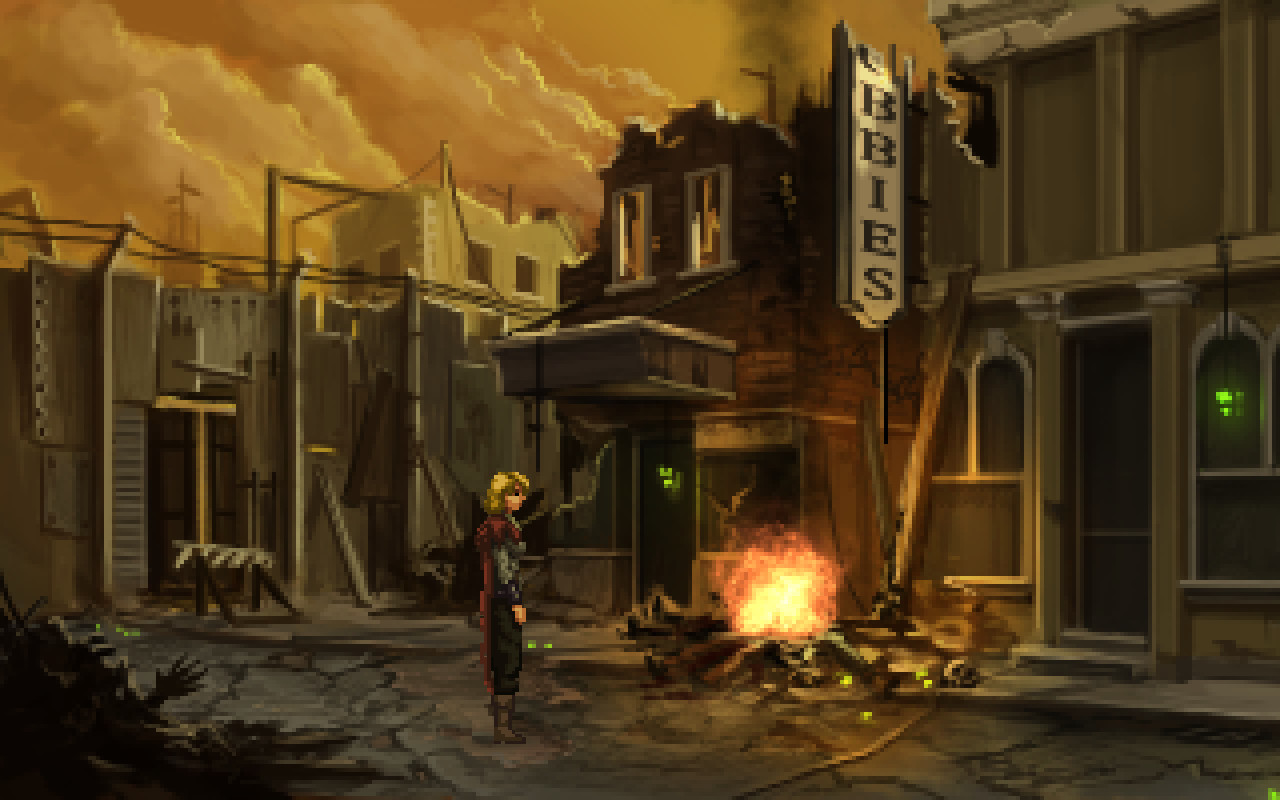
The presentation uses hand-drawn pixel-art scenes, character portraits, voice acting and a score to give the damaged city a recognizable palette and social character. The sewer, market and open wasteland each make different conditions visible: confined repair spaces, improvised public life and the long reach of ruined infrastructure. Background details distinguish districts and suggest how people have adapted, while voiced conversations keep Amy’s route centered on the residents she encounters. The Steam PC edition has a separate demo, and the game also appears in a special edition with additional items such as concept art, soundtrack and voice-over videos. An iOS release is also available, while the PC game is sold through Steam and GOG and is compatible with Windows, Linux and macOS. The central progression stays focused on Amy’s movement between people and places, her handling of everyday objects and the widening consequences of the first job. Her search for a cure remains linked to the structures that decide who gets to live.
- Developer
- Wadjet Eye Games
- Genre
- Post-apocalyptic point-and-click adventure