
About Shadowrun: Dragonfall - Director's Cut
In 2054 Berlin, a shadowrunner joins a battle-scarred crew in the Flux State, where magic, cyberware and corporate power share the same streets. A mission tied to rumors of the dragon Feuerschwinge draws the team into a conspiracy, while jobs, dialogue and tactical encounters shape how the crew responds.
Shadowrun: Dragonfall – Director’s Cut is the standalone edition of the Dragonfall campaign, a story-driven role-playing game set in a future where technology and magic coexist. In 2054, Berlin sits inside the Flux State, a region described as stable anarchy: the state has fractured, power is contested, and personal connections can matter as much as money. Elves, trolls and other metahumans live among humans, while corporations exert influence through wealth and force. The old Dragonfall refers to the destruction attributed to the great dragon Feuerschwinge decades earlier. The player’s shadowrunner is drawn into a new conspiracy after a job links the team to rumors that the dragon may not be gone. The premise stays focused on this campaign and its crew rather than requiring the earlier Shadowrun Returns story.
The player operates with a small crew of runners whose different outlooks, histories and abilities affect how missions can be approached. The Kreuzbasar serves as a Berlin hub between field jobs: conversations with the crew and people around the market add context to the city, while contacts and services connect story progression with preparation. Mission briefings establish a job, and investigation and dialogue can reveal extra context or routes through a situation. Conversations use character attributes and etiquette options for certain checks; a fitting social skill can open a line of questioning or offer a way to avoid some violence. These checks are selective, so a character built around talking still needs a practical role when a job turns into a fight. The Director’s Cut expands the crew’s personal stories through additional missions, making time between assignments part of the campaign’s character-focused structure.
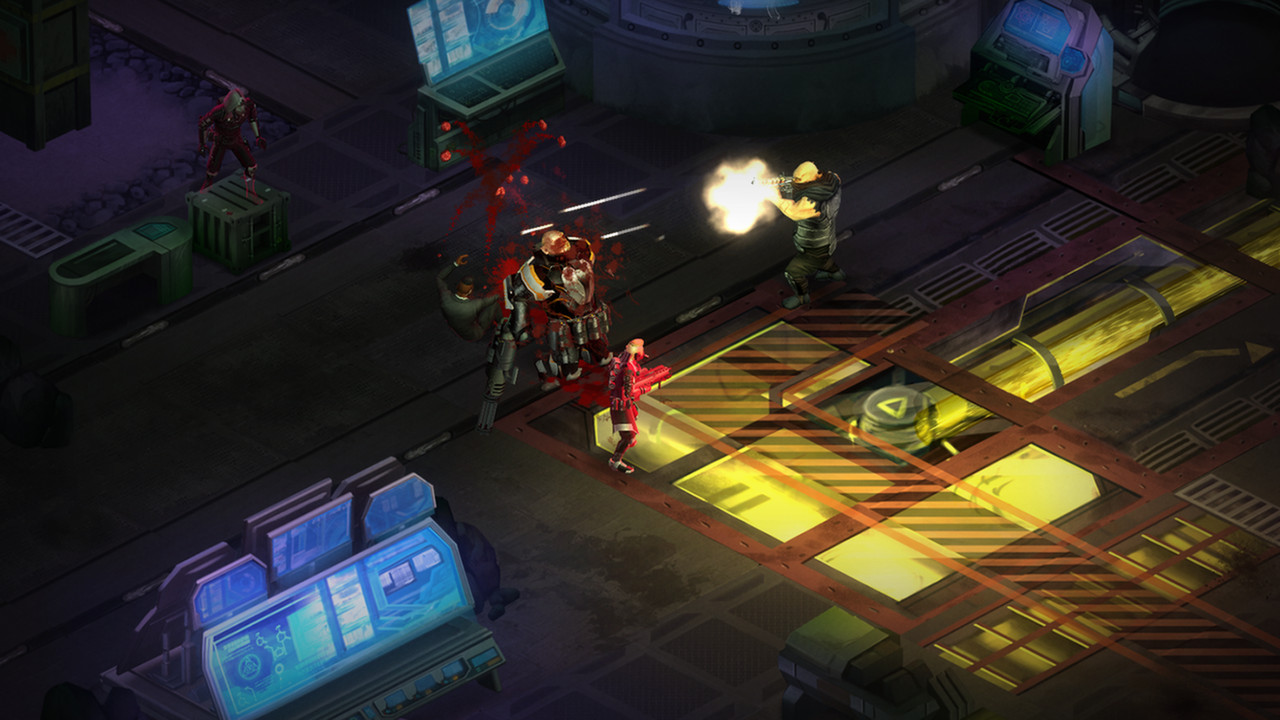
Combat takes place on an isometric battlefield in alternating team turns. Each runner has an action-point pool spent on moving, attacking, using spells, or activating items and abilities; the whole player team acts before the opposition responds. That makes positioning and action order central: moving to cover can reduce exposure, while leaving a target without cover can make it easier to hit critically. Enemies also use armor that reduces damage, so attacks with armor-piercing properties or a different damage source can matter against a protected target. The team can concentrate fire to remove an immediate threat or divide actions to control several positions. Dragonfall’s Director’s Cut specifically revises armor, cover, damage and enemy behavior, so choosing where to stand and which action to spend is part of the combat model rather than decoration around a conventional shooting exchange.
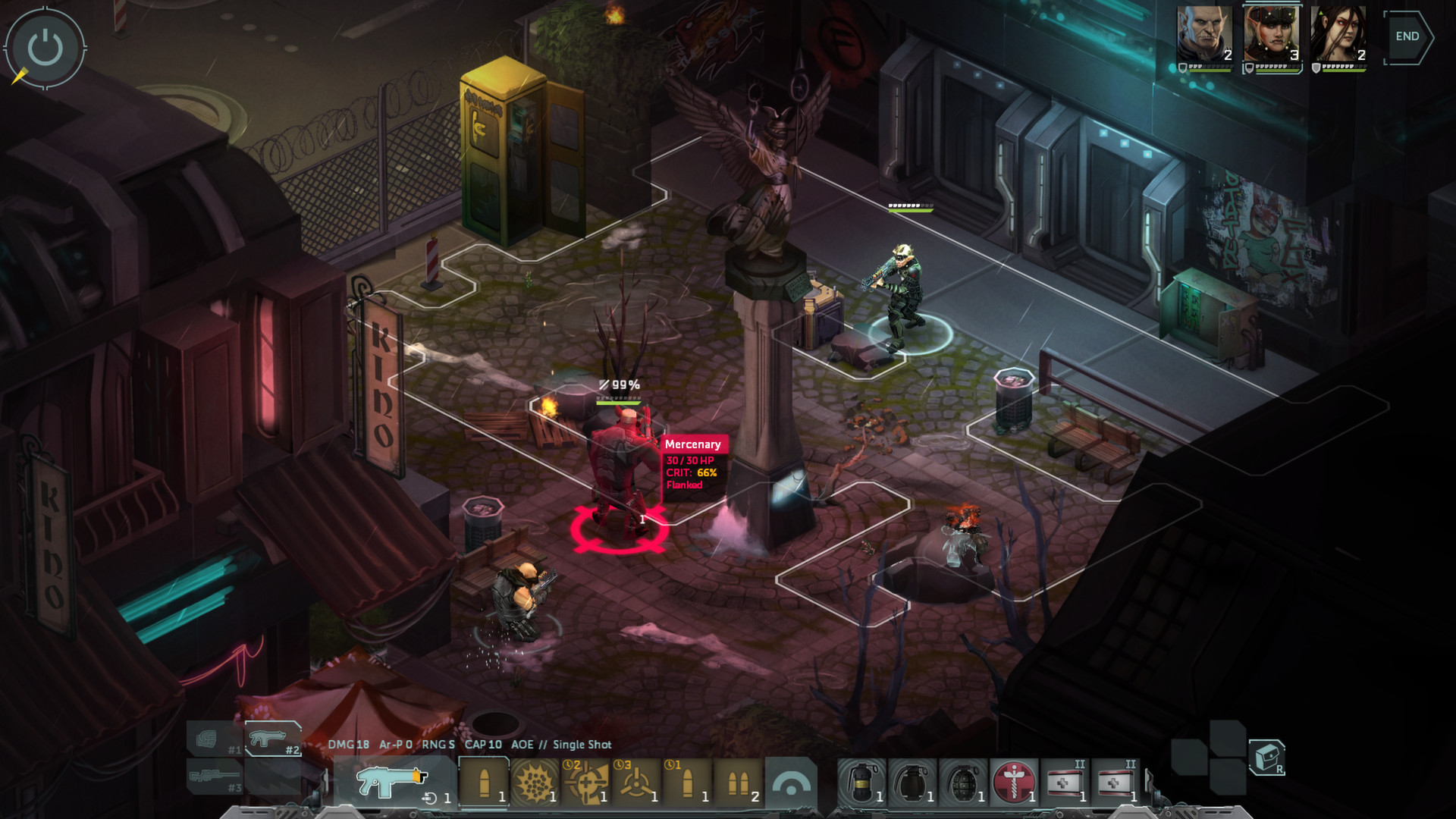
Character growth uses a classless skill system. A starting archetype points toward a role, but the player can invest in other capabilities over time: weapon specializations, physical abilities, spellcasting, summoning, or technological skills such as decking and rigging. Karma earned from completing missions is spent on attributes and skills, so a focused build gains reliable strengths while broadening every skill can leave a character without a clear specialty. Dialogue checks draw on attributes such as Charisma and associated etiquette choices, linking character development to conversations as well as battle. Equipment and cyberware provide another layer of customization, with weapons, armor and implants available through the campaign’s services. Cyberware has a meaningful trade-off for spellcasters because installing it reduces Essence, which affects magic use; developing a runner therefore involves balancing the advantages of technological enhancements against the resources used by magical abilities.
The setting’s magical and technological roles produce distinct tools in missions. Mages use spells for direct effects and battlefield control; shamans use conjuring to call spirits; physical adepts invest in Qi abilities that enhance their own actions. Deckers use a cyberdeck to enter computer systems, where matrix sequences form a parallel tactical space and can provide access or interfere with security. Riggers can control drones, adding a remote option to encounters and interactions with machinery. The team’s specialists can cover some of these functions, while the player character’s own skills determine which checks and opportunities are available directly. This mix means a run can shift from conversation and exploration into a conventional firefight, a magical response, or a computer-system problem without leaving the same Shadowrun world.
The Director’s Cut packages the campaign as its own Steam title and adds five missions, including three tied to companions’ personal stories, along with alternate endings, interface changes, team customization and a revamped combat system. In the campaign loop, the player accepts work, explores mission spaces, speaks with contacts, handles objectives and fights when needed, then returns to the crew’s broader story. Some objectives and conversations can change the immediate circumstances of a job, while the branching narrative carries consequences across the campaign. The result is a single-player tactical RPG structured around a specific Berlin crew and a rising conspiracy, with character development and squad composition offering several approaches to its encounters. Its campaign is Dragonfall itself, rather than the Seattle story from Shadowrun Returns or a bundled trilogy campaign.
- Developer
- Harebrained Schemes
- Genre
- Single-player, story-driven tactical computer role-playing game