
About Shadow Warrior 3: Definitive Edition
Shadow Warrior 3: Definitive Edition follows Lo Wang and Orochi Zilla across a demon-infested Japanese fantasy realm as they pursue an ancient dragon Lo Wang accidentally released. Its campaign combines gunfire and katana combat with grappling, wall running, double jumps and finishers that turn enemy weapons against the horde. The Definitive Edition adds several replay and challenge modes.
Shadow Warrior 3: Definitive Edition is a first-person action shooter set across a fractured realm inspired by Japanese myth and infused with samurai-era magic and technology. Lo Wang, a fallen corporate shogun, is joined by Orochi Zilla, his former nemesis, in an attempt to recapture an ancient dragon that Wang accidentally released from its prison. Their pursuit takes them through landscapes overrun by demons and yokai, including temples, bridges and other places damaged by the dragon’s arrival. The campaign follows the effort to track the creature and confront the threat it poses, with the dragon hunt supplying the narrative thread between its combat encounters. At the Dragon's Nest, Wang and his companion seek an egg that can be weaponized against the dragon.
The central play loop puts ranged weapons, katana strikes and movement together inside combat arenas. Lo Wang carries a blade alongside firearms such as the Sidekicks machine guns, a shuriken launcher and the Basilisk, a chargeable railgun-like weapon. Switching between shooting and melee is part of staying responsive: the katana can attack at close range, while guns cover enemies or positions that are harder to reach. Demon types ask for different responses. Hattori fighters can deflect bullets with their swords, fast-moving Slinky Jakku are easier to track with the Sidekicks, and floating Seeking Shokera give the Basilisk a clear target. The game introduces new weapons as the campaign progresses, and the arena encounters bring several demon types together so that movement, aim and weapon choice are used in combination rather than as isolated systems.
Finishers connect combat to a second resource and temporary enemy-derived weapons. Collecting finisher orbs fills a charge that can be spent to execute eligible enemies. The charge required depends on the target, and the reward varies with the enemy: a defeated foe can provide a Gore Tool, a weapon or a temporary buff. For example, finishing an ice-based enemy yields its brain as a freeze bomb, while a Hattori can yield the Blade of Hattori. These rewards change the immediate fight by letting Lo Wang turn part of the enemy arsenal against the surrounding group or use a short-lived effect to manage danger.
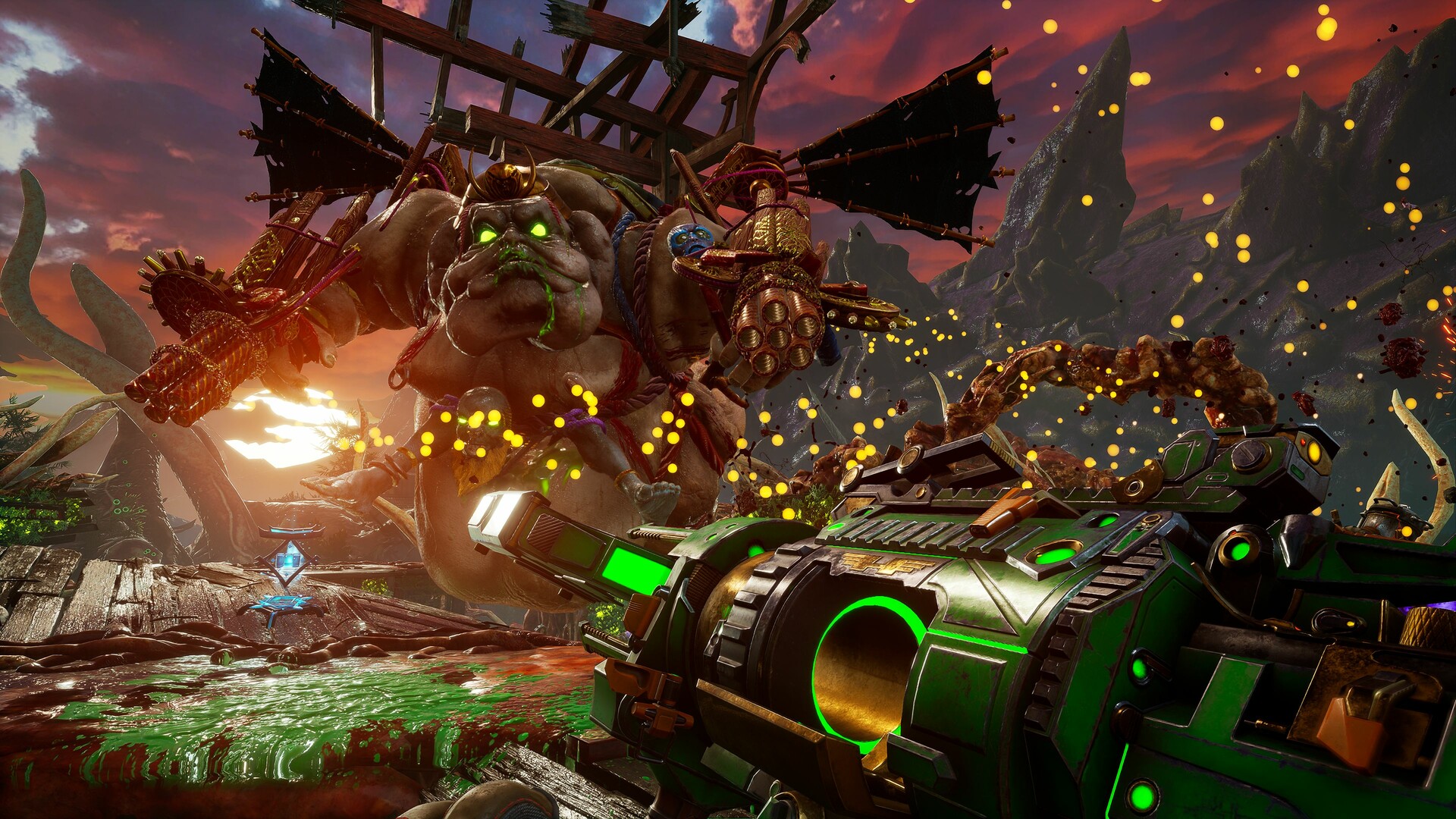
Health and ammunition are tied to the way enemies are dispatched, encouraging the player to alternate between weapons and the katana. Katana kills yield ammunition for ranged weapons, while firearm kills can make enemies drop health. That exchange supports a close-range and long-range rhythm: sword attacks help replenish bullets, and gunfire creates opportunities to recover health. Finishers add their own tactical choice because using one spends charge but may remove a dangerous opponent or provide an item that changes the encounter. The player therefore tracks position, the current weapon, health, ammunition and finisher charge at once.
Lo Wang’s mobility tools work both on the route through a level and inside battle spaces. He can double jump, dash in the air, slide, run along walls and use a grappling hook to swing across gaps or pull himself toward a target. The hook can also attach to environmental objects such as explosive barrels, allowing them to be moved into a useful position. Arenas contain hazards that can be triggered, and the player can combine those devices with movement and Chi-Blast, a push that can send explosive objects or enemies toward danger. These options make traversal part of combat: changing height or direction helps evade attacks while creating different angles on the group.
Campaign progression uses upgrade orbs and challenges rather than experience awarded for every kill. Silver and purple orbs improve weapons and Lo Wang respectively; some are found along the route or away from the main path, while others come from completing combat objectives such as landing headshots or using environmental traps. Weapon upgrades alter guns, and character upgrades improve abilities and resources, including options that affect health or ammunition drops. Ammunition pickups are shared across the weapons in the inventory, so capacity improvements can benefit more than the gun currently in hand and can support the full ranged arsenal. Finding or earning these points gives the player reasons to look through a level and vary how enemies are dispatched, while the Chapter Select menu in the Definitive Edition later allows completed sections to be revisited for missed upgrade points.
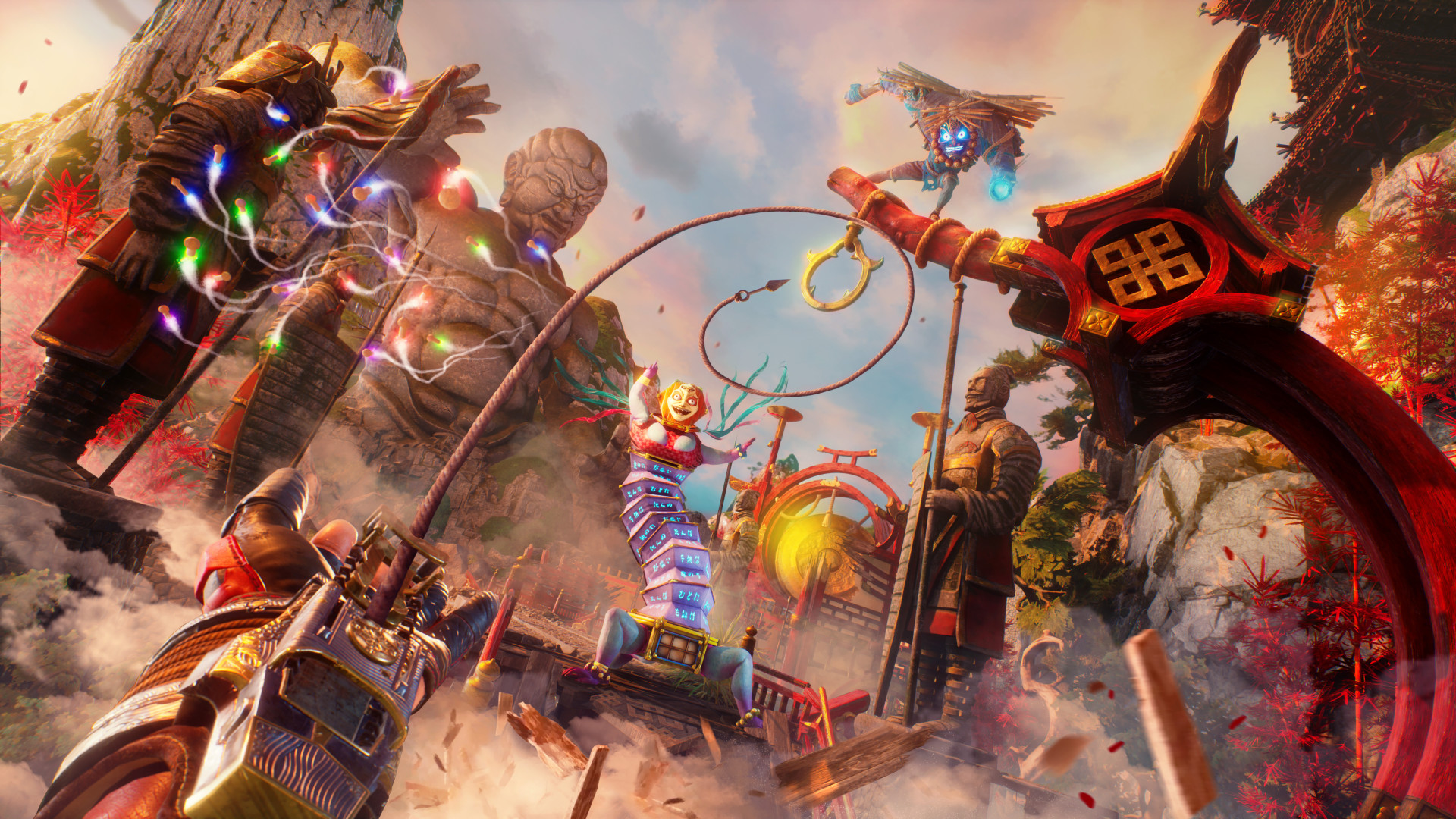
The Definitive Edition adds distinct ways to continue after and alongside the campaign. Survival Mode unlocks after finishing the game and places Lo Wang in three new battle arenas against waves of enemies, with weapon skins available for completing its challenges. New Game Plus carries additional challenges, rewards and weapon skins into another run. Hero Mode imposes a limited supply of lives, replenished by performing finishers; exhausting them ends that run. Hardcore is a separate, more punishing difficulty, while Chapter Select provides access to campaign chapters in a chosen order. These modes extend the base dragon-hunt campaign with replay, arena survival and higher-stakes rules.
- Developer
- Flying Wild Hog
- Genre
- Single-player first-person action shooter