
About Shadow Warrior 2
Five years after the first game, Shadow Warrior 2 follows Lo Wang as a mercenary in a corrupted world where humans and demons live side by side. Missions combine first-person gun and blade combat, magic, equipment loot and optional online co-op for up to four players across shifting, partly procedural environments.
Five years after Wang’s actions in the previous game, the boundary between the human world and the Shadow Realm has broken down. The result is a world where demons and people coexist uneasily, with the neon cybernetic metropolis of Zilla beside wildlands that change as the realms press against one another. Lo Wang has left his former corporate role behind and works as a hired sword for local Yakuza clans, living on the edge of the city and taking dangerous jobs for survival. A mission involving a brilliant young scientist named Kamiko goes wrong and draws him into a wider struggle involving his old enemy Orochi Zilla and demonic forces that have become active in the human world. The story returns to Wang’s irreverent voice and supernatural conflicts, but places him in a different role: he is a mercenary navigating rival human and demonic interests rather than an employee sent to acquire the Nobitsura Kage.
The campaign is arranged around missions and side quests that send Wang into regions of the altered landscape. The player accepts objectives, travels through an area, fights through hostile groups and completes the task before continuing the larger chain of events. A mission can include a primary objective alongside optional work, and its terrain is assembled with procedural variation, so paths and landscape arrangements can shift between visits. The areas are not a single seamless open world: the mission structure provides the frame, while the changing routes and encounter spaces alter how a particular run unfolds. Wang can undertake the campaign alone or enter online co-op with up to three other players. In co-op, each participant brings their own character progression and equipment into shared campaign action, while the missions and enemies give the group common goals. The game is therefore built to support both a solo route and coordinated four-player combat without changing its basic mission loop.
Combat expands the first game’s sword-and-gun pairing into a much larger equipment roster. Wang can carry a selection of eight weapons at once, drawing from blades and firearms that range from katanas, short swords, crescent blades and hand claws to shotguns, rifles, launchers and stranger designs. Weapons have distinct firing or attack behavior, so the player changes tools as enemy distance, toughness and number change. The rapid reach of a blade, the close spread of a shotgun, and the sustained fire of an automatic weapon solve different immediate problems. Movement is also more acrobatic: double-jumping and dashing help Wang cross gaps, evade attacks and reposition while fighting. This mobility encourages the player to keep moving through an encounter rather than staying planted behind one weapon. Magic remains part of the same combat vocabulary, giving Wang control and area effects alongside direct damage from guns and melee attacks.
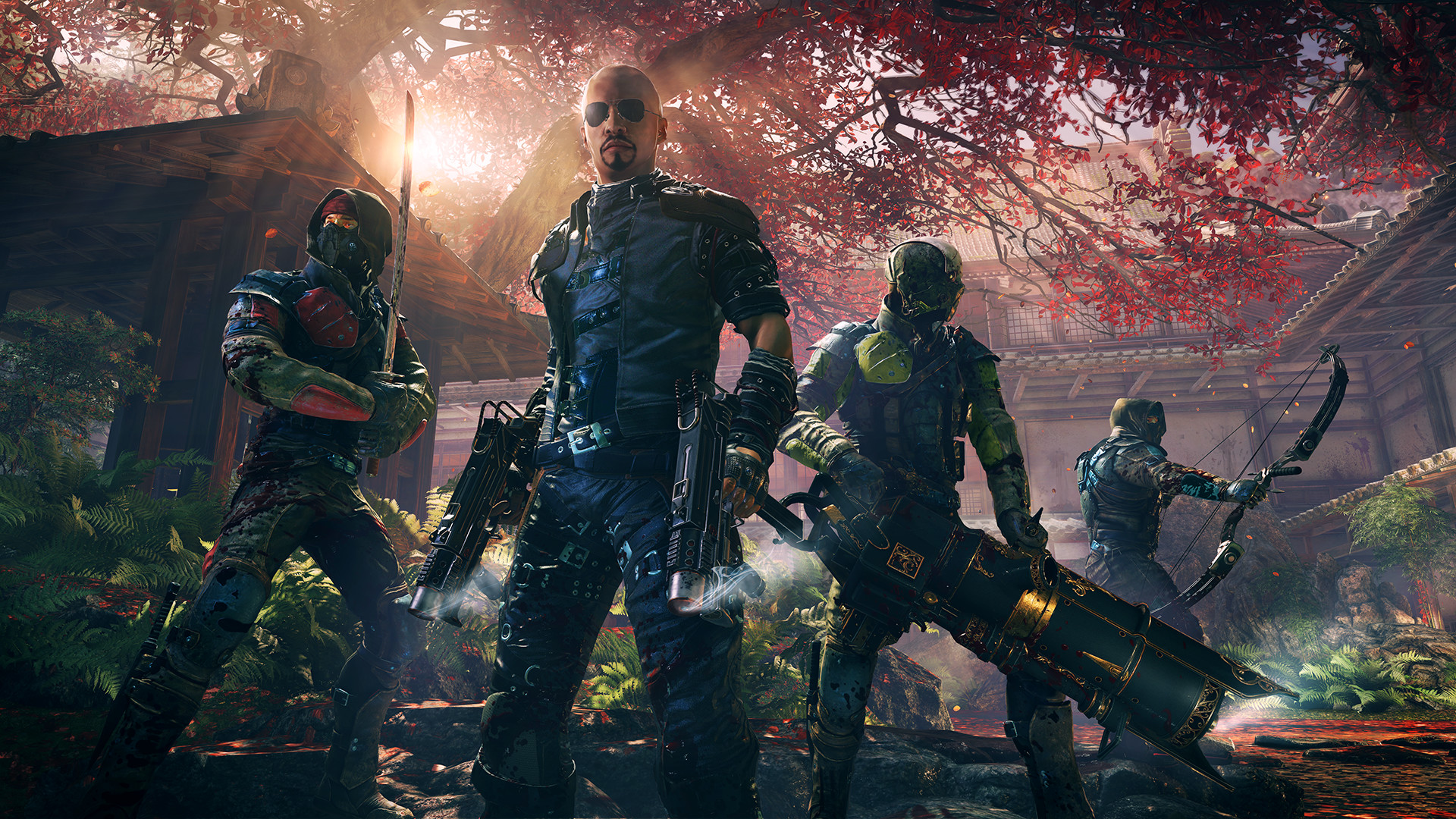
Finding a weapon is only the start of its progression. New weapons can appear as mission rewards or enemy loot, and the game uses scaled statistics to distinguish many drops. Up to three upgrade gems can be fitted to a weapon, changing its performance with bonuses such as altered damage, elemental effects, reload speed or a different firing mode. Those slots make loadout decisions concrete: a player can specialize a gun toward a damage type or add a practical improvement, then move gems among weapons as the needs of the current mission change. Wang also gathers armor, amulets and other equipment that raise his capabilities, so the inventory extends beyond the weapon rack. Replacing a drop, comparing its properties and adjusting a weapon’s gems are regular parts of progression between fights. The combination of weapon variety and modular stones makes equipment configuration a central loop rather than a single upgrade bought once and forgotten.
The broader character progression uses skill points and Karma to develop Wang in several directions. Leveling awards a skill point that can be spent on upgrades grouped under Life, Warrior, Powers and Resource. Life improvements can raise maximum health or increase the chance that defeated enemies drop medkits; Warrior upgrades strengthen sword techniques such as the thrust or circular attack; Powers improve supernatural abilities such as Healing Flame, Vanish or Chi-Blast; Resource skills can affect ammunition or the collection of drops. These upgrades let a player emphasize durability, magic, melee or supplies, and they sit beside the weapons rather than replacing them. Loot and skill investment therefore reinforce one another: gems change an individual weapon, while skill points improve Wang’s broader capabilities. Karma is also collected as part of progression, alongside amulets and armor, and the game’s menus track those resources with the growing equipment inventory. Preparing for a mission includes deciding which weapons and bonuses are worth carrying into its changing terrain.
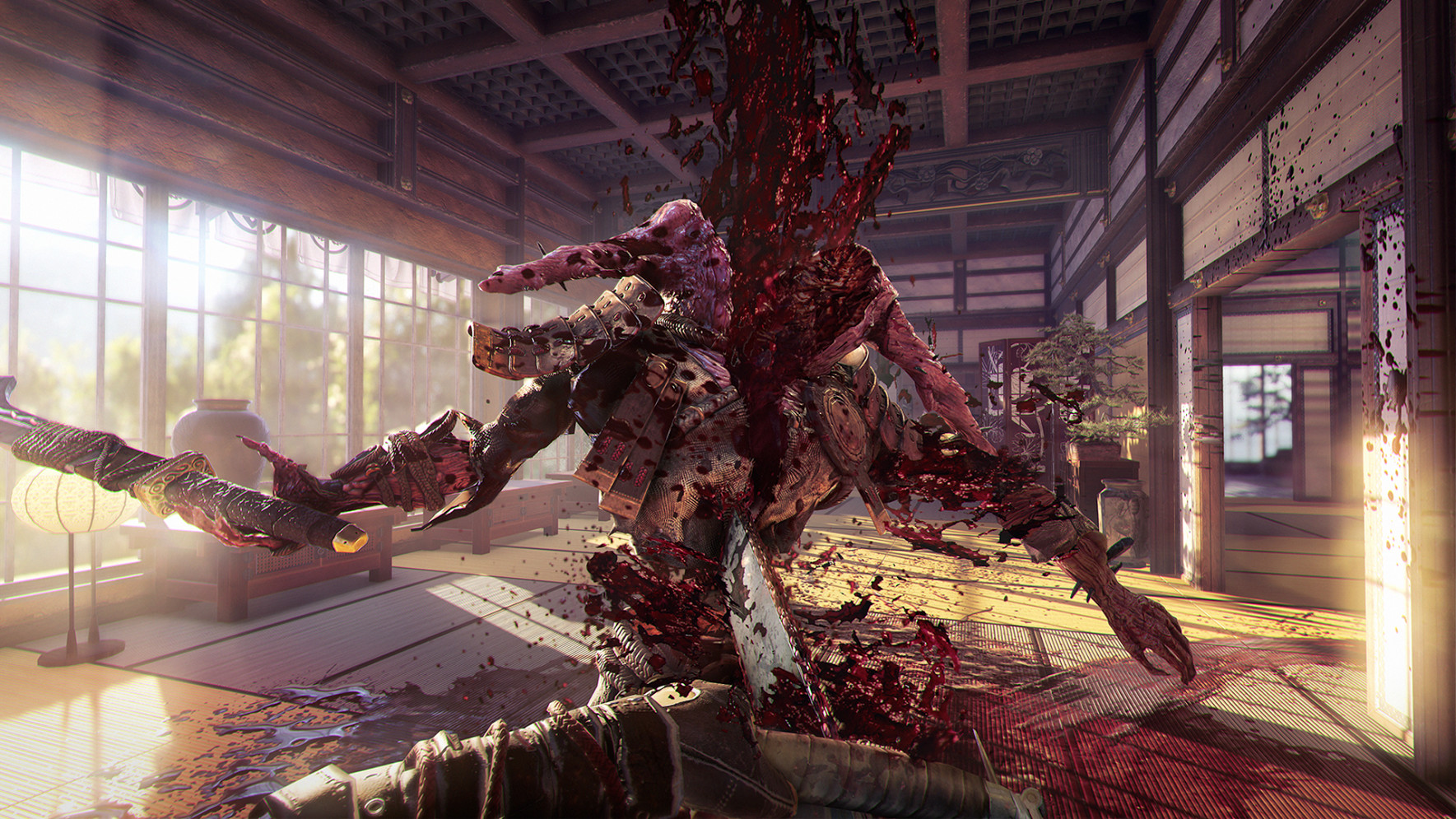
Enemies are affected by the same emphasis on choosing the right tool. Demons, human soldiers and larger creatures can be cut, shot or controlled with different parts of Wang’s arsenal, and the game’s damage system responds visibly to where weapons land. A precise blade attack can remove a limb or head, while heavy fire can tear through the body of a large target; the resulting damage is both a combat effect and a graphic depiction of the hit. Some enemies are more vulnerable to certain elements, giving gem selection a practical purpose beyond raw weapon statistics. Magic can stagger or displace foes while Wang switches weapons or escapes pressure, and fast movement helps him create space when several threats close in. Between objectives, players can pursue side quests, gather additional loot and adapt their build before the next mission. The final loop joins changing mission routes, combat decisions, co-op options and equipment tinkering into a campaign with several ways to prepare for its next fight.
- Developer
- Flying Wild Hog
- Genre
- First-person action shooter with equipment and character progression