
About 7 Days to Die
7 Days to Die is an open-world survival game set in a post-apocalyptic landscape overrun by the undead. Players scavenge, craft, build and fight while developing a character and preparing defensible shelter. Exploration, resource gathering, quests and vehicle travel feed into recurring horde attacks, with a broad sandbox that can be adjusted to shape each world.
7 Days to Die places the player in a post-apocalyptic world where the undead roam settlements, wilderness and the remains of human infrastructure. The game combines first-person combat with survival, role-playing progression and base defence. Players can explore the hand-crafted Navezgane map or generate a world with towns, cities, roads, valleys and other locations arranged differently. The environment is built from destructible and placeable blocks, so buildings are both places to search and materials that can be mined, altered or reinforced. The player begins with limited equipment and has to turn discoveries into reliable tools, food, weapons and shelter. There is no single prescribed route through the sandbox: a run can focus on exploration, settlement building, crafting, quests or a mix of these activities, shaped by the player's chosen world settings.
Day-to-day survival is a cycle of leaving shelter, finding useful supplies and deciding what is worth carrying back. The world contains food, medicine, tools, weapons, clothing, armour and raw materials, and each find supports a different need or future project. Players can loot abandoned points of interest, harvest natural resources, mine underground and hunt or farm for food. Inventory space creates a practical constraint on longer trips, since the player must reserve room for supplies and decide whether to return home or continue searching. Food and water, injuries and stamina interact with movement and work, so a trip through hostile areas is also a resource-planning problem. Keeping equipment, recovery items and enough supplies ready makes it possible to continue exploring rather than retreating after every encounter.
Crafting turns scavenged components into equipment and infrastructure. Players can make and repair weapons, clothing, armour, tools and vehicles, and can build defensive structures in a world where blocks and buildings can be damaged or collapse if their support is poor. Some tasks use dedicated workstations, including the Forge, Workbench, Cement Mixer and Chemistry Station, which each open different recipes. Crafting is tied to character advancement and what the player has found or learned, while traders and loot offer alternate ways to acquire useful gear. The result is a progression loop in which a new recipe or workstation can change what materials are worth collecting. A player who wants stronger walls may need to mine and process resources; someone preparing for a longer trip may prioritise vehicle parts, weapons or protective clothing. The player is continually choosing which branch of preparation to develop first.
Character growth combines general skills and perks with item-based progression. Spending skill points improves selected abilities, while reading crafting magazines advances the relevant crafting skills and unlocks more recipes or higher crafting quality. The magazines are found through exploration and looting, and may also be acquired through trader rewards or purchases. This connects progression to the places the player chooses to search: a building with shelves, a workshop or a trader can offer items that make a particular craft path more accessible. Gear also matters independently of character skills. Weapons, tools and armour can have different quality and mod combinations, while Item Magnitude variants can give found equipment boosted attributes. At the Combine Station, similar items can be merged to strengthen equipment. These systems let scavenging, reading, crafting and character development contribute to the same longer-term effort.
Traders are contact points for buying and selling goods and taking on jobs. Their quests direct the player to locations in the world and provide rewards for completing objectives, giving exploration a short-term goal alongside the longer effort to build a base and improve equipment. A point of interest may contain useful loot but also enemies and hazards, so entering, searching and leaving requires attention to health, ammunition and carrying capacity. Combat includes melee weapons, firearms, bows, explosives, traps and automated defences, with different tools suited to different situations. Players can cooperate with others to build a settlement or play competitively, and can share the work of looting, fighting, gathering and construction. Travel becomes more flexible as the player finds and builds vehicles, including bicycles, minibikes, motorcycles, four-wheel-drive trucks and gyrocopters. A vehicle expands the area that can be searched, but parts, fuel and protection still depend on what has been collected and crafted.
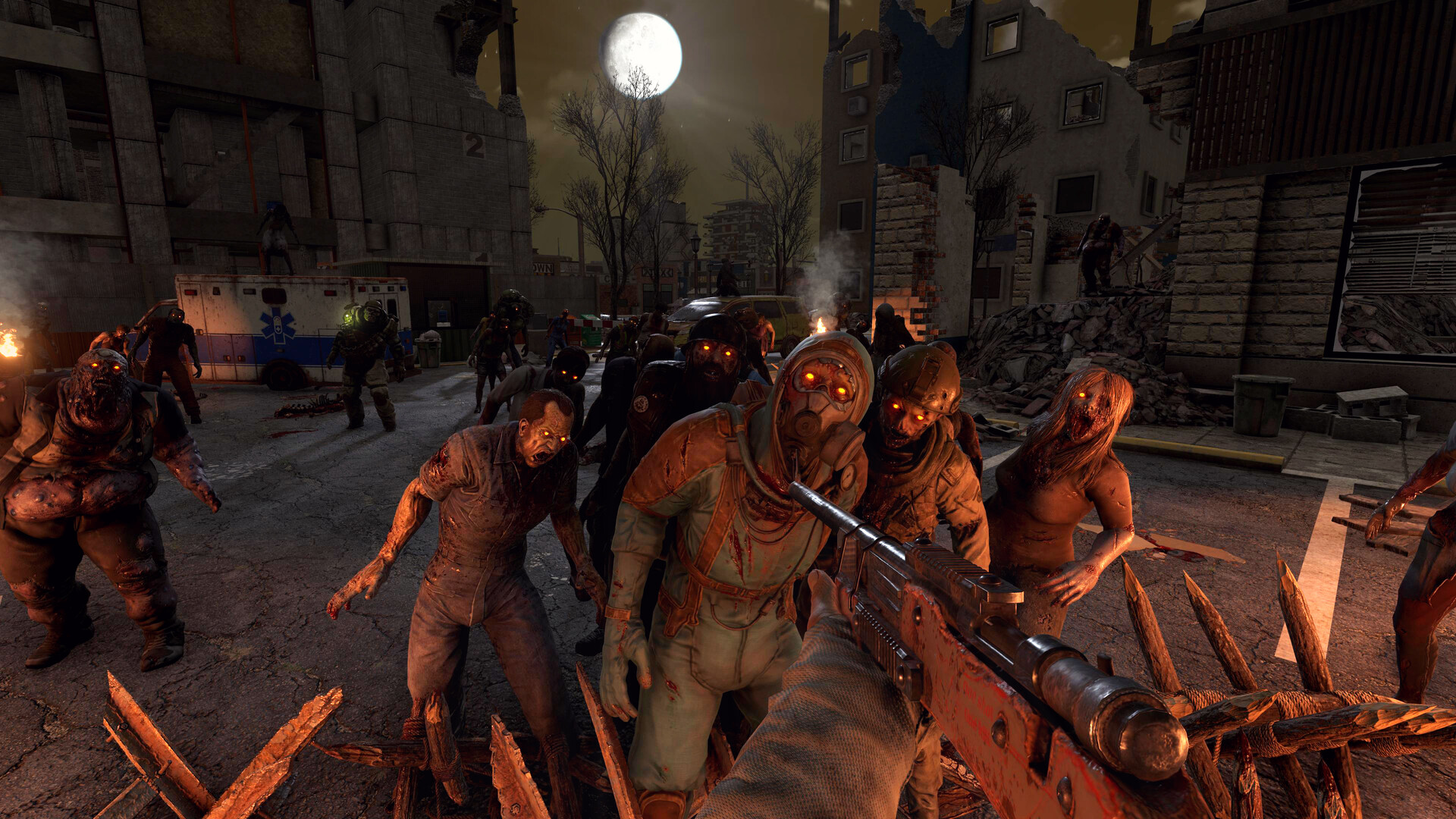
The recurring Blood Moon horde gives preparation a clear pressure point. On the default schedule, the event arrives every seven in-game days, though world settings can change its frequency or disable it. During a horde, zombies seek out the player and attack obstacles to reach them, putting a base's layout and materials under direct stress. A player may build firing positions, reinforce routes, place traps or use automated turrets and doors; because the world is destructible, a defensive structure can be breached or damaged. The event tests several parts of the survival loop at once: equipment needs to be repaired and supplied, ammunition and healing items have to be ready, and the player has to decide whether to hold a fortified position or keep moving. Surviving one horde gives time to repair and expand, while the next period can be used to gather resources, take jobs or search farther from home.
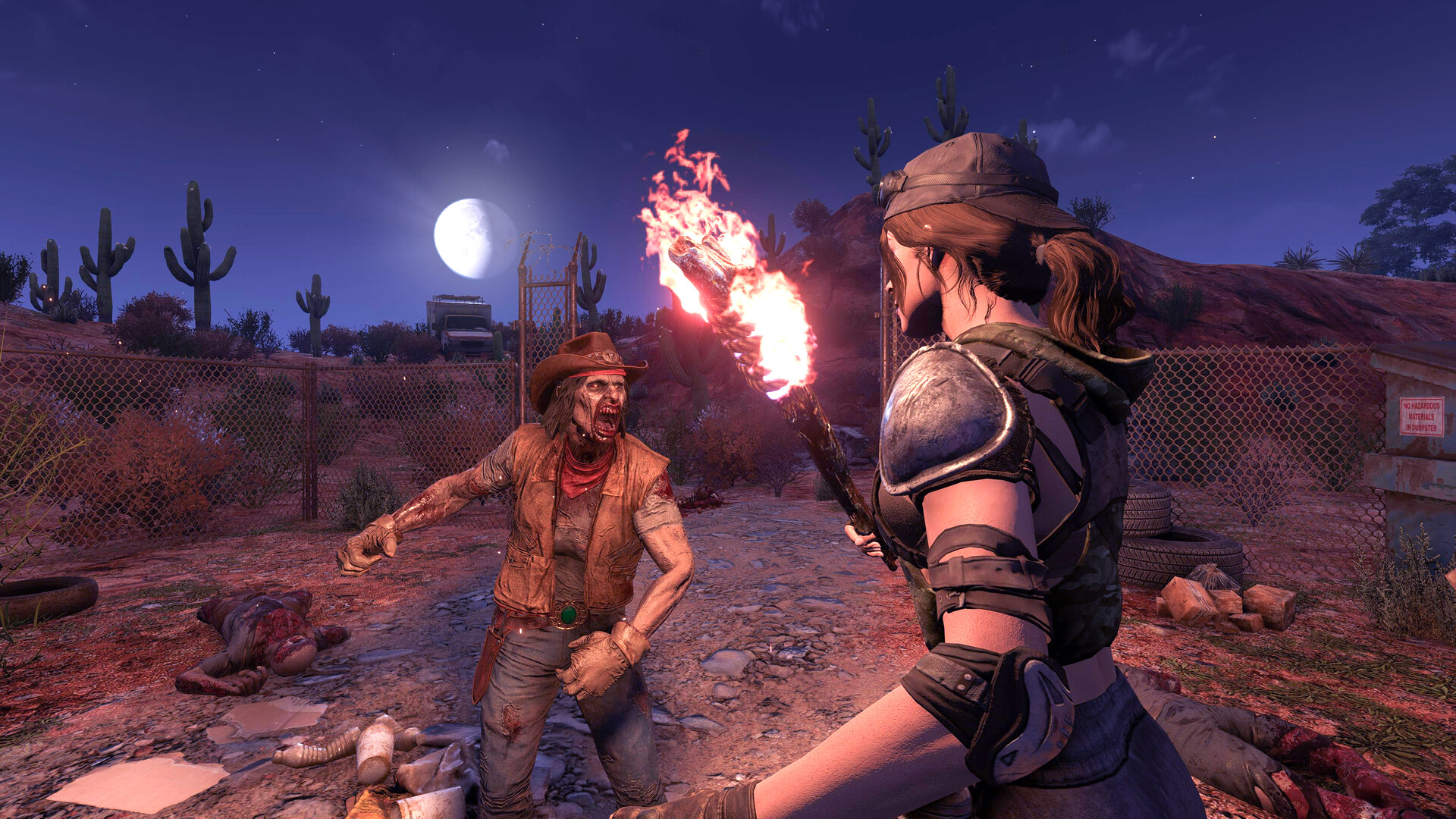
The sandbox gives players control over how much pressure the world applies. Its settings can change the frequency, range, size and warning for a Blood Moon event, and adjust other parts of survival, enemy behaviour, loot and resource gathering. Groups can tune a session toward more exploration and construction or put greater strain on combat and preparation. Whatever settings they choose, survivors still need to search, gather, craft, improve a base and keep enough supplies for another trip. A new route, stronger defence, improved equipment or vehicle can extend what seems possible, but every expedition still involves deciding which risks to take and when to return. The loop remains open: the player can prepare for the next horde, search a farther region or improve the shelter before setting out again.
- Developer
- The Fun Pimps
- Genre
- Open-world zombie survival, crafting, first-person combat and sandbox RPG