
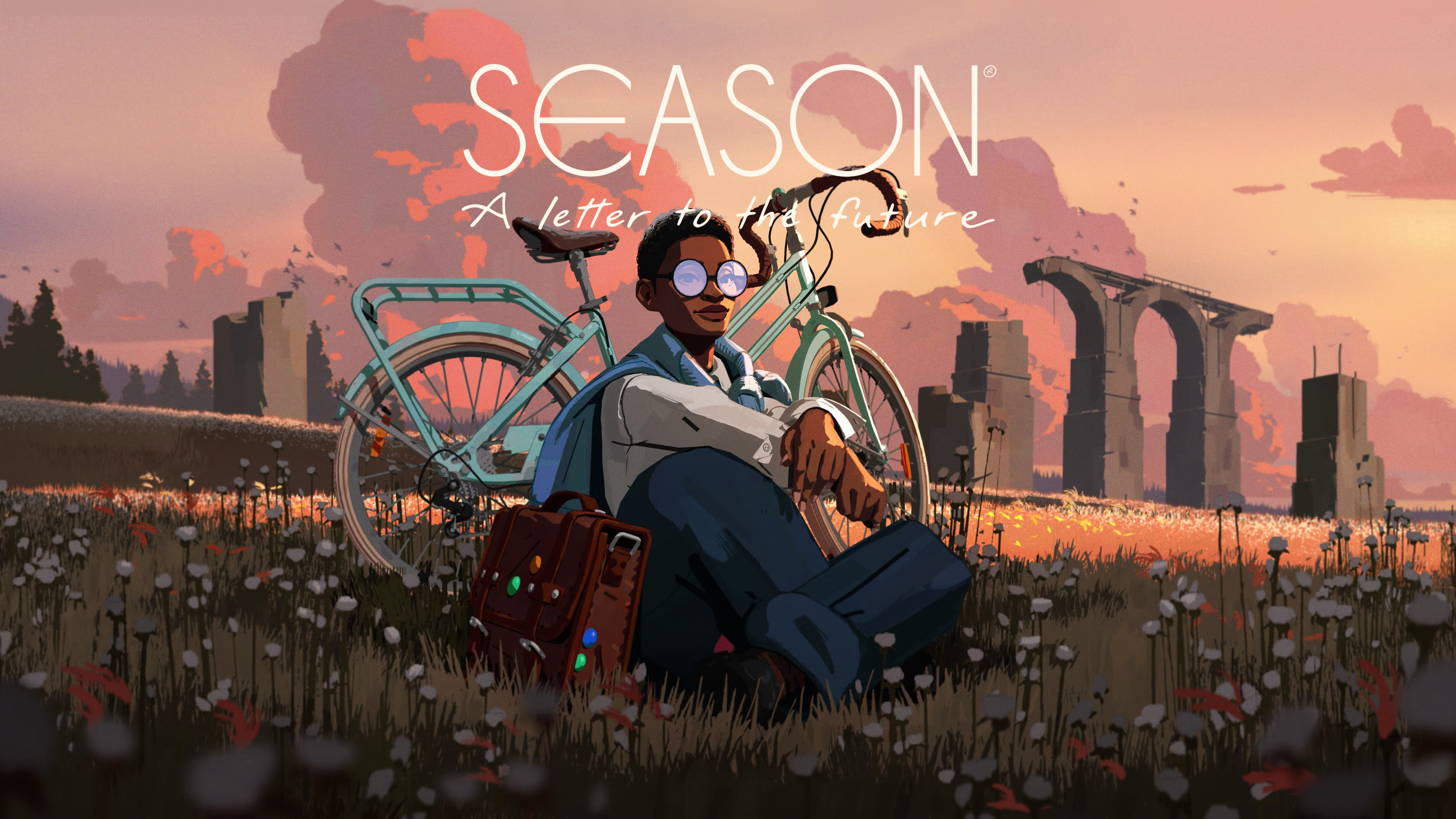
About SEASON: A letter to the future
As Estelle, leave a mountain village by bicycle and enter Tieng Valley as its residents prepare for a world-changing end to their season. Photograph places, record sounds, speak with people and assemble selected discoveries in a scrapbook that becomes a personal record of the present for an unknown future.
SEASON: A letter to the future follows Estelle, a young woman leaving her secluded mountain village for the first time. In this world, a season is also an age of history, and the era Estelle knows is nearing an uncertain end. She travels toward Tieng Valley to observe what is happening and preserve a record for people who may live afterward. The valley is not simply a backdrop to a disaster: it is home to people with their own routines, attachments and ways of understanding the change. Estelle arrives as a visitor and witness, not a fighter sent to defeat a threat. The central question is what this ending means to those living through it, and which parts of their present should be carried forward. The journey is prompted by the sense that ordinary life itself may soon become history; small details gain urgency because Estelle cannot assume there will be another chance to see them.
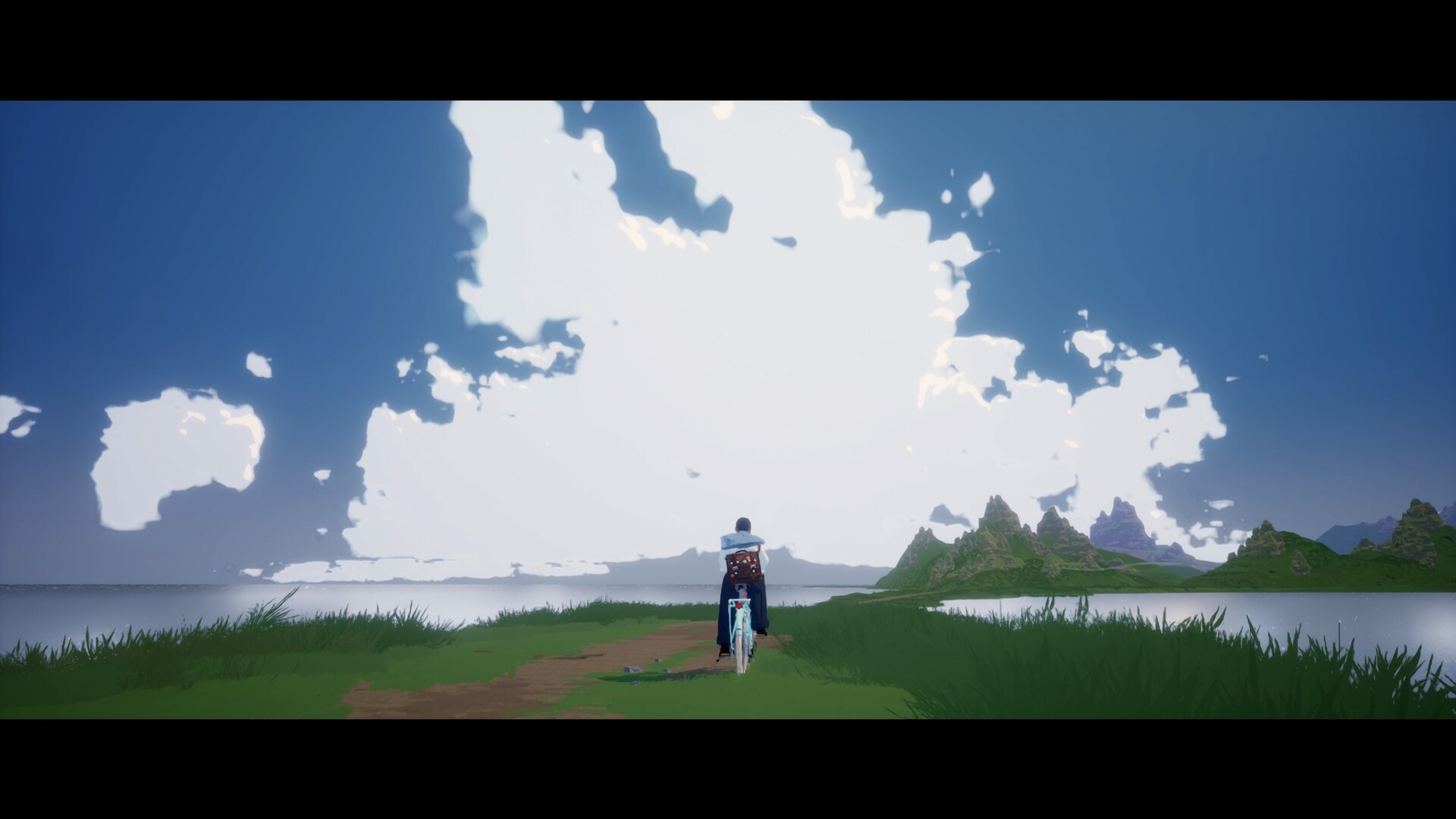
The journey is structured around reaching and exploring the valley, where a route between landmarks opens into smaller places worth examining. A bicycle provides the main way to travel, and Estelle can leave the road to follow a path or investigate something visible in the landscape. On foot, she can approach objects and details at a slower pace. The movement between riding and stopping gives the player a repeated choice: continue toward the next place, or spend time with something encountered along the way. There is no combat system driving that choice. Instead, attention and observation lead to discoveries, conversations and material for the journal. The broad geography is traversed at a deliberate pace, with side paths and points of interest inviting detours from the main route. Cycling off the obvious route can reveal hidden places, while getting off the bike makes it possible to interact closely with the things that caught the player's attention. Travel sets the rhythm, but the player decides when to interrupt it.
Estelle carries several tools for documenting what she sees and hears. The camera lets the player frame photographs of the environment, while the microphone records sounds from a chosen direction and can play them back. These instruments are more than souvenirs: using them can prompt Estelle to reflect on a detail, ask a question or notice a connection that was not apparent at first. A recording may also be shown to someone she meets, creating an opening for a response, useful information or a moment of recognition. The tools therefore connect exploration to investigation. A photograph of a place, a sound in its surroundings and a person's account can each contribute a different piece of understanding, while leaving the player to decide what those pieces mean together. Photography is integrated into the adventure rather than offered as a separate free-standing photo mode. The camera's role is to help examine the world and preserve evidence of it; the microphone offers a parallel way to attend to sounds embedded in that environment.
The journal turns collected material into a curated account rather than an automatic catalogue. Photographs and audio recordings can be assembled into pages, letting the player shape a record of the route and what seemed important within it. The book represents Estelle's perspective: what she chose to capture, how she arranged it and which moments she carries from one part of the journey to another. This makes the act of documentation part of progression, as taking records and investigating places can produce further reflections and discoveries through the story. The aim is not to mechanically document every object. The player decides what deserves space in the keepsake, and that selection gives the journal its character as a letter addressed to a future reader. Pages bring the separate tools together: an image can sit beside a sound or observation, changing the way the location is represented. The record is therefore both a practical way to revisit clues and a visible expression of what Estelle values. This structure also means two players may pass through the same places yet leave different records, because the journal reflects choices about emphasis rather than demanding one exhaustive archive. The book links individual acts of noticing to the game's larger concern with what a future generation can know about a lost era.
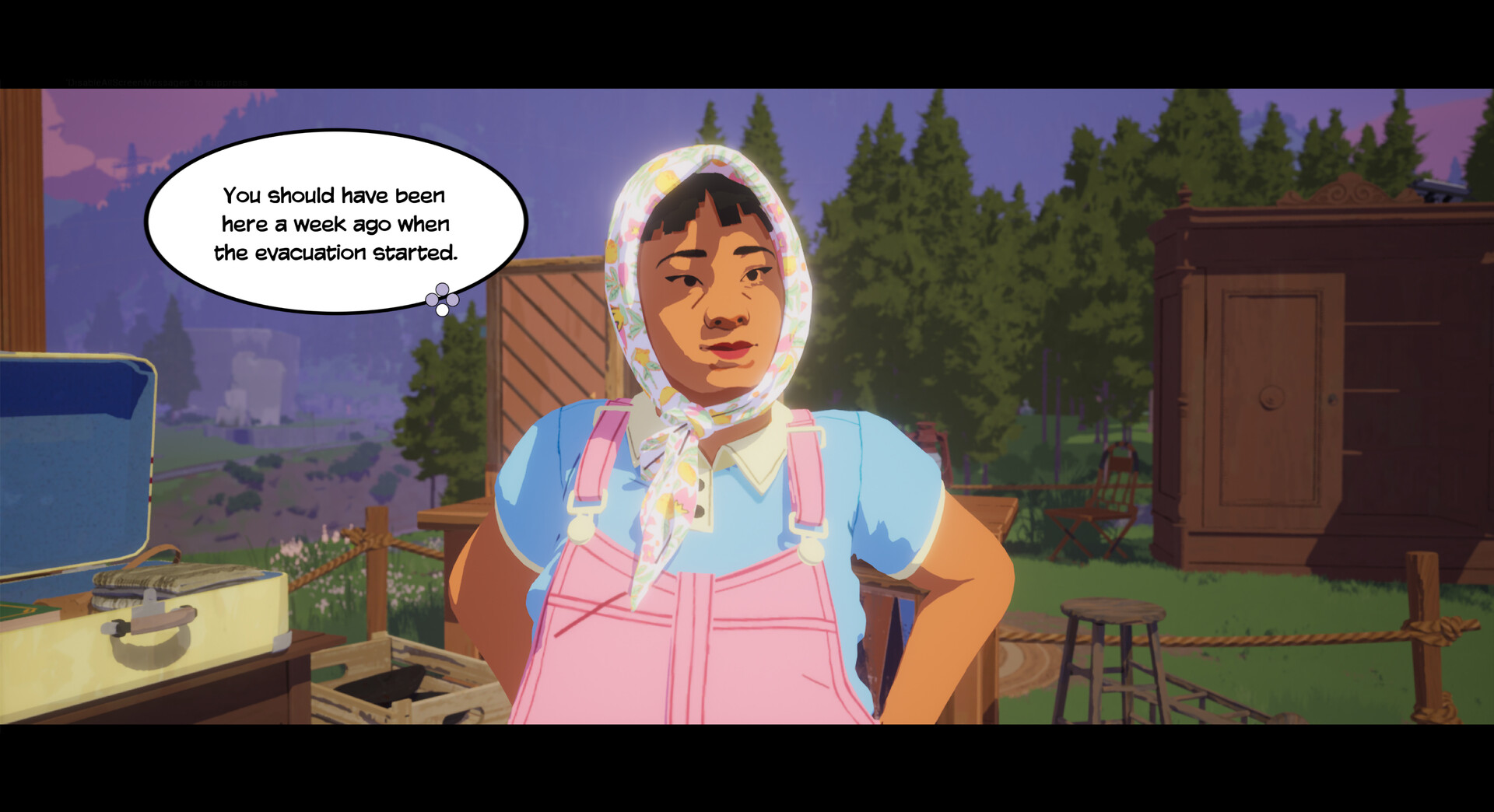
The people Estelle encounters give the approaching change a human scale. They are preparing for the end of the season in different ways, and their circumstances make the valley more than a collection of scenic locations. Kochi, a young boy, shares a bicycle tour of a valley on the eve of its flooding; Maytora is an outsider artist whose sculptures record her understanding of the place; and Easel, the last monk of Tieng Valley, waits in isolation after the people around him have left. Their stories are not presented as enemies to overcome or tasks in a combat quest. Estelle listens, asks questions and may share what she has recorded. Choices in conversation affect relationships and how she understands the events around her, so paying attention to an individual's concerns can matter as much as finding another landmark. There are stretches when she travels alone, which makes each encounter feel like an interruption in the quiet road trip rather than part of a crowded settlement. Each character has a distinct relationship with leaving, remembering or continuing a tradition.
The setting's mystery develops through the contrast between familiar everyday life and evidence of a wider historical transition. Tieng Valley contains landscapes, structures, practices and traces of earlier seasons; recording them helps Estelle grasp the culture, history and ecology beneath the visible surface. The world is stylised and painterly, but its details are grounded in tangible things: architecture, local sounds, objects people leave behind and the ways they prepare for upheaval. Sound has a particular role in directing attention. Environmental noises and music belong to the places where they are heard, and directional recording lets the player isolate them as part of a record. This sensory focus encourages a closer look at what is present while the meaning of the coming change remains unresolved. Music may come from a source within the scene as well as from the score, so listening becomes another form of locating oneself in the landscape. The valley's history is not delivered as a single exposition dump; it is pieced together through places, practices and testimony.
The collected journal and the relationships formed along the route feed into the story's larger decisions about what will survive as memory. Estelle cannot preserve an entire living world simply by passing through it; the player chooses which images, sounds and encounters make up her account. What is gathered and what is shared contribute to her understanding of the valley and to the way the ending is approached. The narrative therefore links small actions—stopping to record, asking a question, arranging a page—to its broader concern with change across generations. The game is single-player and has no combat progression: advancement comes through travel, investigation, conversations and assembling a record, rather than improving weapons or defeating opponents. The result is an exploration adventure in which the scrapbook is both a personal keepsake and the means by which Estelle interprets a world in transition. How often Estelle stops, whom she listens to and which traces she keeps give the journal its shape across the journey.
- Developer
- Scavengers Studio
- Genre
- Third-person exploration adventure / bicycle road-trip game