

About Sea of Solitude
Sea of Solitude follows Kay, a young woman transformed into a monster by loneliness, through a flooded city shaped by her changing state of mind. She travels by boat, on foot and through the water, meeting other creatures whose struggles are bound to her past and family as she searches for a way forward.
Kay wakes in a partially submerged city, where streets have become waterways and familiar urban structures rise out of the sea. She has turned into a monster and sets out to understand what has happened to her and how she might change. The creatures she encounters are not unrelated threats scattered through a fantasy landscape: each has a story and a connection to the emotional pressures surrounding Kay. The city itself shifts with her journey, moving between darkness and brighter states, with weather and water reflecting the events and relationships she confronts. This makes the setting part of the narrative rather than a fixed backdrop. Kay's route carries her through flooded streets, rooftops and enclosed structures, while what she learns about the monsters changes the meaning of the places she crosses. The game presents loneliness as something that affects a person and the people around them, and frames the journey around listening, facing difficult memories and understanding the figures that have become monstrous.
Travel changes according to the city's water level. Kay can steer a small boat across open water, leave it to walk through buildings and streets, or swim when a route passes beneath the surface. Higher water opens broad passages for the boat and places exposed rooftops and upper floors among the reachable paths; when water recedes, previously submerged ground becomes available for walking. These changing levels alter the geography instead of simply decorating it: a familiar landmark can serve as a route from a different height, and a shift in the water can reveal areas that were inaccessible earlier. On foot, Kay climbs, jumps and platform-hops across broken structures, while the boat provides a way to cover the wider stretches between them. Swimming brings a different kind of risk because the dark water can hold dangers beneath the surface. The three forms of travel fit together as a continuous navigation problem, asking the player to read the shape of the flooded city and move between water, shore and elevated architecture as the environment changes.
Kay carries a flare that gives her a small, visible source of light in the dim world. It also helps direct attention toward objectives, and in encounters it can be fired to affect shadow creatures. Light is therefore both a navigation aid and a limited offensive tool, connecting the game's visual contrast with its basic interactions. Some enemies must be driven off or cleared before Kay can move on; in other situations, a creature can be manipulated or turned into an ally that helps reach a ledge. The central monster encounters work differently from conventional boss fights. Kay confronts corruption associated with the creature and clears it by gathering smaller glowing orbs placed around the area, often by platforming and solving simple spatial challenges. Progress comes from helping the monster's story come into focus, not from depleting a health bar or defeating it through escalating attacks. This structure lets movement and small environmental puzzles carry the encounter, while the flare keeps the darkness at bay and marks the connection between safety, visibility and the act of facing what has been hidden.
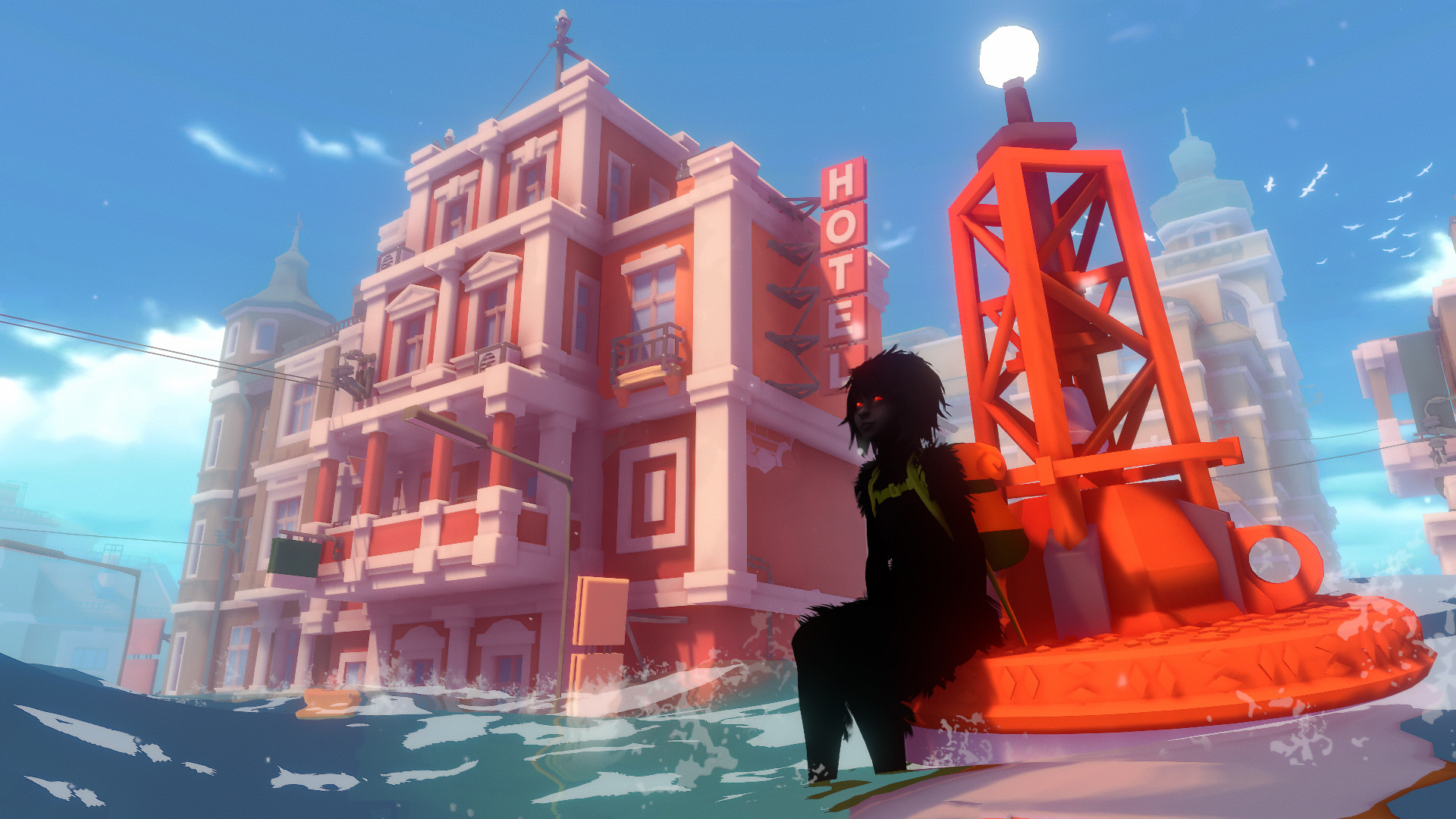
The creatures Kay meets give the journey its character-by-character progression. Their forms can suggest fear, anger, grief or isolation, and each encounter is tied to people in her life rather than a bestiary of unrelated opponents. Family members also appear in monstrous forms, making the city's dangers part of the relationships Kay must understand. The story approaches these figures through what they say, what their environments reveal and the corruption that surrounds them. Clearing that corruption advances the encounter and provides more understanding of the person behind the monster. Kay's own perspective shifts as she listens and responds, while the game avoids treating every conflict as something solved by force. Some sections involve avoiding threats or using the flare against shadow beings; others rely on moving through a space and collecting the lights needed to clear a central source of corruption. That change in approach helps each meeting function as a distinct emotional chapter, while the continuing exploration of the city keeps the separate stories connected to Kay's attempt to understand her own transformation.
Weather, color and architecture change alongside the stories. Storms and darkness can signal danger, while clear light creates a different sense of space and safety. A character's conflict can alter the look of the surrounding district: the city may become cold and snow-covered, or a building's vents may turn a route into an image of mounting anger. Water rising and falling changes which surfaces are reachable, so visual shifts also affect navigation. The soundscape supports those transitions with water, weather and creature calls set against Kay's dialogue and the voices of people whose histories emerge during the journey. The result is a world with a sparse population but a strong visual identity, where the empty streets make each monster and remembered relationship more prominent. Changes in the environment are not a separate cosmetic layer added after the story; they are cues about mood and clues about how the surrounding space will behave. The player reads color, storm conditions, water height and the placement of light as both expressive details and practical information for moving through each area.
The city also carries information through small traces that sit outside the monster encounters. Messages left in bottles provide written fragments amid the flooded streets, while voiceovers can add context as Kay moves through a platforming section. These delivery methods give the player different ways to assemble what has happened: a creature's conversation presents a personal account, a spoken memory can accompany movement, and a bottle offers a detail to notice while navigating the otherwise empty city. The written messages also preserve the sense that people once occupied these spaces even when Kay sees no ordinary community around her. They encourage attention to the environment without making every discovery a required step in clearing corruption. This quieter storytelling layer complements the large, visible changes in weather and water by placing smaller pieces of human history along the route. The player can continue following Kay's immediate path while also reading these traces as evidence about the absent people and relationships that have shaped the world she now crosses.
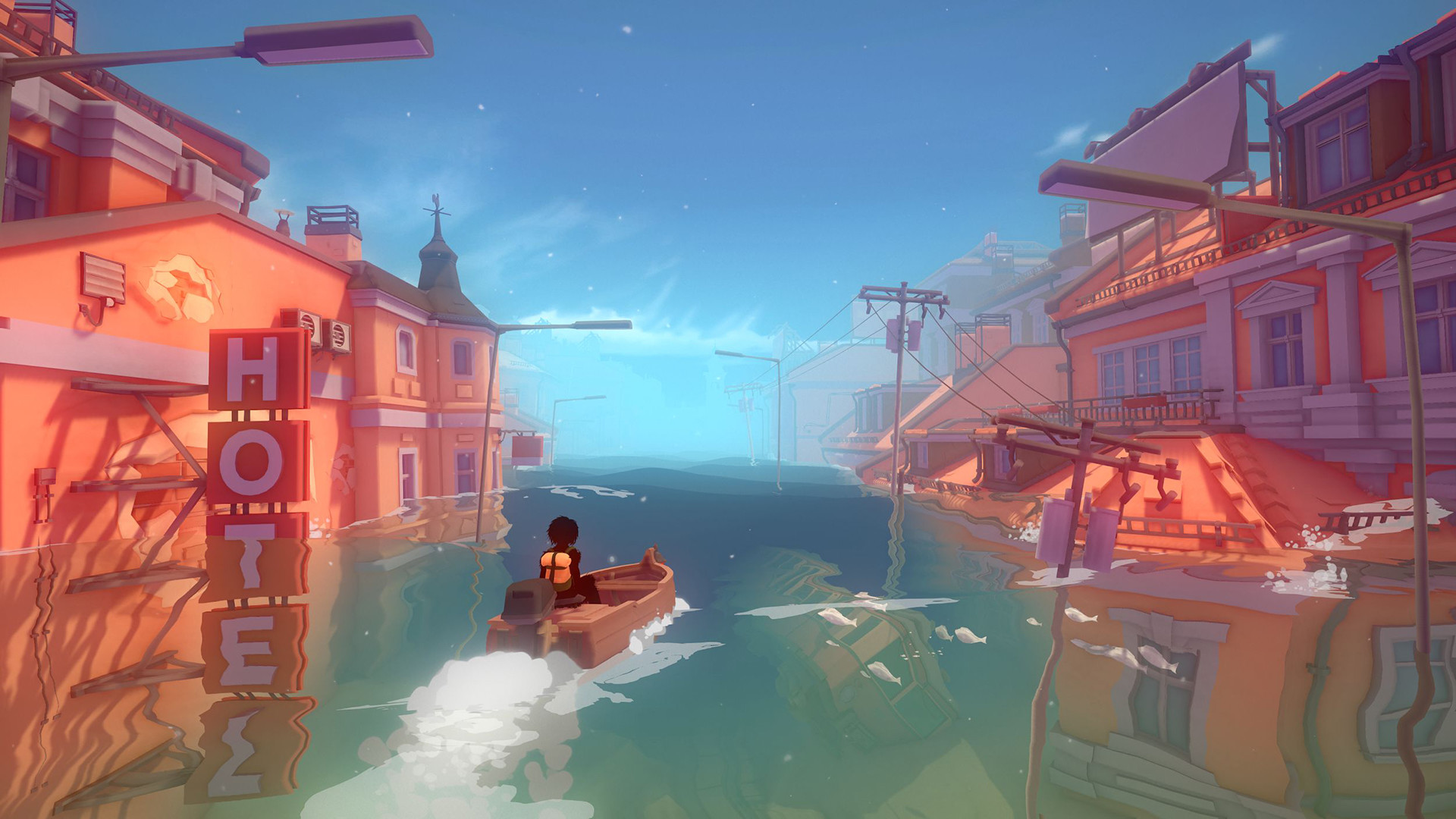
Smaller shadow encounters show how a threat can function as a moving part of the environment. Kay may need to use her flare to defeat a shadow creature before a route is safe, or lure one away from a doorway so she can pass. Later, some creatures can be turned into temporary helpers: their jump can carry them onto a ledge that is beyond Kay's reach, where they can collect an orb needed for the objective. This changes the player's task from simply avoiding a monster to reading how it moves and where it can go. The creature remains part of the area's platforming problem, while the light and corruption objectives determine whether Kay should repel it, redirect it or make use of it. These exchanges stay within the same small set of tools, but shift the relationship between Kay and the darkness around her. They also make the orb-collecting encounters depend on the shape of the room, reachable ledges and the positioning of creatures, rather than on an abstract combat arena separated from the city.
- Developer
- Jo-Mei Games
- Genre
- Single-player action-adventure