
About Scorn
Scorn is a first-person horror adventure set in a strange, interconnected biomechanical world. An unnamed, isolated figure moves through regions built from flesh, bone and machinery, learning how unfamiliar devices work. Environmental exploration and multi-part puzzles drive progression, while living weapons, scarce ammunition and limited supplies make encounters with hostile creatures a secondary survival challenge.
Scorn begins with a figure alone in a strange world, without a name, spoken introduction or clear explanation of how the surrounding place came to be. The game keeps that uncertainty in view: its story is carried by spaces, objects and the consequences of interacting with them rather than by a conventional chain of dialogue and exposition. The setting joins biological forms to machinery, making architecture look grown and engineered at the same time. Doors, conduits and instruments appear to belong to one functioning system, even when their purpose is initially hard to read. Progress means learning how parts of this environment operate and moving deeper into it, while the larger meaning of what the player sees remains open to interpretation.
The experience is played from a first-person perspective as the figure explores interconnected, maze-like regions with rooms and paths to discover. Movement through them is oriented around finding a way forward rather than following dialogue markers or a quest log. A chamber may open onto several corridors, connect back to a larger space, or reveal a console whose purpose becomes clear only after another mechanism has been activated. The changing architecture supplies much of the game’s context. Each region presents its own visual theme and puzzle elements, while recurring forms of living machinery make the world feel connected without spelling out a definitive account of its history or inhabitants.
Progression relies on treating unfamiliar devices as practical objects. The player approaches consoles, handles controls and studies how a mechanism changes when operated. A machine may move a large piece of the environment, open a route or make another instrument usable, so a puzzle often involves tracing how separate controls relate instead of searching for a single obvious key. Steam’s description stresses direct, physical interaction: objects are picked up by hand and machinery is operated by grasping its controls. That emphasis is visible in how actions are presented. The figure’s body remains part of the frame, and manipulating a device takes place in the space itself, tying puzzle solving to the same strange physical world as traversal.
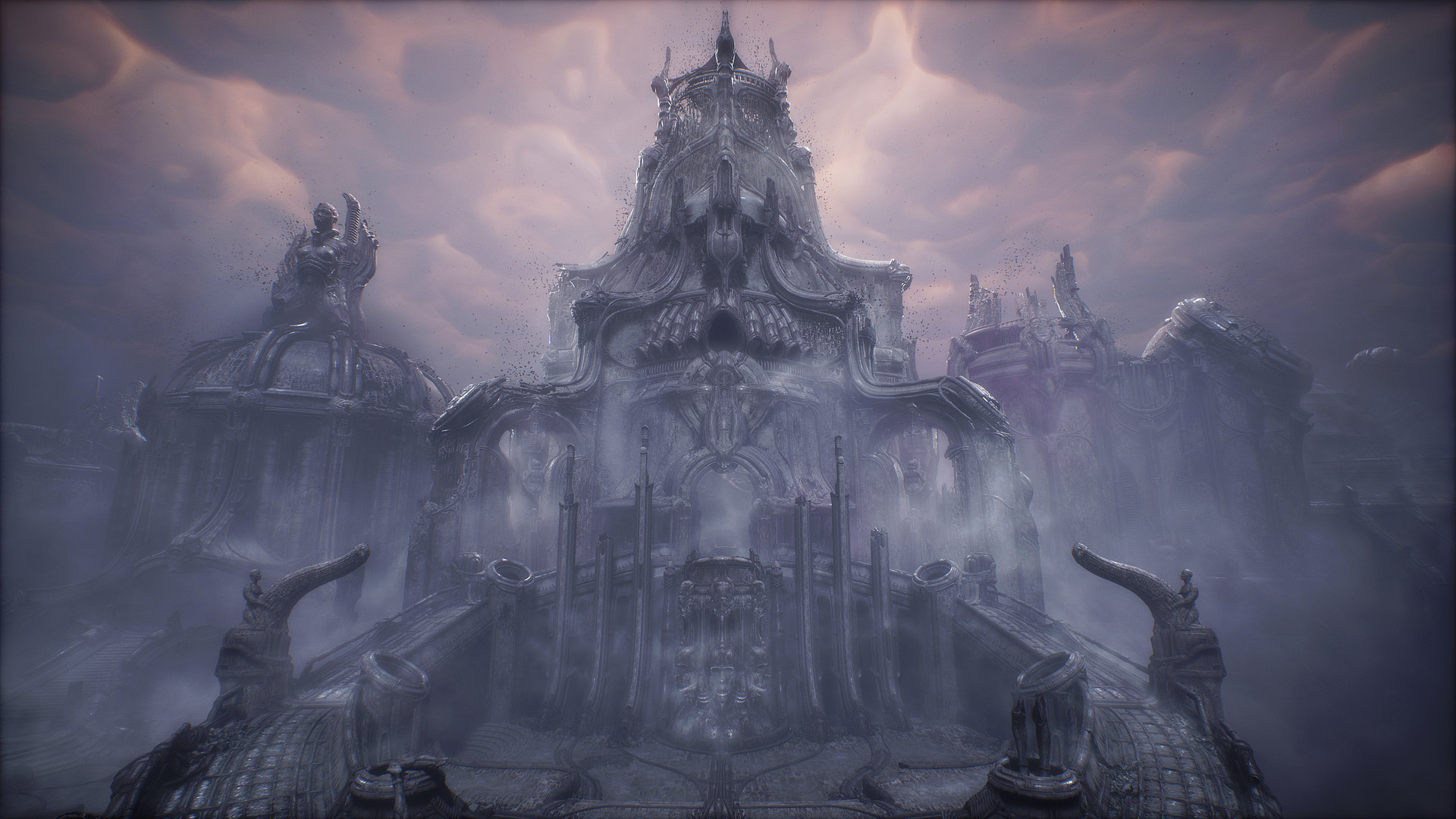
Some puzzles are small interactions embedded in a region; others build across a larger area. Multi-step puzzles make exploration reveal routes, while consoles can shift large objects to complete paths. The player may need to look around a hub, test accessible controls, follow newly opened passages and return to mechanisms that were previously inert. Such spaces can contain dead ends, but the important task is understanding how the machinery fits together. Puzzle solving therefore changes the environment, rather than simply presenting a detached riddle screen. As routes open and objects move, familiar functions such as a gate, lift or lever emerge from designs that initially look alien, giving the player a concrete way to reason about progress without an explanatory voice-over.
Items gathered along the way expand what the figure can operate and how it can deal with threats. New equipment has unfamiliar organic forms, yet the game gives it practical functions within the world: one object can access certain terminals, while other living tools are weapons. This progression asks the player to connect appearance with use by trying equipment at compatible machines or against an obstacle. Not every strange object is merely decorative, and not every mechanism is a direct combat tool. Because these objects are discovered within the areas being explored, acquisition is part of navigation and puzzle progression. The player has a defined, limited loadout, tying inventory and ammunition management to decisions about fighting, taking cover or moving on.
Combat becomes more prominent after the opening stretch, but it shares space with exploration rather than replacing it. Hostile creatures occupy corridors and rooms, and the weapons are integrated into the setting as living or biomechanical implements. The first weapon is a short-range device with a slow firing cycle, while later options include a shotgun-like weapon and a heavier cannon. These tools are not treated as a plentiful shooter arsenal: ammunition is scarce, firing opportunities are limited, and some weapons take time to recharge. The player has to judge whether an encounter can be bypassed, whether there is space to approach or retreat, and whether a shot is worth spending. Avoiding a fight may preserve ammunition for a later situation, so movement through a region and preparation for its threats remain linked.
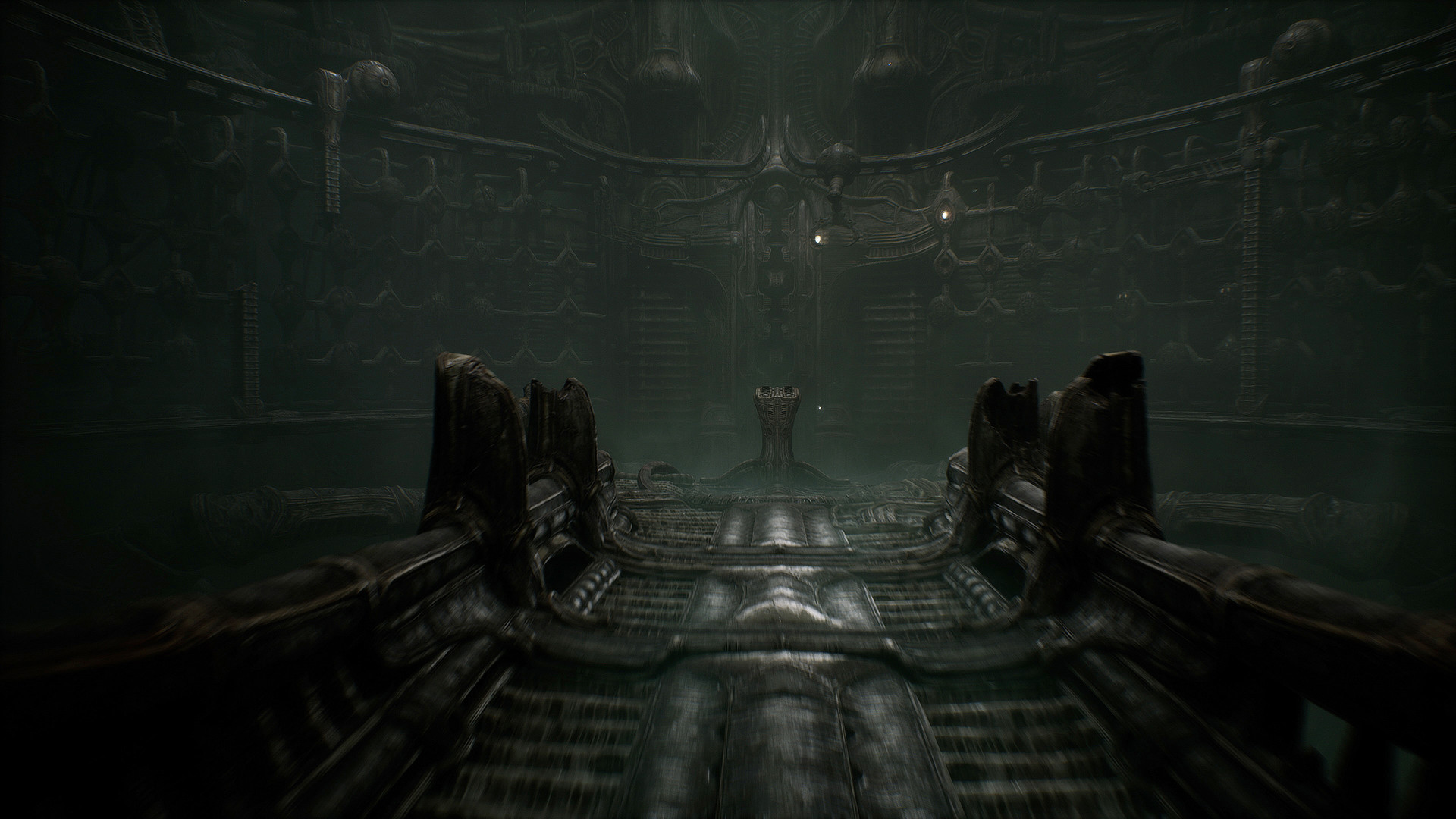
Health and ammunition management reinforce that measured approach. Ammunition and health stations are scarce, so a corridor with a creature in it is both a combat space and a route problem: engaging may cost resources, while sprinting past can expose the figure to attacks. Weapons also have different practical reach and firing patterns, making the order in which tools are used matter. The campaign continues to introduce new areas, items and capabilities, so the player gradually becomes more fluent in its interaction language. Its final multi-part mechanisms draw on that accumulated familiarity without resolving the world’s imagery into a single confirmed explanation.
- Developer
- Ebb Software
- Genre
- First-person horror adventure with exploration, puzzles and survival combat