
About Scarlet Hollow
After your aunt’s death brings you to the North Carolina mountain town of Scarlet Hollow, a reunion with your prickly cousin Tabitha unfolds alongside reports of creatures, sealed mines and restless spirits. Build a protagonist through two traits, investigate through conversations and exploration choices, and carry consequential decisions through an episodic horror mystery still in Early Access.
Scarlet Hollow begins with a family obligation that quickly becomes an investigation. The player character travels to a rural North Carolina town after the death of an aunt, expecting to meet long-lost cousin Tabitha and attend the funeral. The visit opens onto a community already troubled by a deadly mine collapse, livestock attacked by strange creatures, and houses said to hold vengeful spirits. Rather than separating these incidents into unrelated scares, the story lets the newcomer encounter them during a week spent among people who have lived with the town’s history and tensions. The family connection gives the mystery a personal route into the place: Tabitha is both the closest relative and a difficult first contact, while the funeral and the late mother’s history tie the visitor to the Hollow before its supernatural dangers are understood. The arrival is not framed as a heroic assignment or a police investigation; the protagonist is a newcomer with family ties, trying to make sense of unsettling events while still negotiating grief, introductions and the practical awkwardness of staying with relatives. The mother’s past in the town also reaches toward its mines, linking the family story to the landscape’s sealed industrial history.
Before the story proper, the player chooses two traits for the protagonist from a set of seven. They act as role-playing abilities rather than cosmetic labels: Book Smart and Street Smart support different approaches to conversations, while Keen Eye and Mystical open ways to notice or interpret the uncanny. Other options, including Talk to Animals and Powerful Build, can change what the character can ask, perceive or attempt in particular scenes. A trait check may reveal an otherwise unavailable line or option, so the same exchange can supply different information across builds. This system makes character creation part of the mystery’s structure: the protagonist is not an all-knowing observer, and the chosen strengths shape which clues and reactions can enter a given telling of the week. Because only two strengths are selected at the start, the character also has defined limits: choosing one style means leaving other specialized responses unavailable in that run. A Mystical character may have a way to read an unusual event that a practical, book-focused character does not, while Talk to Animals can make creatures part of the conversation rather than mere scenery. The distinction is carried in dialogue and decisions, not in a separate combat or skill-point interface.
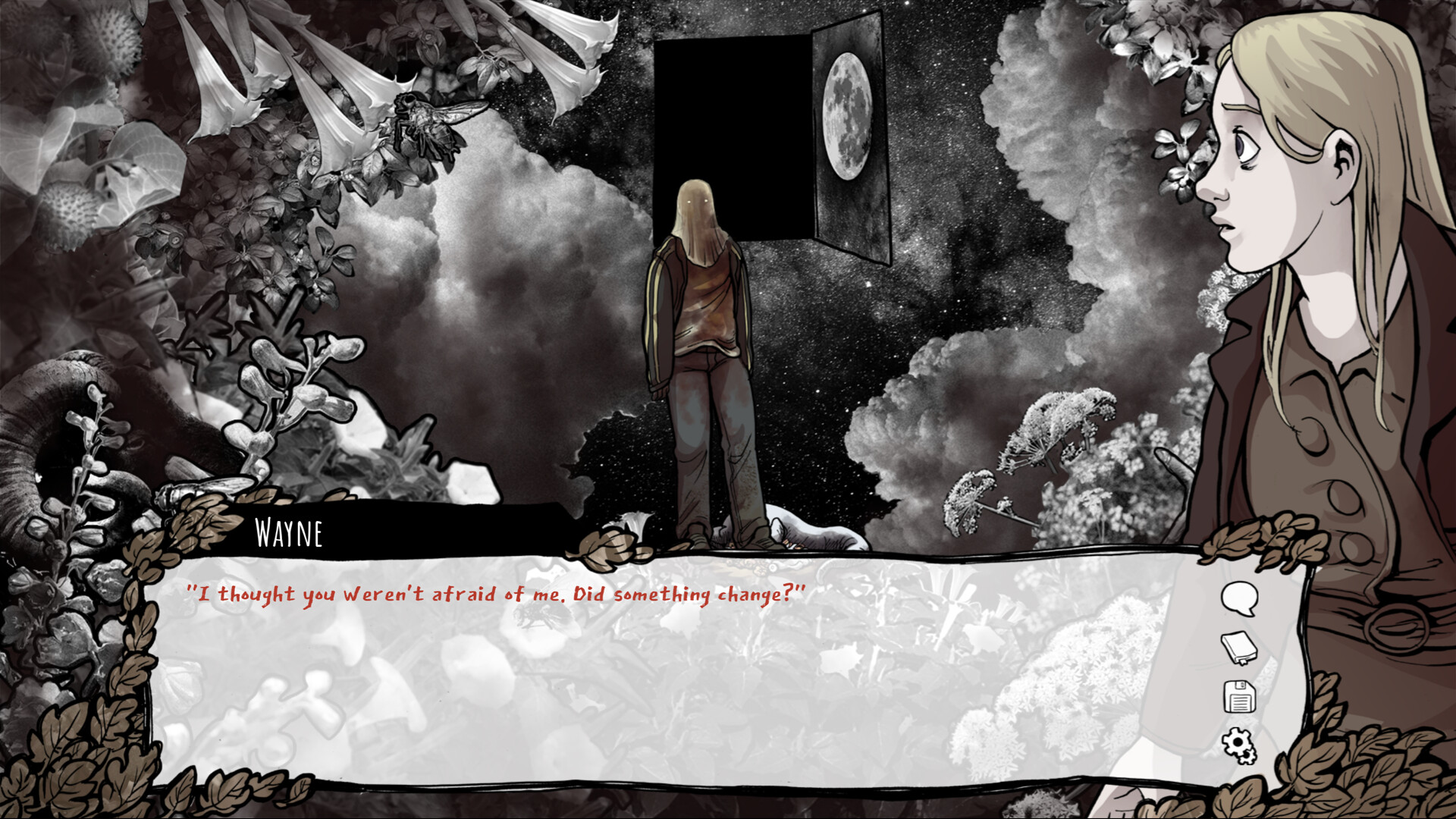
Most interaction happens through illustrated dialogue scenes. The player selects what to say, how to respond to people, and whether to use an Explore option when one is available. Exploring a conversation can uncover background or local lore without immediately pushing the central exchange forward; a direct response, by contrast, may affect the relationship or commit the protagonist to a course of action. The distinction matters because conversations are not simply menus of polite, neutral and hostile variants. Character-specific and trait-gated choices can move the talk into unexpected territory, while what the player asks may matter even when several answers lead into the same immediate scene. The game therefore makes attention to a speaker, a subject and the protagonist’s chosen voice its main form of investigation. Explore is particularly useful for players who want to ask around before settling on a position: it can broaden what is known about a character or local event, while a response can instead reveal the player character’s attitude. Options can range from ordinary social replies to unusually blunt or disruptive remarks, and residents respond according to their own temperaments. Since not every line can be exhausted without advancing the scene, the player makes small choices about whether to pursue context, keep the conversation moving or risk a more personal answer.
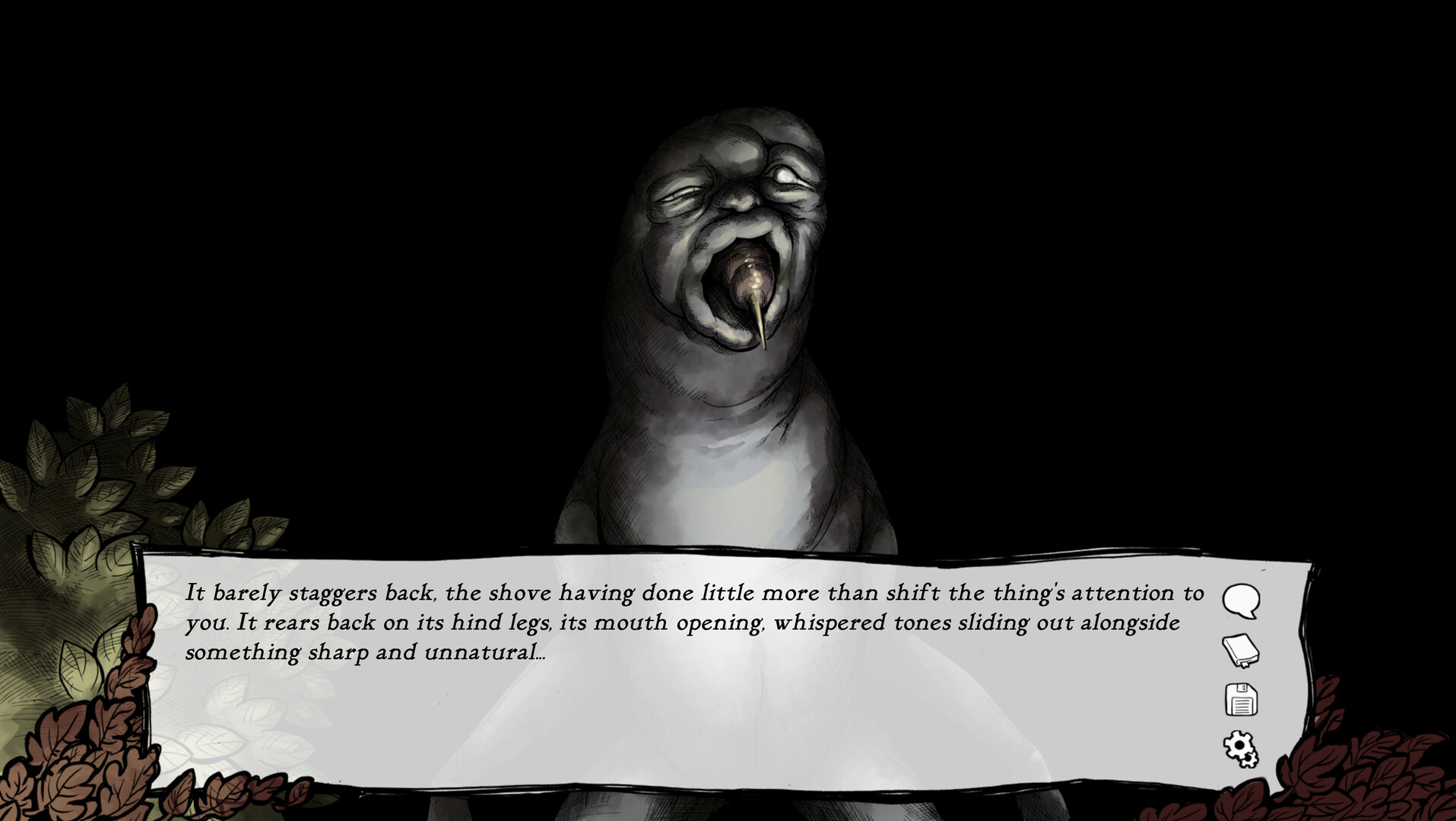
The town itself is presented through story scenes and decisions about where to go and whom to accompany, rather than through free-roaming point-and-click navigation or environmental scanning. In the opening episode, meeting local residents leads toward places beyond the family home, including an excursion with Stella into the surrounding woods. Following one person can uncover a different thread of local history and supernatural activity than spending that time elsewhere. This makes movement through Scarlet Hollow a matter of narrative access: a relationship, invitation or earlier response can determine which scene comes next and which details the player gets to see. The mines, homes and rural outskirts are not a checklist of interactable objects; they become legible through the people who know them and the choices that bring the protagonist into contact with them. The forest excursion illustrates the connection between social and physical exploration: the protagonist reaches a new setting by deciding to go with Stella, and the outing brings a separate encounter with the uncanny. In this structure, a location is also a piece of character context. Who accompanies the player affects the conversation and the kind of local knowledge that is available, so choosing a direction means choosing whose perspective will frame the next discovery.
As the week proceeds, the mystery is carried by a group rather than by a conventional combat loop. Tabitha’s strained family relationship, Stella’s invitations, and conversations with other residents give the player different ways to approach the Hollow and its dangers. Choices can change relationships and later events, and the store description emphasizes that a single playthrough reveals only a fraction of the branching narrative. Some pivotal decisions affect other characters’ safety; different trait combinations can provide alternatives in moments that would otherwise force a hard choice. There is no action-based fighting system to master here: suspense comes from what the player learns, whom they trust, and whether they have the right ability or earlier context when a situation turns dangerous. The player can revisit scenes or start another run to explore routes that the first build did not expose. This consequence structure applies both to explicit crises and to quieter exchanges, where small remarks help define how another person sees the protagonist. A choice may preserve an uneasy relationship, create an opening for more conversation or close off a line of inquiry. Because the episodic plot remembers earlier decisions, the player’s route through one day can influence the conditions of later scenes. The story does not promise that every character can be protected at once, and the trait system sometimes changes the set of solutions available rather than merely changing the wording of a response.
The presentation supports that conversation-led structure with Abby Howard’s hand-drawn character and environment art, arranged as sequential illustrated scenes with movement and changes in expression. The imagery can shift from everyday details and dry humor to grotesque creatures and unsettling supernatural encounters, allowing the same small-town setting to hold both social awkwardness and horror. Music and sound design contribute to scene changes and atmosphere, while dialogue and reading remain central to how the story is delivered. Scarlet Hollow is available on PC, Mac and Linux, with English interface text and subtitles listed for the Steam version; it is a single-player game. Its Steam edition is still marked Early Access: the current story is playable through Episode 5, and the developers state that a major content update remains before the story concludes. The episodes form one continuing work, so the available material should not be mistaken for a completed series. The storefront notes that the developers use Early Access to release chapters as they are finished and to use player feedback when tightening earlier chapters. That release model explains why the experience is presented as an evolving serial rather than as a finished, self-contained book. Its illustrated scenes, portraits and written choices keep visual expression closely tied to dialogue, while the eerie creatures and domestic settings carry the horror without relying on a separate action system. The edition scope here is the current PC, Mac and Linux release, not a claim that every platform version has the same availability or update schedule.
- Developer
- Black Tabby Games
- Genre
- Horror mystery; narrative adventure / visual novel