
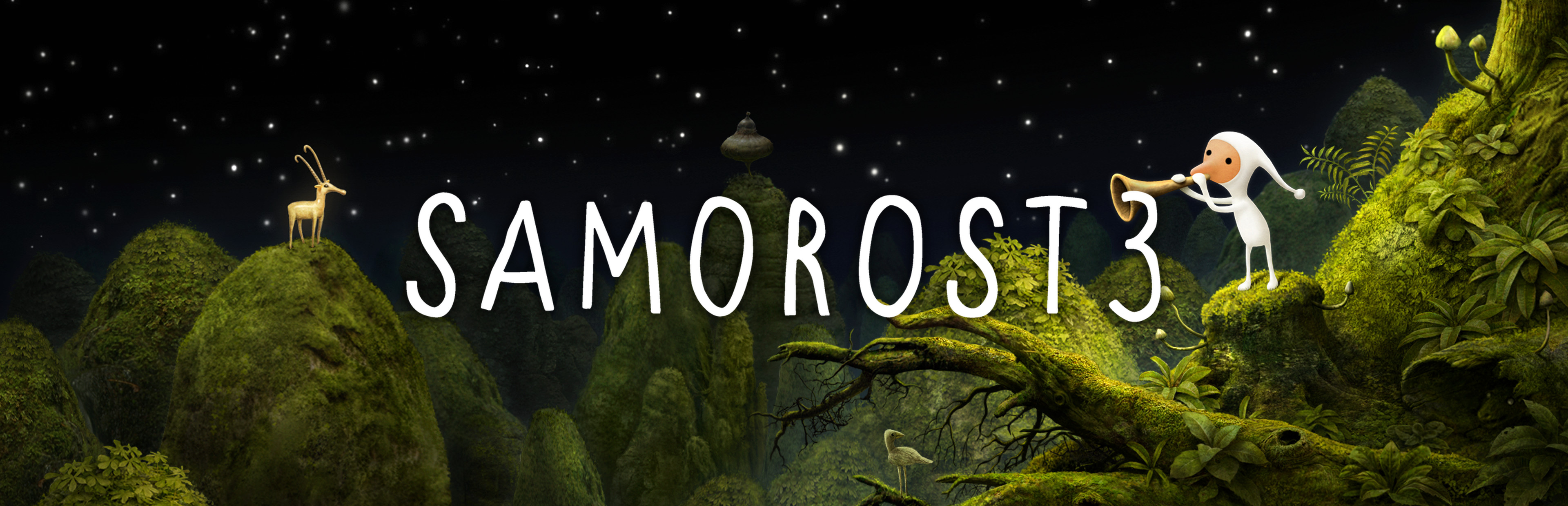
About Samorost 3
A curious space gnome discovers a magical flute and follows its musical clues beyond his home world. Across a chain of strange planets and moons, he listens to creatures, experiments with objects, and solves environmental puzzles that reveal more of a quiet cosmic mystery.
Samorost 3 begins on a small green world suspended in a starry void. Its resident is a little gnome in a white cap, whose quiet routine changes when a strange instrument arrives from above. He investigates it, learns that it can produce and receive sounds, and follows the trail outward. The story is conveyed through pictures, gestures, music, and brief encounters rather than spoken explanation. The gnome’s purpose gradually becomes clearer as the journey unfolds, but the opening lets curiosity do much of the work: the player is invited to notice how the world reacts before every mystery has been named. A small picture book in his home offers visual foreshadowing, while the flute gives the player a concrete reason to examine nearby objects and creatures. Changes in posture, movement, and sound carry the exposition, so a new gesture can reveal something that another adventure might explain in dialogue.
The adventure is played by pointing and clicking through illustrated scenes. The gnome walks to places the player selects, and objects or creatures can respond when examined, touched, pulled, or activated. Interaction is not limited to conventional puzzle pieces: a patch of ground, a small animal, a machine, or an odd shape in the background may all react. Some responses move the journey forward; others are self-contained encounters that reward attention with animation, music, or a visual joke. The basic verbs stay simple, while variety comes from learning what each scene can do. Clicking may trigger an expressive animation rather than produce an inventory object, so the player has to read the scene and distinguish a playful reaction from a clue to the next step. Mouse input suits this close screen-by-screen interaction: a click can direct the gnome or test an object without switching to a separate action system.
The flute is the central tool that joins observation to puzzle-solving. At certain marked objects, the player listens for a melody and uses the instrument to reproduce its sequence. Sound becomes a kind of language: a successful performance may call forth a little spirit, reveal a clue, or set an object in motion. These exchanges communicate local instructions without conventional dialogue. A puzzle may ask the player to distinguish a rhythm, remember a short phrase, or connect a sound to the thing that produced it, making listening an active part of play. As the only persistent puzzle tool, the flute links otherwise different environments and gives the gnome a way to communicate with unfamiliar beings. The player learns its use by listening to a specific object, then reproducing what was heard. The spirits that appear can respond with wordless clues related to the immediate scene, so the musical exchange doubles as communication. Sound thus carries both practical information and character: creatures sing or dance, and puzzle melodies belong to the place in which they are heard.
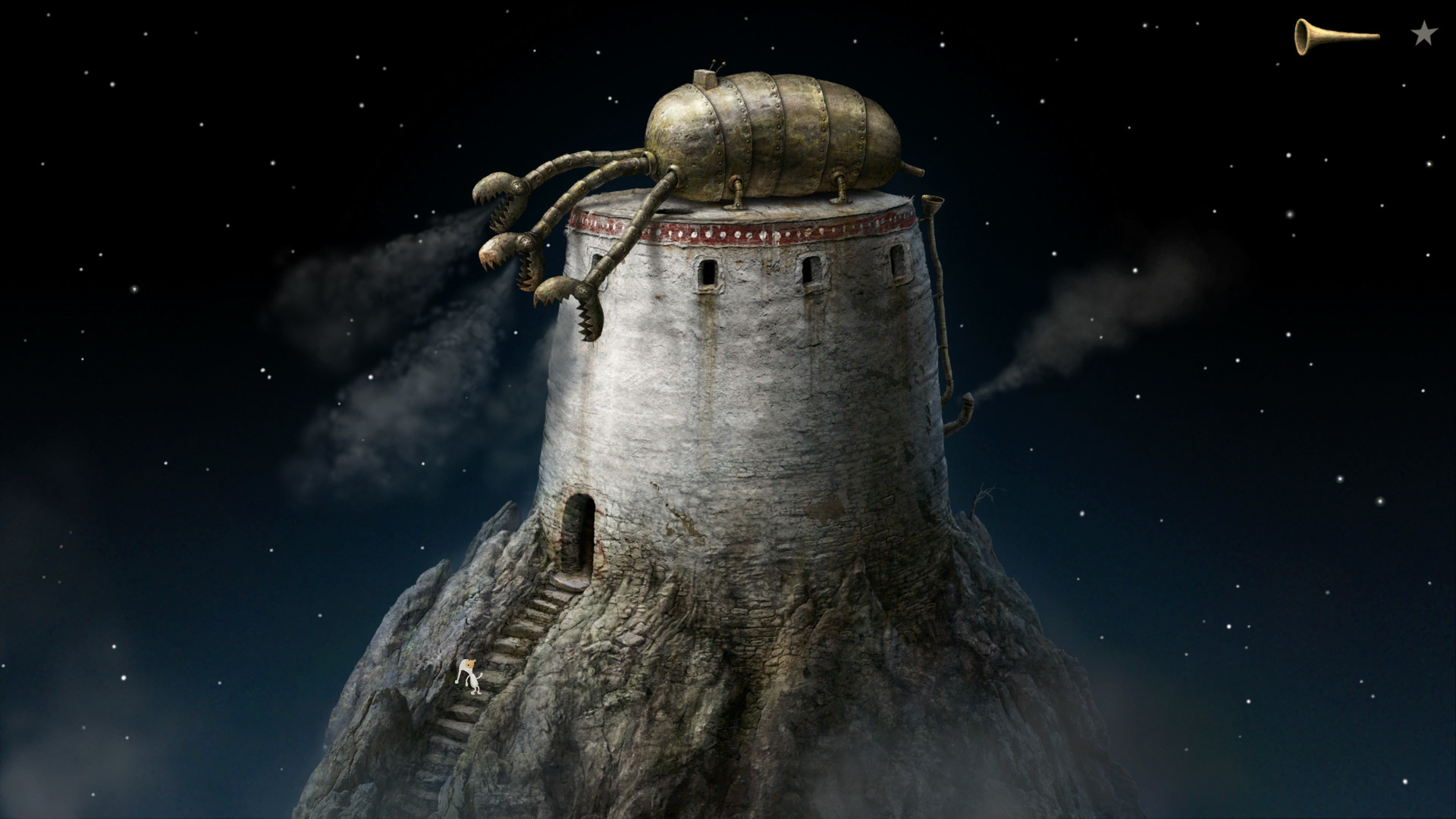
Travel expands the experience from the gnome’s home to a succession of alien environments. A makeshift spacecraft carries him between nine worlds, each arranged as scenes filled with peculiar inhabitants, plants, structures, and natural features. Each destination introduces a different visual vocabulary and things to inspect. The player opens routes and resolves obstacles, then returns to the ship to continue elsewhere. The ship marks the journey’s scale, while each world keeps progress intimate: the player studies a scene, tests possibilities, and follows any route that opens. The gnome is physically present among the inhabitants, learning each environment through contact rather than viewing it from a map. Encounters include bearded tree-like people, enormous musical beetles, and machinery whose purpose is not immediately clear. A location can feel like a storybook landscape and still contain small, responsive details that the player can test. The sequence of destinations supplies a broad sense of movement through the cosmos, while each place’s own sounds and inhabitants give it a local identity. The spacecraft connects those very different scenes without turning travel into a separate combat or resource-management system.
Puzzles are built into the places the gnome visits rather than gathered into a separate challenge menu. A player may need to discover which creature can help, identify a mechanism’s order, or perform a musical phrase at the right object. Some solutions depend on reading movement, expression, sound, or a newly visible animation; others ask the player to remember a detail from another scene. Clues remain part of the environment, and solving a puzzle changes the scene in an observable way. A living creature may react in a manner that suggests how it could help, while mechanisms can require a sequence or pattern. Returning to an earlier area or repeating an action can sometimes matter, so patience and memory support the same hands-on process. The game does not confine attention to objects that are essential for the route: some interactive details are simply there to produce a reaction. At the same time, a required cue may be visually subtle, and the player can need to revisit a scene after learning more. The built-in hint book addresses that friction with sketches of the current puzzle’s solution, offering a visual nudge without replacing the act of interpreting the screen.
Not every clickable detail is a gate. Optional reactions—an animal’s movement or song, a chorus of small creatures, or an environmental detail—make a place feel inhabited without changing the route. These encounters give exploration value even when the player is not looking for a key or switch. The player can make a field mouse dance, assemble a choir of singing termites, or simply interact with flowers, without these moments becoming prerequisites for travel. Optional interactions can also unlock achievements, marking discoveries that do not advance the main route. When progress stalls, an illustrated hint book suggests solutions without spelling out every action in text. The player still has to connect the sketch to an object in the scene. Guidance and optional discovery both fit the wordless presentation: one points toward the next step, while the other rewards curiosity beyond it. This separation lets the adventure support both a direct trip through the main puzzles and slower visits focused on the local life of each world.
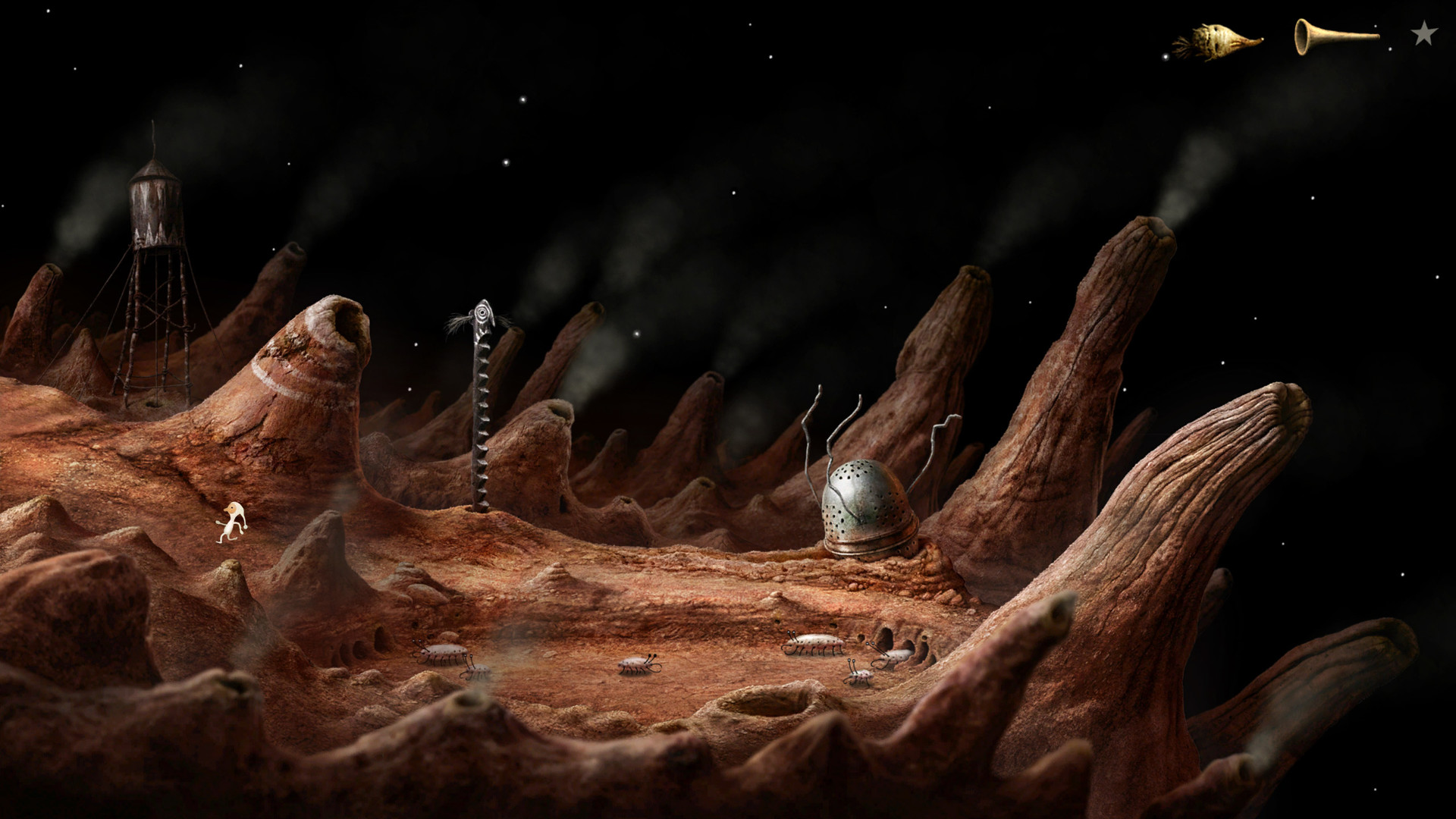
The presentation carries information as well as mood. Textures make plants, rocks, machinery, and creatures feel tactile even when their forms are dreamlike. Animation shows the result of interactions, while music distinguishes places and also serves as puzzle material. Gestures and sounds carry information in place of dialogue boxes. Samorost 3 is a standalone entry in the series, with a story independent of earlier games. The full single-player adventure is available for Windows and macOS; a separate Cosmic Edition bundle includes the soundtrack and art book. Recognizable textures set against impossible forms make the worlds feel both tangible and unfamiliar. The soundtrack uses unusual instruments and shifts with the environments, while recurring songs and creature responses make sound part of the world’s ecology. Characters may sing or dance in response to the gnome or on their own, making music a behavior of the world as well as a puzzle input. A newly played phrase can advance a puzzle, but music also gives an encounter its character when no route changes. Together with the hand-built visual scenes, these audio cues help the player understand both what can be done and what kind of place the gnome has reached.
- Developer
- Amanita Design
- Genre
- Exploration adventure and puzzle game