
About Saints Row 2
After waking in Stilwater following a long absence, the Boss returns to a city where the Third Street Saints have lost their standing. Rebuild the gang through story missions, neighborhood strongholds and open-world activities, while moving between rival crews, police pressure, vehicles and the many districts of a city that can be explored between jobs.
Saints Row 2 begins with the Boss waking in Stilwater Penitentiary after recovering from the explosion that ended the previous game. Johnny Gat is also a prisoner, and the two escape into a city that has moved on during the Boss’s absence. The Third Street Saints no longer hold their former place in Stilwater, so the campaign follows their return and renewed struggle for control. The opening jailbreak establishes the game’s mix of gunfights, hand-to-hand combat, movement through a large space and driving between objectives. Once outside the prison, the Boss can follow the main missions or spend time earning Respect and money in the city before choosing the next job.
Stilwater is laid out across two principal islands and smaller surrounding land areas, with districts divided into named neighborhoods. The map gradually identifies places as the player enters them, and a waypoint can be set for a route across the roads. Those districts hold shops, activities, properties and rival territory, giving travel a practical connection to the Saints’ campaign. The city’s rival groups include the Brotherhood, the Sons of Samedi and the Ronin, each with its own mission strand. Ultor, the corporation that controls the prison and has expanded its influence in the city, is another force the Saints encounter. The story’s gang missions can be tackled across separate arcs, so the order of those conflicts is not a single straight sequence.
Most missions combine travel with combat. The Boss can fight with firearms or melee attacks, use nearby objects and vehicles, and recruit Saints in areas controlled by the gang. These followers can accompany the player into a fight, while the map and mission markers distinguish hostile groups, allies and objectives. Vehicles are both transportation and a way to respond to the situation: a car can carry the Boss and crew across town, help escape a police response or provide cover and momentum in a confrontation. Raising police notoriety brings more attention from law enforcement, so a noisy encounter may continue beyond its original objective. Health regenerates over time, and food bought around the city can restore it quickly.
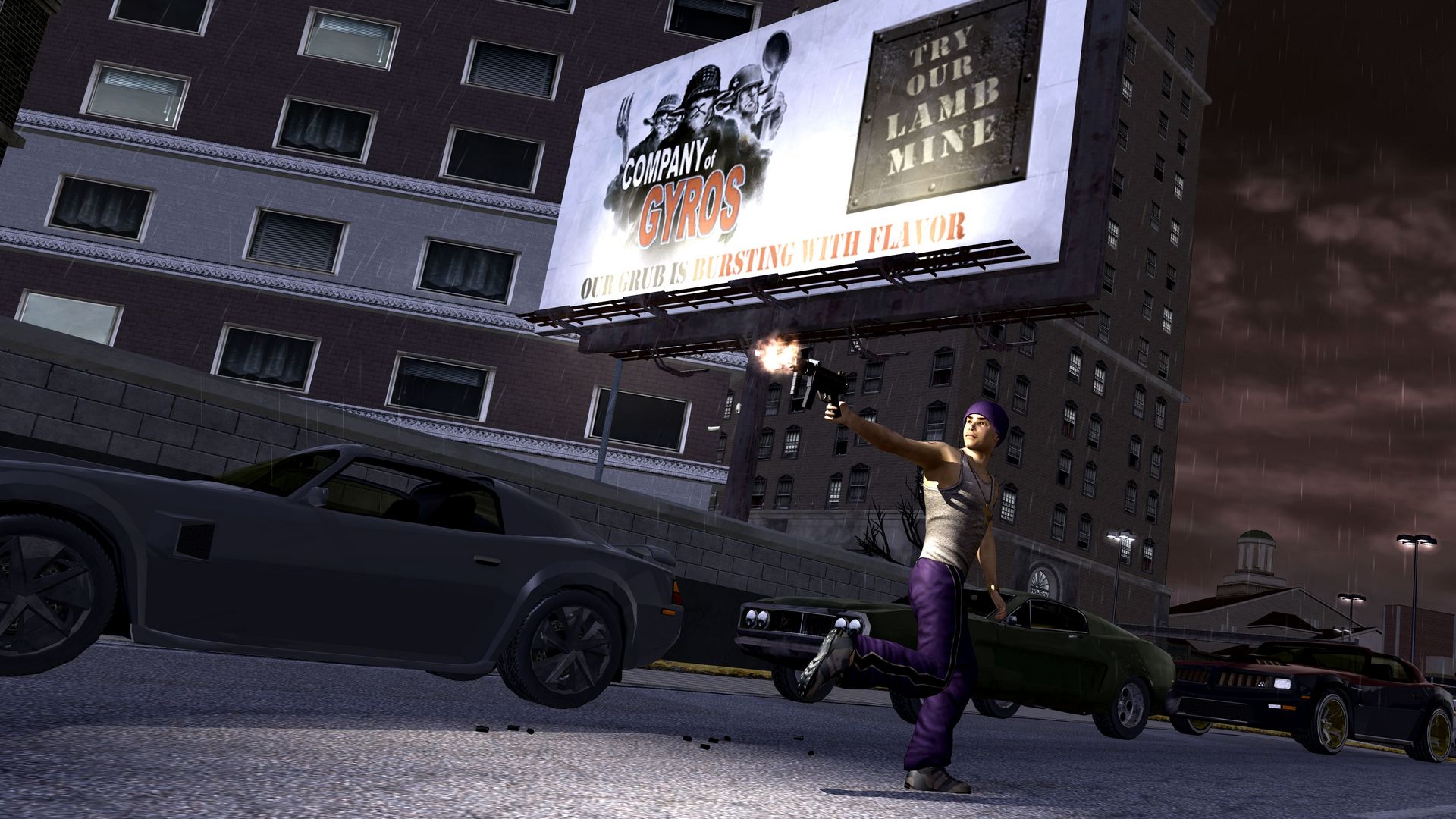
Story missions and Strongholds are tied to Respect. A full Respect bar is spent to begin one of these jobs, while Activities, Diversions and fighting rival gang members build it again. This creates a loop between campaign progress and life outside the main objectives: the player can pause a gang storyline, try a side activity, earn enough Respect and return to a mission. Strongholds are separate operations connected to the control of a neighborhood, while the broader story missions move the conflict against each rival group forward. The phone and map help keep objectives visible as the player moves between districts, and the mission display tracks the current task rather than requiring the player to follow one continuous route through the city.
Activities turn the open world into short, self-contained challenges with different goals. Insurance Fraud asks the player to throw the character into traffic and accumulate compensation, while Mayhem rewards destructive attacks around a marked area. Trail Blazing puts a flame-suited rider on a four-wheeler and extends the time available through damage; Septic Avenger uses a septic truck to spray buildings; and Heli Assault moves combat into an attack helicopter. Other activities change the role again: Fight Club is a series of arena brawls, Drug Trafficking has the player ride shotgun protecting a dealer, and Fuzz frames street policing as a reality television shoot. Diversions also reward unscripted actions such as unusual driving and combat. Both categories supply Respect and cash, but the specific task determines how the player approaches each run.
Character style feeds into that progression. Buying clothing, jewellery and items for a crib grants Style Points, which increase the Respect multiplier. The bonus is tied to owning those purchases rather than wearing one particular outfit, so appearance can be changed without losing the progression benefit. The same idea connects the character’s presentation to the city routine: shops and safe properties let the player invest in the Boss’s look and surroundings between missions. As Respect is earned from activities and combat, a stronger Style modifier increases the value of later gains. This gives shopping and customisation a mechanical role alongside their visual one, while leaving the player free to decide how to spend money and time between gang operations.
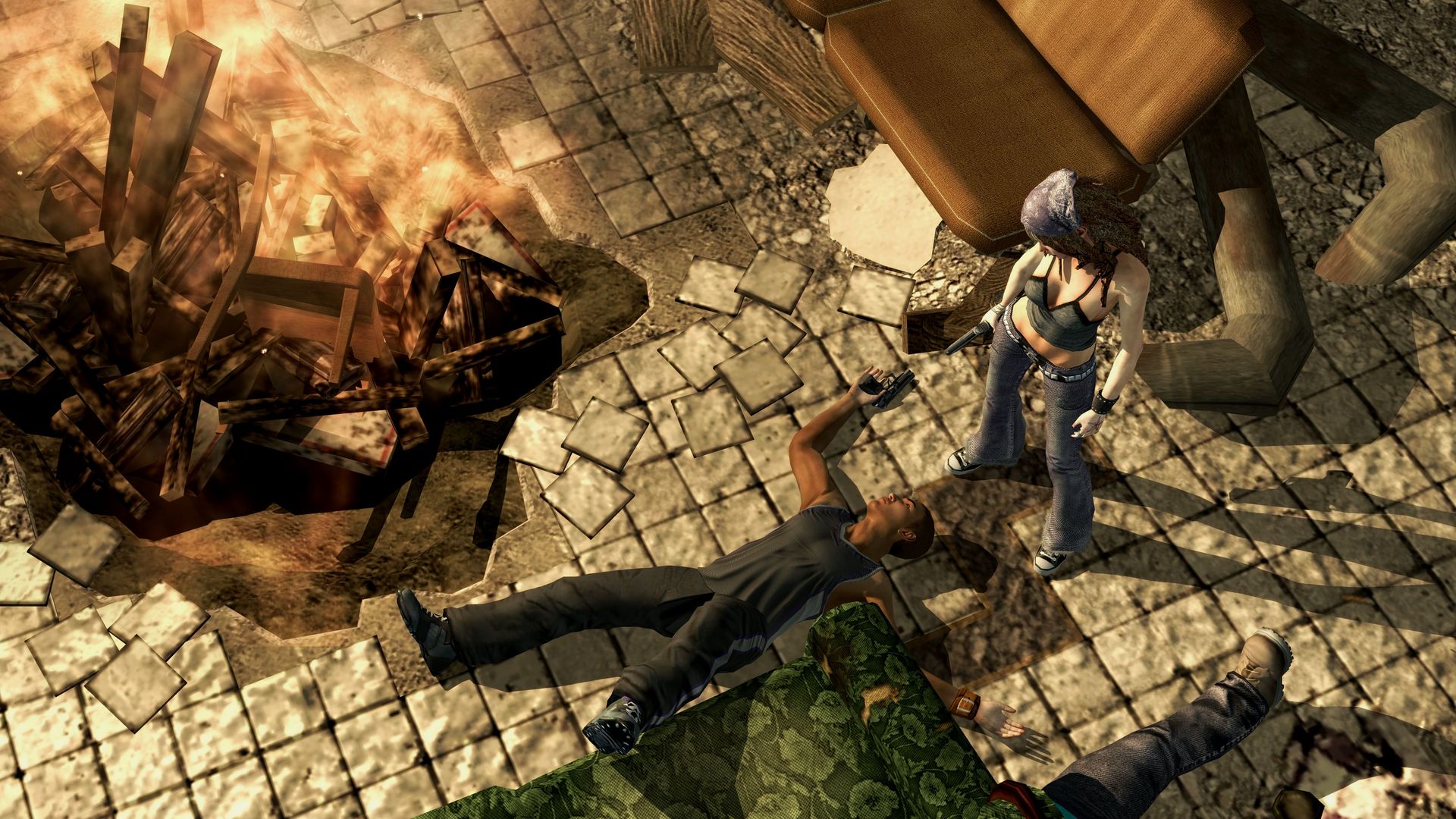
Vehicles give the city another progression path alongside missions and activities. The Boss can take cars found on the street, although some thefts draw police or rival-gang attention. Chop Shop lists turn that open traffic into a collection task: find the requested models around Stilwater and return them to the shop for cash and Respect. Completing lists also unlocks vehicle and garage rewards, including the Mongoose Buggy, a Saints vehicle and a mechanic discount. Because targets are spread across districts, this work gives the player a reason to learn the city’s roads and neighborhoods while adding new options to the garage. It is a separate route to rewards, built around driving and vehicle acquisition rather than another gunfight or story objective.
- Developer
- Volition
- Genre
- Open-world third-person action-adventure