
About Sable
Sable follows a young nomad crossing Midden during the Gliding, a rite of passage in which she leaves her family to explore, meet other clans and decide what kind of person she wants to become. Riding a hoverbike, climbing ruins and gliding between landmarks, she helps people, earns badges and discovers masks that express possible paths through life.
Sable begins at Ibex Camp, where the young protagonist prepares for the Gliding: the journey every member of her nomadic community undertakes as they reach adulthood. Her family and fellow Ibexii give the departure a personal frame, while the wider desert of Midden opens as a place shaped by past civilizations, fallen spacecraft and scattered settlements. Sable is not sent to defeat a threat or restore a kingdom. She travels to see how people live, listen to their stories and work out which identity feels right for her. The central question is carried by the masks that people wear and the roles those masks can represent.
The opening introduces the basic tools before the journey becomes open-ended. Sable receives a Gliding Stone and activates it at a temple, gaining the ability to float through the air after a jump. She also helps assemble Simoon, her hoverbike, by gathering components from several nearby sites and fitting them into the frame. Once the ceremony concludes and Sable leaves camp, Midden can be explored in a largely self-directed order: the quests and locations are optional, and the player chooses which people and regions to pursue. A compass helps point toward tracked objectives, while a Navigator lets Sable mark places seen across the landscape for later visits.
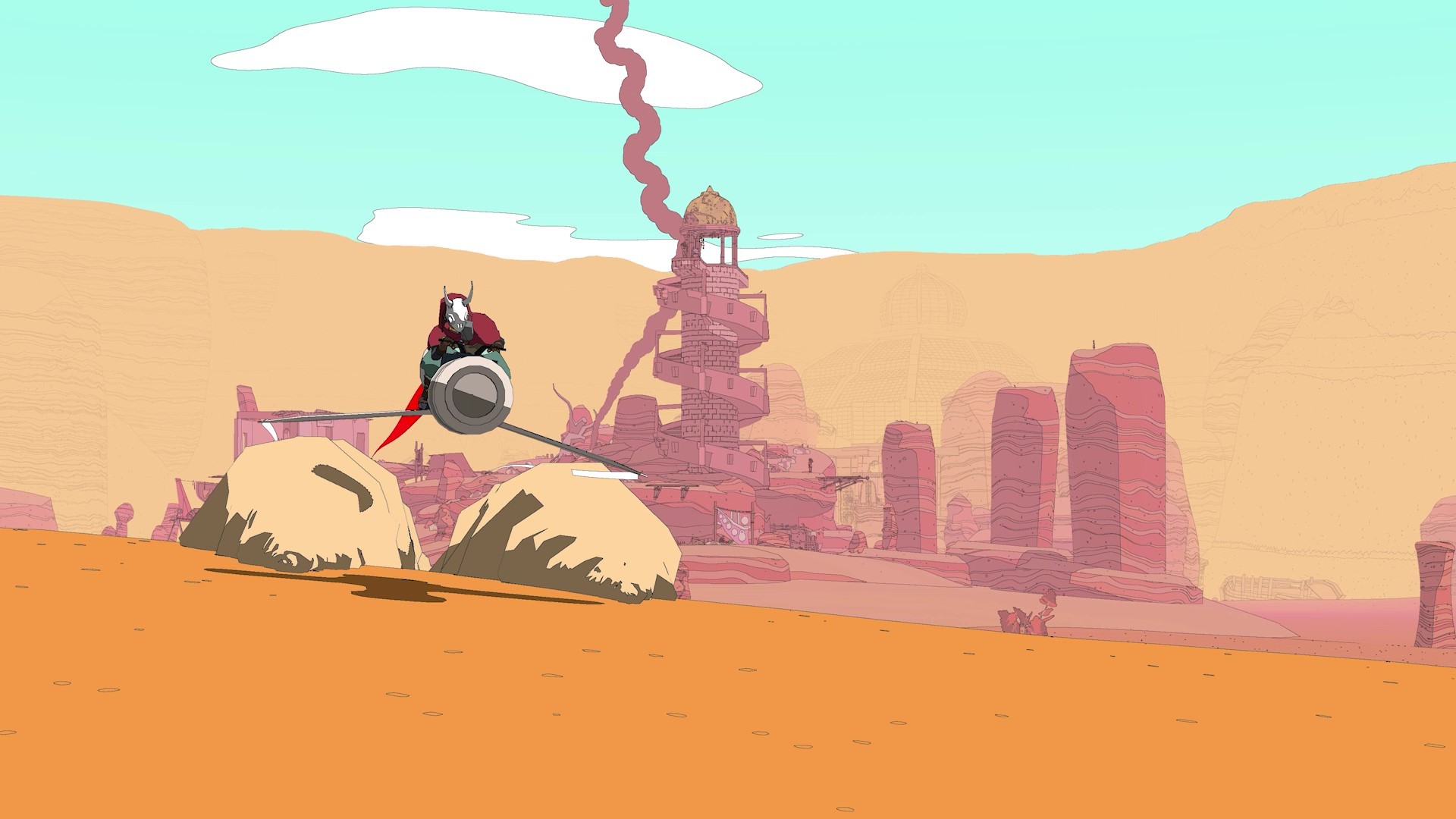
Movement is the main action that links the world together. Simoon carries Sable over long desert stretches, but the bike cannot solve every route: cliffs, towers and broken structures call for climbing, jumps and the Gliding Stone. Climbing consumes stamina, so reaching a high ledge involves reading the surface, planning pauses and choosing where to leap or glide. The expanded view from a summit can reveal another ruin or settlement, turning observation into a practical navigation tool. The game’s exploration is therefore built from connected acts of travel and approach rather than combat encounters; traversal itself is how Sable reaches people, puzzles and traces of the past.
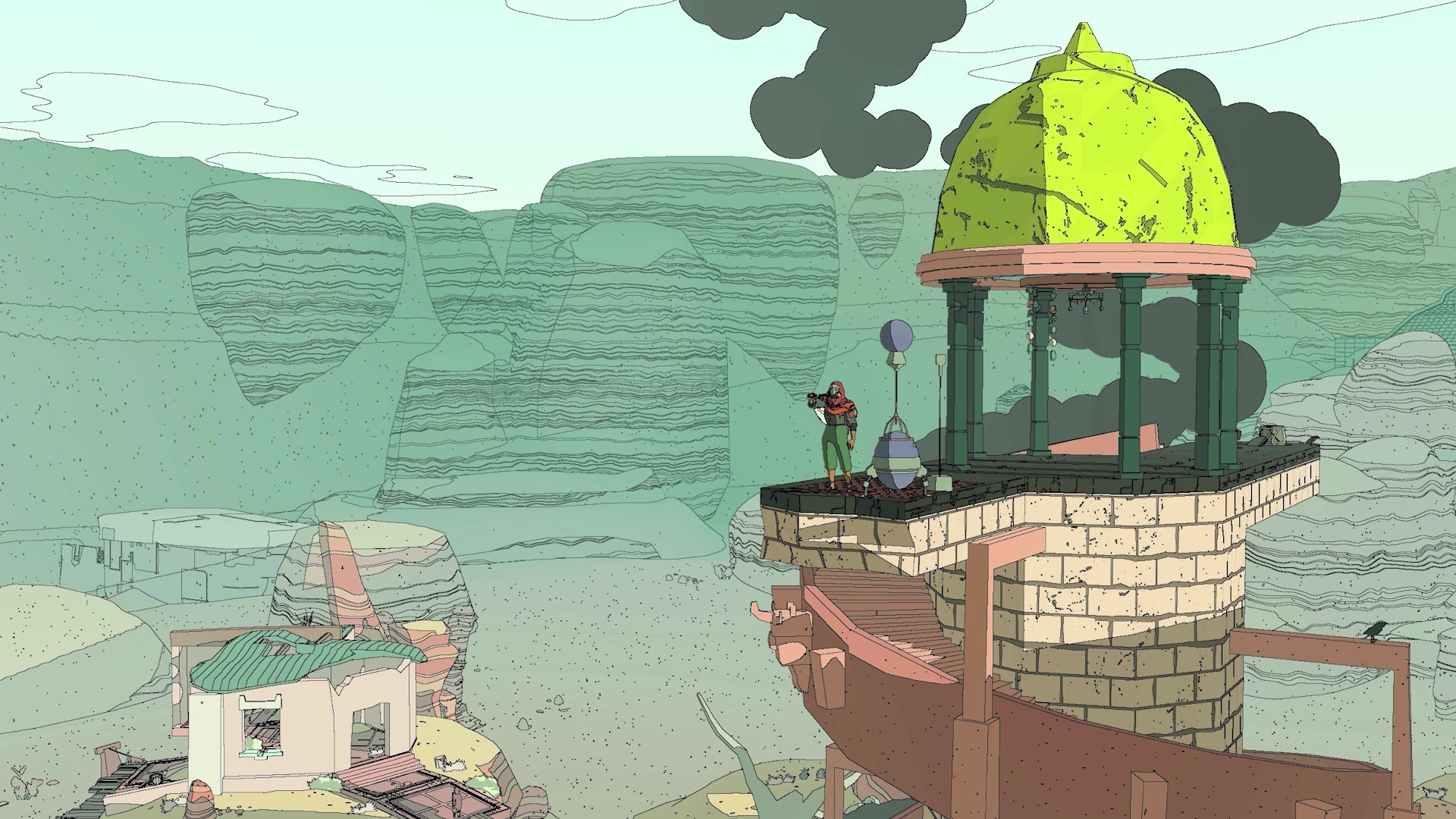
Midden’s residents give those discoveries a human scale. Sable meets nomads and members of different clans at stations, camps and remote sites, where conversations lead to requests, errands or glimpses of local customs. Tasks can involve searching a wreck, solving a device or puzzle, collecting something for another character, or reaching a difficult structure. Helping people earns badges and other rewards, but the game does not funnel every visit into one required chain after the introduction. Returning to a familiar settlement with new information or a new badge can open additional context, while the player remains free to leave a request unfinished and follow a different landmark instead.
Badges and masks turn the journey into a process of trying on possible futures. Sable can earn badges through different kinds of work and trade sets of them for masks at Mask Casters; these masks embody occupations or ways of belonging in the world. Her choice at the end of the Gliding reflects the role she wants to take back to her community. Clothes, dyes and bike components also let players shape her appearance and Simoon as they travel. Most of these customisation pieces express taste rather than improve statistics, although particular masks can matter within specific quests. The emphasis stays on what the objects mean socially and personally, rather than on building a stronger character through equipment bonuses.
Several systems reward looking closely and making detours. Chum Eggs come from small creatures encountered in the world, and bringing them to Queen Chum at the Chum Lair increases Sable’s stamina, extending how long she can climb. Cartographers found near regional balloons sell maps that clarify the terrain and point out notable sights, giving a useful outline without replacing the act of finding places. Scrap and other sellable objects can be exchanged for cuts, while bugs can be caught and collected. The map reveals the shape of the region and highlights important sights, but does not simply fill in every undiscovered point of interest. That leaves room for visual landmarks and curiosity to guide the next ride. The compass and placed markers can then help Sable return to an objective without turning exploration into a sequence of automatic directions. These activities give a reason to inspect abandoned machinery, vegetation and unusual corners of the desert even when no quest marker directs Sable there.
The expanded release also adds fishing and the Vivarium as another thread of optional collecting. Sable can get a fishing rod from the Angler at the Angler’s Hut in Sansee and cast for fish across the sandy world; helping with the Angler’s requests can lead to an Angler Mask. In The Wash, the Vivarium’s researcher asks for fish and butterflies, and specimens Sable hands over become part of the display on a later visit. This activity extends the same pattern found elsewhere: meet someone with a particular interest, explore at your own pace, and bring back discoveries that give the world another layer of detail.
- Developer
- Shedworks
- Genre
- Open-world exploration adventure