
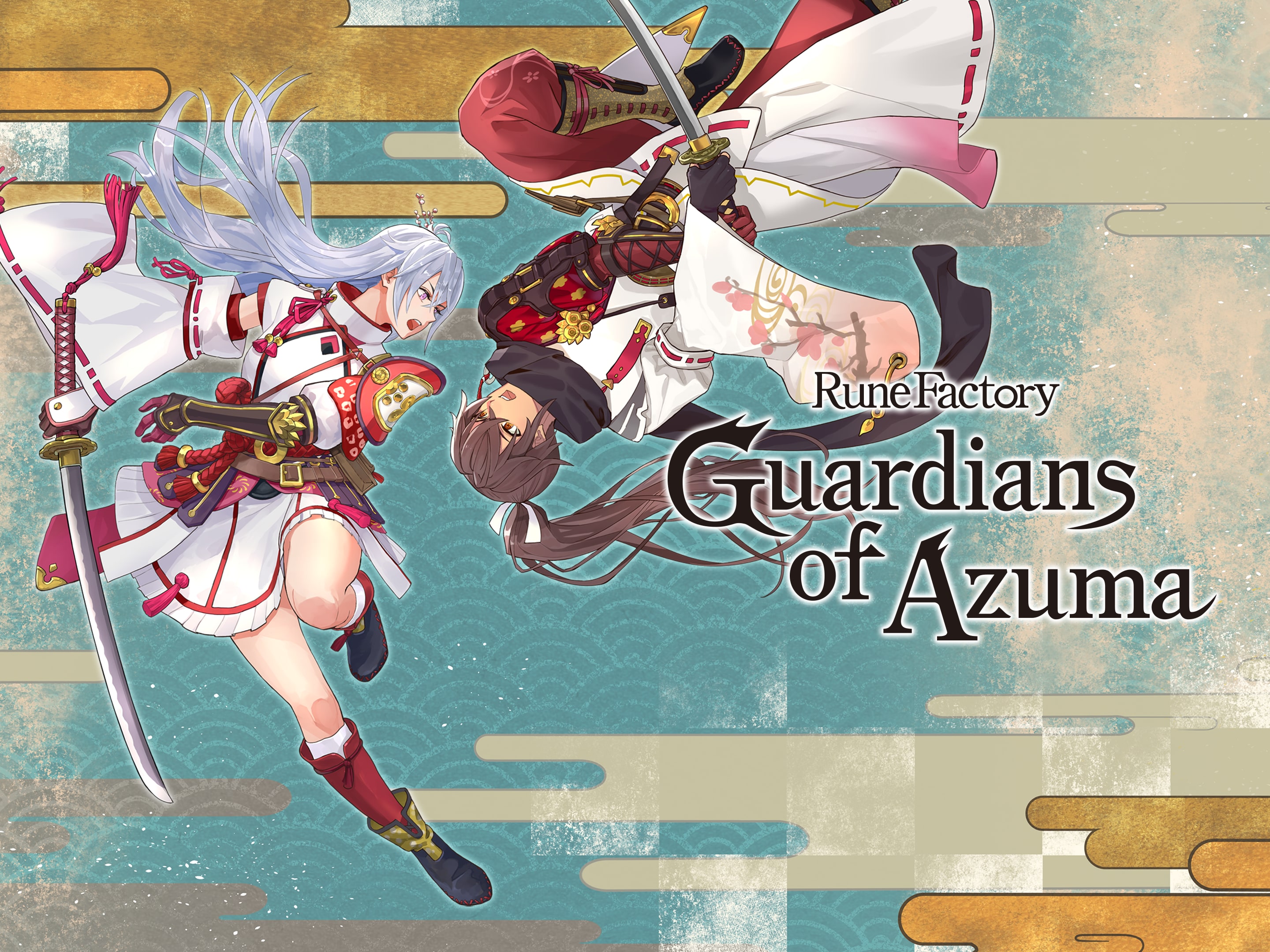
About Rune Factory: Guardians of Azuma
In Azuma, a calamity has shattered the land, silenced the runes and caused the nature gods to disappear. Chosen as an Earth Dancer, Subaru or Kaguya travels through seasonal regions, fights monsters, restores villages, grows crops and builds relationships while seeking to bring the gods back.
Rune Factory: Guardians of Azuma takes place in the eastern lands of Azuma after the Celestial Collapse, when a colossal object struck the region and broke its terrain into fragments scattered above the sky and beneath the sea. The disaster interrupted the flow of runic power, the gods of nature vanished, and mountains and fields began to fail. The player chooses Subaru or Kaguya, two childhood friends from the same northern village, as the central hero. After awakening from a dream of dueling dragons, the protagonist hears a voice asking them to accept the power of an Earth Dancer and save the land. Their journey is therefore both a search for Azuma's missing gods and a practical effort to restore places where people can live. The setting draws on Japanese cultural imagery in its landscapes, clothing, music and creatures, while its four regions are each associated with a season. The story's broad premise gives the adventure a clear direction, but the day-to-day work of rebuilding, farming and meeting residents fills in what recovery means for individual communities.
The world opens by region as the story advances. The Spring Region is the starting area; each region has a village that works as a local base, with surrounding places to visit and monsters to face. As the journey progresses, access to Azuma's skies adds floating islands and a faster way to travel between regions. Exploration combines resource gathering with obstacles that require tools, combat or the powers earned from the gods. Ore deposits yield stone, iron and other materials, while trees provide lumber and seeds. Barriers can trap the hero inside an area where monsters spawn; clearing the enemies removes the obstruction. Blighted growths also block routes, and sacred treasures gained through story progress can destroy them. Save statues provide a return point and allow fast travel once activated. Other landmarks offer useful side activities: bonfires support cooking, rune lanterns replenish Rune Points, and secret springs restore health and Rune Points, with some also improving attributes for the day. Frog statues reward recipes when approached with the Dance of Bonds, and wayside shrines offer another source of recipes. Cleaning Jizo statues can provide onigiri, while fishing spots are identified by shadows in the water. Time matters as well: beds at Dragon Shrines let the hero rest for a few hours or advance to morning, while staying up late gradually drains health and Rune Points. These systems make a trip beyond the village a sequence of gathering, fighting, recovering and opening access to more of the landscape.
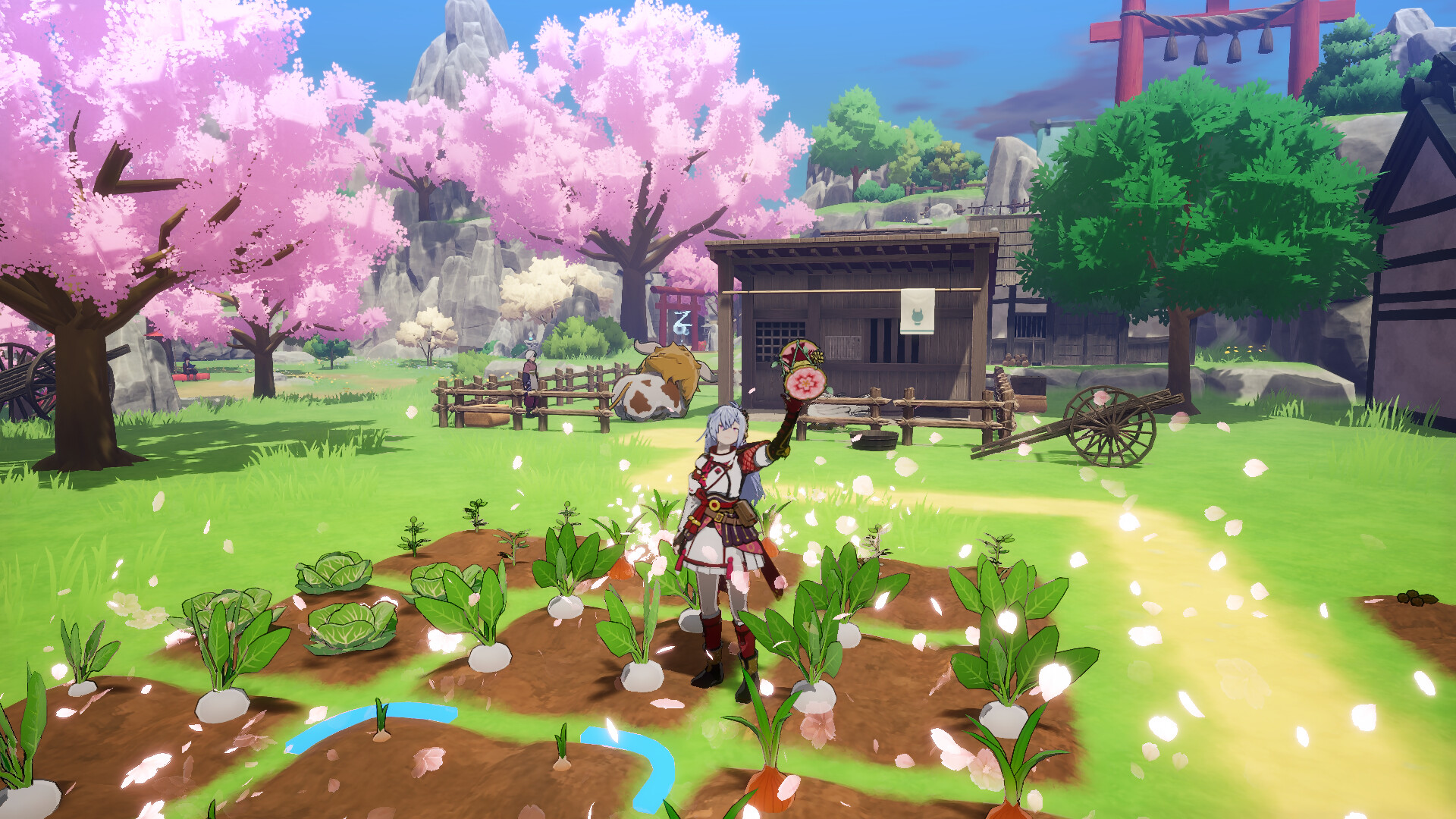
The Earth Dancer's sacred treasures and dances connect environmental restoration to both adventure and everyday life. Treasures received from Azuma's gods have distinct powers: some revive nature, some are offensive techniques, and others clear Blight. The Plum Branch enables the Dance of Bonds, used at save statues and frog statues as well as in interactions with villagers. Frog statues and small wayside shrines can yield cooking recipes after the dance, giving exploration finds a role in the home routine. The official gameplay description also identifies dances that make flowers bloom on dead trees, heal companions and attack enemies, so the same identity links care for the land with field combat. The game includes routine fieldwork rather than treating restoration as a purely symbolic objective. In Village Builder Mode, equipping the Terra Tiller lets the player clear debris and arrange fields, buildings and other terrain within designated development zones. The building menu includes terrain such as fields, rice paddies and hills; Woolby can be called to create terrain tiles. Seeds are planted in fields and need regular watering over several days. Crops can wither if neglected, while the Drum Dance can revive them or speed their growth. Harvested goods and gathered items can be shipped for cash the following morning.
Each village is a management space whose recovery depends on residents, jobs and infrastructure. Population and construction contribute to revitalizing a village and restoring the power of its patron god. Village Missions award village experience, and when enough has accumulated, the player can speak to the patron god or call them at the shrine to raise the village's level. Higher levels can increase the population limit and the number of buildings allowed. The Villages menu tracks levels, residents, building limits, missions and stat bonuses, so it is possible to see how local development is progressing. Buildings require learned recipes, money and materials, and are constructed through a carpenter before placement in a development zone. Their arrangement can grant character stat bonuses, while repeated structures or items that clash with the village's style do not provide those benefits. Residents can be assigned daily work such as farming, logging, mining, trading, herding or fishing. Their roles turn the settlement into a continuing source of crops, materials, shop access and income, tying the player's choices about layout and population to what resources become available.
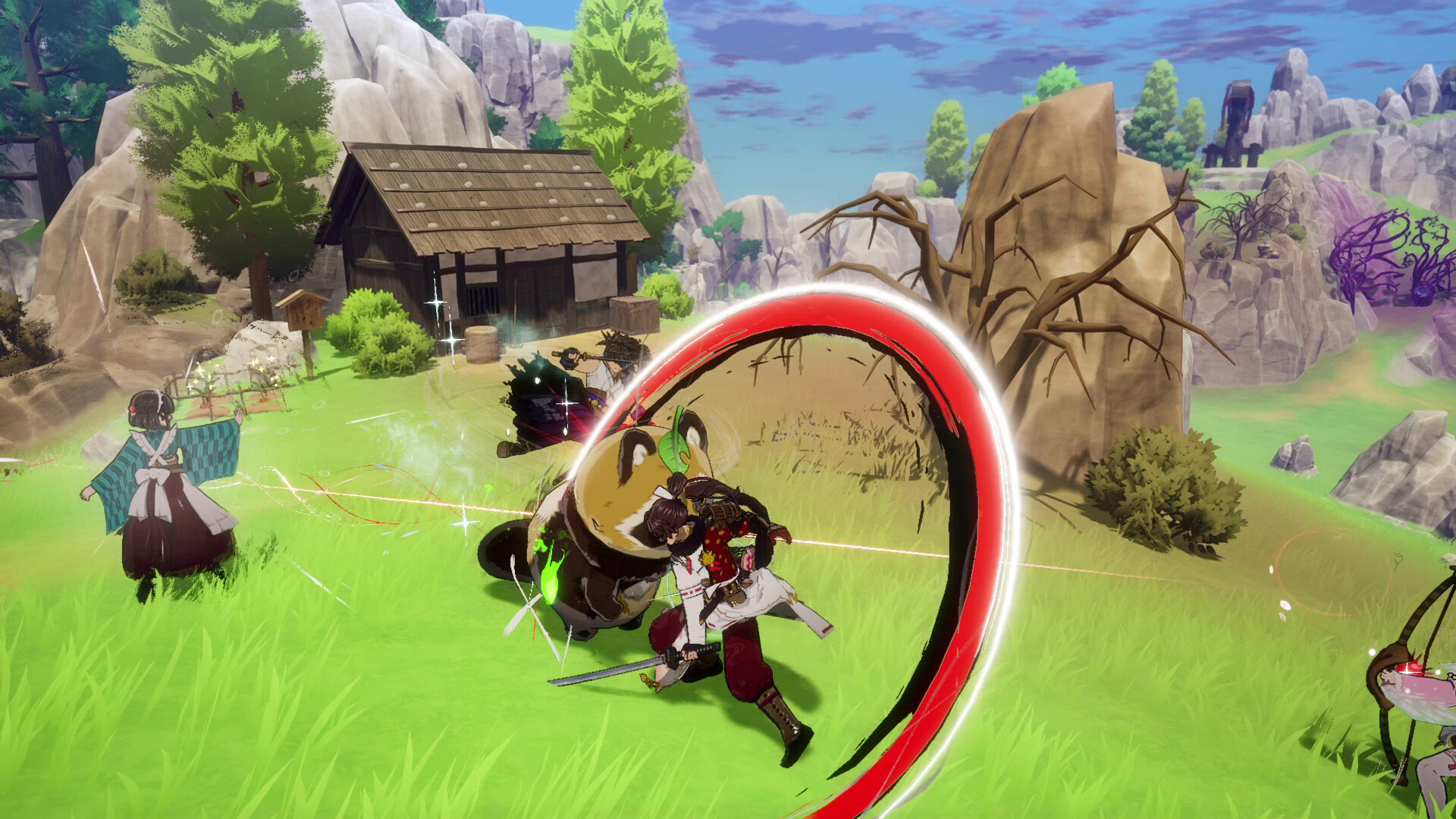
Combat is real-time and allows the hero to equip primary and secondary weapons, switching between them during a fight. The available styles include short swords for quick close-range pressure, long swords for slower powerful blows, dual blades that strike twice, bows for ranged attacks and talismans whose homing magic helps against airborne targets. A dodge can be stationary or directional; timing one just before an incoming hit creates a perfect dodge that slows time, and attacking during that opening produces a counterstrike. Strong enemies have a Stun Gauge: filling it temporarily lowers their defense, creating a chance to follow up with repeated attacks. Some creatures need not be defeated: using the Dance of Bonds before the finishing blow can create a chance to befriend a monster, then giving it an item may bring it to a barn if room is available. A monster's preferred gift improves those odds, and befriended monsters may produce items. The Blight also transforms some villagers into monsters; defeating these foes restores them to their human form and makes them available for village work. Weapons and sacred treasures are associated with seven elements, including earth, wind, fire, water, light, darkness and love. Opposing elements deal extra damage, while using the same element can reduce or negate damage. Progression supports both combat and noncombat routines: using a weapon or cooking earns experience tied to that skill, while general actions such as defeating monsters and harvesting crops earn all-purpose experience. Skill-specific points stay within their matching tree; all-purpose points can be invested wherever the player chooses.
Residents are more than workers in the villages. Speaking with them and maintaining positive interactions raises individual Bond Levels, which can unlock skills for those characters and allow them to join adventures. Special hangouts become available when a villager has a yellow speech bubble, and the activities depend on the bond already established. Social-skill nodes expand those activities, while profiles track bond progress and reveal a person's preferences or concerns over time. Gifts can be loved, liked, disliked or hated, and birthdays and seasonal festivals give the calendar recurring occasions for interaction. At a sufficiently high bond, a character's Bonding Quest can begin; reaching Bond Level 7 and completing the relevant quest permits a confession and a dating relationship. Further events include dates, marriage and, after enough time as a married couple, the possibility of welcoming a child. This relationship path shares the same residents and village schedule as the work and exploration systems: villagers can staff shops or help with production and also become companions with personal storylines. The game is available for Nintendo Switch, Nintendo Switch 2, Steam, PlayStation 5 and Xbox Series X|S; the Switch 2 edition adds higher-resolution visuals, faster frame rates and Joy-Con 2 mouse support for village construction.
- Developer
- Marvelous Inc.
- Genre
- Action role-playing and life simulation with farming and village-building systems