
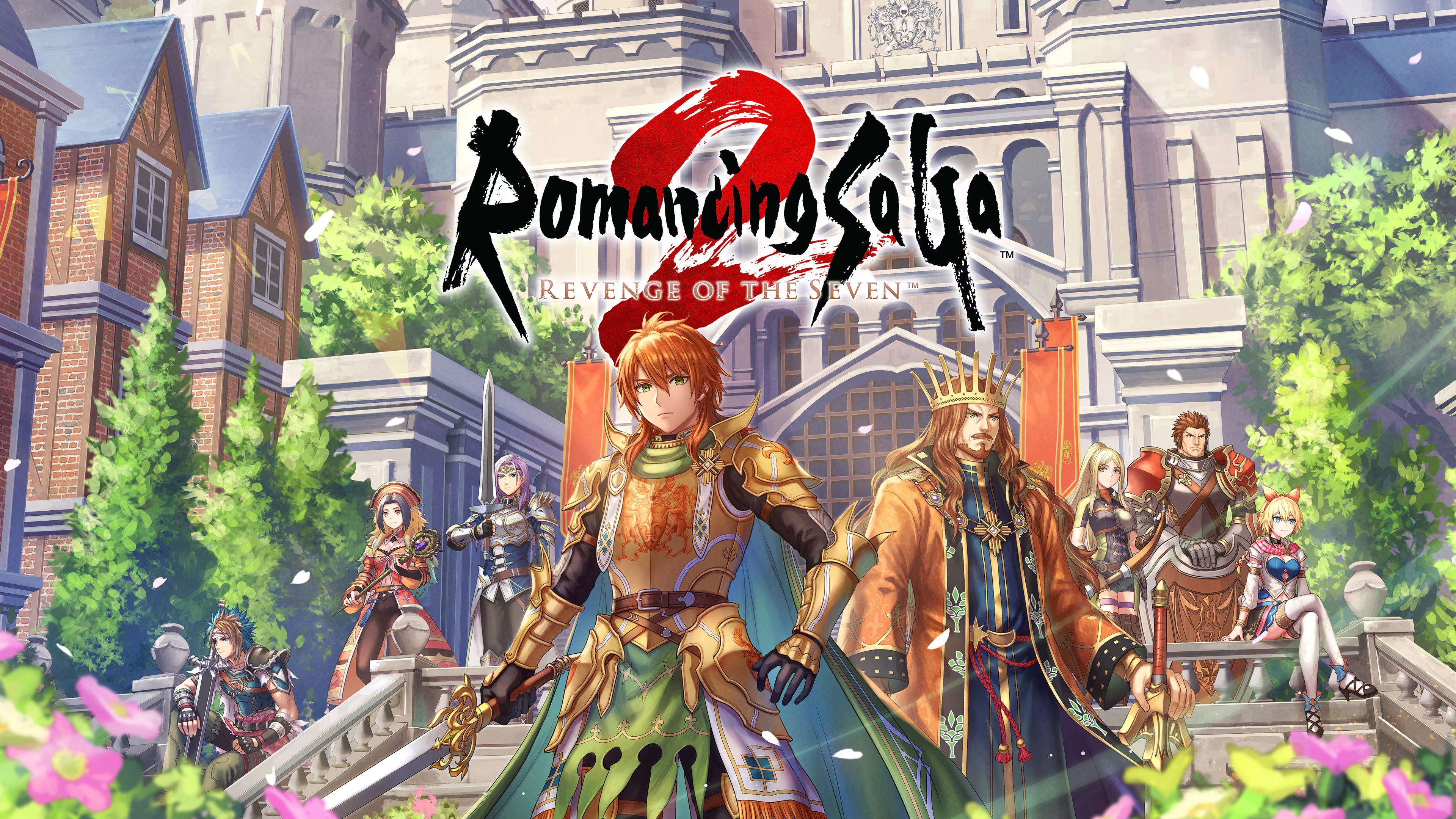
About Romancing SaGa 2: Revenge of the Seven
Lead the Varennes Empire through generations in a three-dimensional remake of Romancing SaGa 2. Inherit the memories and abilities of successive rulers, explore a changing world, develop Avalon, and choose how to confront the Seven Heroes through turn-based battles shaped by weapon and spell proficiencies, formations, enemy weaknesses and linked United Attacks.
Romancing SaGa 2: Revenge of the Seven turns the fate of an empire into a conflict that outlives any one ruler. The Seven Heroes were once celebrated for saving the world from demonic forces, then vanished; when their return brings violence to the Varennes Empire, Emperor Leon and his family are caught in the first clash. Leon’s son Gerard inherits the throne and a way to carry the struggle forward: the inheritance magic lets a successor receive the memories and abilities of the ruler before them. The goal is therefore not simply to win one campaign with one fixed group, but to lead Varennes through a succession of reigns and confront the Seven Heroes across a span of centuries. Kzinssie, Subier, Dantarg, Noel, Bokhohn, Rocbouquet and Wagnas are the central adversaries, while the imperial line supplies the changing protagonists. The remake retains the original game’s generational premise while retelling it with fully three-dimensional characters and environments.
That structure shapes the story’s pace and its choices. After the opening events, the free-scenario design lets the emperor pursue regional problems in different orders, and the history that emerges depends on how the player handles them. Decisions in conversations matter, but so do the route taken through a quest and the method used to resolve it. The Seven Heroes need not be challenged in one fixed sequence; expanding the empire, learning about a region and deciding which conflict to address can produce different events and opportunities. Some quests can become unavailable when choices or the passage of time close them, so the narrative is presented as a changing record of imperial decisions rather than a single chain of mandatory chapters. As the campaign advances, generations pass and the world’s political situation changes. A ruler’s reign is therefore a limited window for some local disputes: a quest can be interrupted by the next transition, while an earlier success may leave a lasting change in imperial territory or party options. The changing cast is part of the premise, since each generation continues work begun by people it never knew. This broad structure leaves room to pursue optional regional stories, recruit further classes and bring new lands under Avalon’s influence while continuing the larger war.
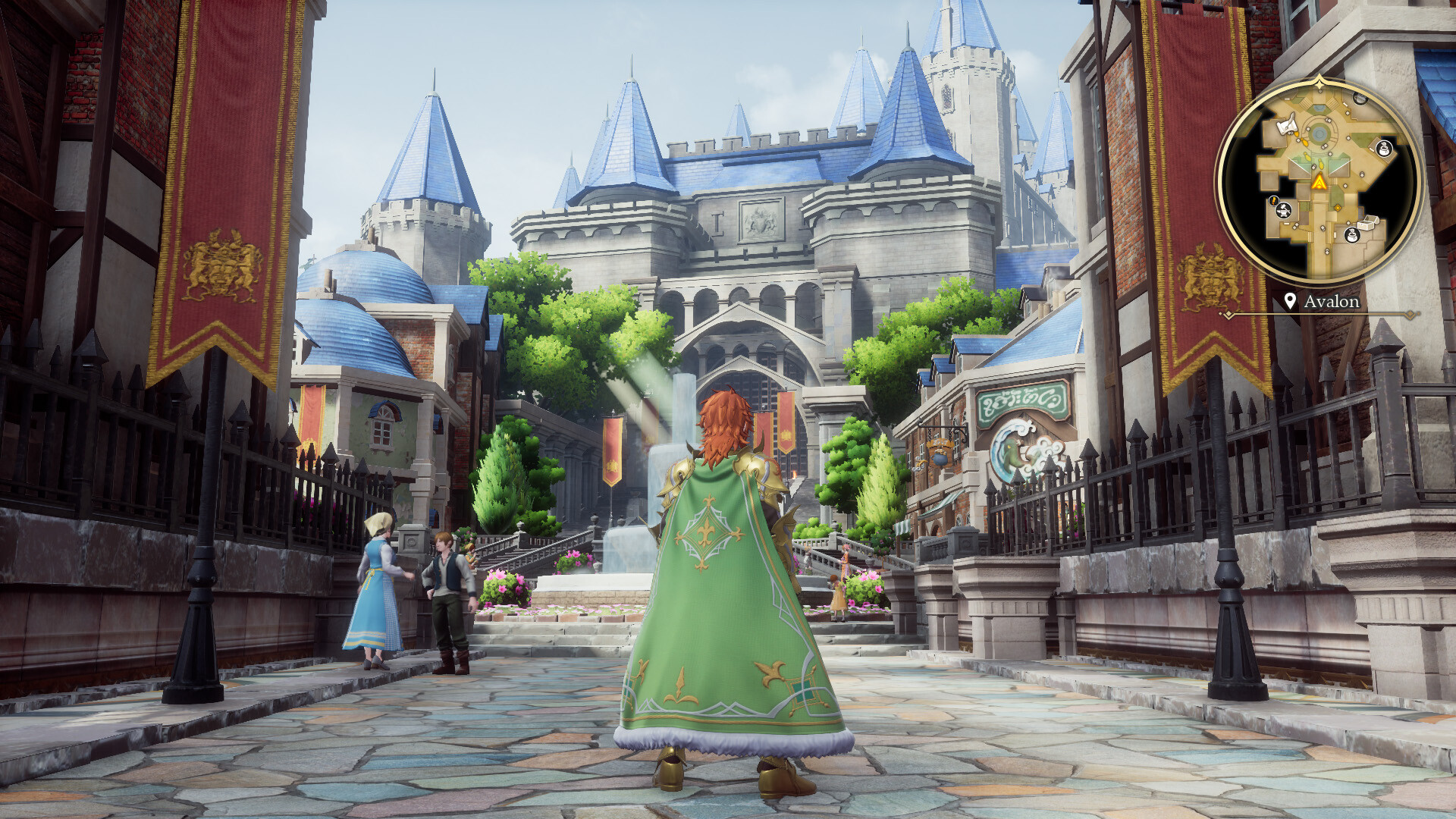
Exploration connects those decisions to the physical world. The player travels from Avalon into settlements, fields and dungeons, speaks with residents to learn about local troubles, and follows leads that can open further destinations. A region may become accessible through geographical discovery, information from an NPC or a choice made during a quest. The remake adds guidance that helps point toward available quests and places of interest, while leaving the order and resolution of many events open. Moving through these spaces is also a way to uncover the empire’s past: scattered fragments called the Seven Heroes’ Memories reveal episodes from the period when the heroes were still regarded as protectors and gradually provide context for their transformation into enemies. The teacher character known as Sensei appears in towns and dungeons; finding Sensei awards stamps, and collected stamps provide practical benefits such as increased imperial income, faster facility development or help locating unopened treasure chests. Exploration thus feeds both the story and the empire’s resources.
When enemies are encountered, combat shifts to a turn-based timeline that displays the coming actions of allies and foes. A character acts when their icon reaches its place in the sequence, so the player can consider the visible order before choosing a weapon technique, spell, item or other command. Attacks can expose enemy weaknesses to particular weapons or magical elements. Exploiting those weaknesses builds the party’s connection gauge; once it is full, a United Attack lets several companions perform a linked sequence of powerful actions. Weapon and spell techniques use Battle Points, so the party weighs immediate damage and support against the points needed for later turns and battles. The battlefield also has an elemental field state, or terrain aura: fire, water, earth, wind, heaven or darkness can strengthen matching techniques and restore health, and a technique from an opposing element can change the state. These systems make target selection, action timing and the party’s mix of skills matter together. The timeline is useful for deciding whether to interrupt a dangerous enemy, remove a weakness-bearing target before its turn, or preserve a spell user’s BP for an approaching threat. Since the terrain state helps both sides when it matches their element, a party may also need to change the field instead of simply repeating its strongest elemental attack.
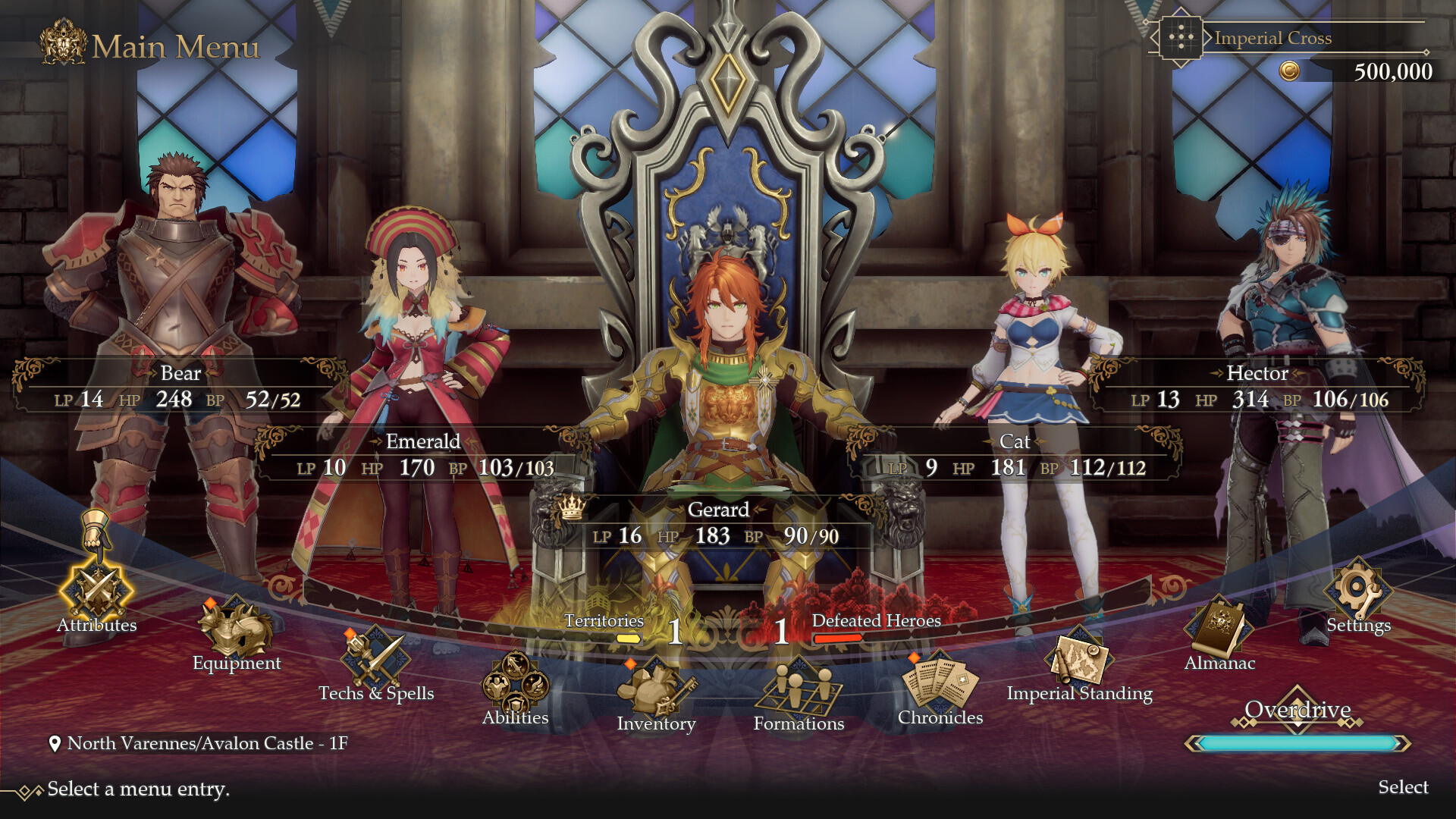
Character growth is tied to use and to the empire’s succession. The remake includes eight weapon families—swords, greatswords, axes, clubs, spears, small swords, bows and martial arts—and six schools of magic. Repeated use raises the corresponding proficiency, while classes have different strengths in weapons and magic. During battle, a character may glimpse a new weapon technique; a lightbulb indicator can signal a likely opportunity, and a technique learned this way becomes available for later use. Characters can also learn to evade enemy techniques, turning a successful insight into a defence against that attack in future encounters. Class abilities are earned through battle victories and can later be mastered so that other classes may equip them. Formations provide another layer of preparation: each arrangement grants its own effects, such as increased attack power or reduced enemy attention, and the class of a newly appointed emperor determines which new formation can be learned. A successor carries forward part of the previous emperor’s abilities, connecting individual growth with the dynasty’s longer development.
The throne and the capital are active parts of progression, not merely story decoration. A new emperor can be chosen when the party is defeated, when the ruler’s Life Points are exhausted, or when the story advances far enough for a generational transition; the successor inherits some of the former ruler’s capabilities. The current ruler may also abdicate voluntarily, although two consecutive rulers cannot both do so. In Avalon, imperial facilities extend what the state can do. The blacksmith develops and upgrades weapons, shields and armour using materials and crowns, with completed work becoming available after further battles or the passage of years. The magic research institute teaches registered spells according to a character’s spell proficiency, and hidden ancient texts found in fields or dungeons enable the development of combined spells that fuse two schools. The Imperial University offers examinations with material and money rewards, while the Avalonian Gardens grow a tree that adds recurring crowns to imperial income. These projects turn regional exploration, battle results and the passage between generations into resources for later expeditions. The forge’s delay makes development a forward-looking decision: investing crowns and collected materials does not produce equipment immediately, so the player must continue through battles or story time before claiming the result. Research likewise links discovery to long-term growth, because finding a text is only the first step toward making its paired-school spell available.
Revenge of the Seven is a full three-dimensional remake of the 1993 Romancing SaGa 2, with updated character and battle-growth systems, selectable difficulty, Japanese and English voice acting, and original as well as rearranged music. Its remade presentation brings the Varennes world, its settlements and its cast into 3D while keeping the generational succession and free-scenario foundations at the centre. For the Steam product represented here, the page identifies Square Enix and xeen Inc. as developers and Square Enix as publisher; its product description also advertises a separate opening demo whose save can carry into the full game. That demo is a distinct way to sample the beginning, ending when Leon and his companions challenge Kzinssie. Beyond that opening, the full campaign follows successive emperors into regions, battles and choices that no single reign can contain.
- Developer
- Square Enix; xeen Inc. (Steam listing)
- Genre
- Non-linear RPG; turn-based party combat