
About RoboCop: Rogue City
RoboCop: Rogue City follows Alex Murphy, the cybernetic police officer, through a new crime wave in Old Detroit and an investigation into a dangerous conspiracy. The first-person action adventure combines firefights with evidence gathering, interrogations and open-area assignments, while upgradeable abilities and player decisions shape how missions and citizens’ stories proceed.
RoboCop: Rogue City is a first-person action adventure developed by Teyon and published by Nacon, set in Old Detroit during a new wave of crime. Alex Murphy, the police officer transformed into RoboCop, is sent to restore order as a new enemy threatens the city. The game’s story takes place between the events of RoboCop 2 and RoboCop 3 and follows an original investigation rather than retelling one of the films. Peter Weller returns as the voice of RoboCop, bringing a familiar character into a story built around crime, corruption and a conspiracy that reaches beyond individual street encounters.
The campaign alternates between explosive firefights and police work in open areas. Players gather evidence, question suspects and respond to incidents while moving through Old Detroit and other locations connected to the investigation. These duties give the protagonist more to do than clear rooms: collecting information and deciding how to address a situation can affect the fate of citizens and the direction of a mission. Side quests sit alongside the main case, presenting local problems and people whose circumstances become part of RoboCop’s day-to-day enforcement work. The result is a structure that shifts between direct action, exploration and decisions about how to carry out the law.
Combat reflects RoboCop’s armoured body and the Auto-9 pistol he carries. The Auto-9 is the signature firearm, while the game also offers a wider selection of weapons that can be used during the first-person encounters. RoboCop’s factory-built strength and cybernetic abilities support an assertive approach to hostile groups, and his equipment and skills can be improved as the story progresses. The player therefore balances shooting with the advantages of a powerful law-enforcement machine, confronting criminals across streets and interiors rather than controlling a lightly equipped investigator. Weapon choice and ability upgrades develop over the campaign, giving progression a mechanical role alongside the unfolding case.
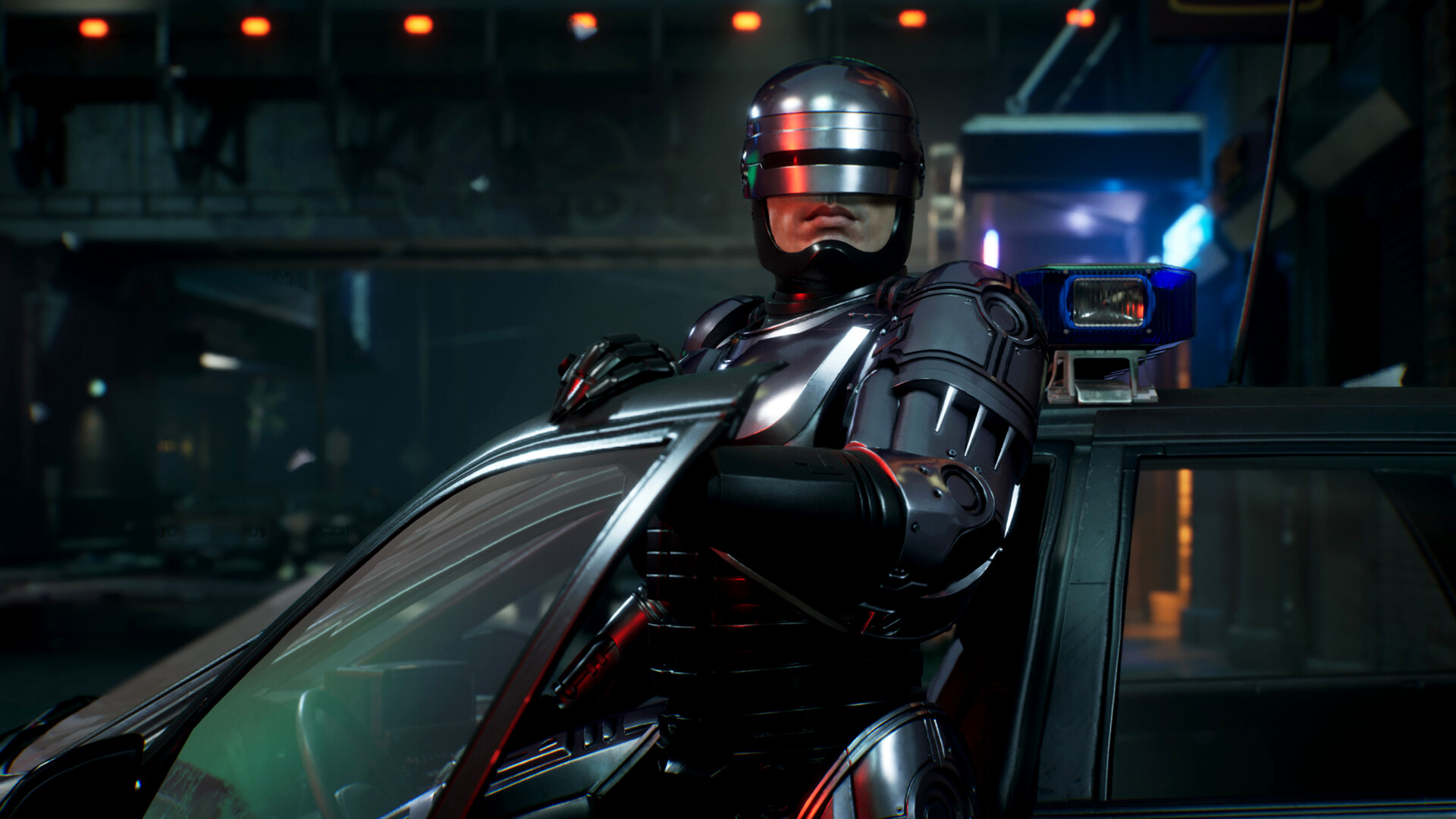
Investigation and enforcement are connected to a decision system framed around RoboCop’s prime directives. In open areas, players can choose how to fulfil objectives according to their own sense of justice, from pursuing evidence to questioning suspects or restoring public order. The consequences can reach citizens and mission outcomes, so conversations and side activities contribute to how the campaign unfolds. This creates a contrast between RoboCop’s fixed mechanical identity and the player’s discretion in applying the law: he remains a heavily armoured officer, while the path through some situations depends on how the player handles them. The narrative uses those choices to place police work inside the larger crime story.
As the investigation develops, familiar faces and recognisable elements from the film series appear alongside new characters and places. The plot follows a dangerous conspiracy within a city already strained by crime, while RoboCop’s duties bring him into contact with people affected by disorder at street level. These threads share the same setting but serve different purposes: the main case advances the story of the new threat, while local assignments let the player address individual incidents and citizens. The campaign’s placement between the second and third films allows it to tell a separate story within the franchise chronology, with references and returning characters supporting the continuity without replacing its original plot.
Progression develops RoboCop’s capabilities over time. The official game description identifies cybernetic abilities that can be upgraded, and the developer’s materials also describe improvements to the Auto-9. These systems let the player shape how RoboCop performs in later encounters as he grows more capable over the course of the investigation. The upgrades complement the broader mission cycle: explore a district, collect information, deal with threats, and decide how to respond to the people encountered there. Combat rewards the character’s mechanical strength, while the investigation and dialogue decisions highlight the human questions around Alex Murphy’s continuing role as a police officer.

The official product description identifies the Auto-9 as RoboCop’s signature sidearm and lists twenty other weapons available during the adventure. This gives the campaign a broader equipment pool around its recognizable pistol, with firearms available for the first-person confrontations encountered on duty. RoboCop’s built-in strength and upgradeable cybernetic abilities complement that arsenal, distinguishing his role from that of a conventional human investigator. The combination of his familiar weapon, alternative guns and mechanical capabilities frames combat around the particular fantasy of an armoured police officer moving directly into dangerous situations. The player’s equipment and upgrades develop over the campaign as the investigation draws RoboCop into increasingly serious threats.
New Game Plus adds a defined replay path after the campaign is completed. Teyon says that finishing the game with the update applied creates a new save, and loading it starts the replay with previously unlocked skills and Auto-9 upgrades retained. The update also adds the named “There Will be Trouble” difficulty, where enemies are deadlier, and a golden Auto-9 skin unlocked after finishing the story. These details distinguish the replay mode from a fresh campaign: the player carries forward earned development while facing a more demanding difficulty option. It extends the base game’s progression without introducing a separate storyline or changing the original Old Detroit investigation.
- Developer
- Teyon
- Genre
- Single-player first-person action adventure with shooter and RPG elements