
About Risk of Rain 2
Risk of Rain 2 is a third-person action roguelike about surviving on a hostile alien planet. Players fight through changing stages, collect items that combine into increasingly powerful builds and activate teleporters to advance. Its rising difficulty makes every detour a choice between gaining resources and giving enemies more time to grow stronger.
Risk of Rain 2 drops a survivor onto an unfamiliar planet filled with hostile creatures, abandoned structures and scattered equipment. The game is a three-dimensional follow-up to the original Risk of Rain, shifting its side-view action into a third-person perspective. The survivor moves through open stage environments, searches for a route forward and fights local monsters while trying to escape. A run can be played alone or in online cooperative play, where players share the stage but develop their own item collections. The premise stays focused on survival and escape; its world is revealed through locations, enemy encounters and collectible lore logs. The survivor roster includes familiar archetypes as well as characters with less conventional combat tools, so choosing a starting character is one of the few decisions made before random stage events take over. The landscapes themselves mix vertical routes, open ground and confined passages. That variety changes lines of sight and escape options: a route that is easy to cross while enemies are distant can become hazardous once a group closes in or a boss controls the teleporter area.
Each stage is a space to explore rather than a linear corridor. Chests, printers and other interactable objects spend currency or items to provide gear, while enemies appear as the survivor travels. The teleporter is the stage’s main objective: players locate it, choose when to activate it, defeat the boss it summons and remain near the device while it charges. Its area creates a combat zone, so positioning matters as much as damage. Once charging is complete, the teleporter can be used to move onward. Finding it early helps plan a route through nearby loot; waiting too long means giving the difficulty system more time to intensify.
Time shapes the run’s central tradeoff. The game steadily raises enemy threat as minutes pass, while collecting items gives the survivor more damage, mobility and protection. Searching the whole stage can produce a stronger build, but it also leaves the player facing tougher enemies during the teleporter event and on later stages. Rushing onward preserves time yet risks entering the next area with too few tools. The player weighs nearby purchases against detours, considers whether the items already collected can handle the boss and decides how much time to invest before leaving. This pressure continues as stages change and the run accumulates more items.
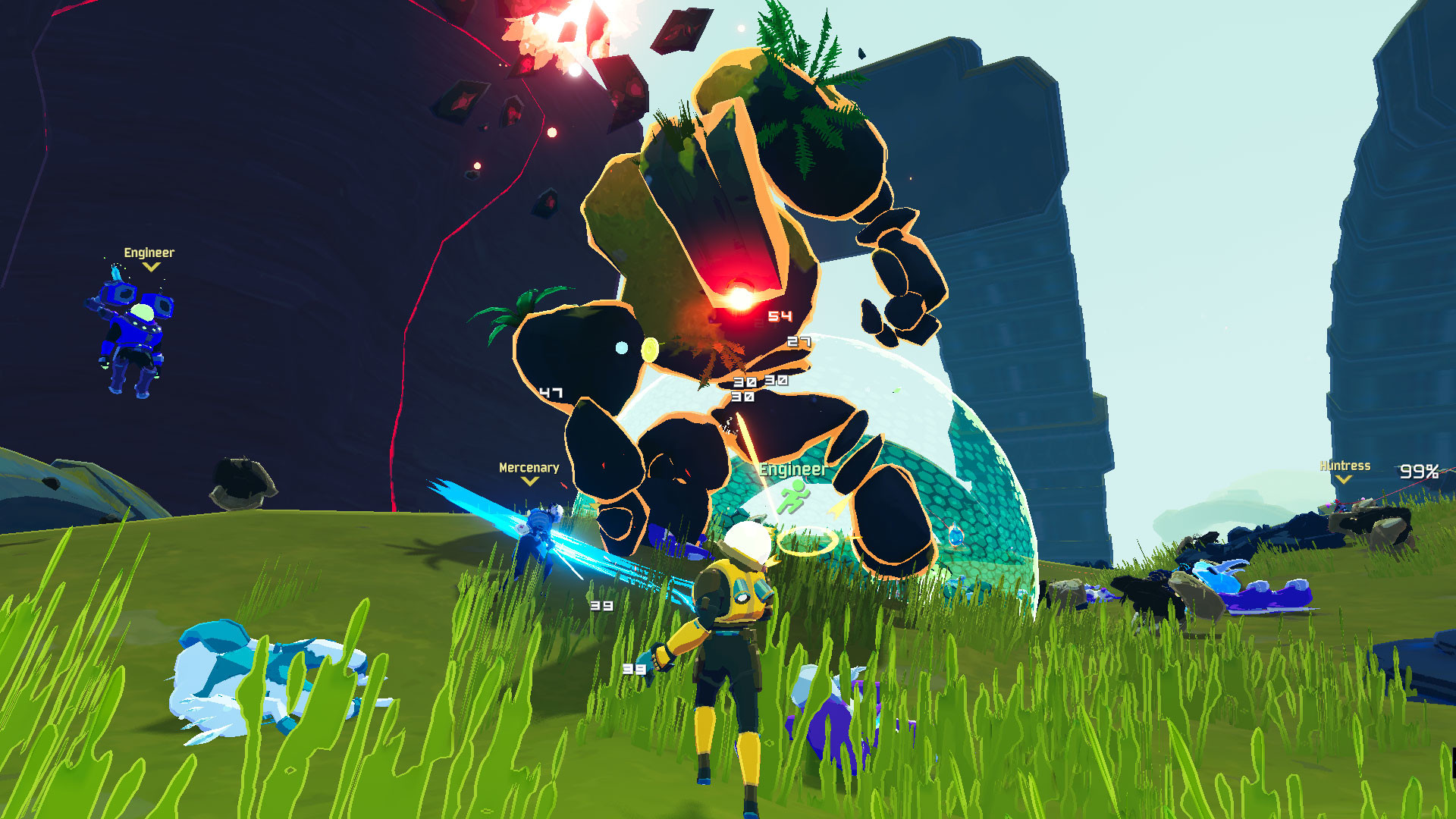
Items form the game’s build system. Many are passive effects that activate automatically, while others trigger after particular events such as hitting an enemy or defeating one. The value of an item depends on the survivor’s attacks and the rest of the inventory: rapid attacks can create more opportunities for on-hit effects, while a heavy strike may suit effects that respond to a large burst of damage. Some triggered effects can activate further effects, creating chains in which one attack leads to additional damage or area attacks. These interactions let a collection grow beyond a simple sum of bonuses, although each effect still depends on its own trigger and restrictions.
The playable survivors provide distinct ways to approach the same stages. Each has a different combat style and a set of skills used for movement, defense or attacks, and alternate skills can be unlocked for some abilities. Commando offers a direct ranged approach, Huntress can attack while moving, Engineer places turrets, and other survivors change the rhythm and reach of a fight. Their skill kits affect which items are useful: frequent hits create more chances for certain effects, while mobile skills can help a survivor cross dangerous ground or escape a crowd. Learning a character means coordinating those built-in tools with whatever the stage provides.
A stage ends through the teleporter event rather than by clearing every enemy on the map. Activating the device calls a boss into the area; defeating it and charging the teleporter grants a boss item and access to the next stage. The event rewards staying within its radius, but attacks may force the survivor to step away and return when safer. After the fifth stage, Sky Meadow, the Primordial Teleporter can send the run toward its final destination or loop back to an earlier stage at a higher difficulty. A loop extends the run and offers further chances to collect items, while the direct route aims toward an ending.
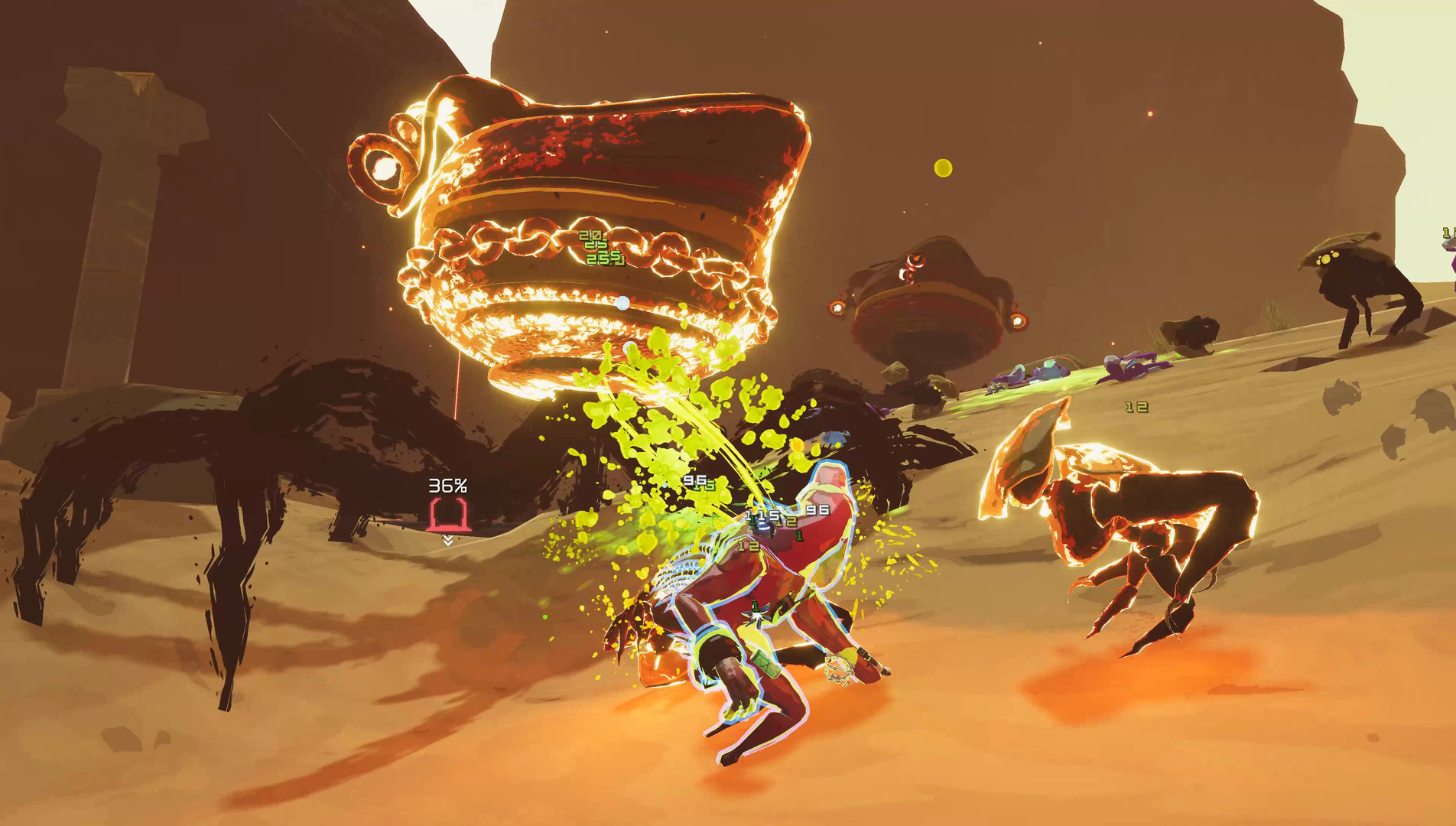
Progress also comes from unlocking survivors, alternate skills and Artifacts, which are modifiers that can change the rules of a run. Challenges provide goals that open some of these options, expanding the starting roster or letting players adjust how items and encounters behave. Randomized stages, enemies and item placements mean these unlocks feed into a run structure that changes each time. A finished or failed run does not preserve the collected build for the next attempt; instead, the player starts again with a chosen survivor and the broader set of options earned through play. In co-op, friends can divide attention across enemies and loot while the same clock and stage objective keep the group moving. Artifacts can change the rules before a run begins, including the way players choose items or how survivors change between stages. Together with different survivor skills, they give a group new ways to approach the teleporter loop.
- Developer
- Hopoo Games
- Genre
- Third-person action roguelike