
About Risen
Shipwrecked on Faranga, an unnamed survivor enters an island unsettled by earthquakes, exposed ruins and dangerous creatures. Risen follows the search for safety and answers through settlements shaped by the Inquisition and Don Esteban’s bandits, where quests, faction allegiance and training determine how the character fights and explores.
Risen begins after a shipwreck leaves the unnamed protagonist on Faranga, an island where earthquakes and newly exposed ruins have unsettled everyday life. The player moves through its wilderness, settlements and ancient structures while searching for a place in a conflict already shaped by the Inquisition. Its commandant, Inquisitor Mendoza, has arrived with soldiers and mages, while Don Esteban and his followers resist the Order’s control. The opening establishes a practical problem as well as a larger one: the survivor has little equipment, few allies and no established standing among the island’s groups. Finding weapons, meeting residents and taking on their requests gradually turns survival into a broader investigation of the island’s change. Faranga is explored as a connected landscape rather than a sequence of separate mission arenas, so a route, a guarded gate or an unfamiliar ruin can lead into quests and dangers that the player may reach at different points.
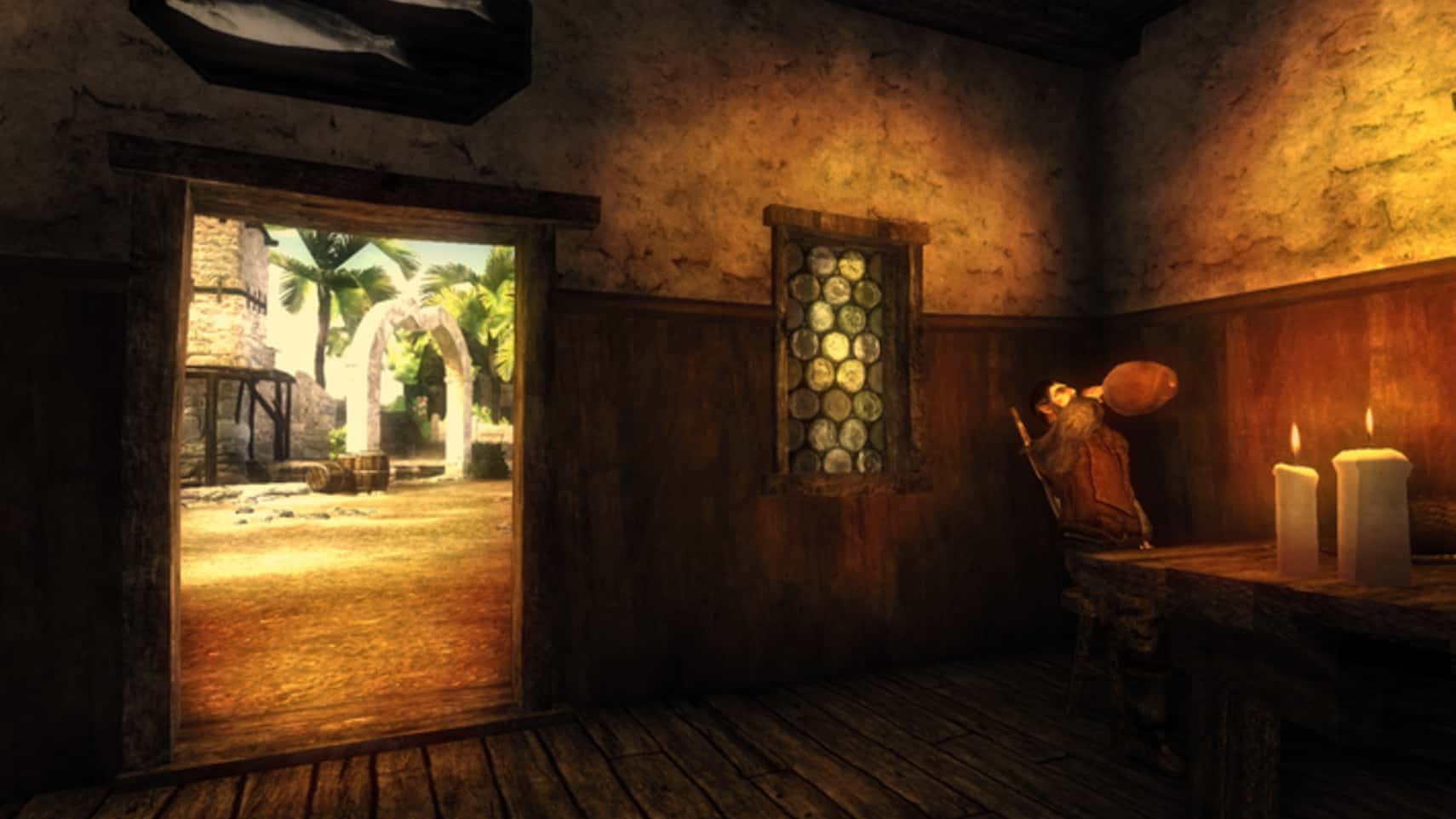
The first stretch introduces the island through people encountered along its paths. After meeting the bandit Jan, the survivor learns about the nearby farm, the swamp camp and the Inquisition presence around the monastery and Harbour Town. Sara, another castaway, can be directed toward shelter with the bandits or toward the novices’ farm, giving an early personal decision a concrete destination without deciding the protagonist’s eventual faction. These conversations work alongside exploration: characters point toward settlements, weapons and local tensions, while the player can search side paths, inspect ruins and confront animals or monsters encountered away from populated areas. Harbour Town, the bandit camp and the Volcano Keep each provide a different social centre, with guards, traders, quest givers and trainers. Returning to a place with new information or status can change which conversations and tasks are available, tying travel across Faranga to the people who control its institutions.
The faction conflict is expressed through work before it becomes a formal allegiance. Don Esteban’s bandits organize themselves from a swamp camp, while the Order operates from Harbour Town and the Volcano Keep. In the city, several disputes can be resolved in ways that benefit either the Don’s people or the Order; enough decisions in the Order’s favour open that route, while comparable work supports the bandit side. The Order’s path then separates into two roles: a warrior trained in staff combat or a mage admitted to the Convocation of the Holy Flame. This gives the player three distinct affiliations across the game rather than treating every soldier and mage as a single character build. Faction membership affects access to trainers, equipment and parts of the quest progression, making allegiance a mechanical choice as well as a political one. The quests also reveal how each group explains its control of the island and its response to the dangerous ruins.
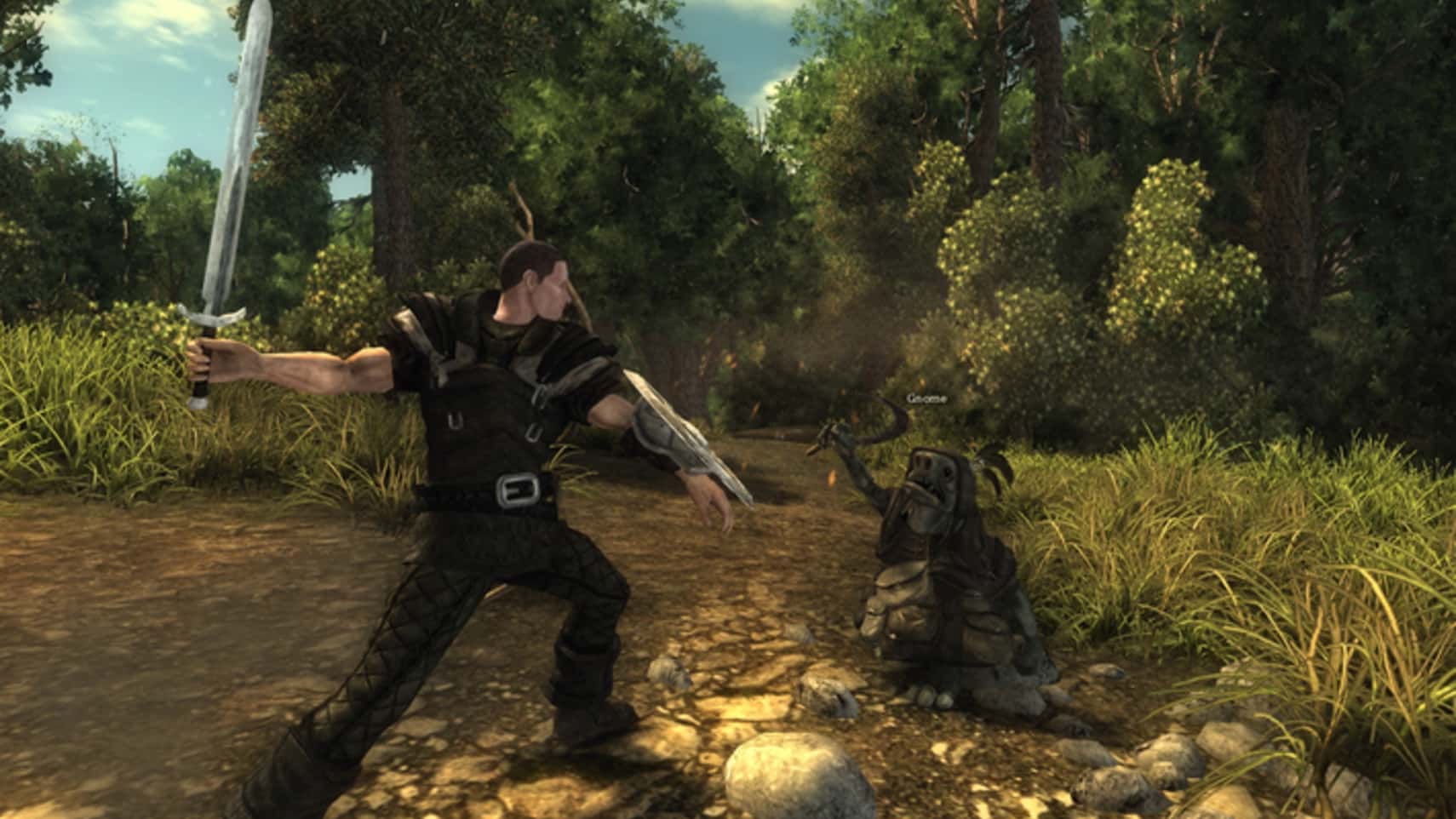
Combat starts with a limited set of moves and becomes more deliberate through training. Swords, axes and staffs each have their own fighting skill, and learned levels add actions such as counter-parries, lateral strikes, charged blows or longer attack combinations. Blocking and timing matter because advancing a weapon skill changes what the protagonist can do in an exchange, not just a number attached to damage. Ranged weapons offer another way to engage, while a mage can learn to use crystal attacks and, with sufficient instruction, rune magic. Different paths therefore emphasize different equipment and combat techniques: bandit-associated trainers develop sword and axe use, whereas the Order’s teachers support staff fighting and the mages’ magical disciplines. The player still has to obtain suitable weapons, ammunition or spells and face the enemy in the space where it is encountered; training expands the available responses rather than removing the need to read an opponent’s attack.
Character development is purchased through teachers instead of selected from a distant menu. Experience gained from quests and defeating enemies advances the protagonist, while Learning Points and gold pay for instruction in attributes and skills. Many combat disciplines cost more as their levels rise, and a trainer may require a particular faction, chapter, quest or attribute before teaching the next step. This makes the choice of where to spend points consequential: weapon mastery can unlock new attacks or access to heavier weapon classes, while Wisdom supports the magical path. Utility skills create other kinds of progress. Lock-picking opens chests according to their difficulty, pickpocketing offers a risky way to take an item from a character, and animal-gutting turns defeated creatures into usable trophies. Alchemy, smithing and prospecting also connect gathered materials to permanent improvements, weapons and jewellery, so exploring and completing side tasks can build resources for more than immediate combat.
The ruins add a separate layer to that growth because they are places to investigate as well as threats to clear. Ancient structures hold enemies, obstacles and discoveries, and moving through them asks the player to use the equipment and abilities developed elsewhere on the island. Scrolls can provide magical effects to characters who are not following the mage path, while runes and more advanced magical instruction belong to the Volcano Keep’s order of study. Crafting scrolls requires the relevant training, and forging weapons or jewellery likewise depends on learned skills and access to a smith or materials. Those systems make exploration feed back into character building: a chest may supply a component, a teacher may explain what that component can support, and a new ability may make another kind of challenge manageable. Across its chapters, Risen links island travel, faction politics, trainer-led progression and combat into one campaign about deciding whom to serve and what kind of survivor to become on Faranga.
- Developer
- Piranha Bytes
- Genre
- Role-playing game; action role-playing gameplay