
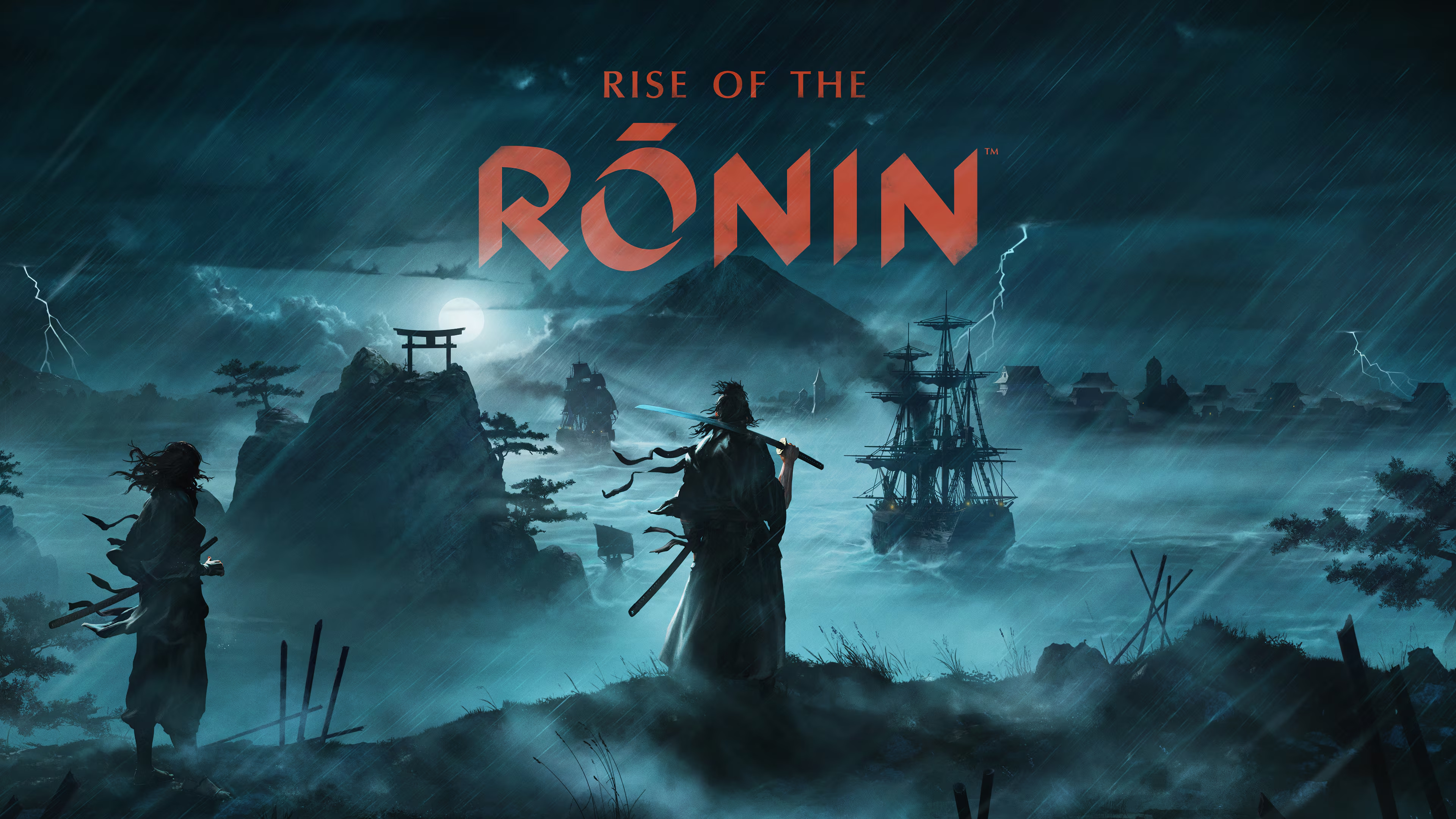
About Rise of the Ronin
Beginning with the 1853 arrival of foreign ships, a nameless ronin searches for a missing twin amid Japan’s political upheaval. Travel through Yokohama, Edo and Kyoto, take on missions, and shape relationships and allegiances through choices. Swordplay, firearms and varied traversal tools support this open-world action RPG.
Rise of the Ronin opens in 1853, when the arrival of American “Black Ships” demands that Japan open to the outside world, and follows the turmoil of the Bakumatsu period into later decades. The Tokugawa Shogunate faces opposition from those who want to restore imperial authority, while foreign powers and people seeking new alliances complicate the struggle. The player creates a nameless warrior known as a Veiled Edge, one half of a pair of blade twins trained together from childhood. During an operation against a foreign vessel, the twins are separated; the surviving ronin becomes masterless and sets out to find the other. That personal search runs through a wider story in which the future of the country is contested by people with competing ideas about authority, reform and foreign influence. The player is not assigned a fixed historical identity: the created ronin moves among real figures and fictional characters, forming relationships and making decisions that place them in the shifting political landscape. Historical people such as Ryoma Sakamoto appear alongside the game’s invented protagonists and supporting cast. The premise therefore combines a specific personal objective with a period of national upheaval, letting the player’s route through the conflict develop through missions, alliances and consequential encounters.
The journey moves through three major open-world cities: Yokohama, Edo and Kyoto. Yokohama is the initial setting, a port transformed by foreign trade and treaty arrangements. Its Kannai district places Western and Japanese influences close together, with areas such as the foreign settlement, Chinatown, the U.S. Consulate and the waterfront serving as landmarks in a city expanding around its newly opened port. Beyond the city, routes lead through inn towns along the Tokaido, the road connecting Edo with Kyoto. Edo, the shogunate’s seat, and Kyoto, the imperial capital, provide distinct stages for the political tensions introduced in Yokohama. Rather than presenting the period as a single battlefield, the changing urban environments give the conflict civic settings: ports, streets, roads and settlements where soldiers, merchants, travelers and political groups cross paths. Exploration links the main narrative to side missions, local errands, landmarks and encounters with people whose interests are not identical to those of the central factions. The open-world structure allows the player to move between story objectives and activities in each region, while local disturbances and fugitives provide additional reasons to investigate beyond the main route. The named cities and locations anchor a fictional ronin story in the particular geography of the Bakumatsu era.
Getting around combines ordinary travel with tools suited to climbing and aerial movement. The player can sprint across rooftops, use a grappling rope to reach elevated points, and deploy the Avicula, a compact glider, while airborne. The rope also works in combat, but during exploration it helps scale buildings and gain access to higher routes. The Avicula lets the ronin glide over streets and open spaces; its direction and speed can be adjusted, and the wings can be closed to descend. Using a grapple to gain height and opening the glider in midair creates a continuous route across rooftops. On the ground, a horse provides faster travel across open fields and between objectives. These options give the player several ways to approach a destination, including direct travel, elevated paths and movement that can set up an approach on an unaware enemy. Traversal is therefore connected to both navigation and encounters: climbing can reveal routes through an area, while arriving from above or pulling an enemy with the rope can turn movement into an opening attack. The world is not traversed only on foot, and the glider and grapple add vertical choices to the city and countryside spaces. Missions and free exploration share these movement tools, so the same equipment can help cross a district or position the ronin before a fight.
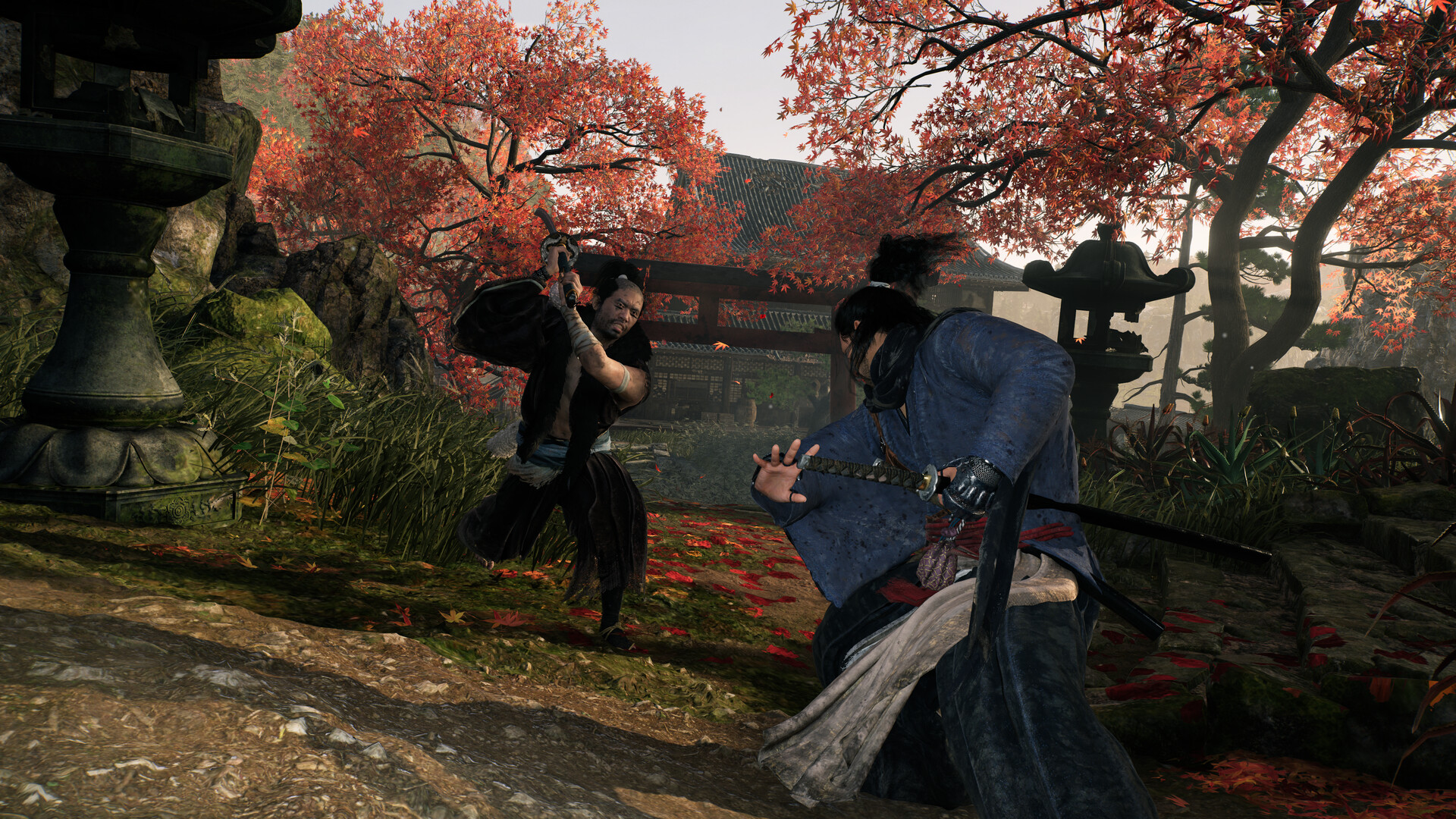
Combat centers on managing Ki, reading enemy weapons and timing defensive actions. The ronin can wield a main weapon such as a blade, spear or fists, with a sub-weapon such as a revolver, bow, rifle or shuriken available alongside it. Japanese weapons sit beside imported firearms and hybrid equipment, including the Fire Pipe, which can ignite flammable barrels, and the bayonet, which can deflect blades and counter rifle attacks. Each weapon has its own actions, and opponents use different combat styles, so the player can change styles during a fight to gain an advantage over a particular enemy. Ordinary attacks, guarding and dodging are all part of the exchange; simply attacking without regard to the enemy’s response can exhaust the player’s Ki, temporarily preventing attacks and running. Depleting an opponent’s Ki leaves them vulnerable to a critical hit. Counterspark is a timed parry performed with a sweeping weapon motion. A successful Counterspark can interrupt an enemy and lower their Ki; against attacks that cannot be guarded, it can also prevent damage and briefly stun the foe. Martial Skills add stronger techniques that can reduce an opponent’s maximum Ki, making later openings easier to create. Because a mistimed Counterspark can leave the player exposed, it is one defensive choice among several rather than a universal answer. Blocking, dodging, selecting a suitable style and watching Ki all feed into the same combat rhythm.
Political choices and personal connections shape how the ronin moves through the story. The factions include pro-Shogunate and anti-Shogunate groups as well as Western forces, and the player can support or oppose people encountered during missions. Decisions can alter the course of key events, change which characters are available to accompany the ronin, and affect how parts of the narrative unfold. The game also distinguishes these political allegiances from individual bonds: helping a character such as the inventor Igashichi can deepen a relationship and reveal more about them, while building bonds with certain people or factions opens additional dialogue and combat styles. Some relationships can develop into a Veiled Vow, a special status available with particular characters. Bonds have practical effects as well as narrative ones, connecting conversations and choices to abilities and equipment. The protagonist’s relationships with historical figures, including Ryoma Sakamoto, place the personal story alongside the broader faction conflict. The player is not limited to one conversation path for the whole game: the Testament of the Soul, available after reaching Edo, allows completed missions to be revisited so that different choices and outcomes can be explored. This replay function provides a way to inspect alternate decisions without treating every earlier choice as irreversible, while the first journey still reflects the player’s selected allegiances and relationships.
Progress comes from both the central story and activities across the regions. Combat styles are unlocked through story progression, encounters with stronger enemies, and bonds with selected characters and factions; new styles can then be equipped to change how a weapon attacks and counters particular opponents. Side missions for monks, travelers, merchants and other residents offer another route through the world and contribute to the game’s role-playing systems. Clearing bandit bases, completing local errands and pursuing fugitives raises the bond with a region. A stronger regional bond brings benefits such as merchant discounts, giving exploration a connection to equipment and preparation rather than serving only as sightseeing. Fugitives are presented as named Bakumatsu-era figures with their own backgrounds, weapons and styles, so these encounters also test the player’s knowledge of combat. The main and side activities thus feed into overlapping forms of development: regional standing, relationships with individual characters, access to styles and the equipment used in battle. Difficulty can be selected and adjusted, with Dawn reducing Ki consumption and increasing the effect of recovery items, Dusk as the default setting, and Twilight making enemies more aggressive and attacks more lethal. After the main story, Midnight provides a further difficulty setting. These options affect the challenge and some combat pressures while leaving the game’s historical setting and open-world structure in place.
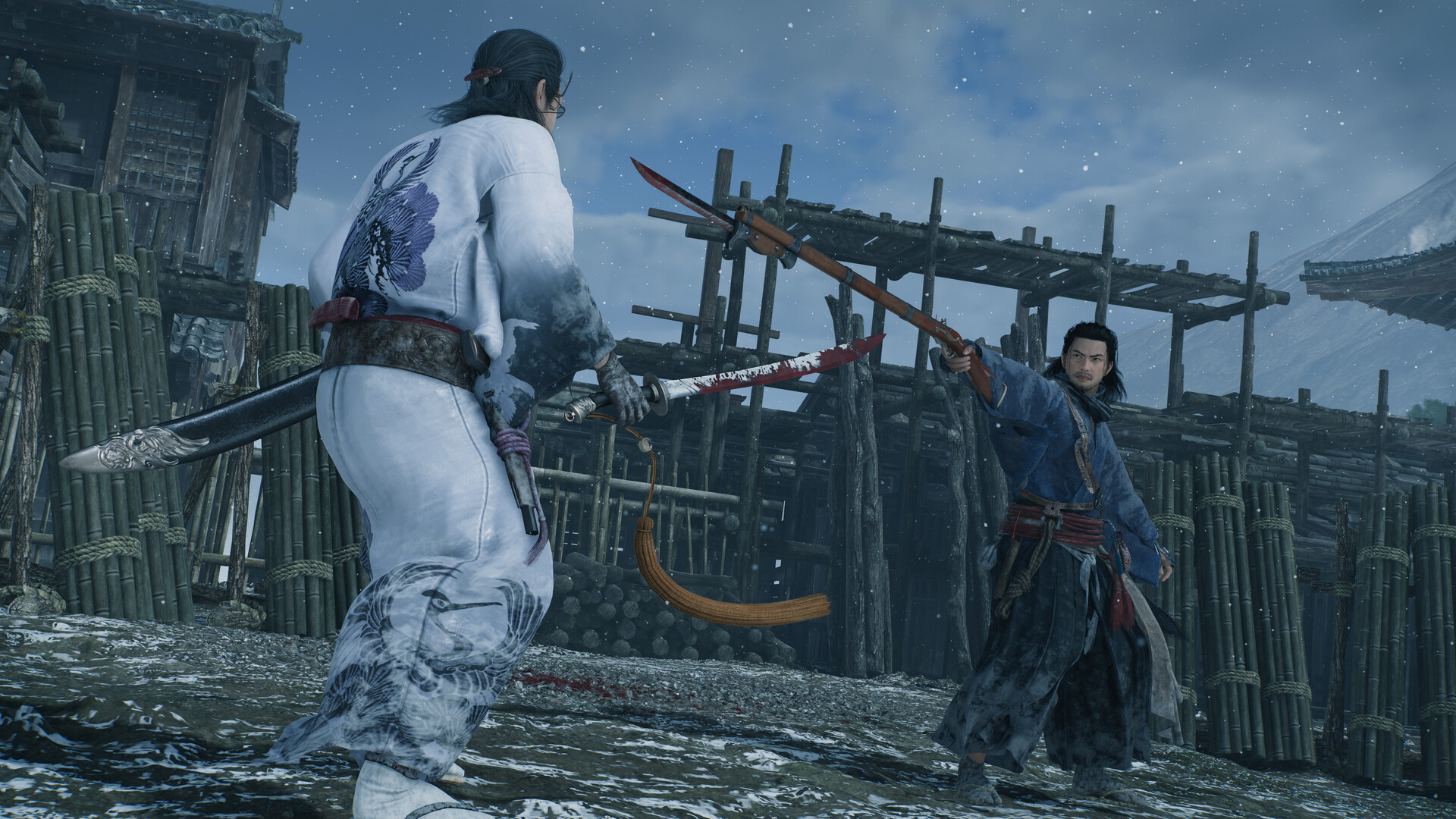
The presentation follows the transition-era setting through a mixture of traditional Japanese architecture and newly introduced Western influence, particularly in the port districts and cities connected to foreign trade. Yokohama’s waterfront, settlement and streets, the routes between cities, and the later urban centers form the visual frame for a story about political change. The game’s equipment reflects that same overlap: swords, spears and other Japanese arms share combat space with firearms and imported or hybrid weapons. This combination is also reflected in the player’s movement, as rooftops and roads are joined by the glider and grappling rope. Rise of the Ronin was released for PS5, with a PC edition listed on Steam under app 1340990. Across those releases, the ronin’s search for their twin runs alongside choices made amid the Bakumatsu conflict. The three cities, shifting allegiances and combat styles give that search a different texture as the journey moves from one region and historical confrontation to the next.
- Developer
- Team Ninja (Koei Tecmo Games)
- Genre
- Open-world action RPG