
About Returnal
ASTRA scout Selene follows a signal to Atropos, where her crash leaves her trapped in a repeating cycle of death and return. She searches the shifting alien world for a way out, fighting through bullet patterns, testing unfamiliar weapons and piecing together fragments of a mystery that changes with each run.
Returnal opens with ASTRA scout Selene pursuing the White Shadow signal to Atropos, a hostile planet where her ship Helios crashes. She sets out to find the signal’s source and escape, but every death sends her back to the crash site as the surrounding world rearranges itself. The cycle gives the story its shape: Selene encounters traces of earlier journeys, audio logs and remnants of an ancient civilisation while trying to understand why the planet keeps drawing her forward. The narrative stays close to what she can discover on the surface, in abandoned structures and through the strange records that appear along the way. Each return gives her another chance to press deeper, while the altered terrain and scattered clues complicate any sense of a straightforward expedition.
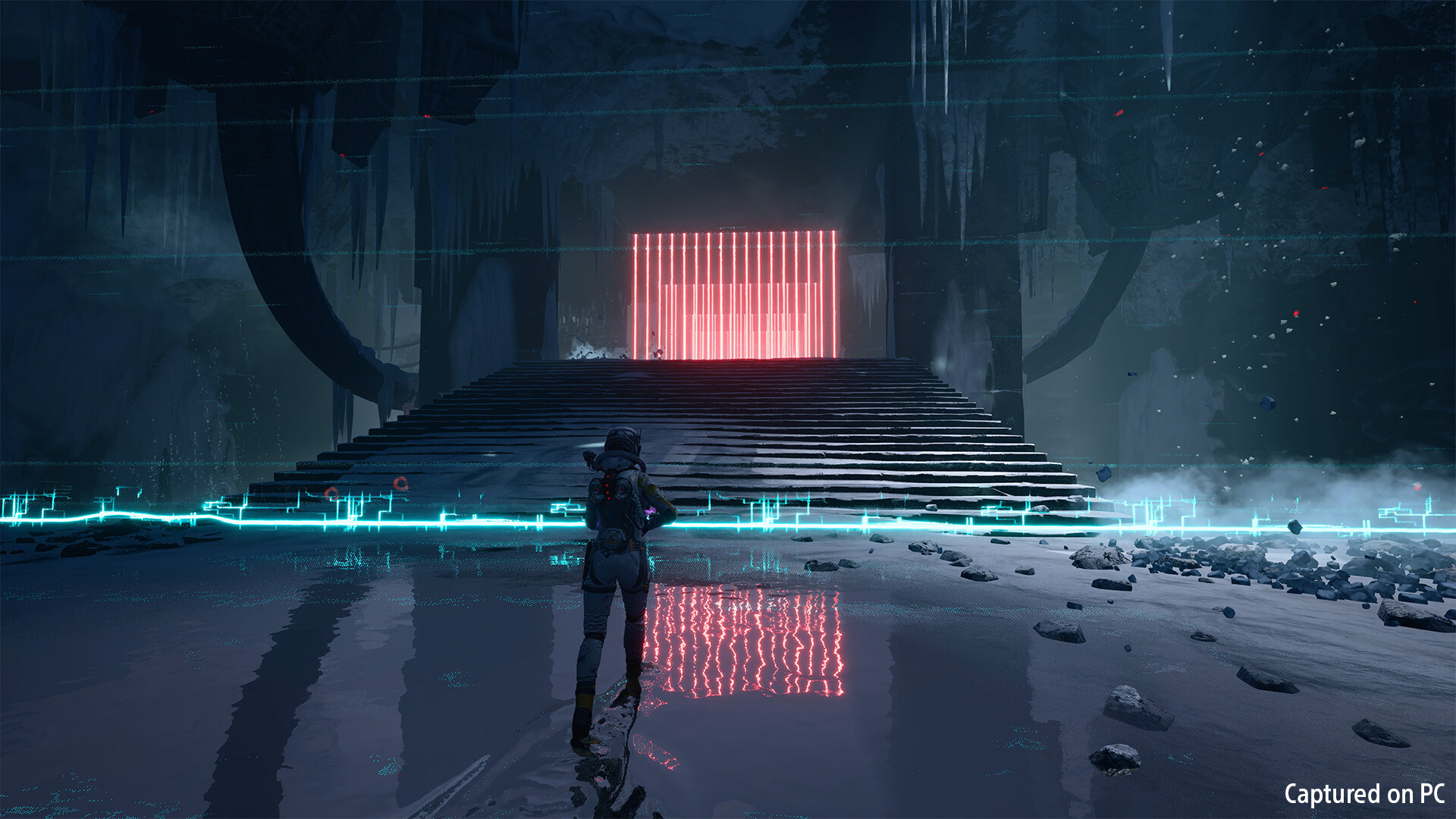
Atropos is divided into interconnected biomes built from rooms that shift between cycles. A main route points Selene toward her current objective, while side doors lead to optional fights, hidden spaces, alien devices and caches. The map marks exits and notable rooms, but exploration is also about noticing doors, grappling points, switches and ledges that open a route through the ruins. Some passages stay unreachable until Selene acquires the relevant traversal technology, so she can revisit familiar sections with a new way across a gap or up a wall. Searching off the direct path can reveal more obolites, equipment and logs about the planet’s vanished inhabitants. The layout changes, but its connected spaces become easier to read as she learns which risks or detours suit the build she has assembled for that cycle.
Combat asks Selene to keep moving through waves of coloured projectiles and enemies that attack from different directions. She can dash through many incoming shots, jump across hazards, use melee to stagger larger foes or finish smaller ones, and aim carefully to expose weak points. Taking down enemies without being hit builds Adrenaline, which grants successive combat benefits; one hit wipes the meter, so maintaining it rewards awareness as much as aggression. Weapons recharge rather than use ordinary reloads, and a timed trigger tap during the recharge performs an Overload for a quicker return to firing. Miss the timing and the weapon jams briefly. The result is a fight rhythm of movement, aimed fire, alternate attacks and quick reads of nearby threats, with no single arena offering much safety for long.
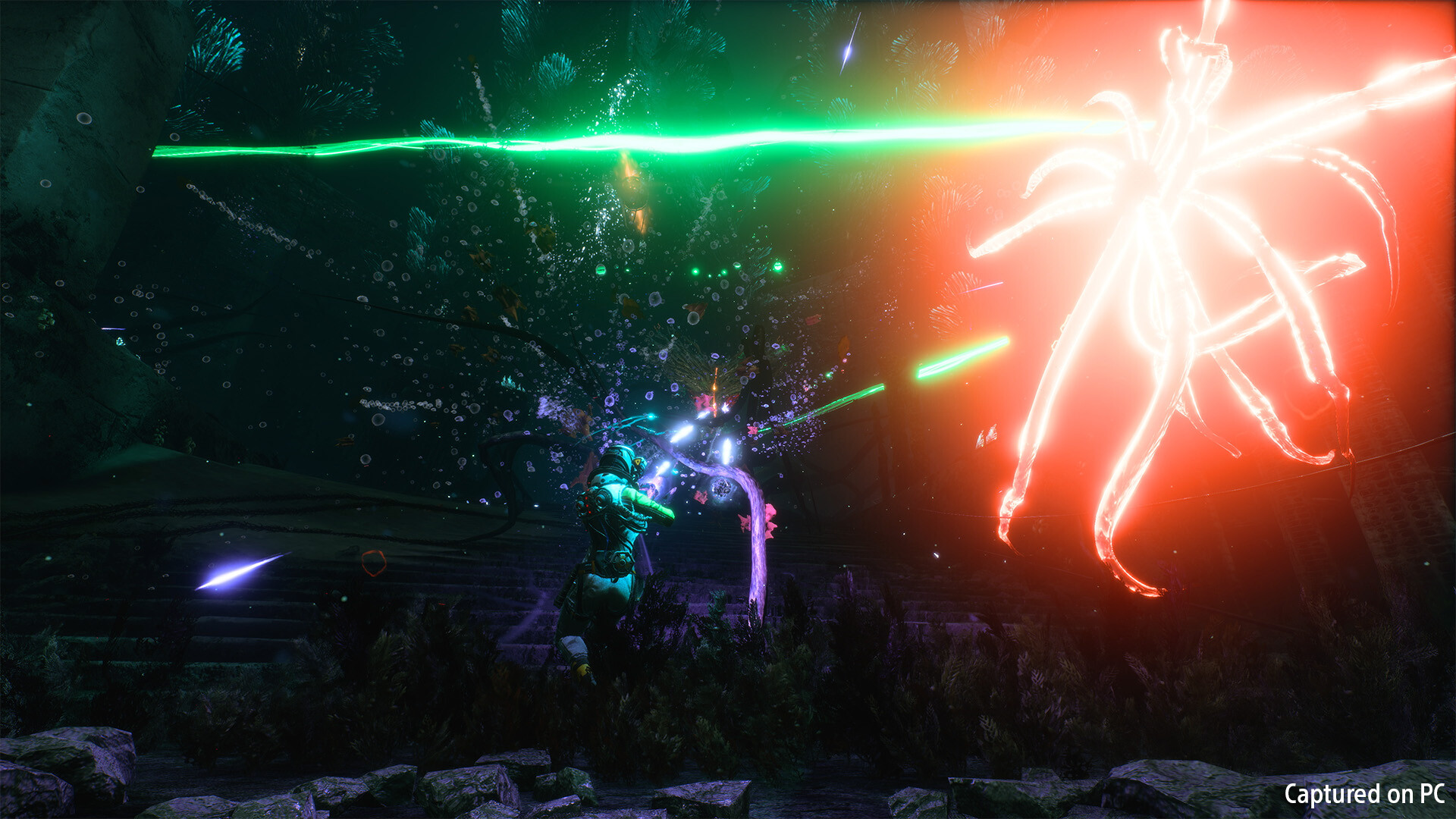
Each weapon has its own primary behaviour and a randomly assigned alternate fire, while later weapon traits can alter how it works. The Spitmaw Blaster handles close-range attacks with a shotgun-like spread; the Electropylon Driver places connected pylons that damage enemies crossing between them. Other traits add explosive shells, acid pools or other effects, and traits earned during play can become available on future weapon drops. Selene carries one weapon at a time, so picking up a new find means weighing its power and traits against the weapon already in hand. Her weapon proficiency influences the level of later finds, while Adrenaline, weapon stats and temporary upgrades shape the current run. A promising combination might make a weapon strong against a particular threat, but a new cycle changes what is available and asks her to adapt again.
Equipment turns exploration into a series of small risk decisions. Artifacts provide effects that last through the current cycle, such as reducing knockback or improving damage under a condition; consumables are used once for an immediate effect, from a shield to an attack or a burst of extra obolites. Parasites attach to Selene’s suit and pair a benefit with a drawback, so a health effect might come with an enemy or movement penalty. Malignant containers and objects can provide useful loot but may inflict a suit malfunction that must be cleared by completing a task. Obolites gathered from enemies and mineral deposits can be spent at alien fabricators on items or upgrades, and other devices may raise maximum integrity or restore a chance at survival. Choosing what to take, spend or risk changes how the rest of that cycle plays out.
Death resets most of Selene’s current equipment, but story progress and selected unlocks carry between cycles. The Cthonos device can award new items that join the future loot pool; weapon trait progress also expands what a weapon can offer when it appears again. Key alien technology opens new ways to traverse Atropos, and permanent suit upgrades retain specific capabilities after a reset. These lasting gains make each expedition part of a larger push through the planet, even though Selene starts again with a basic loadout. The main cycle can be played alone or in online co-op, where another player joins as a different version of Selene; the host’s progress sets the item pool for that session. The Tower of Sisyphus is a separate endless combat ascent focused on score and survival, with exclusive discoveries along its route. It is a solo mode, alongside the main cycle and other single-player challenges.
- Developer
- Housemarque; Climax Studios
- Genre
- Third-person action shooter with roguelike and bullet-hell systems