
About Return to Monkey Island
Guybrush Threepwood returns to the Caribbean to pursue the Secret of Monkey Island, years after his earlier clashes with zombie pirate LeChuck. Familiar islands are under new leadership, old friends have moved on, and unexplored places lie beyond the sea. This point-and-click adventure combines comic dialogue, inventory puzzles and a choice of Casual or Hard mode.
Return to Monkey Island brings Guybrush Threepwood back to the pirate Caribbean after many years. The game presents itself as a continuation of The Secret of Monkey Island and Monkey Island 2: LeChuck’s Revenge, the two earlier adventures associated with series creator Ron Gilbert. Guybrush is no longer simply chasing the reputation of a mighty pirate: he is adrift and unfulfilled because he has never found the Secret of Monkey Island. That unfinished ambition gives the new journey its direction, while the long gap since his last battle of wits with zombie pirate LeChuck gives the characters and their world room to have changed. The story’s starting point is clear even if a player comes to the series after its earlier chapters.
The return begins on familiar ground, but familiarity does not mean the islands have been waiting unchanged. Melee Island, a recurring home base in the series, is under new management. Captain Madison and a group of younger pirate leaders have displaced the old guard, and people Guybrush once knew are now living with the consequences. Elaine Marley, his true love and a leader in her own right, has turned her attention away from governing; Stan, the businessman, has been imprisoned for “marketing-related crimes”. These details establish a setting shaped by shifting power and old acquaintances without requiring the player to know every previous plot turn. The cast includes returning faces alongside new characters, and conversation is often where their changed circumstances become apparent.
Melee Island is a starting point for a wider archipelago rather than the whole stage. Guybrush can set out across the sea to visit unfamiliar locations, including Terror Island and the outposts of Brrr Muda. These journeys lead him toward allies and enemies, places under new leadership, and fresh predicaments. Movement between islands gives the adventure a changing set of people, environments and problems while keeping the central pursuit in view. A location is more than scenery to pass through: it is a place to investigate, speak with its inhabitants and gather the context needed to decide what to try next. The familiar Caribbean setting also lets old landmarks sit beside new territory, so the story can revisit the series’ history while giving Guybrush fresh ground to explore.
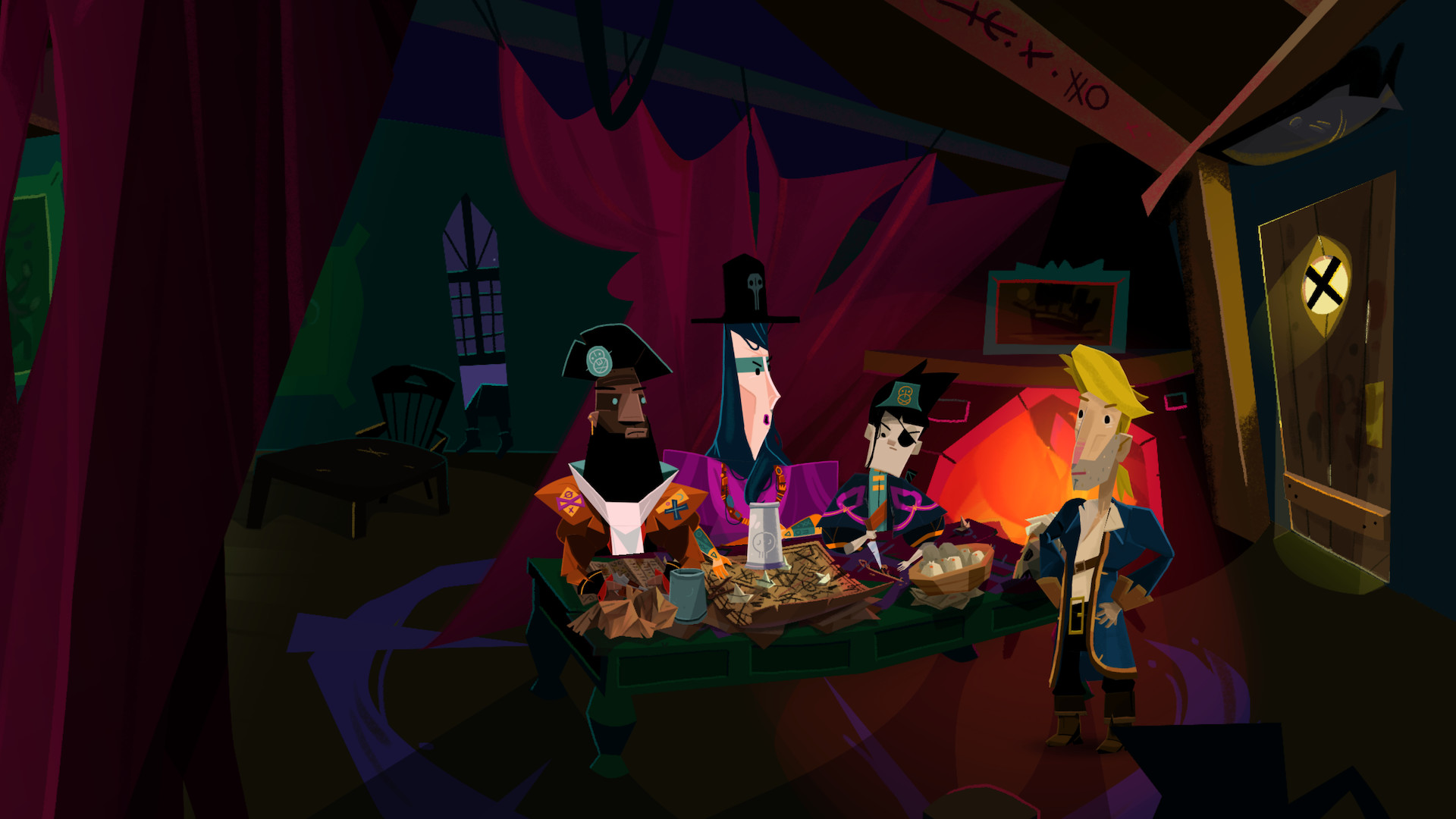
The central activity follows the point-and-click adventure tradition. Players inspect scenes, interact with people and objects, and solve puzzles to move the story forward. Return to Monkey Island updates that structure with context-sensitive interactions: available actions depend on what is being examined, and the interface presents those actions in relation to the selected character or object. An inventory stores items Guybrush collects, and using an item in the right situation can help resolve a problem or open a new route through it. The game’s puzzles sit among the conversations and island exploration rather than in a separate challenge mode. Progress therefore comes from combining observation, questions and experimentation, then returning to people or places with new information. The exact solution is not always announced in advance, so noticing how a situation is described can matter as much as collecting another object.
Dialogue is part of both the comedy and the practical rhythm of the adventure. Conversations use reactive dialogue trees, so the exchange can respond to the subject or situation rather than presenting a single fixed line. Guybrush’s replies, the responses of people he meets, and the mismatch between pirate bravado and everyday absurdity supply much of the series’ familiar comic tone. Nintendo and Steam describe the journey through banter, bizarre situations and sharp retorts; the dialogue also helps communicate what characters want or what has changed around them. An optional Writer’s Cut setting adds more dialogue to some conversations. It expands selected exchanges, while leaving the main activity intact: talk, learn something useful or amusing, and decide where to investigate next.
The game offers Casual and Hard modes, which are selected for a new game rather than switched during a save. The modes can contain different puzzles, so the choice affects the challenge itself, not just a label in the menu. A hint book is available for players who get stuck; it tailors its help to what the player has and has not done. This makes guidance part of the adventure’s tools while leaving room to work things out independently. The interface and inventory provide a streamlined way to examine situations and apply collected objects, and the story can be approached through exploration and dialogue at a self-directed pace. These options shape how much puzzle assistance or challenge a player wants without changing Guybrush’s goal of pursuing the island’s secret.
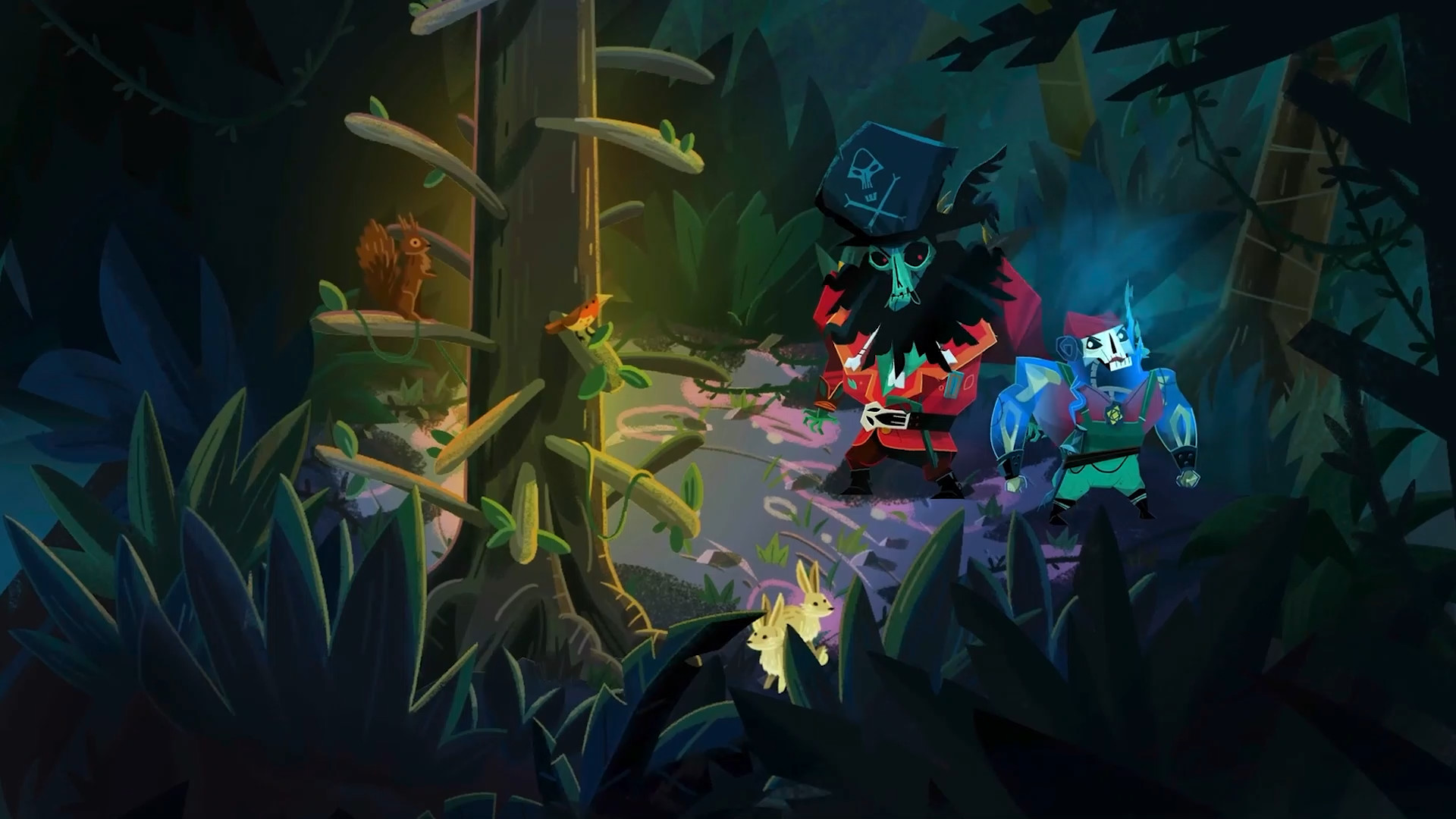
The visual direction has a distinct credited voice: Rex Crowle is named as art director, with previous work including Knights & Bikes and Tearaway. The presentation pairs that art direction with animated island scenes, expressive characters and a comic adventure tone. Music is credited to Peter McConnell, Michael Land and Clint Bajakian, composers associated with the earlier Monkey Island games, which links the new chapter to the sound of the series while giving it a new score. Ron Gilbert returns as series creator and Dave Grossman as co-writer, placing the project’s writing and art under a team with both returning series experience and new creative contributions. Together, these elements frame the game as a contemporary point-and-click adventure whose identity comes from its Caribbean setting, conversational humour, puzzle solving and continuing cast.
- Developer
- Terrible Toybox
- Genre
- Single-player point-and-click adventure with puzzle and comedy elements.