
About Return of the Obra Dinn
In 1807, the Obra Dinn drifts back to Falmouth after being declared lost at sea, with no crew visible aboard. As an East India Company insurance investigator, you explore the ship and use a supernatural pocket watch, its crew records and careful observation to reconstruct what happened to the people listed in its manifest.
In 1807, the merchant ship Obra Dinn returns to Falmouth with damaged sails and no crew in sight. Five years earlier, it had departed London for the Orient carrying trade goods; after missing its rendezvous at the Cape of Good Hope, it was declared lost. You are an insurance investigator sent by the East India Company’s London office to board the vessel, inspect the damage and account for the people and cargo. The task begins with a ship that is physically present but whose voyage survives only in records and remnants. Its decks, cabins and cargo spaces become the setting for reconstructing the events behind the loss.
The investigation centres on the Memento Mortem, a pocket watch that lets you witness the final moments associated with a dead crew member. When the watch opens a memory, the action is held in a frozen tableau. You can move around the scene to inspect people, objects and their positions, while listening to the sounds and speech that accompany the moment. These fragments do not arrive as a tidy chronological story: each death gives a local view, and the surrounding context must be assembled by comparing it with other memories and with the ship itself. The watch can also lead between connected scenes, so examining a body may open further moments involving people nearby or events linked to that death.
A central job is identifying the people in those scenes. The ship’s book provides a crew manifest and a group portrait, while individual profiles collect each person’s appearances across the memories. You can compare faces with the drawing, track where someone appears, and use the manifest’s names, ranks and nationalities to narrow the possibilities. Details such as uniforms, work roles, sleeping arrangements, accents and words spoken in a scene can distinguish one sailor from another. The book gathers the evidence as the investigation proceeds, including the scenes in which a person appears, so a clue found in one part of the ship can help identify someone encountered elsewhere.
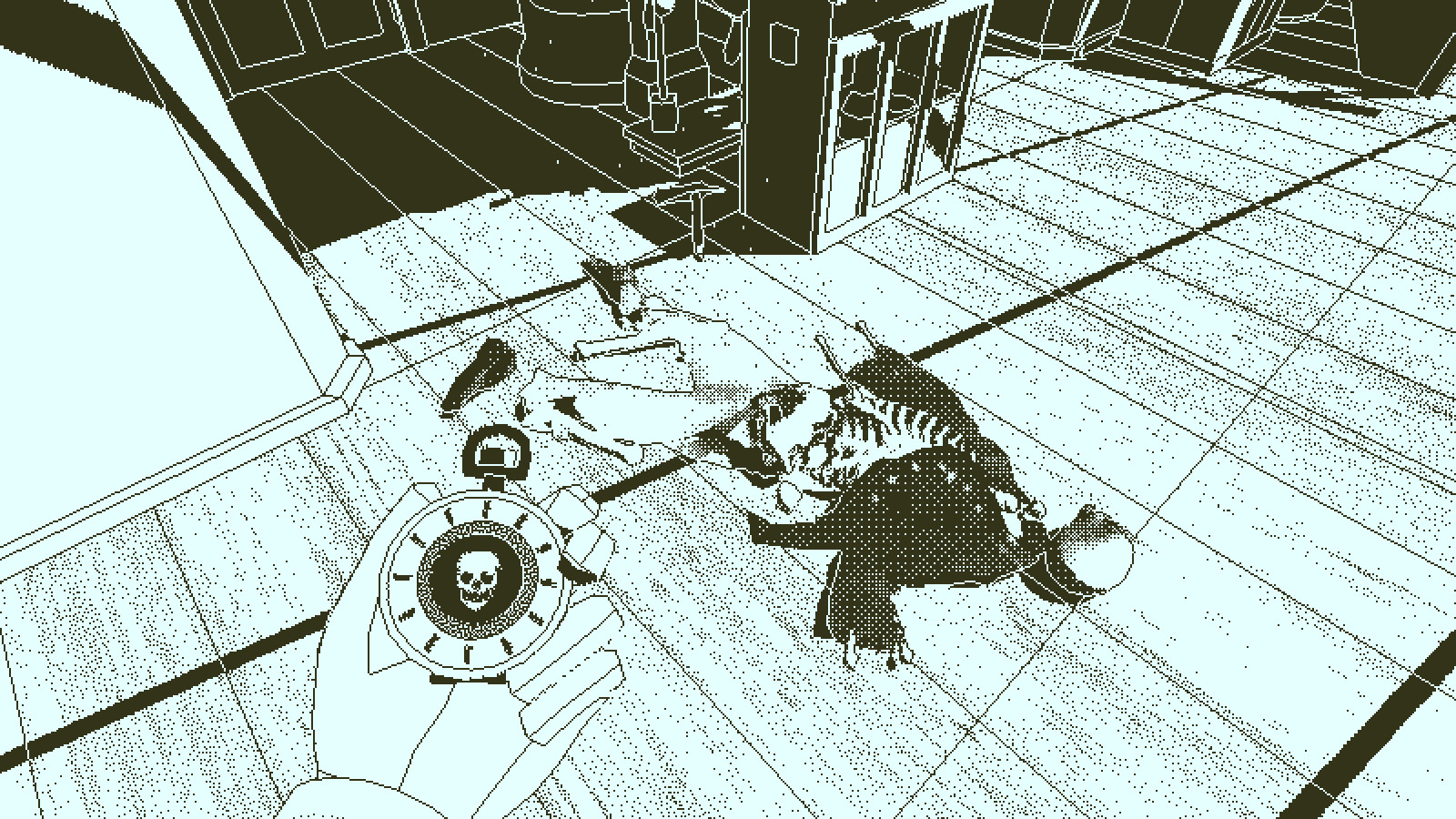
For each person, the book asks you to determine both who they are and what became of them. A fate can describe a death, its cause, and in some cases the person or force responsible; for someone who survived or escaped, the record must account for that outcome instead. The available choices connect what can be seen in a memory with what the investigator can reasonably infer from the evidence. A wound, weapon, nearby figure, spoken line or location may help establish a cause, while the sequence of events across several scenes can clarify how the person reached that moment. The task is not to select from a list of pre-highlighted answers: you enter a theory in the book and use the evidence to decide whether it fits.
The game gives measured feedback rather than immediately grading every entry. When three fates have been correctly recorded, the book confirms that group and writes those conclusions into the record. Until enough information is available, portraits and identity clues can remain uncertain, encouraging you to leave a question open and return after finding another scene. This confirmation rule makes the ledger part of the deduction system: a set of answers can be checked together without the game revealing the solution to every unsolved person. Progress therefore comes from gathering more memories, comparing evidence and revising entries as new details change what earlier scenes mean.
Exploration supplies the context that the memories leave out. You move through the ship in first person, searching its decks, cabins and working spaces for bodies and traces that can activate the watch, while the vessel’s layout helps connect people to their duties and quarters. The book’s chapter structure and scene records give the investigation an accumulating shape, but it is the player who links the different points in time. Conversations can indicate relationships or origins; clothing and position can suggest rank or work; an object or the direction of an injury can clarify an event. Listening matters alongside looking, because voices and brief exchanges preserve clues that a frozen image alone cannot provide.
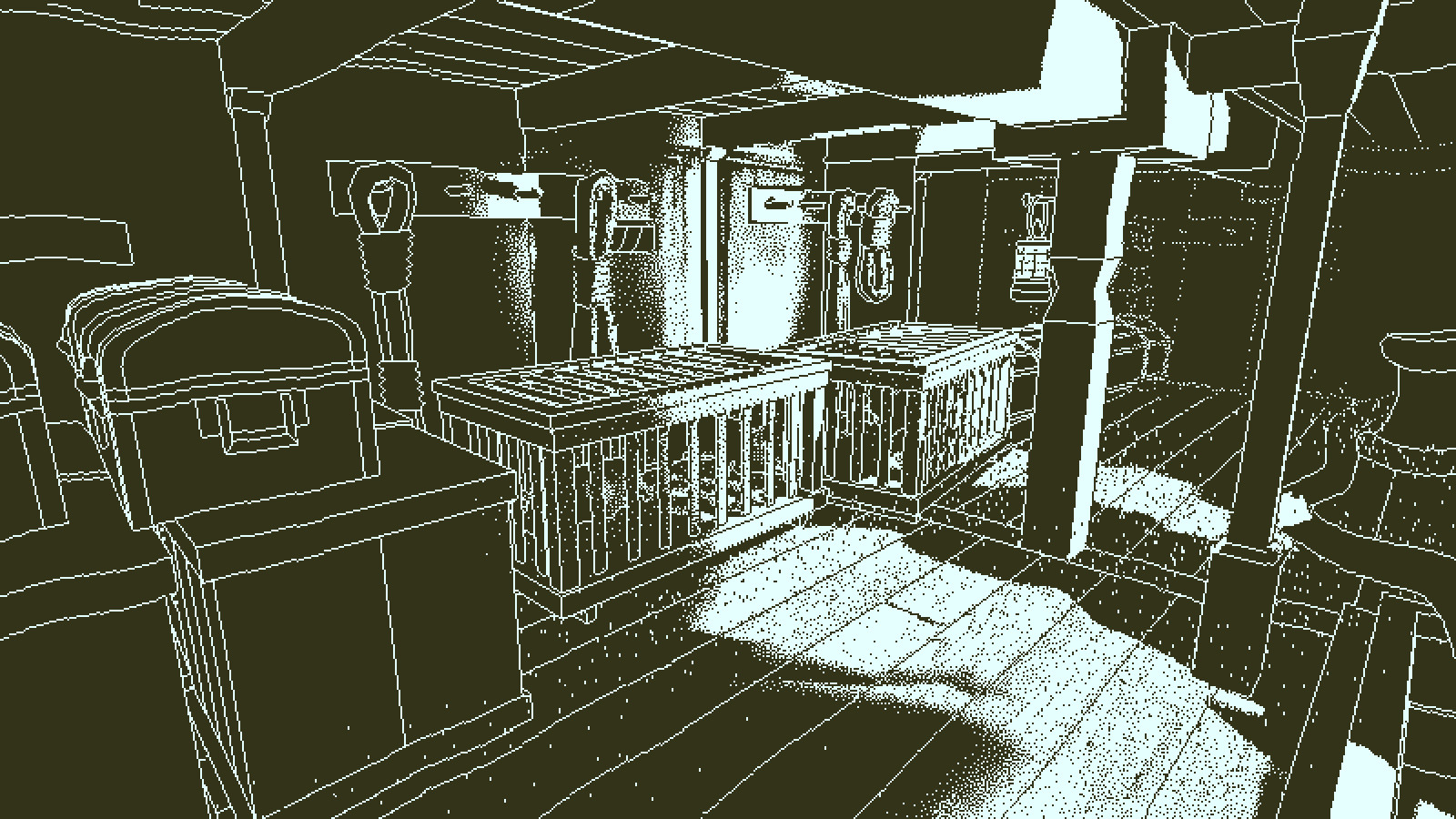
The ship is rendered in a stark monochrome style built from sharply defined pixels and dithering, giving ordinary spaces and supernatural memories a shared visual language. Heavy dark regions, stippled textures and bright outlines separate railings, sails and figures on crowded decks. In the death scenes, these contrasts keep faces, tools and gestures visible as the investigator moves around a still moment, examining the same evidence from several angles. The restrained palette makes silhouettes, gestures and object placement especially prominent, while sound distinguishes the quiet present aboard the returned ship from the voices and events preserved in a memory. Together, the ship, the watch and the book form the investigation’s working tools: inspect the space, revisit its past and record a reasoned account of the crew’s fates.
- Developer
- Lucas Pope
- Genre
- First-person mystery adventure; exploration and logical deduction