
About Resident Evil HD Remaster
In 1998, S.T.A.R.S. officers Jill Valentine and Chris Redfield investigate killings near Raccoon City and take refuge in the Arklay Mountains mansion. This 2015 HD release presents the 2002 remake of the 1996 Resident Evil, where scarce supplies, locked rooms, evidence and the mansion’s changing threats shape each character’s escape.
The story opens in 1998, when the S.T.A.R.S. Alpha Team follows a trail of bizarre murders into the Arklay Mountains outside Raccoon City. A dog attack scatters the team, leaving Jill Valentine, Chris Redfield and their surviving colleagues to seek shelter inside a remote mansion. The building offers walls against the creatures outside, but its rooms contain further signs that the outbreak is tied to deliberate biological research. As the investigation continues, notes, reports and abandoned workspaces gradually connect the mansion’s inhabitants, its hidden laboratories and the company behind the experiments. The immediate task remains practical: stay alive, locate missing teammates and find a route out of the estate.
A new game begins by asking whether to play as Jill or Chris, and the selected character changes the campaign’s route, available equipment and supporting-character encounters. Jill carries more ordinary items and can use a lockpick on simple locks; Chris has fewer inventory spaces and uses a lighter to burn corpses. Their personal tools make familiar spaces and item decisions play differently. The mansion remains the shared setting, but each campaign is not simply the other character’s story with a different model: scenes, conversations and the people who can help differ. Progress with one character therefore introduces another view of the incident while preserving the same central investigation and survival problem.
The mansion works as a connected puzzle space rather than a sequence of rooms cleared once and left behind. Fixed camera views frame halls, staircases and chambers so that a doorway or object can conceal what lies beyond the current angle. Keys, emblems and other objects open routes or fit into mechanisms; examining an item in the inventory can reveal a detail needed to use it. Reading documents adds clues about people and experiments, while maps and marked doors help track which areas have been searched. A puzzle may send the player back through a corridor already crossed, and a newly acquired key can change which branches are available. Returning to familiar rooms is part of the investigation and carries risks when enemies remain there.
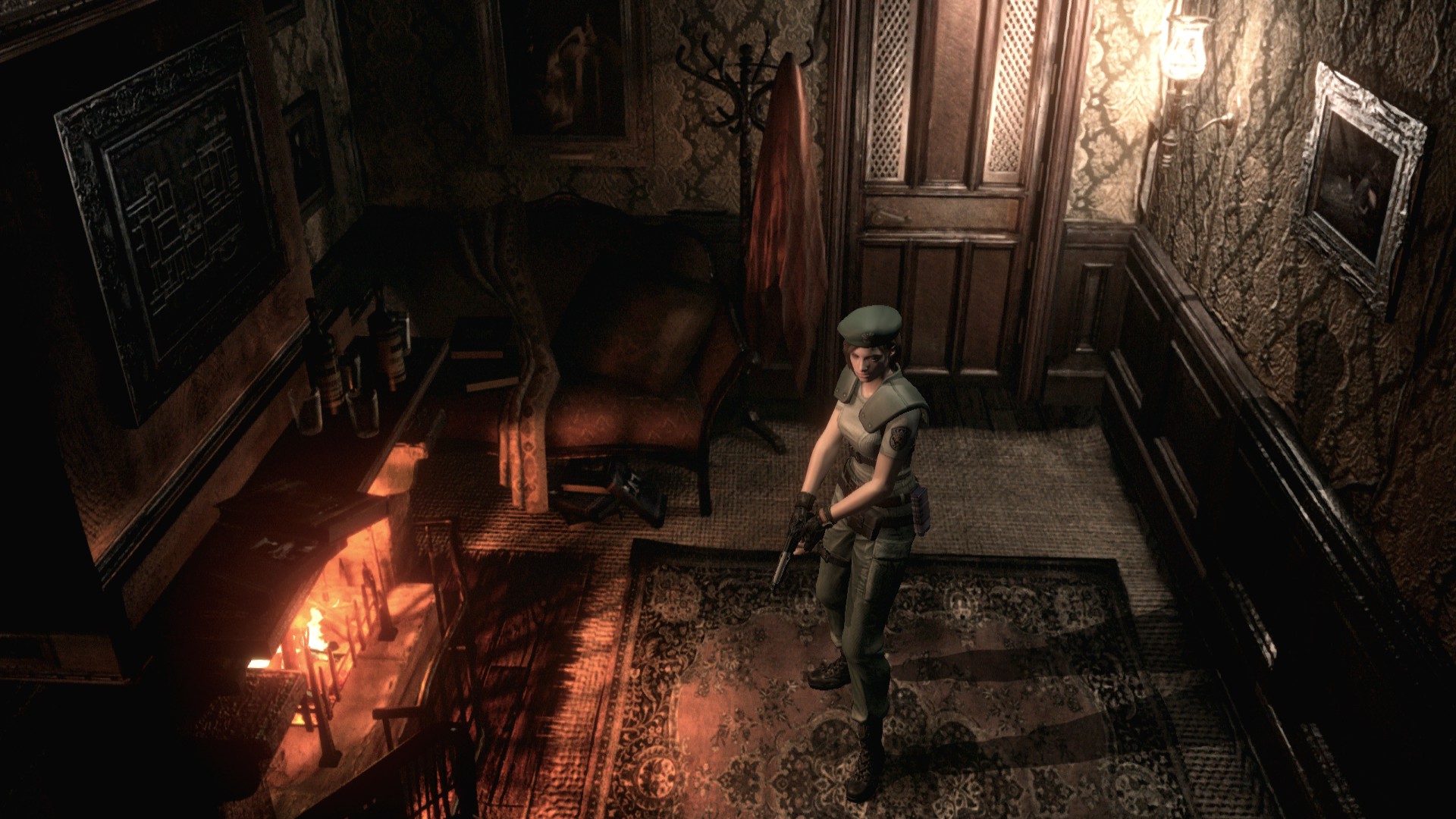
Every excursion is also an inventory decision. Jill and Chris can carry only a small number of objects, and key items, weapons, ammunition, healing supplies and character-specific equipment compete for those spaces. Linked item boxes in safe rooms let the player store objects and retrieve them from another box, so a route through the mansion often includes a stop to reorganize before entering an unexplored area. Herbs restore health, while ammunition and weapons determine whether a threat can be confronted or should be avoided. Typewriters provide manual saves, but using one consumes an Ink Ribbon, a limited item. The game therefore makes saving, carrying an extra weapon and bringing a puzzle object into the next trip competing uses of limited preparation.
Combat is built around positioning and deciding which encounters deserve ammunition. Firearms can stop or kill zombies and other creatures, but a fallen zombie may later rise as a faster Crimson Head unless its body is dealt with. Kerosene in the fuel canteen and a character’s ignition tool can burn a body; a head-destroying shot can also prevent that return. Burning takes fuel, and carrying the canteen occupies an item slot, so corpse management has a cost as well as a benefit. The choice is especially consequential in narrow corridors that the player may need to cross again. A room can become safer through careful resource use, while an apparently finished fight may create a more dangerous obstacle later.
Outside the mansion’s main halls, the investigation moves through grounds and connected facilities that deepen the account of what happened to the estate’s residents. Files, photographs and personal effects function as evidence the player can inspect, while locked doors and environmental mechanisms continue to gate access. The recurring threat of Lisa Trevor is tied to the mansion’s hidden history, and encounters with her add a different pressure from ordinary enemies: the player must navigate a place and its hazards while confronting a figure who cannot be handled as another routine target. Later locations widen the physical scope of the search, but the core loop remains the same—read the space, conserve what is carried, solve the next obstruction and uncover another piece of the outbreak.
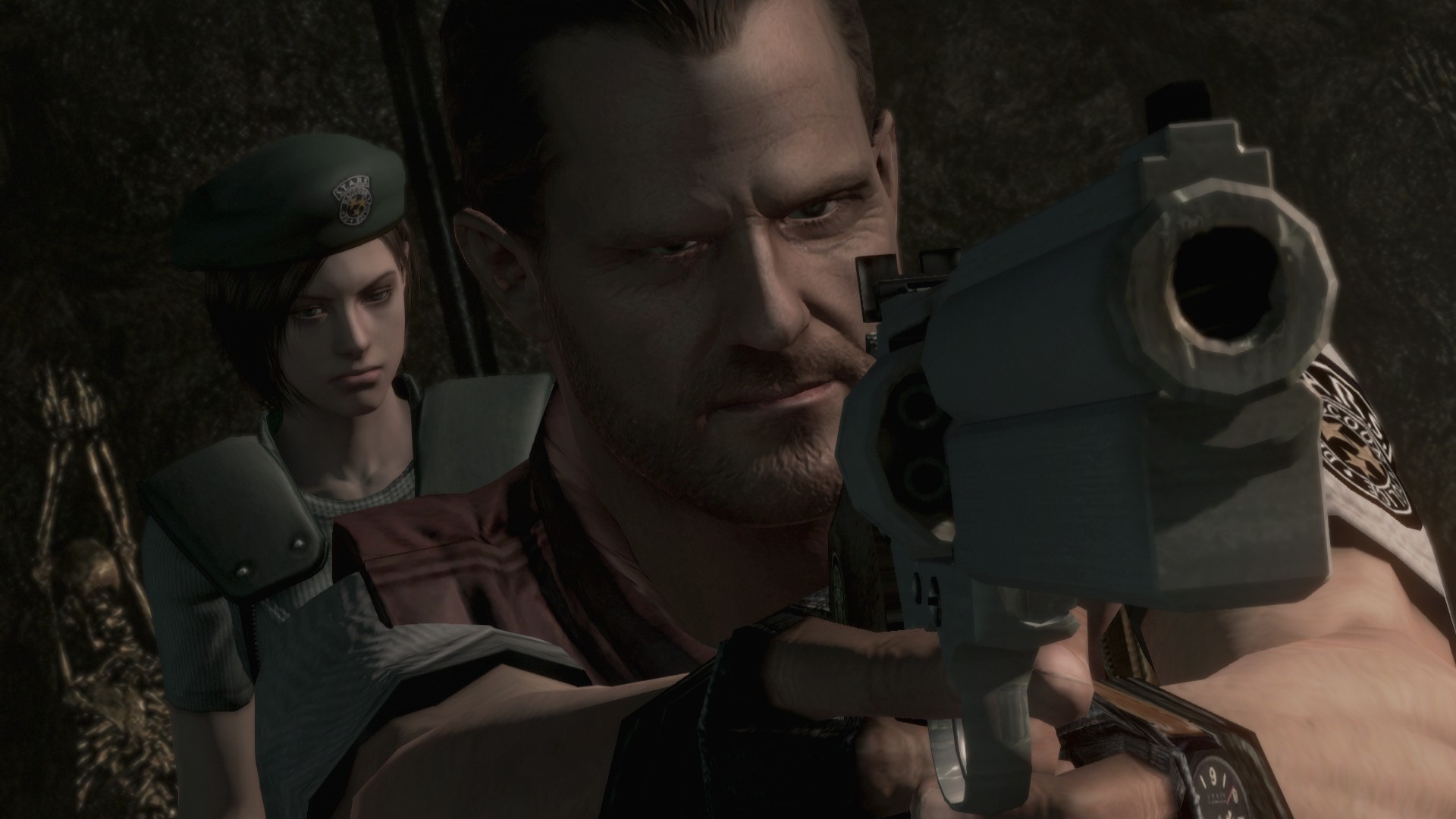
Resident Evil HD Remaster is the 2015 high-definition presentation of Capcom’s 2002 remake, itself a reworking of the 1996 original; it is not a new, separate story identity. The PC release raises the image resolution, updates environmental presentation and offers a widescreen display option while retaining the remake’s mansion investigation and survival systems. A modern movement option supplements the original-style controls, allowing movement in the direction pressed rather than only relative to the character’s facing. The camera still cuts between fixed viewpoints, and scenes remain composed around those angles. The result keeps the remake’s deliberate room-to-room structure while making its visual presentation and control choices available in this later PC edition.
- Developer
- Capcom
- Genre
- Survival horror