
About Resident Evil 3
Capcom’s 2020 remake follows former S.T.A.R.S. officer Jill Valentine as she tries to escape Raccoon City during the outbreak and evade the pursuing Nemesis. Explore streets and buildings, find supplies, craft ammunition, solve access obstacles and fight or dodge infected threats in a third-person survival horror campaign.
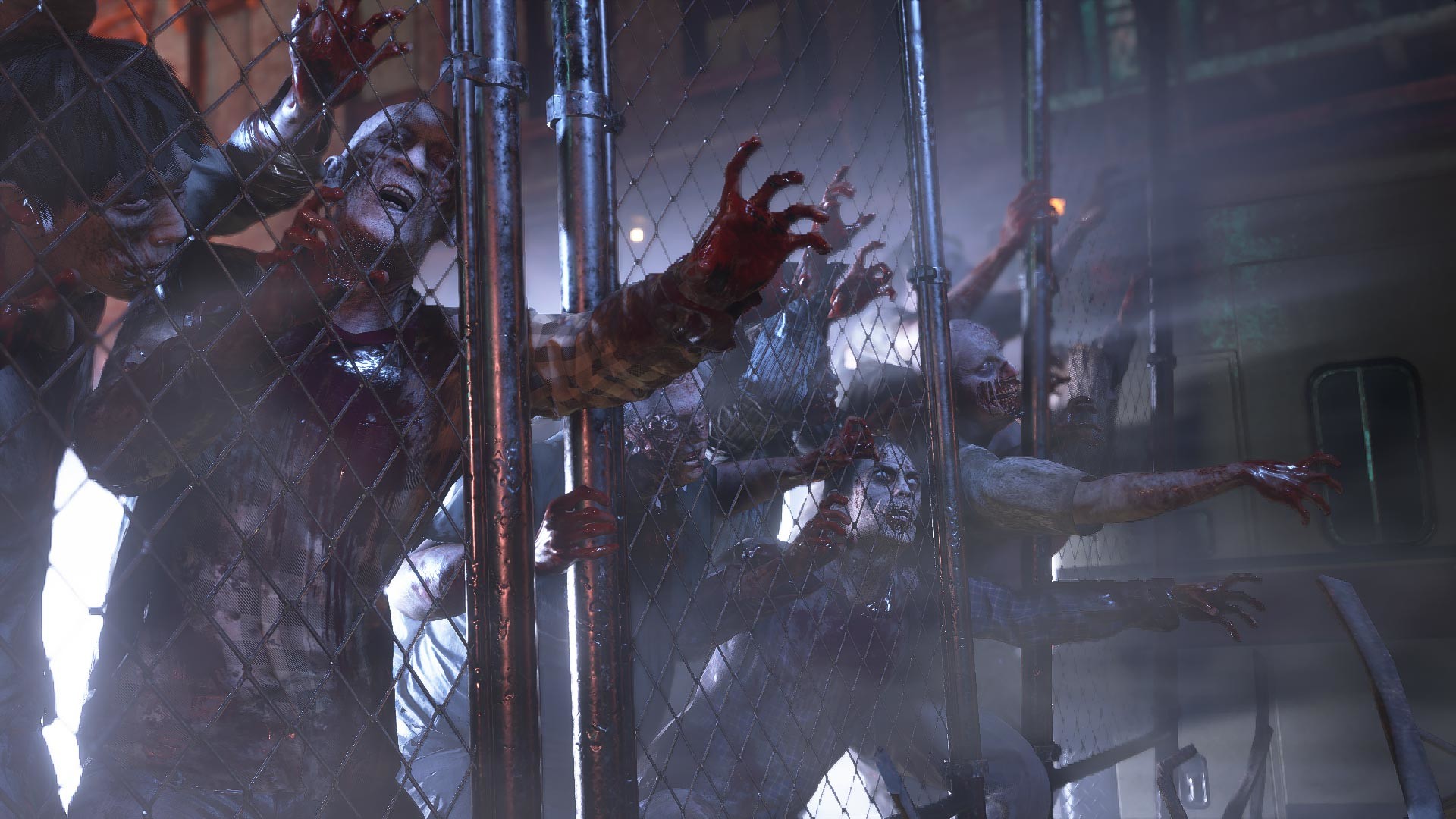
Resident Evil 3 is Capcom’s 2020 remake of Resident Evil 3: Nemesis (1999), focused on former S.T.A.R.S. officer Jill Valentine during the Raccoon City outbreak. Umbrella’s experiments have turned residents into dangerous creatures, and the corporation sends the bio-weapon Nemesis after Jill. The campaign follows her attempt to get out of the city, with fellow survivor Carlos Oliveira and other members of the Umbrella Biohazard Countermeasure Service becoming part of the unfolding crisis. The action moves through damaged streets, shops, public infrastructure and underground spaces rather than staying in one central building. The remake retells the 1999 game’s broad premise with new presentation and reworked sequences; it is a distinct release from the original game. Jill is the principal playable character, while some sections place the player in Carlos’s role, giving his part of the escape its own combat rhythm.
Raccoon City is arranged as a series of connected streets and interiors that reward looking beyond the immediate route. Shops, alleys, the subway station, sewers and other buildings provide shelter, supplies and ways forward through the damaged city. A map helps orient the player and can indicate areas where items remain or doors that are still locked. Documents and environmental clues add context to Umbrella’s outbreak and help make sense of the places Jill passes through. Keys and tools open routes, while yellow padlocks mark containers or doors that Jill can eventually open with her lock pick. These detours can return ammunition, healing herbs or other useful items, so revisiting a previously seen area can change the resources available for the next encounter. The city’s wider spaces offer room to move around threats, but they also create sightlines where enemies can approach from different directions.
Combat combines aimed shooting with a quick evasive move that gives Jill more options than simply standing and firing. A well-timed evade against an incoming attack can trigger a Perfect Dodge: the moment briefly slows and creates a chance to line up a countershot at an enemy’s weak point. Timing matters, because an ordinary dodge can still leave Jill in reach of a pursuing creature or another enemy. The knife remains available as a weapon and does not degrade, but it no longer functions as the defensive item that automatically saves Jill from a grab in the earlier remake. Nemesis changes how some encounters unfold: the towering pursuer can close distance, use a tentacle to catch Jill and interfere with an apparent escape route. The player can use the environment, including explosive barrels and electrical boxes, to stagger nearby enemies or damage a threat while conserving ammunition. Breaking contact and running remains a practical way to protect supplies.

Supplies connect exploration directly to preparation. Ammunition is limited, and different gunpowder combinations produce different kinds of bullets, so the player must decide what ammunition will be useful against the threats ahead. A bottle of gunpowder has no immediate benefit by itself; combining the right materials turns it into a combat resource. Herbs restore health, with green and red herbs combining into a stronger healing item. Storage boxes allow spare equipment to be put away and retrieved at safe points, while inventory-expanding hip pouches provide additional carrying room when found. This creates a continuing choice between carrying another weapon, holding on to healing supplies, or leaving space for items that may be discovered. Weapons can also be fitted with parts found during the campaign, changing traits such as capacity or aiming. The items gathered on side routes therefore affect both immediate survival and how much flexibility Jill has later.
Not every encounter has the same answer. Ordinary infected can crowd a narrow doorway, while other bio-organic creatures require different distances or weapon choices. The player can spend ammunition to clear a route, evade a lunge, use a nearby explosive hazard, or move past an enemy and accept the risk of returning through that area. Jill’s precise dodge adds a short counterattack opportunity, while the campaign also switches to Carlos for a section that takes the player through the R.P.D., giving that stretch a different playable perspective. These character-specific actions mean the campaign’s combat is not simply one set of controls applied to both protagonists. Some rooms become tense because moving through them requires awareness of nearby enemies and the position of the next route, not because every threat must be defeated. Nemesis’s presence also makes space and timing part of resource management: damaging him can create an opening, but staying to fight may cost health and ammunition needed elsewhere.
Progress follows Jill’s attempted escape through successive parts of Raccoon City, with story scenes and combat set pieces linking exploration areas. Safe rooms and typewriters provide places to save and reorganize, while locked doors, power controls and other obstacles turn collected items into new routes. The remake includes Assist difficulty with more forgiving combat and additional resources, alongside standard play and harder settings for a greater challenge. Completing the campaign also contributes to an in-game record of challenges and unlockable extras, giving later runs goals beyond reaching the ending. The product includes Resident Evil Resistance as a separate multiplayer game with survivor and Mastermind roles. Jill’s escape and Resistance have different objectives and structures; the latter is not an episode within the remake’s story campaign.
- Developer
- CAPCOM Co., Ltd.
- Genre
- Survival horror