
About Resident Evil 2
In Capcom’s 2019 remake of the 1998 survival horror game, rookie police officer Leon S. Kennedy and college student Claire Redfield try to survive a zombie outbreak in Raccoon City. Explore the R.P.D., solve environmental puzzles, manage scarce supplies and play separate character campaigns.
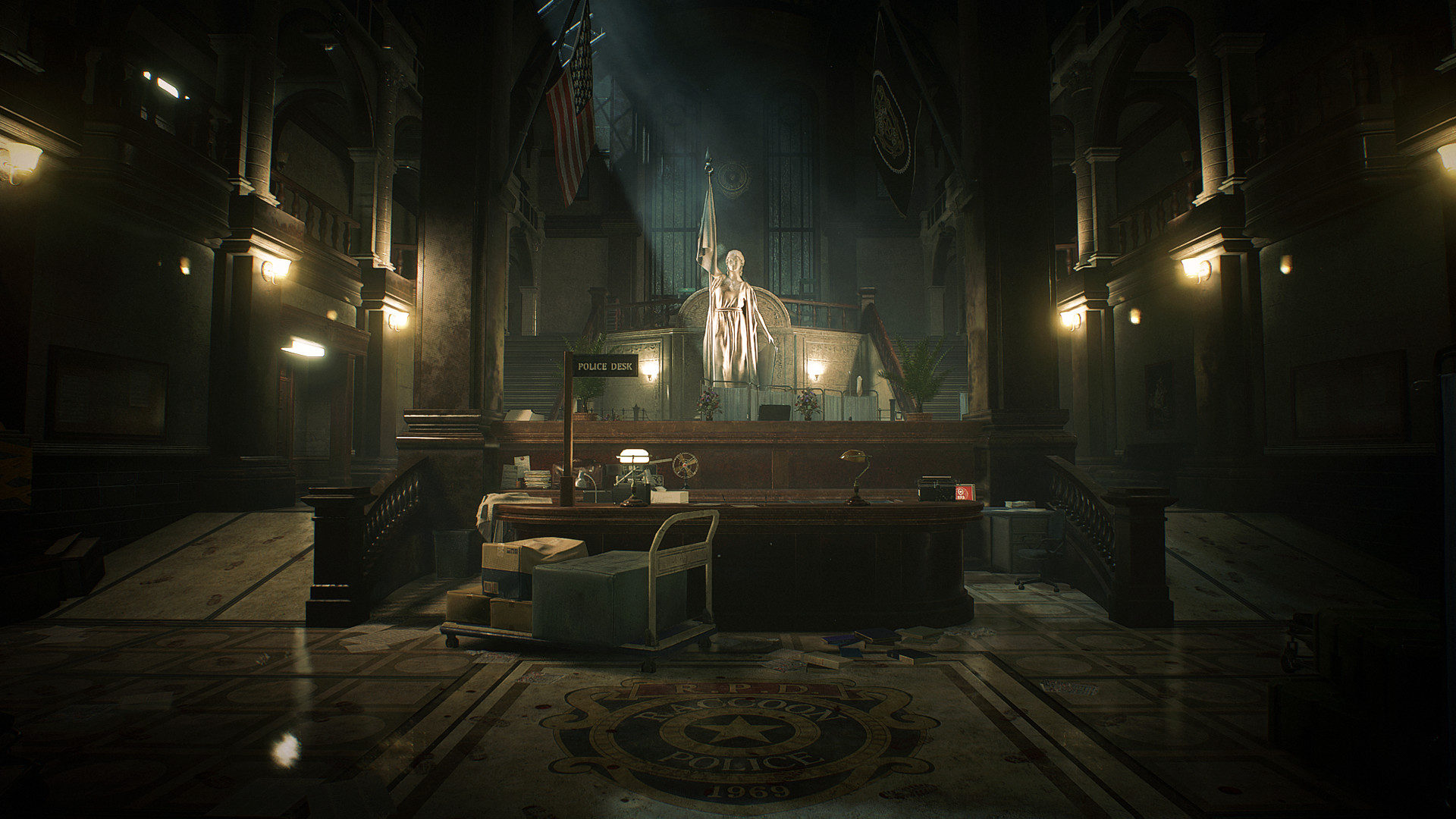
Resident Evil 2 is a survival horror game rebuilt around the 1998 story of Raccoon City’s outbreak. Rookie police officer Leon S. Kennedy arrives for his first day at the city’s police department as the crisis unfolds, while college student Claire Redfield searches for her brother. Their paths bring them into the same disaster, but each character has a separate campaign and perspective. The playable story follows their attempts to survive the undead and discover what lies behind the attack. The setting moves through the streets and interiors of Raccoon City, with the Raccoon City Police Department serving as a central, multi-floor location. This 2019 release is Capcom’s ground-up remake of Resident Evil 2 (1998), using an over-the-shoulder camera and modernized controls. The over-the-shoulder perspective changes how each corridor is read, keeping danger close to Leon or Claire as they move through the station.
The core loop joins exploration, combat and puzzle solving. Leon and Claire move through interconnected rooms, search for supplies and clues, and use items to open routes or reach locked areas. The police station is arranged as a multi-level labyrinth, with rooms connected by more than one entrance and routes that become easier to understand as the player builds a map. The map records discovered items that have not been collected, marks doors that need a particular item, and highlights rooms with unfinished interactions or secrets. Documents found in the environment can provide story background as well as clues to puzzles and access codes. Safes and lockers contain useful supplies, inventory expansions and weapon parts, so reading notes and checking room details feed directly into navigation and preparation. Rather than treating each room as an isolated combat arena, the remake allows threats to move between spaces and makes revisiting familiar corridors part of the survival challenge.
Fighting is designed around limited ammunition and enemies that can remain dangerous after taking damage. Zombies react to the player’s line of sight and to loud sounds, which makes sneaking or slipping around an enemy a viable alternative to spending bullets. When combat is necessary, shots can injure particular body parts: damaging a zombie’s legs can stop it standing, while damage to its arms can limit its ability to break through doors. A fallen zombie may rise again, so a brief knockdown does not always mean a threat has been removed. The player has to judge whether to spend ammunition attempting to finish an enemy, cripple it to make a route safer, or leave it behind and risk meeting it again. Sub-weapons such as knives, flash grenades and grenades provide emergency responses when a character is grabbed or surrounded, but their different uses and limited availability make them resources to manage rather than routine attacks.
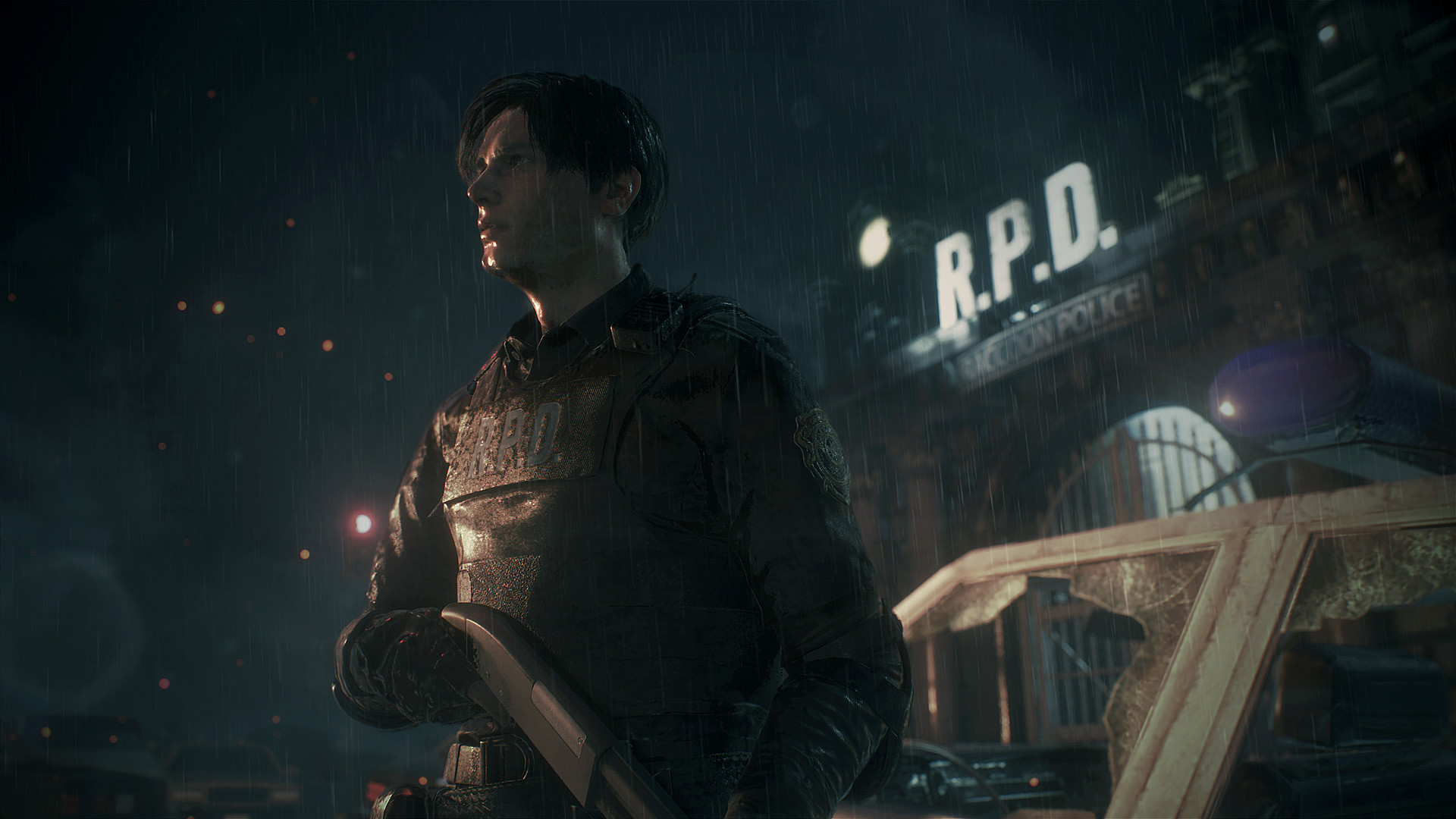
The remake’s third-person view keeps the controlled character visible while aiming and moving through tight rooms. Capcom describes the camera as an over-the-shoulder perspective, and the view can be adjusted between a closer position and a wider framing. Weapons, ammunition and healing items compete for limited inventory space, with items occupying different amounts of room. Storage boxes let the player put away supplies that are not immediately needed and retrieve them from other boxes later. Finding inventory pouches expands carrying capacity, while custom weapon parts can improve traits such as accuracy, recoil or capacity at the cost of taking up additional space. Herb combinations form another part of preparation: green herbs restore health, blue herbs address poison, and red herbs strengthen the effects of other herbs. Particular combinations provide temporary defensive benefits, giving the player a reason to save them for dangerous encounters.
Puzzles link the station’s separate rooms and turn exploration into a process of identifying missing tools, symbols and access codes. When the player examines a locked door, the map can mark both the obstacle and the item needed to get through it, so a later discovery changes which routes are available. Safes and lockers often have codes recorded in nearby documents or environmental writing; reading those details can reveal supply caches and weapon upgrades. Items can be inspected closely in the inventory, where some need to be manipulated or opened to expose information or contents. The resulting loop asks the player to notice clues, carry the necessary item, and decide what to bring while moving between safe storage and unknown areas. The R.P.D. is also a place where sound and line of sight affect movement: zombies can follow between rooms, and careful movement can avoid drawing them toward the player.
Leon’s and Claire’s campaigns let the same outbreak be experienced through two protagonists with different story threads and equipment. Capcom’s developers said the remake gives each character their own campaign presenting a comprehensive story, rather than reproducing the original game’s Zapping System in which one character’s actions affected parts of the other campaign. Completing either initial campaign unlocks a second run with the other character, with adjusted puzzles, weapons and story flow that provide another perspective on the events. The two campaigns make replaying part of the game’s progression rather than simply repeating identical stages. As players learn the building’s layout, identify which rooms remain unresolved and understand how enemies react, they can make more informed decisions about when to fight, sneak, retreat or spend a scarce resource. The focus stays on surviving Raccoon City and piecing together the outbreak, without detailing the story’s later revelations.
- Developer
- CAPCOM Co., Ltd.
- Genre
- Survival horror