
About Resident Evil 0
Set on the eve of the Spencer Mansion incident, Resident Evil 0 follows S.T.A.R.S. rookie Rebecca Chambers and convict Billy Coen through an outbreak linked to Umbrella. Its survival-horror campaign switches between both characters, using their separate abilities, inventories and partner commands to solve puzzles and manage threats. This is the 2016 HD Remaster.
Resident Evil 0 takes place on July 23, 1998, the night before the mansion incident that begins the original Resident Evil. S.T.A.R.S. Bravo Team rookie Rebecca Chambers is travelling toward the Arklay Mountains after a series of unusual murders draws the unit into an investigation. She encounters Billy Coen, a death-row prisoner and former Navy lieutenant, aboard the Ecliptic Express. The train and its passengers are caught in an outbreak that turns the search into a fight for survival. Their route leads from the train toward Umbrella’s Executive Training School and connected facilities. The story stays with Rebecca and Billy as they try to understand the crisis around them and find a way through it; it follows the events before the mansion rather than retelling that later incident.
The campaign moves through a sequence of enclosed locations rather than an open map. Compartments and service areas aboard the Ecliptic Express give way to the Training School, its surrounding grounds and further research spaces. Rooms link by doors, lifts and other mechanisms, while locked routes direct attention toward keys, mechanisms or objects that have not yet been found. Moving on often means remembering a blocked passage or puzzle device and returning when a new item or character ability makes it usable. Documents and environmental details add context to Umbrella’s presence, but progression comes chiefly from searching, examining objects and working out how pieces fit together. The changing spaces also alter the demands of traversal: narrow interiors constrain movement during fights, while larger rooms can leave the two characters exposed or separated.
The central system, known as partner switching or character switching, keeps Rebecca and Billy in the same campaign instead of treating one as a brief escort. The player controls one as the main character while the other acts independently as a partner. When both are available, control can be switched through the status or partner menu, allowing the player to place each character where a task requires them. Partner behaviour can be set to follow, move independently, attack or stay idle. An independent partner can cover another part of a room or remain near a point of interest; a following partner stays with the controlled character. Those orders matter in combat as well as puzzle solving, and leaving a partner in danger requires attention to their condition. Some obstacles require cooperation, so the player must think about both characters’ positions rather than only the one currently on screen.
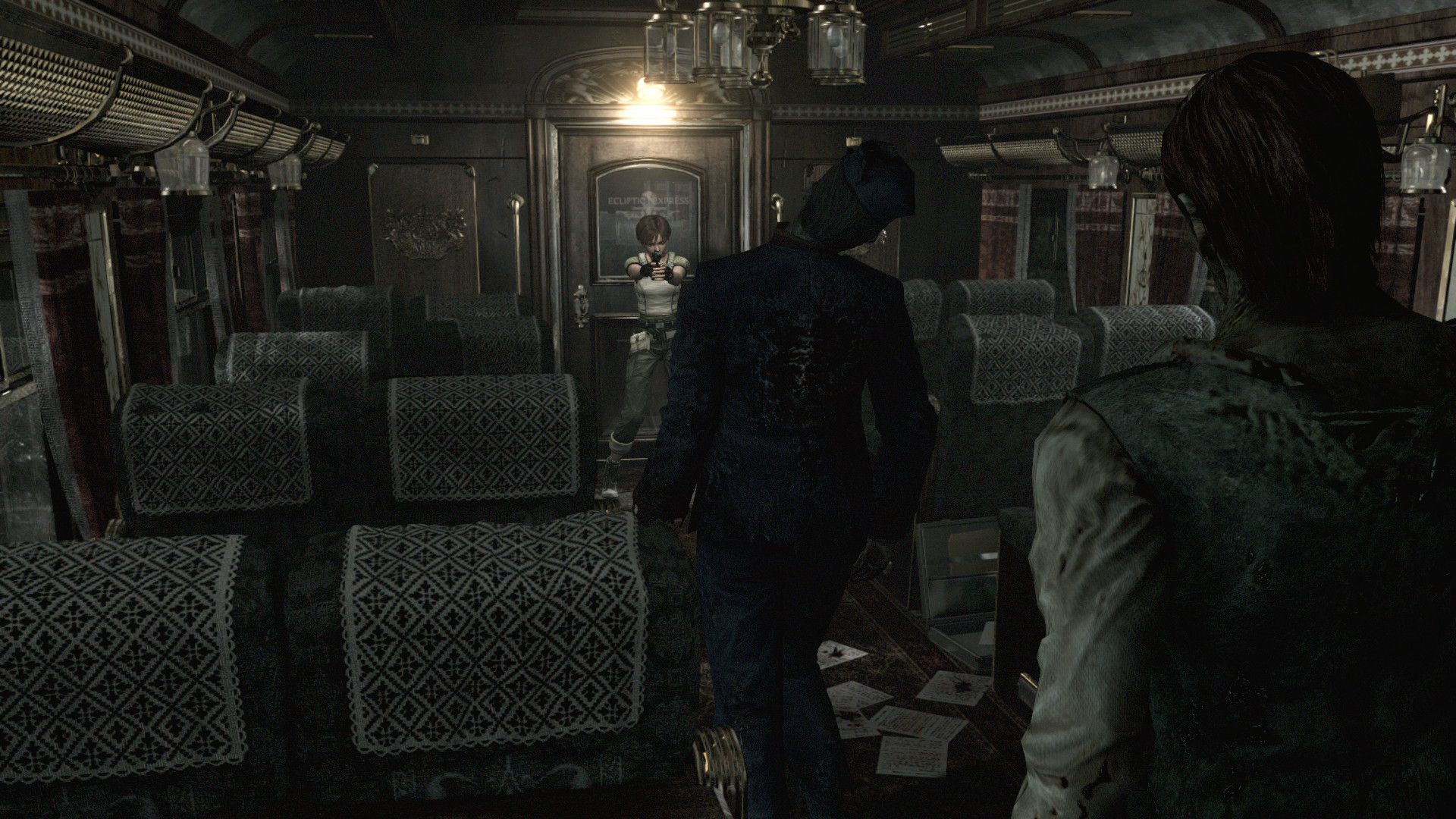
Rebecca and Billy have different practical strengths. Rebecca can combine herb items and use a mixing set to combine chemicals, giving her a role in handling medicinal and laboratory materials. Billy is more effective in direct combat and can push large objects that Rebecca cannot move. These distinctions make character choice part of ordinary exploration: an object that looks like a simple obstruction may call for Billy, while a chemical task points toward Rebecca. The player can switch to the relevant person and carry out the action, then change back to the character best placed for the next room or encounter. The design turns character knowledge into a small planning loop: inspect the obstacle, identify who can deal with it, and consider what that character is carrying before splitting the pair. It also gives each protagonist a concrete place in the campaign’s puzzle and resource work.
Both characters carry their own items, so collecting supplies is only half of inventory management. The player has to decide which character should hold a weapon, ammunition, recovery items or a key object, and can exchange items through the status screen when the partner is close. Herbs and other compatible objects can be combined into more useful supplies. Rebecca’s ability to combine herb-related items gives her inventory an additional role, while Billy can be equipped for the encounters he is better suited to face. Since the partner may attack automatically when ordered to do so, their ammunition can be spent even while the player is controlling Rebecca or Billy elsewhere. Keeping both inventories and both health states in view helps prevent a useful item or a combat-ready partner from being left behind.
Combat retains a deliberate survival-horror rhythm: search the room, identify the threat, choose whether to fight or move around it, and spend limited ammunition with care. The partner’s attack command can add a second weapon to a fight, but that support uses the partner’s ammunition; the idle order avoids those automatic shots when saving supplies matters. Threats can also endanger the partner in a different room, and the manual directs the player to respond quickly when they call for help. Puzzles and enemy encounters therefore share the same resource decisions, because ammunition, healing items and character condition all affect what the pair can safely attempt next. This is a single-player campaign built around two controllable characters, not a two-player cooperative story campaign.
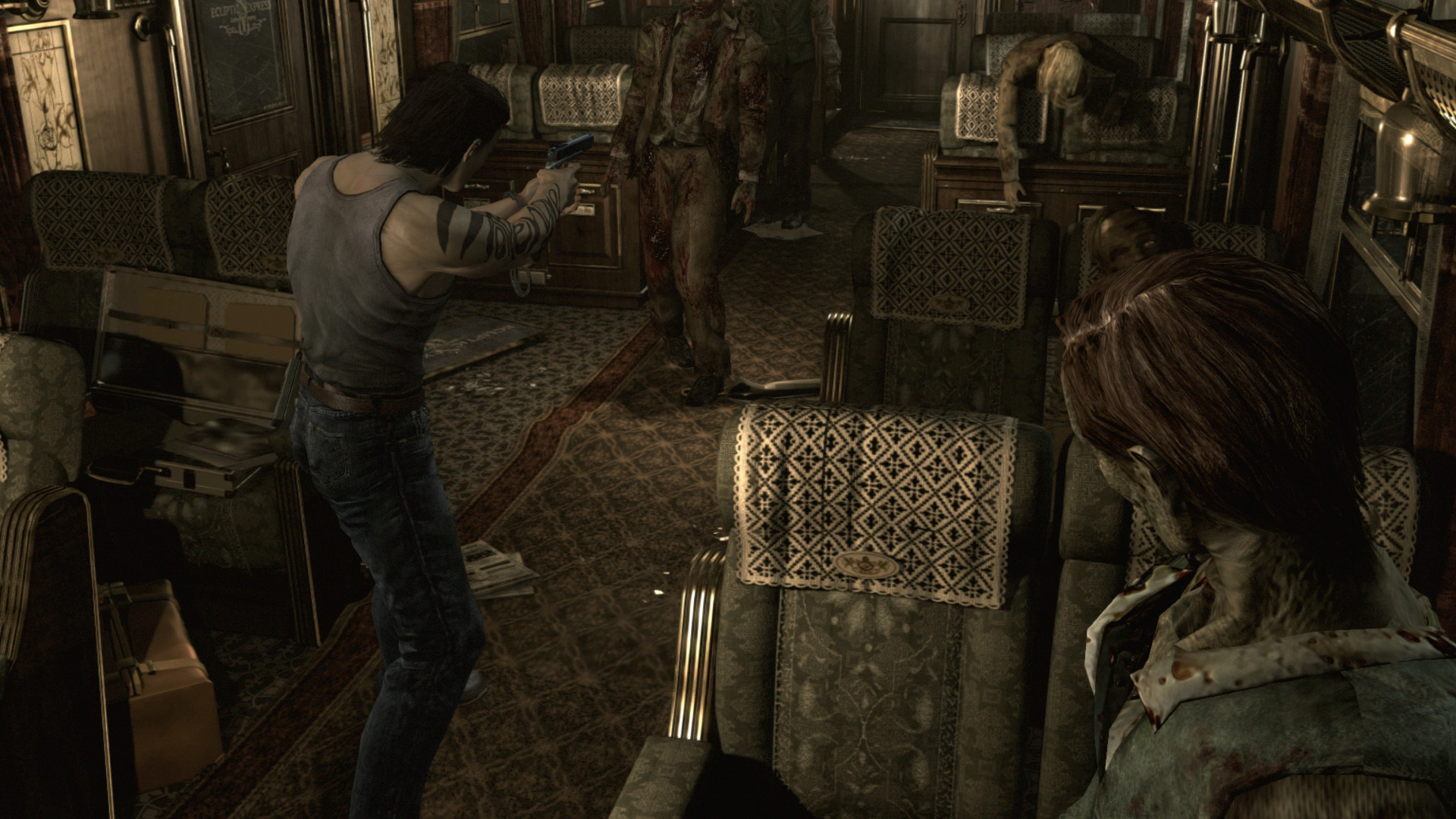
The PC release is Resident Evil 0 HD Remaster, a 2016 edition of the 2002 game. Capcom’s Steam page identifies enhanced high-resolution visuals, remastered sound, a choice between classic 4:3 and widescreen presentation, and an optional control scheme that moves the character in the analogue-stick direction. The story and partner-based structure remain those of Resident Evil 0; the remaster presentation should not be confused with a separate remake. Completing the main storyline also unlocks Wesker Mode, which lets the player control Albert Wesker through the missions with abilities that differ from Rebecca and Billy’s. That extra mode changes the playable character and combat approach, while the main campaign’s investigation, item handling and two-character puzzles remain the core experience.
- Developer
- Capcom
- Genre
- Action, adventure; survival horror