
About R.E.P.O.
R.E.P.O. is a physics-driven cooperative horror game in which small robotic workers search haunted sites for valuable objects. A mysterious computer intelligence sends teams to retrieve and extract the remains of a lost humanity, while monsters roam the same spaces. Careful handling, communication and upgrades help crews meet each collection target.
R.E.P.O. is an Early Access cooperative horror game that places a crew of small robots in a world where humanity has disappeared and its abandoned places have become hazardous work sites. The crew operates under the direction of a mysterious computer intelligence, whose orders give each expedition a practical purpose: locate valuable objects, carry them out and satisfy an extraction target. That premise turns the haunted environment into both a workplace and a threat. Players are not simply clearing a building of enemies; they are recovering a physical cargo whose condition matters. The contrast between an impersonal collection assignment and the unsettling remains of human life gives the setting its distinctive tone. Rooms contain ordinary possessions on an extraordinary scale, while monsters make even a routine delivery feel precarious. The game supports solo play as well as online groups of up to six, making the same task either an individual operation or a noisy crew effort.
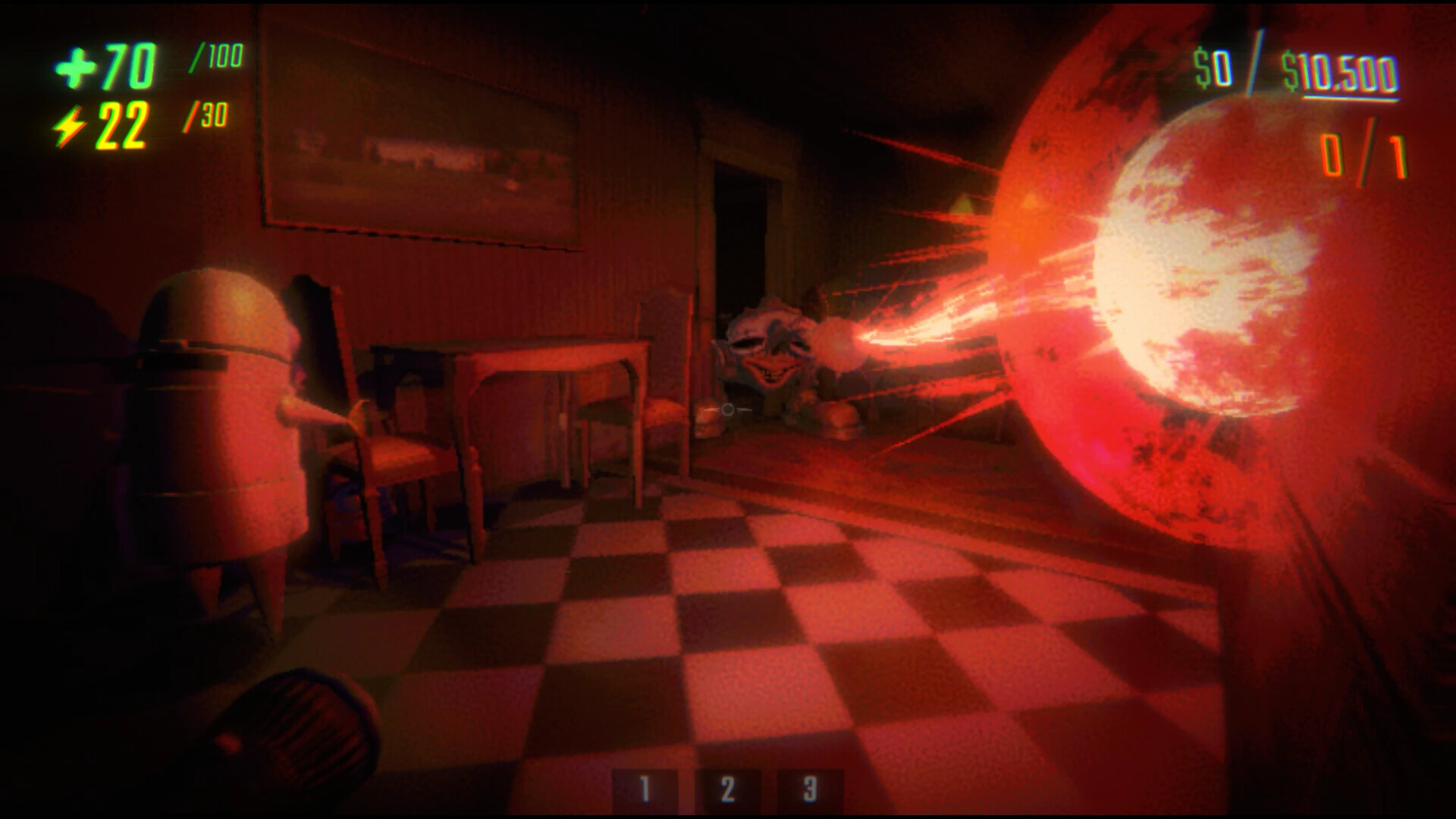
The central tool is a physics-based grabbing device used to lift and move objects. Valuable finds can be heavy, awkward or fragile, and they respond to movement and collisions rather than behaving like items in an inventory. A piano and a ceramic object pose different transport problems: weight affects control, while a delicate piece can lose value if it is dropped or struck. Teams have to coordinate around narrow passages, obstacles and one another, taking care with how they lift, turn and set down cargo. The physics apply to the environment’s dangers too; monsters are affected by gravity, which makes the world feel governed by the same physical rules as the objects being recovered. Success therefore depends on judgment as much as speed. A careful route and a steady hand can be more useful than rushing toward the exit with everything at once.
The locations are described as terrifying environments among the haunted remains of a long-lost humanity. Their rooms and objects invite exploration because crews need to find enough valuables to complete the assignment, but investigating more of a site also means spending more time where monsters can appear. The game’s proximity voice chat makes communication part of this tension: players speaking near one another can coordinate a lift, warn of danger or decide when quiet is safer. The sound of a teammate calling from nearby belongs to the same local space as the threats, so talking and listening become situational choices. The environments function as interconnected work areas rather than neutral menus. Teams move through them, search for cargo, and judge how much more they can collect before returning. The horror premise supplies uncertainty, while the collection objective gives that uncertainty a concrete cost.
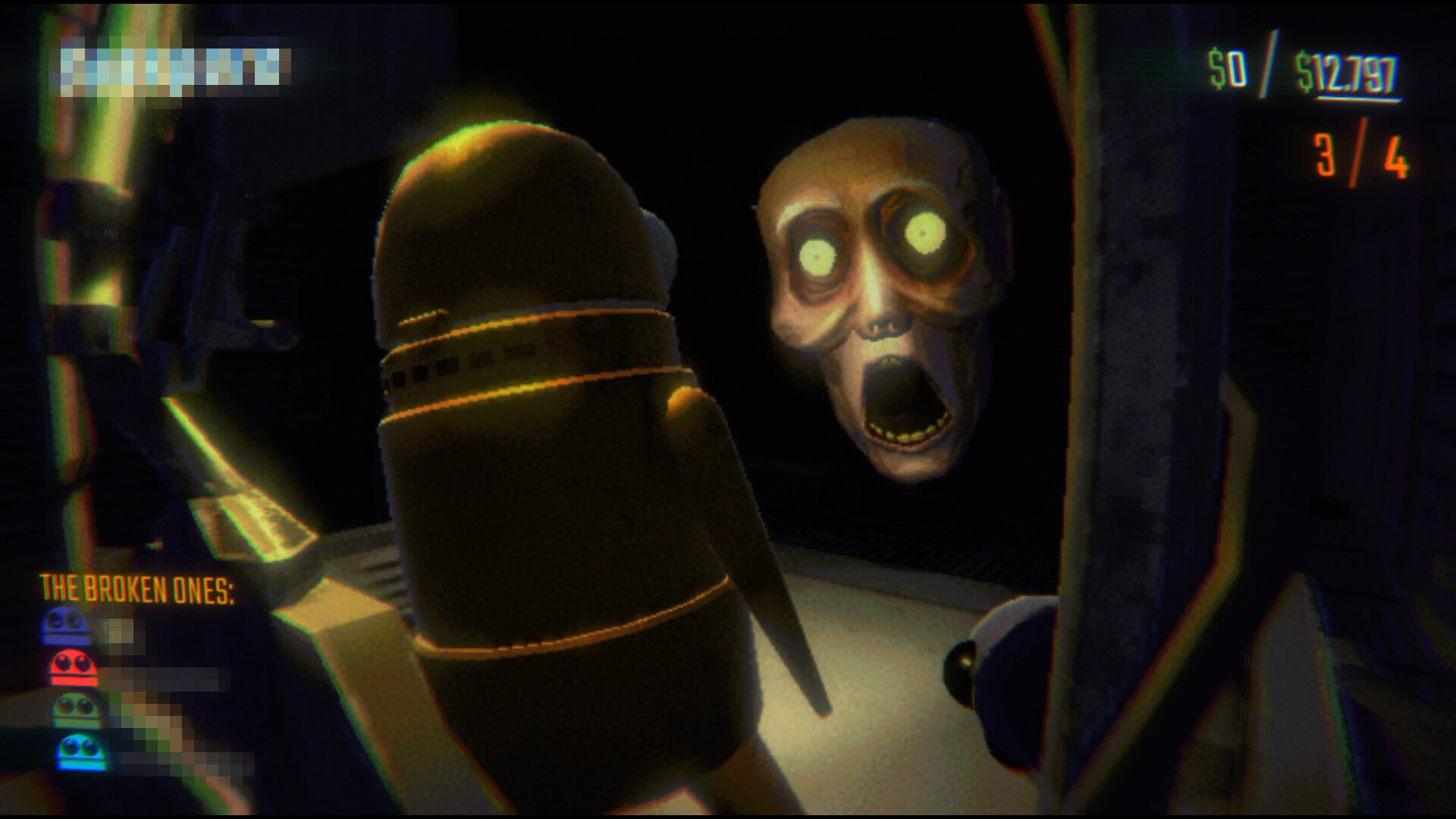
Extracting objects is a shared logistical puzzle. One player can guide a carried item while another watches the path, and a group can divide attention between finding cargo and monitoring the surroundings. The value of an object is tied to getting it safely to its destination, so a promising find can become a liability if the route is too difficult or the crew handles it carelessly. Heavy objects demand control; fragile ones reward patience. The team must also decide what is worth carrying and when to stop searching. Staying longer may uncover more value, but it extends exposure to monsters and raises the chance that earlier work will be lost. These choices give expeditions a repeated rhythm: enter, locate, transport, protect and extract. The objective remains easy to understand, while the physical handling and hostile spaces make its execution unpredictable from one trip to another.
Cash earned from successful work can be spent on upgrades and weapons supplied by the crew’s creator. Robotic enhancements improve the chances of completing later assignments, so extracting value has a longer-term role beyond finishing the current run. A crew weighs immediate spending against the benefit of improving its equipment for future trips. The upgrade shop gives the otherwise mysterious employer a direct presence in the robots’ work: it sets the tasks, receives the recovered goods and offers tools back to the workers. That transactional loop reinforces the game’s darkly comic premise without turning the experience into a conventional story about a human protagonist. The robots’ identity is expressed through their equipment and team behavior, while the computer intelligence remains the distant authority behind the operation. Each expedition connects the exploration of a haunted site to the crew’s evolving capacity to handle its work.
R.E.P.O. brings together cooperative action, horror and object-focused physics. Its main decisions are practical and immediate: how to move a valuable object, whether to speak or stay quiet, which route appears manageable, and whether another search is worth the risk. The monsters interrupt a task that would otherwise resemble careful warehouse work, and the physics make the cargo itself a source of pressure. Online crews can share responsibility, while solo play leaves every lift and warning to one player. The game’s presentation sets an eerie backdrop for those systems, but its core identity comes from the tension between fragile valuables and dangerous extraction. Rather than treating cooperation as a simple combat bonus, it makes communication and handling central to the job. A successful trip is measured by what the team manages to bring back intact.
- Developer
- semiwork
- Genre
- Online cooperative horror action game with physics-based object handling