
About Remember Me
In Neo-Paris in 2084, memories can be digitised and traded, giving the Memorize corporation influence over private life. Nilin, a former elite memory hunter whose own past has been erased, escapes custody and works with a clandestine ally to recover her identity. She moves through the city, fights its pursuers and enters other people’s memories.
Neo-Paris in 2084 has rebuilt daily life around Sensen, a technology that lets people digitise, share and trade personal memories. Memorize stands at the centre of that system, while augmented-reality displays and connected devices extend its presence into the city. Nilin once worked as an elite memory hunter, able to enter another person’s mind and take or alter what they remember. The authorities capture her and wipe her own memories. After escaping, she receives help from Edge, her remaining contact, and begins a search for the identity and abilities that have been taken from her. That search also brings her into conflict with the organisation that controls the city’s memory infrastructure. The premise makes memory both a practical tool for obtaining information and a commodity that shapes how citizens experience private life.
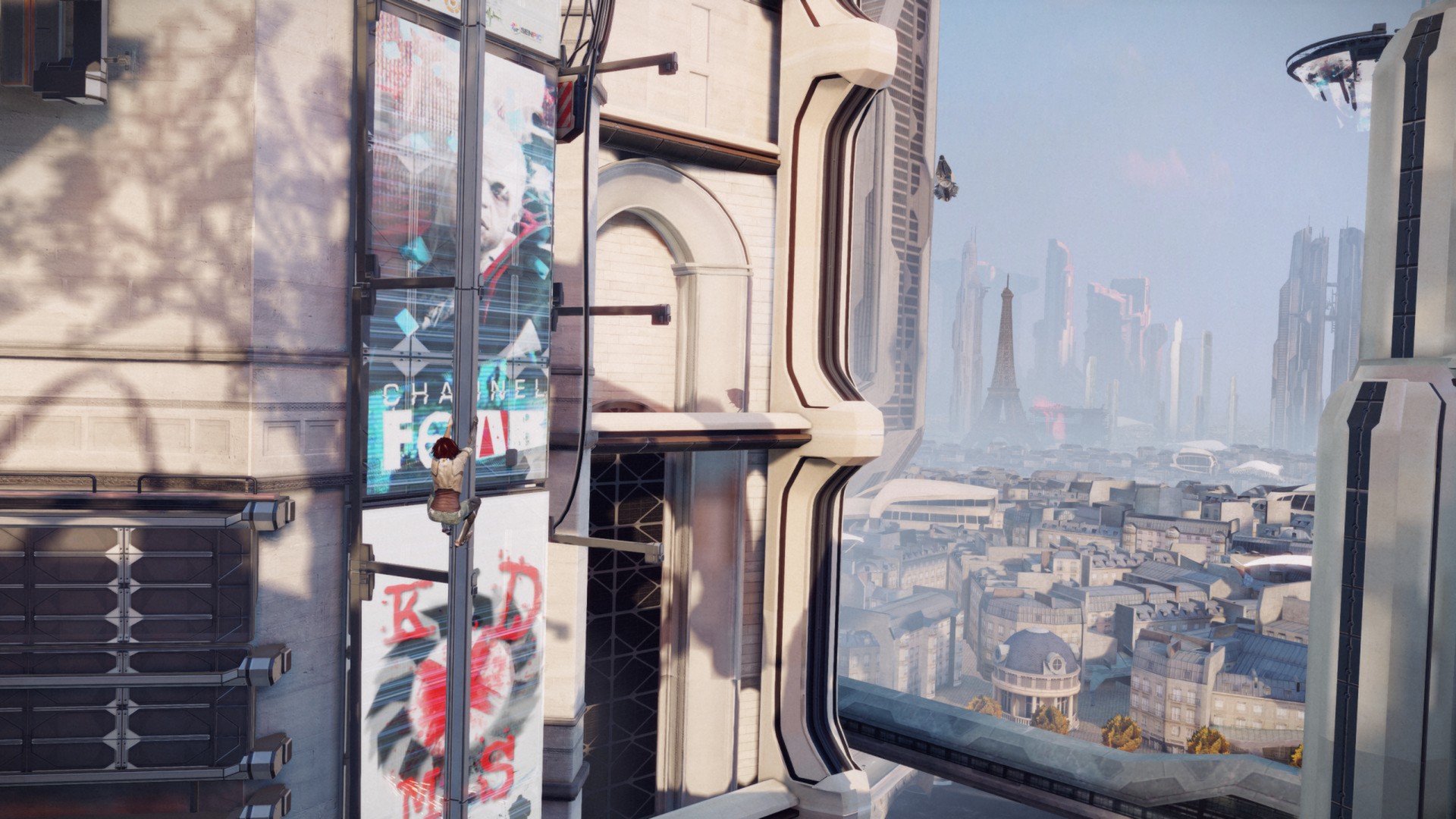
The campaign follows Nilin through connected districts of Neo-Paris as she carries out missions for the resistance and pursues leads about her past. Movement through the environments combines running, jumping, climbing and navigating routes across streets, rooftops and interior spaces. These sections place the city’s vertical architecture alongside its public spaces and guarded facilities, while interruptions from enemies turn movement into combat encounters. Memorize’s security forces and people changed by memory technology create different kinds of threat, so progress alternates between travelling through an area, reaching the next objective and responding to whoever blocks the route. The city also uses augmented-reality displays as part of its everyday fabric, making the technology behind the plot visible in streets and buildings. The focus remains on Nilin’s journey rather than an open-ended city activities loop.
Memory Remixes make Nilin’s ability to enter other minds a playable system. In these sequences, the player examines a person’s recorded memory and can alter selected details while events unfold in real time. The recorded scene can be scrubbed back and forth, letting the player inspect its moments before choosing an available change. Changing an object or action can redirect how the person understands an experience and the people involved in it. The sequence is therefore about both finding information and deciding which part of a memory to change to affect the target’s perspective. The consequences can reach beyond the immediate scene, connecting this ability to the wider conflict over who owns a person’s past. Remixes are set-piece investigations within the campaign; they do not replace the ordinary traversal and combat used to move through Neo-Paris.
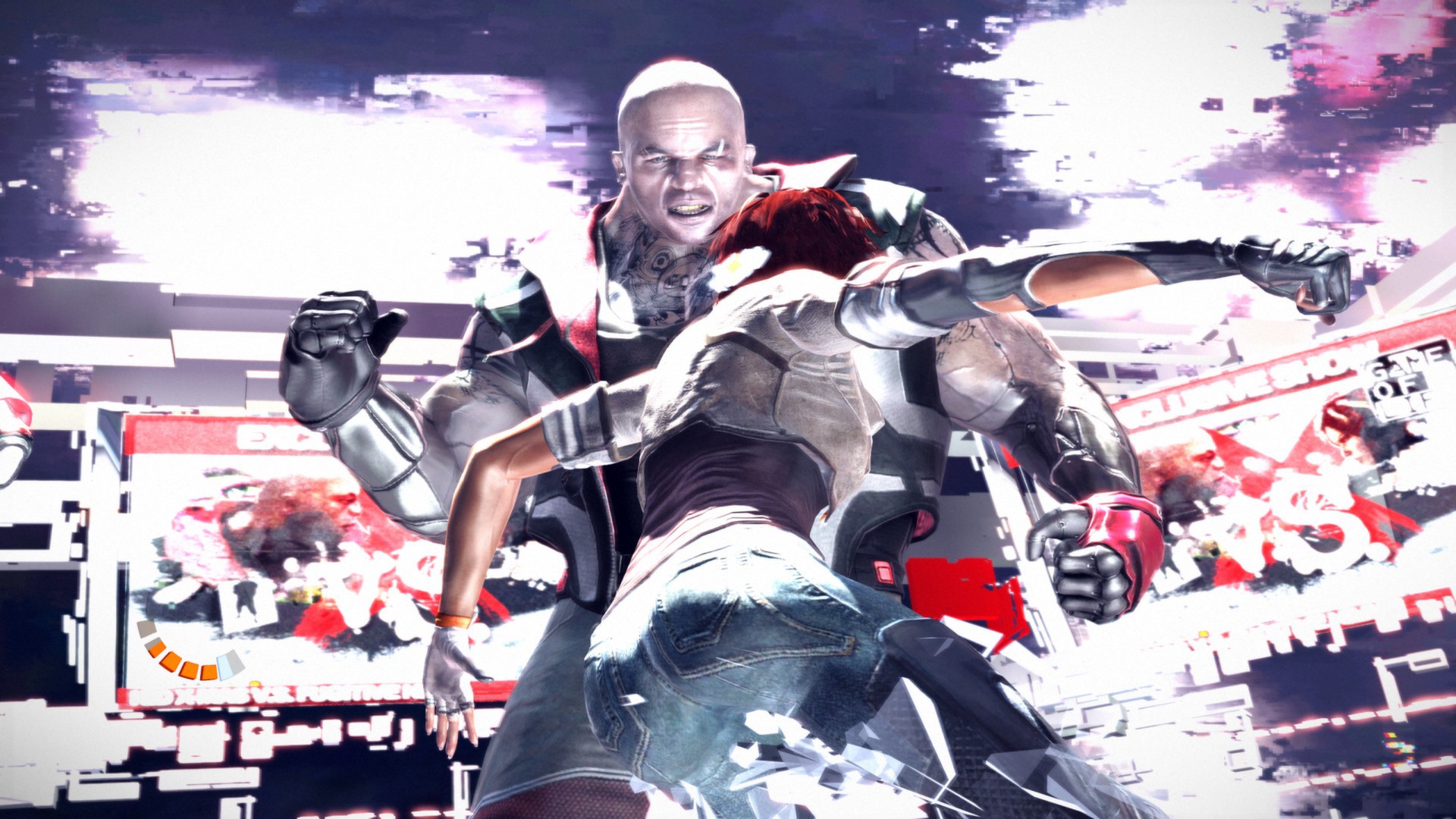
When Nilin is confronted directly, she fights with punches and kicks in close-range encounters and can dodge incoming attacks to keep a combo going. The Combo Lab lets the player assign unlocked Pressens to the available positions in her combo strings, then change those arrangements as needs shift. Power Pressens increase the damage of their strikes, Regen Pressens restore health on a successful hit, Cooldown Pressens shorten the recovery time for special attacks, and Chain Pressens repeat the effect of the preceding Pressen. Because the chosen effect depends on its place in the sequence, a combo can be shaped around damage, recovery or a mixture of both. The attack pattern provides the framework; configuring the Pressens changes what a completed sequence contributes. These components are introduced over the campaign, so new unlocks expand the configurations available rather than replacing the basic punch-and-kick inputs.
Procedural Mastering Power earned during encounters unlocks further Pressens and extends the options available in the Combo Lab. As Nilin progresses, she gains longer combo patterns and can slot additional effects into their later positions. The game also gives her S-Pressen, special abilities selected separately from ordinary attacks and fuelled by Focus built through combat. Sensen Fury directs a rapid sequence of attacks across targets, Sensen DOS can disable enemies, and other abilities affect a selected target or a machine. The specific ability available depends on what has been unlocked in the story. Their functions give the player a reason to vary when they spend Focus instead of relying on the same punch-and-kick sequence. Cooldown Pressens link the two systems: placing them into ordinary combos reduces the time before another S-Pressen is ready. Combat thus combines basic strings, their assigned effects and a limited pool of stronger abilities.
Exploration also supplies clues and context beyond the main route. Mnesist memories are collectible journal entries that add background about the 2084 setting, while other encounters let Nilin use her memory-hunting ability to obtain information directly from a target. The Spammer gives her a ranged option during parts of the campaign, complementing hand-to-hand attacks when an enemy or object cannot be reached at close range. Additional pickups can improve Nilin’s health or expand her Focus capacity, giving optional searches a direct link to combat readiness. Between these moments, the game uses environmental traversal and short puzzle sequences to carry Nilin through the city. Moving through Neo-Paris, fighting its inhabitants, collecting background material and manipulating selected memories are distinct activities tied to the same effort to uncover Nilin’s past.
- Developer
- DONTNOD Entertainment
- Genre
- Action-adventure