
About Red Faction
On Mars, miner Parker is caught in a revolt against Ultor Corporation as disease spreads through its mining colony. This first-person shooter combines a story-driven campaign with Geo-Mod, a system that lets explosive weapons reshape supported walls and terrain during combat.
Red Faction is a first-person shooter set inside Ultor Corporation’s mining operation on Mars. Parker has come from Earth for the promised work and opportunity, but the colony is governed by armed security, harsh labor, and a disease spreading through the miners’ barracks. When violence erupts between guards and workers, Parker is drawn into the revolt. The campaign follows him through connected industrial spaces, mines, research areas, and other parts of the colony as he tries to survive and learns why the company is concealing the plague’s origins.
The uprising grows from more than a single clash. Red Faction is the name of the miners’ resistance, whose calls for action circulate through the colony before the revolt becomes open conflict. Parker’s changing position puts him between the workers, Ultor’s security forces, and the people guiding the rebellion. One of the most useful contacts is Hendrix, a security technician inside the company who secretly accesses its systems. Messages from him appear during the campaign and provide information tied to current objectives, so communication forms part of the mission flow rather than a separate briefing menu.
The defining environment system is Geo-Mod: explosive weapons can alter supported parts of the terrain and structures while the action is underway. In mine caverns or other destructible areas, a rocket or charge can cut a hole through a wall beside a blocked entrance, open a passage, or reshape cover during a fight. The system has boundaries, and not every surface can be changed, but it makes routes and sightlines part of combat. A destroyed walkway can change how a room is crossed; a blast into a cavern floor can create a depression that affects where both Parker and guards can move.
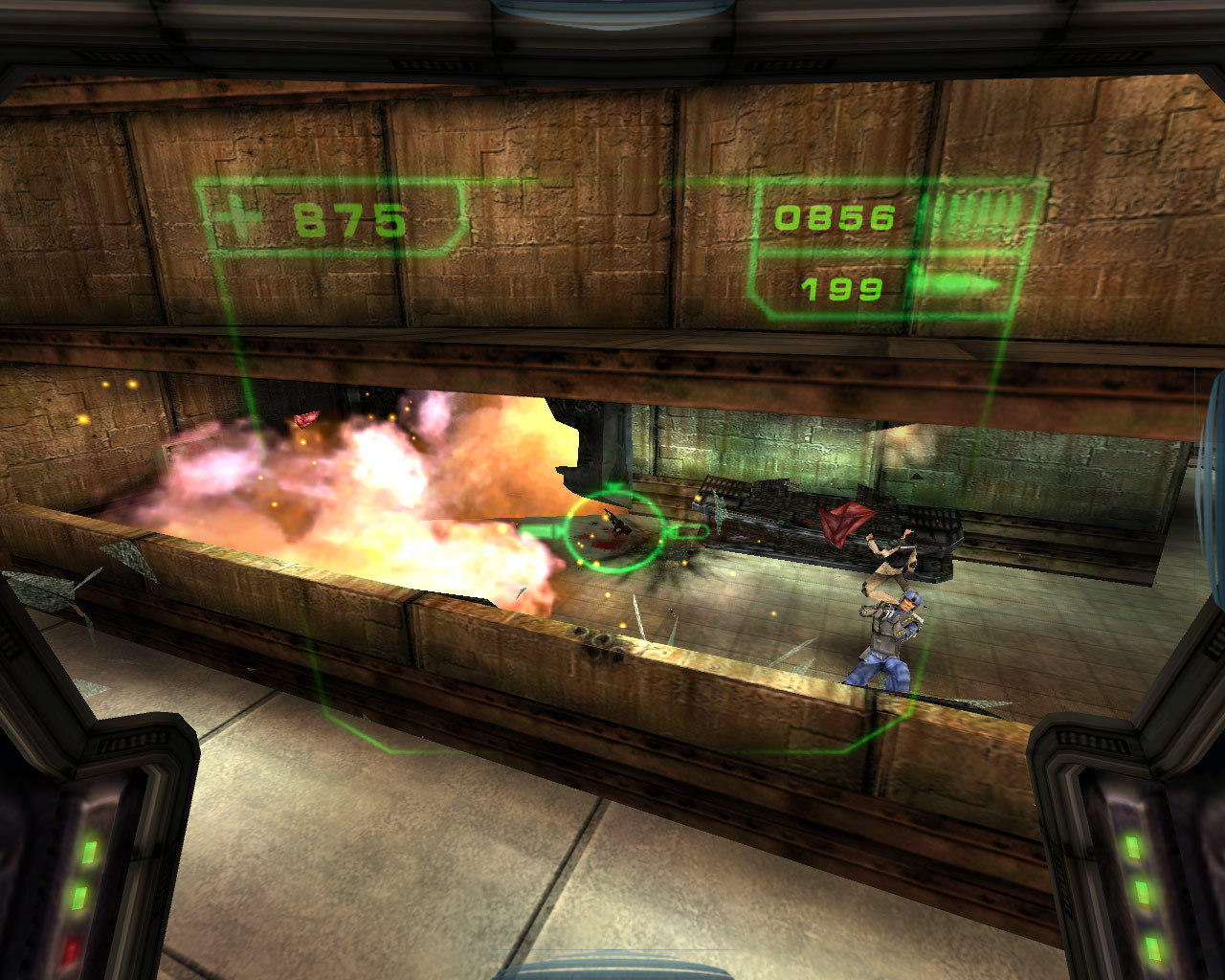
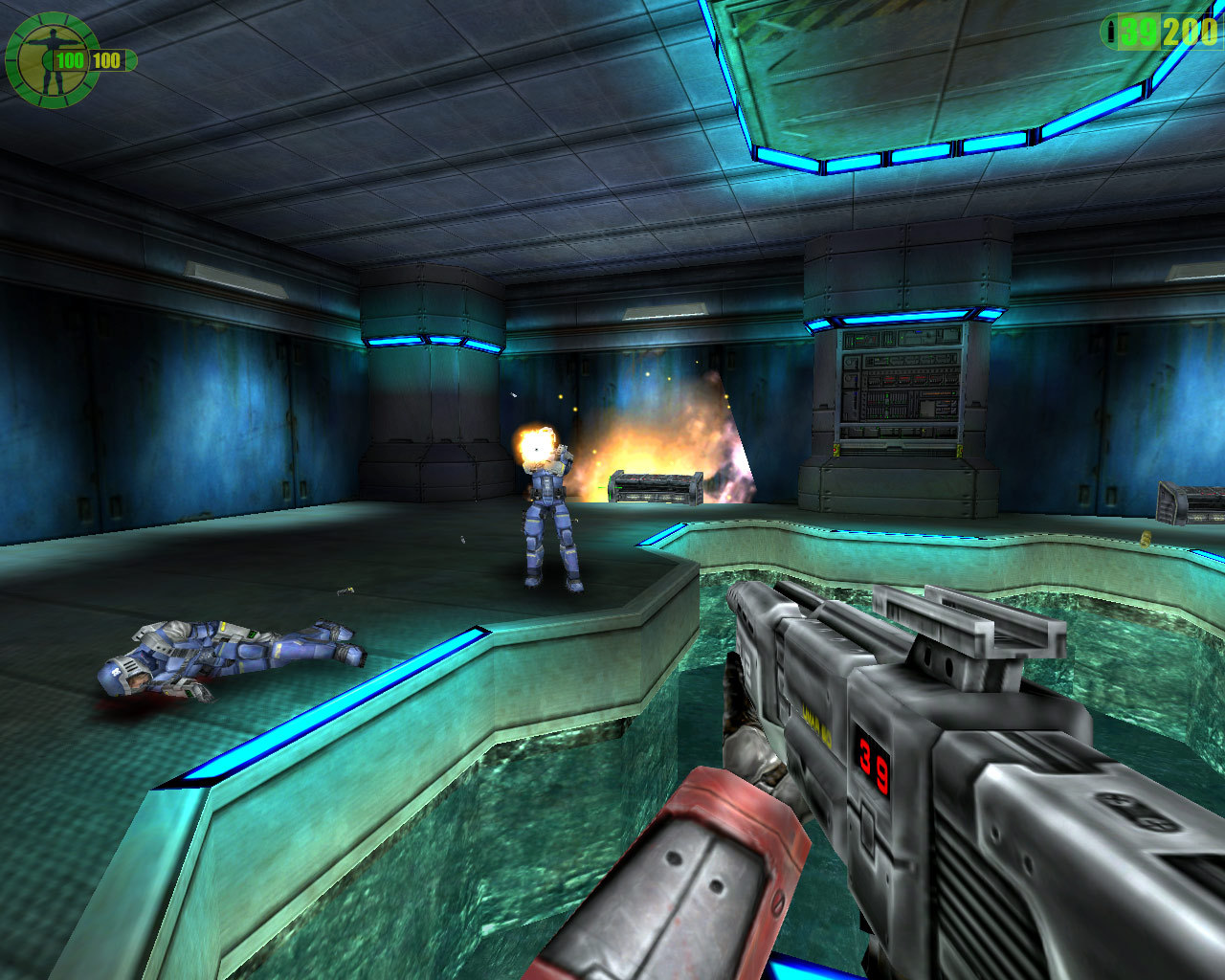
Progress through the campaign combines firefights with objectives that sometimes call for stealth. Weapons have distinct handling and alternate functions, so changing equipment matters as the situation shifts. The Ultor pistol can use a silencer, while the submachine gun switches between standard ammunition and armor-piercing rounds. The assault rifle offers a controlled three-round burst or continuous fire; the sniper rifle has a magnified scope; and the rocket launcher can switch to a heat-seeking mode after acquiring a target. Remote mining charges can be thrown and detonated, while grenades can be timed or used as impact explosives.
Other weapons make specific tactical choices possible. A rail driver sends a slug through walls, and its scope can reveal enemies on the other side, letting Parker line up a shot without opening a direct route. The flamethrower burns targets at close range and can detach its fuel canister for use as an explosive. The heavy machine gun trades accuracy for sustained fire, while the fusion launcher delivers a powerful single shot with a long reload. The HUD tracks ammunition alongside separate health and envirosuit readings: the suit protects Parker and is needed to breathe in unpressurized spaces, so staying alive involves watching both measures and finding supplies.
Vehicles change the pace and the kind of control required in several campaign sections. The ATV separates the driver’s position from its rear-mounted gunner position, so movement and firing are handled from different seats. A Driller is slow and armored, but its rotating bits can bore through the environment; it does not carry weapons. In aerial combat, the Aesir fighter pairs a Gatling gun with heat-seeking missiles, and the player adjusts altitude to engage other craft. A submarine uses homing torpedoes and depth controls, while the armored personnel carrier combines a chain gun with a mortar. These sequences extend the campaign beyond walking and shooting through corridors.
Stealth breaks up some of the direct fights. In one type of sequence, Parker enters a guarded area under disguise, with a concealed silenced pistol rather than his normal arsenal. Cameras and patrol routes become threats, and using the weapon carelessly can reveal him. When a guard must be removed, the body may need to be dragged out of sight so a passing patrol does not discover it. These sections change the immediate task from clearing a room to managing where enemies can see and what evidence they can find. They still use the same first-person movement and shooting, but ask the player to pay attention to the security layout before choosing when to act.
The campaign is arranged as a sequence of twenty varied levels, with objectives built around both action and stealth. There are rooms and side routes beyond the most direct path, and checking adjoining spaces can reveal an encounter or supplies before the next push. Health packs, medics, and envirosuit armor restore different parts of Parker's protection, while the selected difficulty changes how quickly and intelligently enemies attack. Single-player supports both ordinary save files and quick saving. In the barracks, a side room can lead to a rocket-turret defense against more than a dozen attackers, an encounter that rewards checking the surrounding spaces.
- Developer
- Volition
- Genre
- First-person action shooter