
About Red Dead Redemption 2
America, 1899: outlaw Arthur Morgan rides with Dutch van der Linde’s gang after a robbery in Blackwater forces them onto the run. Story Mode follows their struggle to survive through robberies, gunfights, hunting, travel and camp life as pressure from the law and conflict within the gang grow.
Red Dead Redemption 2 is set in 1899, as the Wild West era gives way to a more settled and policed America. Arthur Morgan is a senior member of Dutch van der Linde’s outlaw gang, whose flight begins after a robbery in Blackwater goes wrong. Federal agents and bounty hunters pursue them across the heartland while the gang searches for money and somewhere to stay. Dutch, John Marston, Sadie Adler, Micah Bell, Javier Escuella, Bill Williamson, Charles Smith and Susan Grimshaw are among the people around Arthur, each part of a group that has travelled and survived together. Their shared camp gives the story a place to return to between jobs, while disagreements over what the gang should do make its future uncertain. The campaign stays close to Arthur’s place in that group as its need to survive collides with his own sense of loyalty and right and wrong.
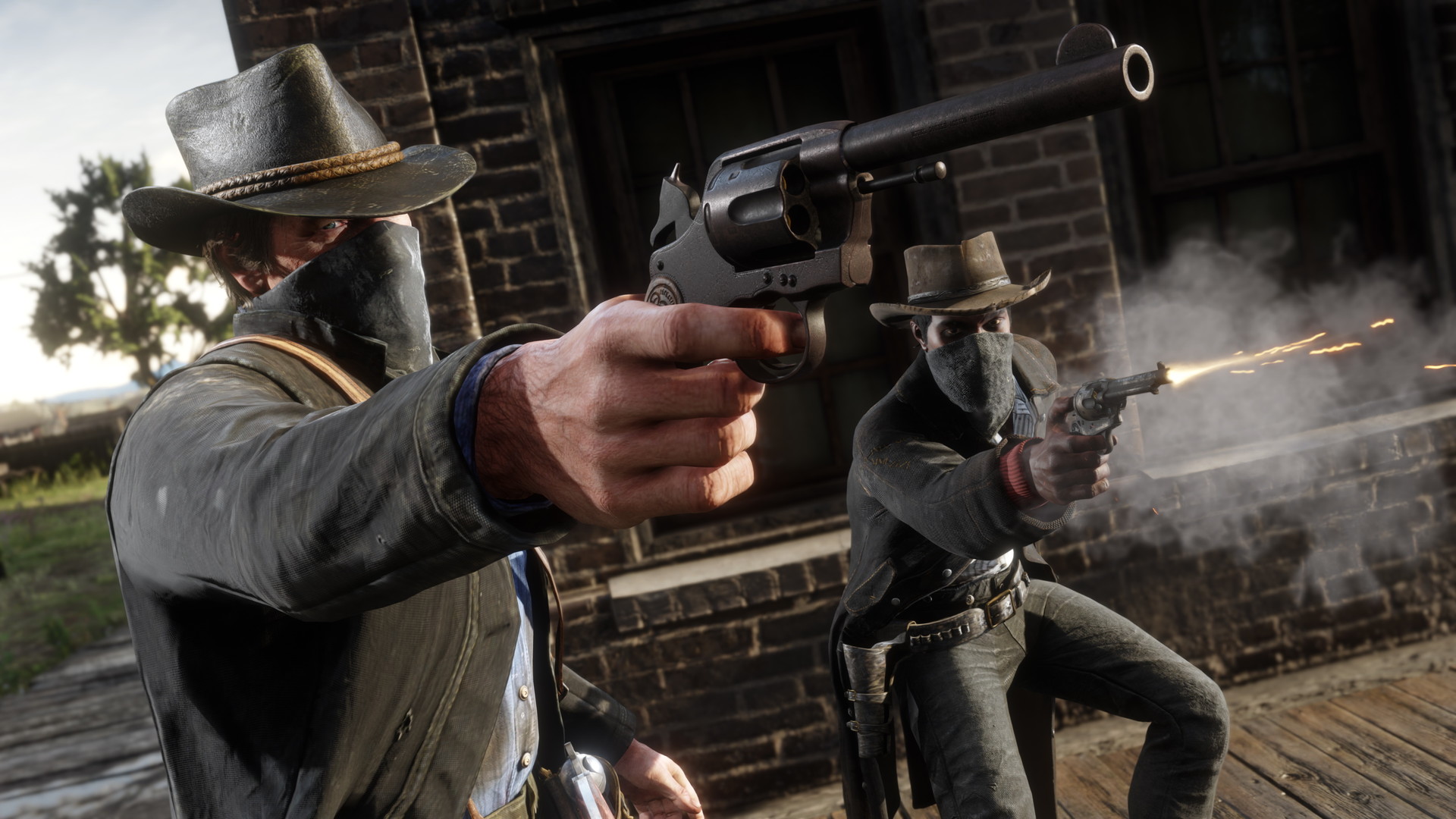
Story missions take Arthur through robberies, escapes, confrontations and work for people he meets along the way. A job may start with a ride to a marked location, but it can turn into a shootout, a pursuit on horseback or a quick decision about how to deal with a witness or enemy. Gunfights draw on revolvers, pistols, repeaters, rifles, shotguns, bows and thrown weapons, with ammunition types and weapon customisation affecting precision, range or damage. Dead Eye gives Arthur a brief advantage in a firefight by slowing the action so he can line up shots. Cover, distance and weapon choice still matter: a rifle that suits a distant target is awkward when enemies crowd close, while a shotgun is better suited to short range. The story places these encounters among quieter rides and conversations, so the pace changes from planned gang work to sudden trouble and back again.
The gang’s camp is both a home base and part of the campaign’s survival economy. Arthur can spend time there with Dutch and the other outlaws, take on tasks and help provide for the group. Money from robberies and other work can go toward camp upgrades, while supplies, weapons and food also connect the gang’s needs with Arthur’s decisions outside camp. Improving the camp is a separate investment from buying equipment for Arthur, so a new personal weapon competes with spending that benefits the wider group. Story missions and camp interactions keep returning attention to the people who depend on each other, while the gang’s changing circumstances determine where they settle. It gives the campaign a rhythm of leaving for work, returning with cash or supplies, and setting out again when a new lead or problem appears.
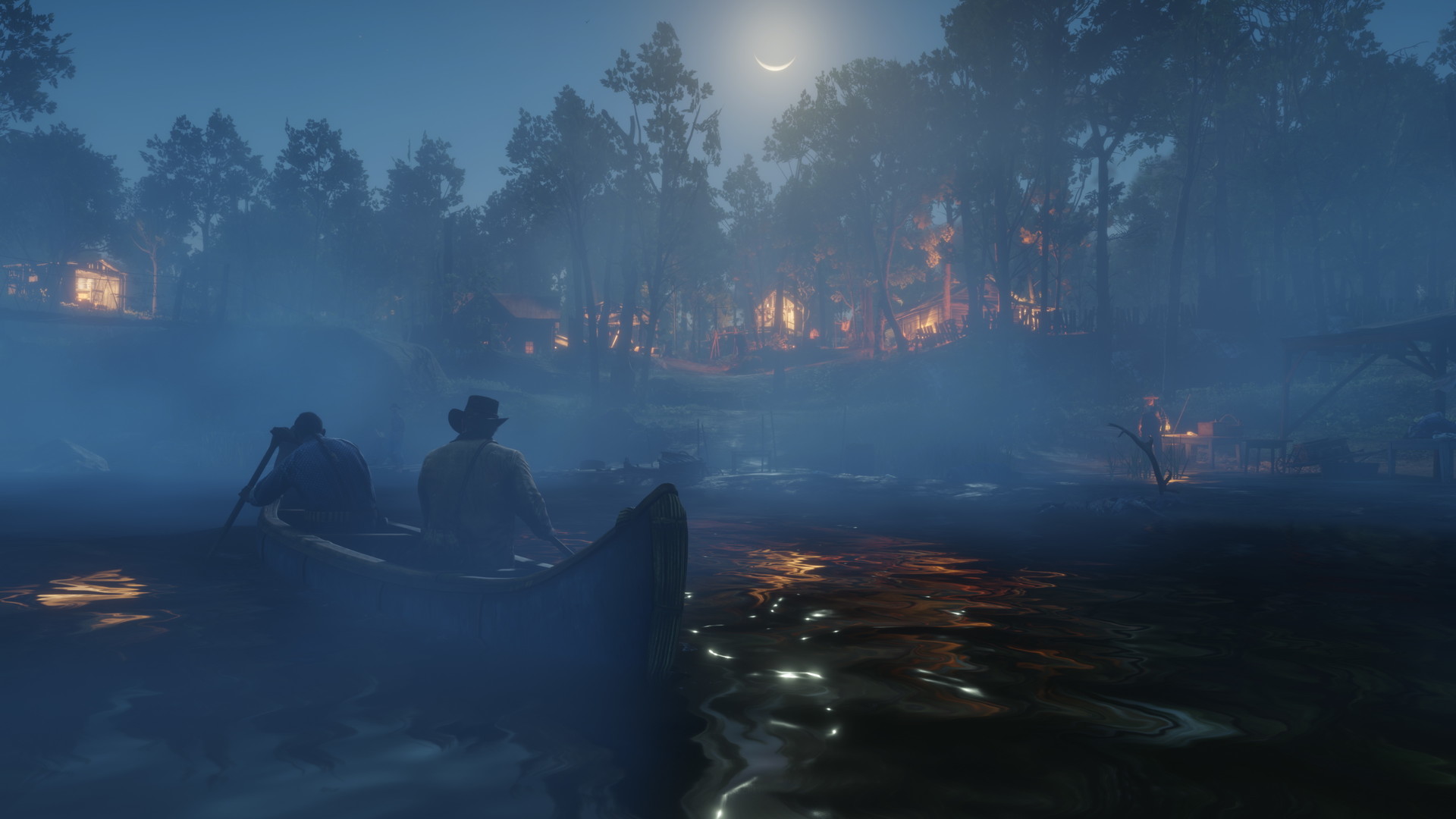
Travel is on horseback across a broad stretch of countryside that includes open plains, mountains, swamps, farms, settlements and growing towns. The landscape is also home to a varied animal population: deer, bison and pronghorn move in herds; wolves hunt together; scavengers gather around carrion; and bears may bluff-charge when threatened. That activity makes a ride more than the distance between two mission markers. Arthur can stop to hunt or fish, follow a trail, cross a river, or explore a place he noticed from the road. The wildlife behaves in ways that affect what is safe to approach and how an encounter unfolds. Hunting connects those detours to practical rewards, since animal materials can be sold and supplies can support Arthur’s life in the frontier. The route you choose therefore brings together travel, observation and the chance to gather something useful.
Finding work and provisions takes Arthur into settlements as well as wilderness. Towns offer shops where he can buy weapons, ammunition and other useful goods, and his travels can bring him into contact with strangers, wanted criminals and rival gangs. Bounty work asks him to track down specific people, while gang hideouts turn into armed encounters with organised groups. Treasure maps can send him searching for landmarks and buried riches, adding a reason to look closely at the terrain rather than ride straight to the next story objective. The campaign also includes optional activities away from its main missions, including hunting, fishing and challenges. These pursuits have their own practical payoffs and give Arthur other things to do between larger story beats, with the surrounding world providing the places and materials they depend on.
Arthur’s Honor is shaped by his choices and influences how the world responds to him. Its level brings consequences and benefits beyond individual encounters. Alongside chapter missions and gang work, this gives everyday conduct a lasting role in the campaign: decisions made while travelling through towns and countryside can affect later interactions, as Arthur navigates the tension between his ideals and loyalty to Dutch.
Red Dead Online is a separate multiplayer experience alongside the single-player Story Mode. Online has its own character and progression, and lets players ride alone or form a posse; its Frontier Pursuits roles and activities belong to that mode. Arthur’s campaign instead follows the Van der Linde gang through the story after Blackwater, with its own missions, characters, camp and open-world pursuits. The distinction matters because the online role systems are not steps in Arthur’s story. Story Mode follows the outlaws across the heartland as they seek work and survival, while the multiplayer frontier gives each player a separate life to build.
- Developer
- Rockstar Games
- Genre
- Action, Adventure