
About Ready or Not
In Ready or Not, you lead Los Sueños Police Department’s SWAT unit through high-risk calls in a city strained by violent crime. Study each briefing, prepare a squad and equipment, then enter uncertain spaces where suspects, civilians and evidence demand careful identification. Mission conduct shapes both the immediate outcome and the condition of your officers.
Ready or Not is a first-person tactical shooter set in the modern city of Los Sueños, where the Los Sueños Police Department’s SWAT team responds to violent and volatile incidents. In the single-player campaign, the player takes the role of David “Judge” Beaumont, the unit’s commander, under Chief Galo Álvarez. The missions place officers inside locations where armed suspects, people needing rescue and incomplete information can overlap. The cases touch on human trafficking, drug dealing, illegal weapons, extremism and terrorism, with details distributed across briefings, rooms, people and objects rather than delivered as a single continuous action scene.
Before deployment, the tactical tablet presents the information available for a call. A briefing can include audio, a situation summary, known suspects and civilians, objectives, maps, entry points, threat indicators and team equipment. Some details establish what officers already know; others are clues about the building or the operation’s purpose. The player chooses a mission and prepares the unit’s weapons, armour and tools for the expected conditions, while keeping in mind that a briefing cannot guarantee what will be encountered inside. This preparation gives a tactical purpose to the station between missions: it is the command base for reviewing information and setting up the next response.
Once inside, play centres on moving through connected rooms and controlling the risks at each doorway. The player can inspect a closed door with a mirror device, choose how to breach it, and direct the SWAT team to enter, cover, clear or hold areas. Orders can be given to the whole group or to the Red and Blue elements, allowing officers to approach from different positions. Flashbangs, chemical tools, shields and other equipment support distinct entry plans, while a door wedge can limit movement through a route. A helmet-camera view offers another officer’s perspective, useful for checking a room or watching a separated element while the commander remains elsewhere. Weapon handling, recoil and the difference between ammunition types matter in close quarters; bullets can pass through some walls, furnishings and bodies, so cover and the line of fire affect more than the target directly ahead.
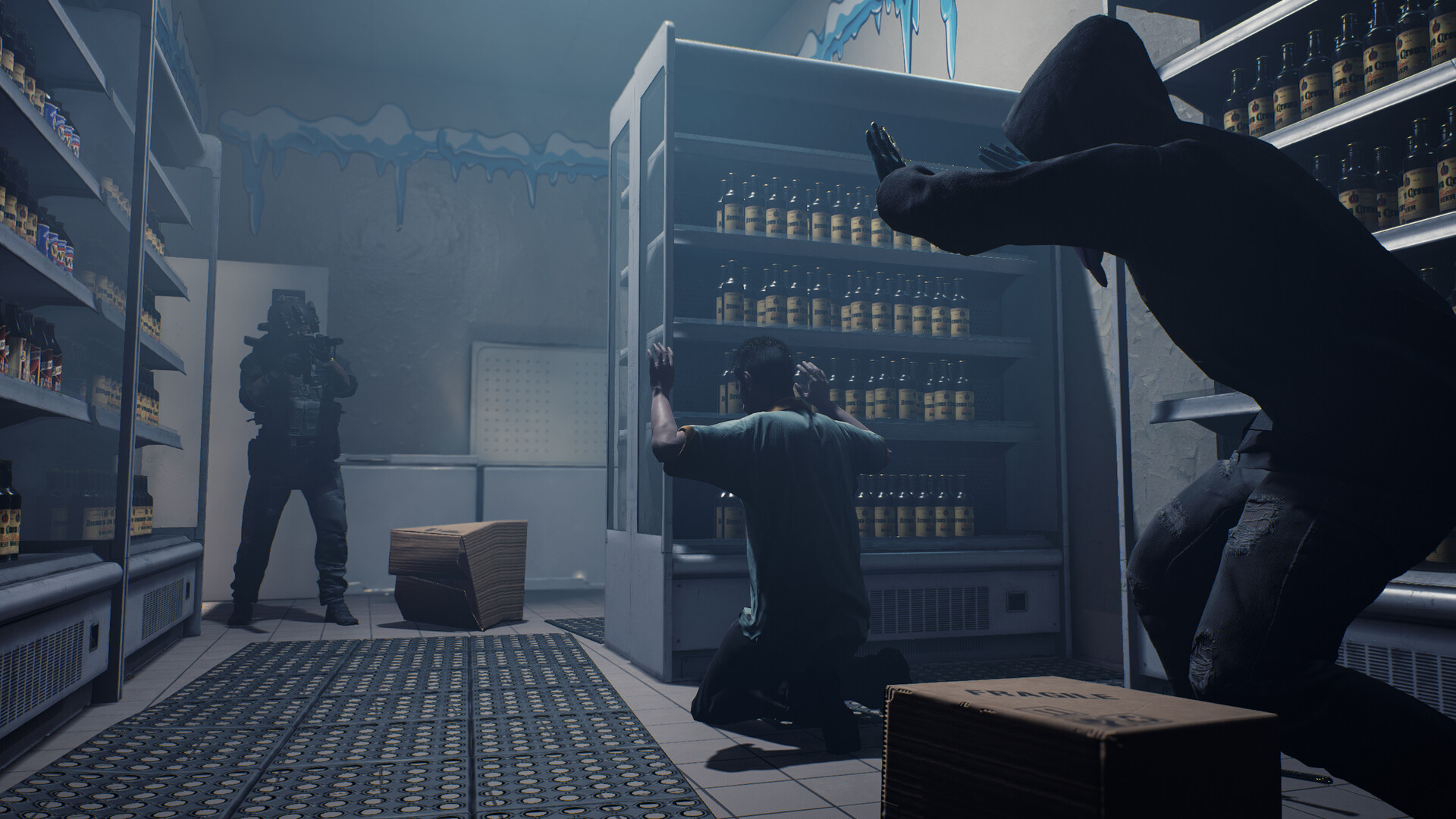
Every encounter requires the player to distinguish an immediate threat from a civilian or a suspect who can be brought under control. Officers can issue commands for people to put down weapons and surrender; restraint and reporting are part of securing a person after the immediate danger has passed. The rules of engagement make the use of force consequential, so firing is not the only way to resolve a room and careless actions can harm people the team is meant to protect. Less-lethal options such as tasers, pepper spray, pepperball launchers or beanbag weapons can help control a resistant person, though protective equipment may affect their usefulness. Tactical judgement includes knowing when to hold fire and when a threat leaves no safe alternative.
Securing a location continues after its main threat is dealt with. The team must report mission objectives and secure relevant evidence, including weapons dropped by suspects. Some evidence is a physical item to collect; other reportable details are observed and communicated to the operations centre. The tablet’s objectives help distinguish required tasks from optional discoveries, and certain clues can connect one detail to another during a mission. The final score reflects how the call was handled, while mission-specific evidence is added to the station’s locker, where its descriptions provide context about the case and the people affected by it. This makes careful observation part of both mission completion and the wider account of Los Sueños.
Commander Mode links operations through the development of a roster of distinct officers. Each teammate has a name and traits that can affect the unit, and officers can gain further abilities through continued service. Their physical condition matters after an injury, while mission conduct contributes to the stress they carry between calls. The station’s mental health unit may recommend time away or therapy when pressure accumulates; officers who are not fit for duty can be benched, and prolonged strain can threaten their place on the team. A mission may therefore succeed tactically while still leaving lasting costs for the people who carried it out. Careful use of force and protecting civilians and colleagues help preserve the squad’s future capability.
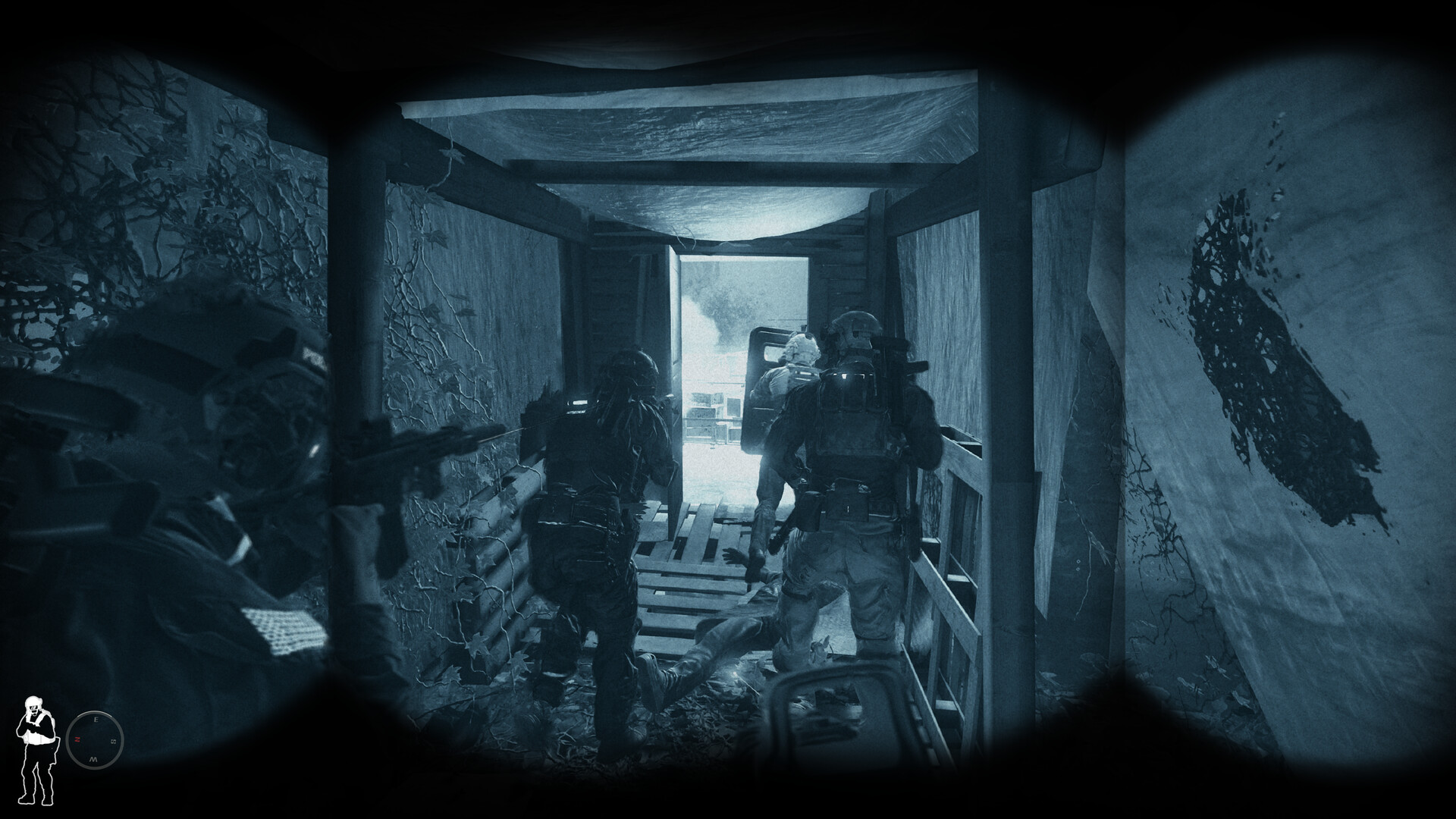
The campaign also makes the station a changing operational space rather than a menu alone. Officers return there to review team condition, select a roster, adjust equipment, inspect the evidence locker and use the firing range or training areas. The station progressively changes as campaign missions are completed, reflecting the unit’s activity and adding spaces to explore between calls. New missions become available through campaign progress, and the narrative emerges from the calls and the clues associated with them. Players who want to focus on an individual operation can use practice options, while the game also supports cooperative play for a squad of up to five. Across these formats, the central activity remains planning an entry, coordinating a team and resolving a dangerous scene with attention to people and evidence as well as the armed threat.
- Developer
- VOID Interactive
- Genre
- Tactical first-person shooter