
About RAGE
After the asteroid Apophis devastates Earth, Ark survivor Nicholas Raine wakes to a wasteland of settlements, bandit groups and mutants. RAGE follows his work for people trying to survive and resist the Authority, combining first-person combat with armed driving, scavenging, crafting, races and optional activities across a broad post-apocalyptic landscape.
RAGE begins as the asteroid Apophis strikes Earth. Before impact, selected people are sealed in underground Arks, intended to preserve human life until the surface can be inhabited again. Nicholas Raine wakes more than a century later to find his Ark ruined and his companions dead. Mutants attack as he emerges, and wasteland settler Dan Hagar brings him to a small community. Raine is an Ark survivor: one of the people implanted with Nanotrites before entering cryogenic sleep, a fact that connects him to the wider conflict. The game is the 2011 id Software shooter set in this world; RAGE 2 is a separate sequel with a different protagonist and later setting.
The wasteland is made up of scattered settlements, dangerous routes, mutant-infested ruins and stretches of open desert where armed vehicles move between destinations. Hagar's community is an early foothold, while the larger town of Wellspring becomes a hub for jobs, merchants and local characters. Captain John Marshall leads the Resistance and opposes the Authority, the technologically powerful government force commanded by General Martin Cross. The Authority is interested in Ark survivors such as Raine, while bandit groups and mutants create threats beyond that organized pursuit. Missions introduce these people and pressures through conversations and assignments, giving Raine reasons to travel between communities as their conflicts converge.
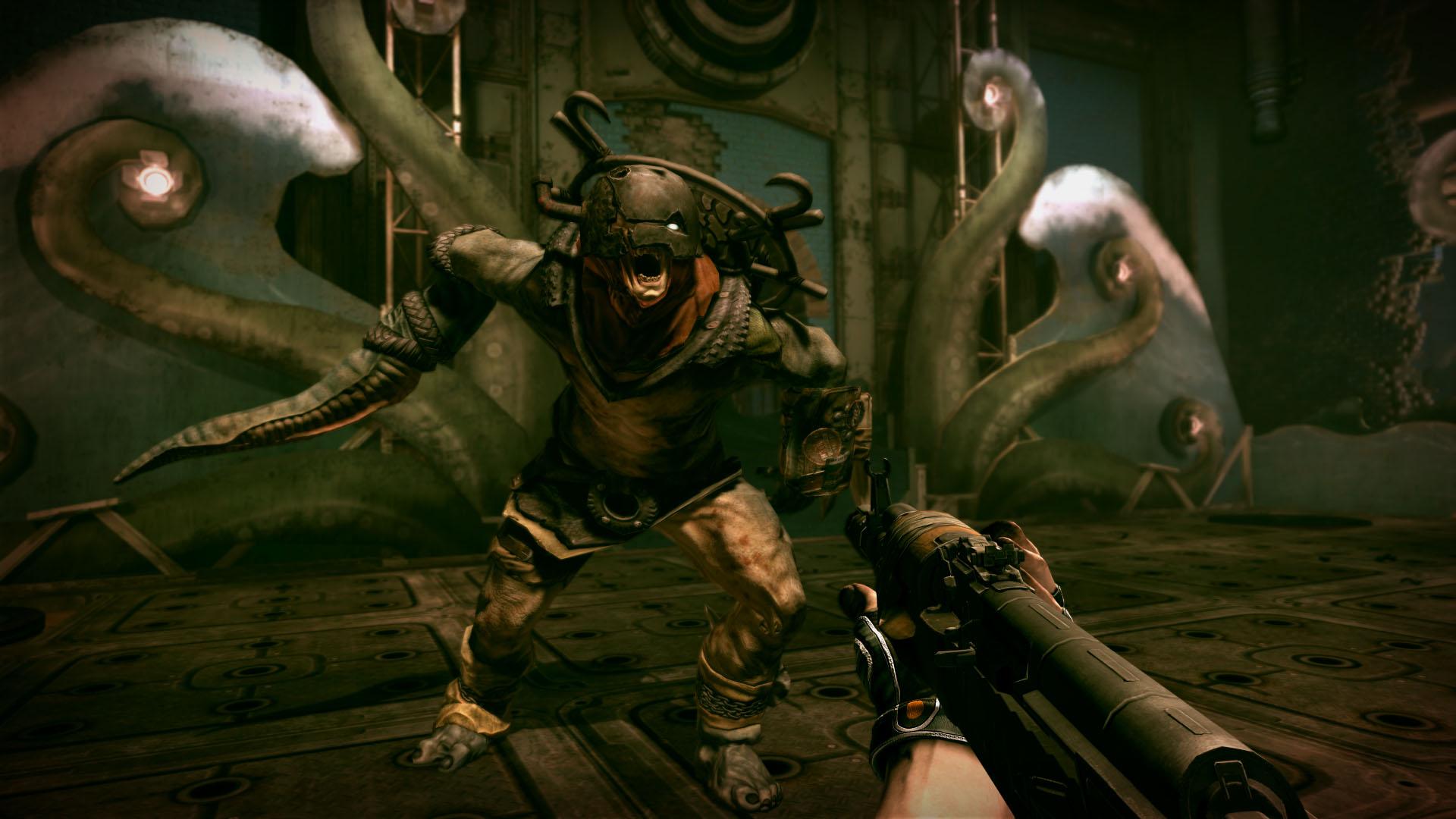
On foot, the game is a first-person shooter built around a set of firearms and quick-use equipment. The pistol and assault rifle have distinct roles, while the combat shotgun is suited to close encounters and the crossbow supports quieter, precise attacks. Ammunition choices change how a weapon behaves: examples include explosive shotgun rounds, electro bolts for the crossbow and specialized rounds for armored or mechanical targets. Wingsticks are boomerang-like blades, and later upgrades let them target several enemies at once. Grenades, deployable turrets, a sentry bot and a remote-controlled bomb car give the quick-use slots options for healing, direct damage or distraction. Lockgrinders open certain locked doors scattered through the Wasteland, where valuable items may be kept behind them.
The inventory and Engineering menus turn scavenged parts into useful equipment. Recipes and ingredients can be found in the wasteland or obtained from vendors; once Raine has both, he can construct the corresponding item. Recipes include combat and support tools such as sentry devices and ammunition, while some items can also be bought directly. Damaged crafted equipment can yield parts for salvage rather than being discarded outright. The same scavenging loop supports the town economy: objects classed as junk can be sold to merchants, and money can then go toward supplies, weapons, ammunition or other equipment. Searching rooms and side paths therefore feeds into combat preparation as well as simple collection.
Driving is part of the route between jobs and a combat activity in its own right. Raine uses vehicles to cross wasteland roads, enter race events and fight hostile drivers. The garage lets him manage vehicle equipment, including weapons and quick-use items, while races reward performance and make boost management relevant: the boost meter refills over time, so timing it matters during competition. Wasteland zones can also present vehicle mini-missions, commonly asking the driver to destroy a set number of enemies or collect meteors. Outside the main assignment chain, settlements and the open routes between them across several different towns offer optional jobs and challenges, linking exploration to cash, parts and access to more of the game's activities.
Combat also has a recovery mechanic that can change what happens after Raine is overwhelmed. His defibrillator charges take time to recharge, and if they are depleted when he is incapacitated, he must load a save. An on-screen meter tracks how full those charges are and makes their recharge state visible. When a revive is available, a brief coordination challenge lets him recover; stronger performance restores more health and releases a larger shockwave around him. That makes the charge meter another resource to consider before entering dangerous encounters. Healing items remain available through the quick-use system, so recovery involves both watching the defibrillator's recharge and deciding when to use an item rather than treating every mistake as automatically reversible.
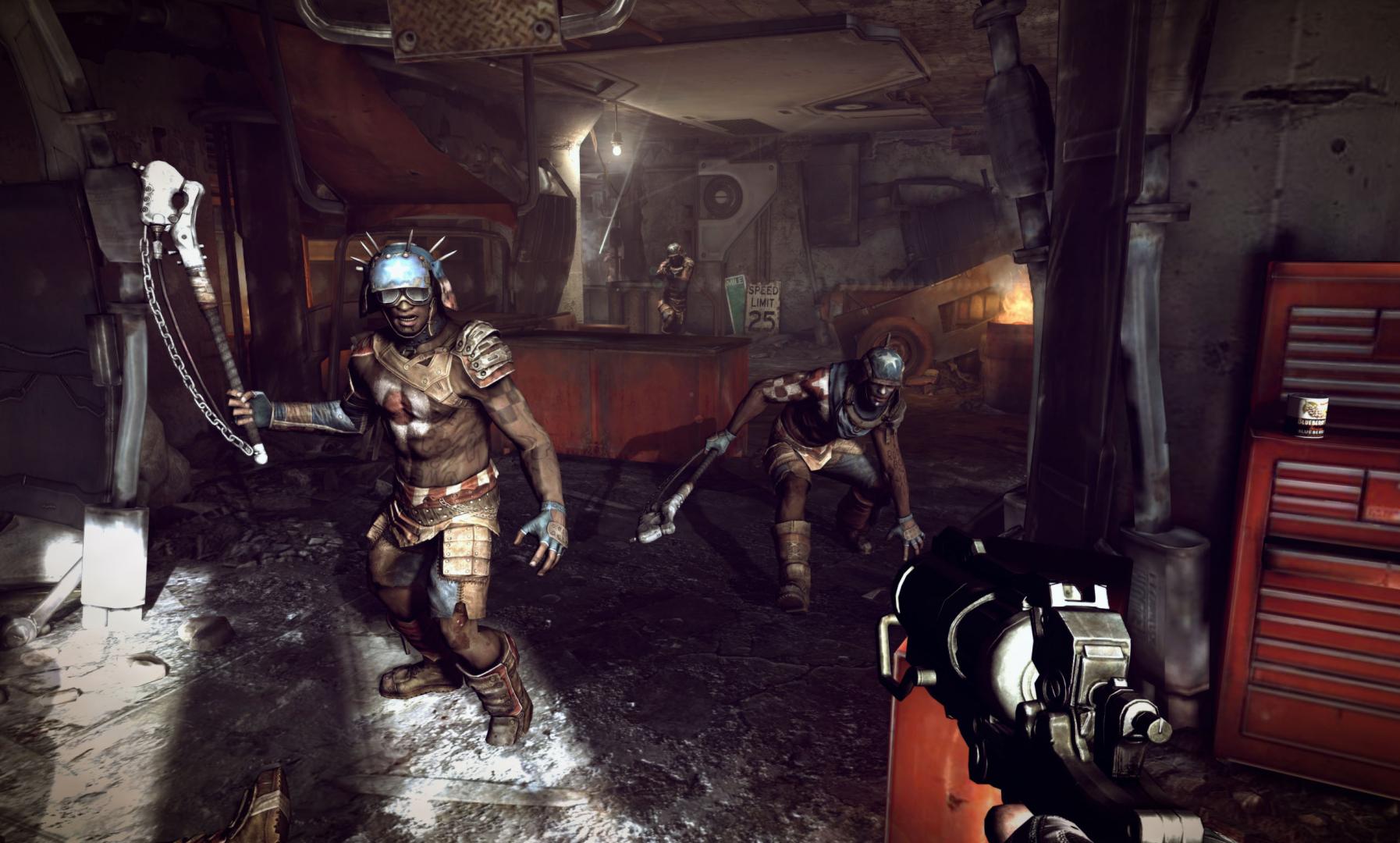
The campaign is not the only structure available. Mutant Bash TV frames combat encounters as staged arena challenges, with waves of mutants and an audience-facing presentation that belongs to the wasteland's rough entertainment culture. At release, RAGE also included two multiplayer modes: Road RAGE is vehicle combat for up to four players, with events such as rally-point contests, meteor collection and free-for-all combat; Wasteland Legends adapts short missions into cooperative challenges. These modes use the setting in different ways from Raine's main story. Across the campaign and its side activities, the central routine moves between settlement conversations, mission travel, on-foot encounters, vehicle sequences and resource management, while new weapons, recipes and equipment broaden the ways those encounters can be approached.
- Developer
- id Software
- Genre
- First-person shooter with driving and vehicle combat