
About Raft
Stranded on a small raft in an open ocean, the player catches drifting debris, keeps food and water supplies going, and turns a few floating foundations into a working home. Research unlocks new equipment, while a Receiver leads toward islands where players can explore ruins, solve local challenges and follow clues about the people who lived there.
Raft begins with a castaway alone on a small platform, a plastic hook and open water in every direction. The raft is both transport and shelter: there is no permanent base on shore, so tools, crops and workstations must travel along as the floating home grows. Food and water are urgent concerns, and a shark circles the raft. Beyond immediate survival, the player searches for signs of civilization and information about the people who lived before. The trip is not a sequence of land levels; the raft drifts through open water, stopping at reefs and islands before a radio-guided route points toward larger story destinations.
The hook turns the passing current into the first supply route. Players cast it at floating planks, plastic, palm leaves, barrels and other debris, pulling useful items back aboard. These materials feed nearly every early plan: planks support construction and fuel simple stations, plastic goes into containers and foundations, and palm leaves can become rope. A Building Hammer adds foundations and structures, while a collection net can catch debris when it passes the raft’s edge. The layout is practical as well as visual. Nets can harvest while the player cooks or works elsewhere, but need to sit in the current, and the shark can damage exposed foundations unless they are defended.
Fresh water and food need their own production chain. A Simple Purifier converts seawater into drinkable water, but needs planks to operate; the player fills a cup with seawater, puts it in the purifier and waits. A grill cooks fish and other food, while crops, fishing and later recipes broaden the menu. The player must tend to these supplies as the raft expands, since a larger workshop does not remove hunger or thirst. Storing ingredients and keeping the purifier and grill supplied can support longer trips. These routines use the same debris needed for foundations, tools or research, so choosing what to make first shapes the pace of development.
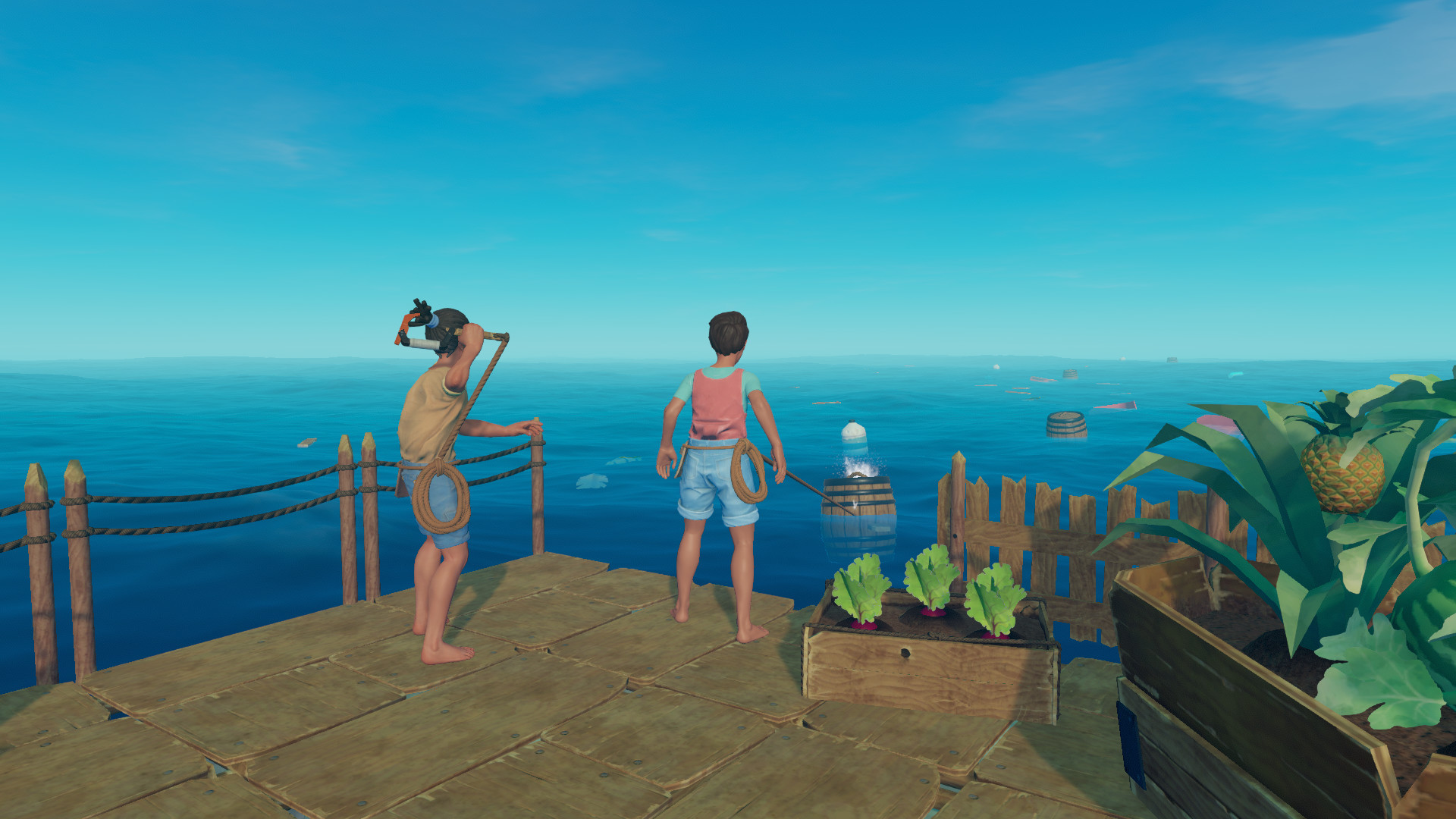
Expansion changes the raft from a few exposed squares into a multi-purpose vessel. The hammer places foundations and structures, and pillars or walls support additional floors. A sail gives some control over direction and can help the raft move with the current; an anchor holds it in place while the player explores an island or dives nearby. The shark can break a foundation and destroy equipment sitting on it. Metal foundation armor protects vulnerable squares, while the hammer can repair damage. Later, engines and steering equipment provide another way to manage a larger craft. Each construction choice competes for planks, rope, metal and other resources, so the player develops the vessel in stages.
Research connects scavenging to a broader set of recipes. The Research Table accepts materials gathered from the sea and islands; researching a material consumes one sample and marks which craftable items use it. Once all required materials for an item have been researched, the player can learn its recipe and make it. Barrels, reefs and island trips bring back different materials, while blueprints add further possibilities. The system rewards bringing unfamiliar resources home instead of treating every find as an immediate ingredient. It establishes a progression rhythm: gather, analyze, unlock, build, then use new equipment to reach places with the next group of materials. Research turns recovered objects into new ways to survive and travel.
Once the Receiver and three Antennas are researched and built, navigation gives the open sea a clearer direction. The Receiver needs a battery and raised position, with Antennas arranged at suitable distances around it. Its display distinguishes ordinary large-island signals from a tracked story destination; entering four-digit coordinates selects where the raft should head. Notes at destinations can provide coordinates for the next stop, and the islands also hold clues and blueprints. The Radio Tower introduces this pattern of sailing, anchoring, exploring and returning with information or equipment. Later coordinates lead to different environments, where puzzles and local obstacles turn each visit into a search for resources and the next piece of the route.
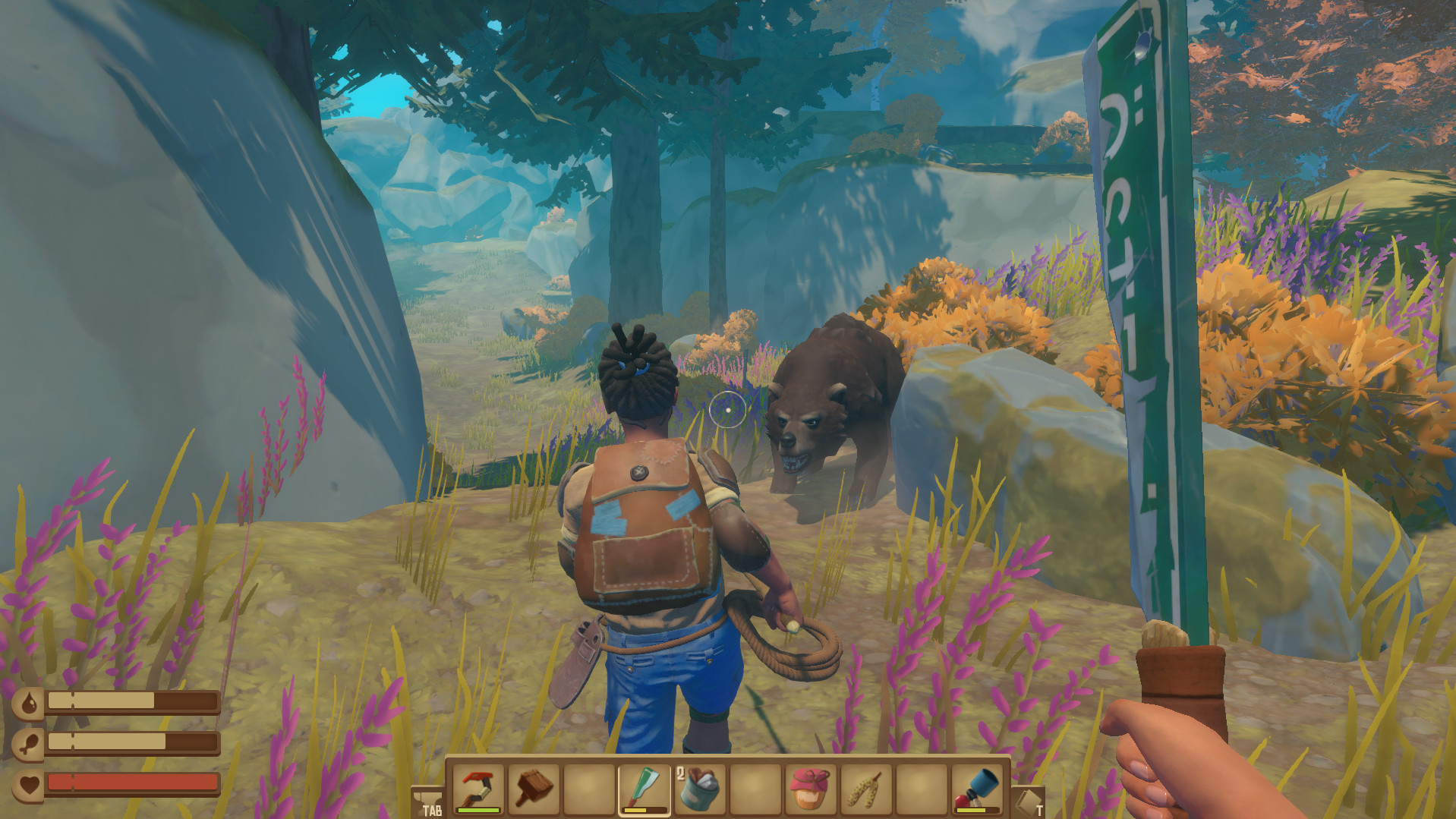
Islands provide opportunities that cannot be reached by casting the hook from the deck. After anchoring, the player can climb inland or dive around a reef to gather materials such as scrap and sand, while managing the risk of leaving the raft unattended. A stronger hook and diving gear extend what can be recovered below the surface. The shark keeps the vessel under pressure while the player is away, and hazards at destinations make preparation relevant beyond the voyage. A spear, food, water and inventory space can determine whether a stop is productive. The player can follow the current coordinates or linger near ordinary islands to collect materials before continuing.
Later progression adds machinery and trade to the cycle of catching, building and sailing. The Recycler blueprint is found at the Radio Tower; after learning its recipe through research, the player can feed it unwanted materials and use a battery to operate it. The machine produces Trash Cubes, which can be exchanged at trading posts on larger islands. This gives surplus resources a purpose and connects a story landmark to a continuing economy. Raft also supports online co-op, so players can share the work of collecting debris, tending supplies, defending foundations and exploring destinations. The raft remains the center of the experience as the systems accumulate: it carries the facilities that support survival and the tools that lead onward.
- Developer
- Redbeet Interactive
- Genre
- Ocean survival crafting adventure