
About Quantum Break
A failed experiment at Riverport University fractures time and gives Jack Joyce the power to manipulate it. As Monarch Solutions closes in, Jack fights through unstable spaces, searches for clues, and confronts decisions made by Paul Serene. The story alternates its playable action with live-action episodes whose events respond to Junction choices.
Quantum Break begins at Riverport University, where Jack Joyce reunites with his brother William and encounters Paul Serene, a former friend whose experiment with a time machine triggers a catastrophic fracture. Jack is caught in the disaster and emerges with the ability to manipulate time; Paul gains a different relationship to the same crisis and becomes the leader of Monarch Solutions, the organisation pursuing Jack. The conflict grows from a scientific accident into a struggle over how humanity might endure time’s breakdown. Rather than presenting the premise only through cinematics, the game moves between playable chapters, environmental evidence and live-action episodes. The result is a story about people attempting to control a disaster whose consequences spread across personal loyalties, corporate power and the structure of time itself.
The playable chapters place Jack in third-person combat and traversal sequences across Riverport and locations connected to Monarch’s response. Monarch security personnel form the main armed opposition, while unstable time events reshape spaces around the characters. A corridor, laboratory or industrial area can become difficult to read when motion stops, repeats or surges out of sequence; these temporal disturbances are both narrative events and obstacles that alter routes through an environment. Jack moves between cover, aims and fires conventional weapons, but time abilities change how an encounter unfolds. Exploration also includes readable documents, screens and other contextual material that add information about the experiment, the organisation and its people. Time Vision can expose nearby threats and points of interest, giving the player another way to survey a space before continuing.
Jack’s time powers each serve a different combat purpose. Time Dodge quickly carries him between positions, while Rush slows the surrounding action so he can reposition as enemies struggle to respond. Stop traps foes inside a local time bubble; firing into that frozen space stacks bullets, which strike when the effect ends. Blast delivers area damage, making it useful when several opponents cluster together. Shield briefly protects Jack and restores some health while he regains room to act. These abilities are used alongside aiming, reloading and switching among carried firearms, so combat involves choosing when a power can create an opening rather than relying on one attack. Time Vision can reveal enemies, ammunition and Chronon Sources, helping the player understand the immediate space and locate material used to develop Jack’s abilities.
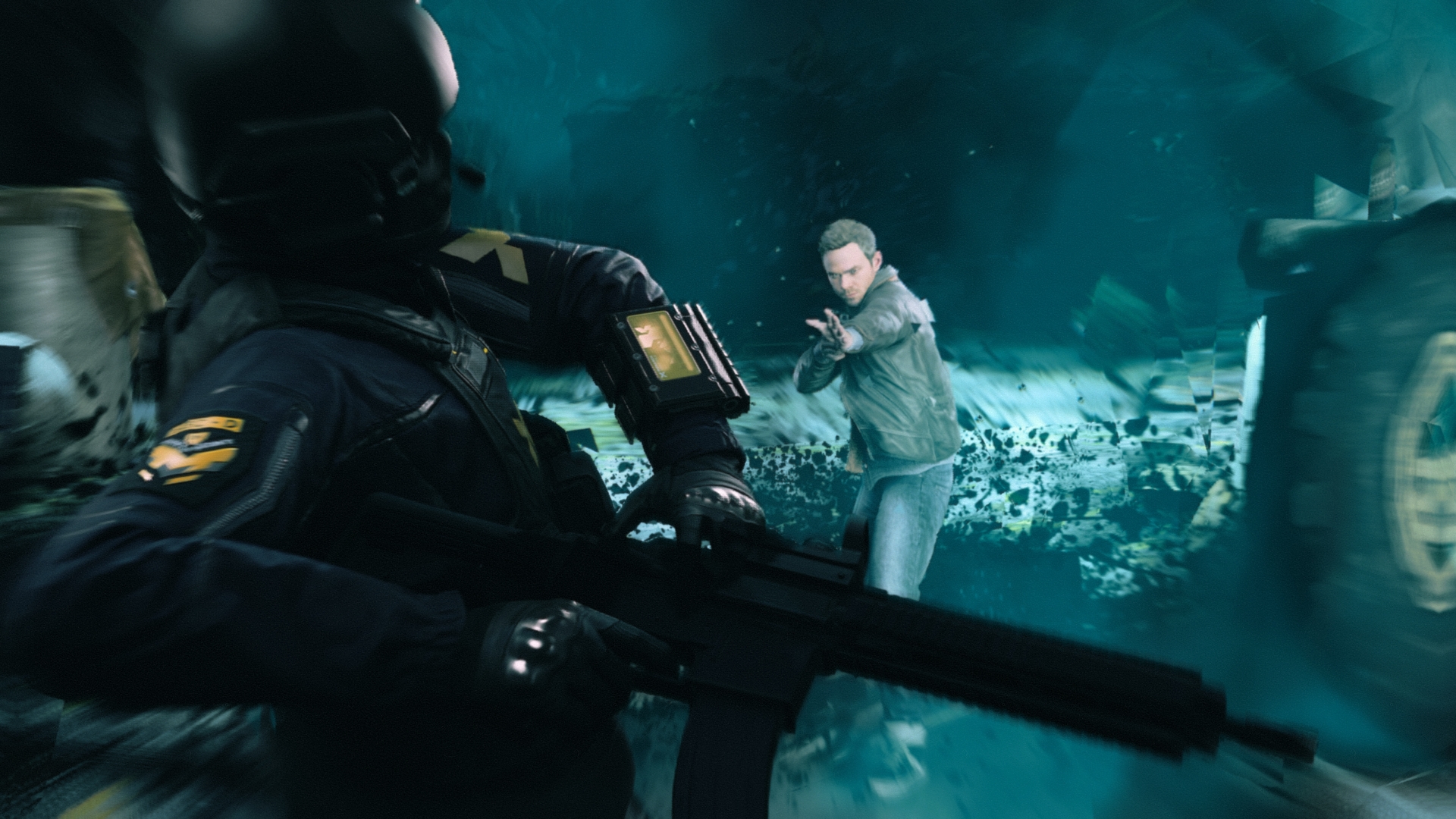
Chronon Sources connect combat and exploration to character progression. The game’s help describes finding them with Time Vision and following its radar indications; collected sources can be spent to upgrade Jack’s powers. Those upgrades improve the capabilities in his time-based toolkit, giving exploration a practical relationship to the next encounter. Time Vision has a separate investigative role: it can reveal clues and objectives, and the game’s temporal echoes let Jack examine traces of past activity or overhear conversations. These moments supply context without turning every scene into a combat arena. Searching a location therefore alternates between reading what happened there, locating useful resources and navigating hazards, then applying the time abilities in the fights that follow. The objective display and contextual clues also help orient the player when time-distorted spaces make a route less obvious.
The live-action show is a distinct part of Quantum Break’s structure, interleaved with the playable game at act breaks. In the show segments, actors portray characters in scenes that develop events around Monarch; these are filmed episodes, not gameplay missions controlled as Jack. The central choice mechanic is also specific: at each Junction, control shifts to Paul Serene, and the player selects a decision that affects the story’s direction. Xbox’s description states that in-game choices influence the combined game-and-show outcome, while the help text distinguishes the show as one of the places where consequences appear. The episodes present the repercussions of those choices through filmed scenes, while the playable chapters continue Jack’s perspective. This division matters because the broader experience combines two forms of storytelling, but the player’s decision input occurs at Junctions rather than through direct control of the show’s actors.
Junction decisions frame the story’s branching consequences without replacing the central action loop. Paul’s choices concern how Monarch responds to the fracture and its exposure, and the selected path alters later circumstances across the game and the episode that follows. The game presents those choices after acts, creating a pause in Jack’s immediate flight and giving the player a different viewpoint on the conflict. Within the playable sections, progress comes from reaching objectives, traversing disrupted environments, finding optional contextual material and surviving Monarch encounters. The player combines movement, protection and attacks as openings appear. Between those encounters, the story returns to Jack, William and the consequences of Paul’s decisions. The structure ties the science-fiction premise to a practical rhythm of investigation, traversal, firefights and branching interludes.
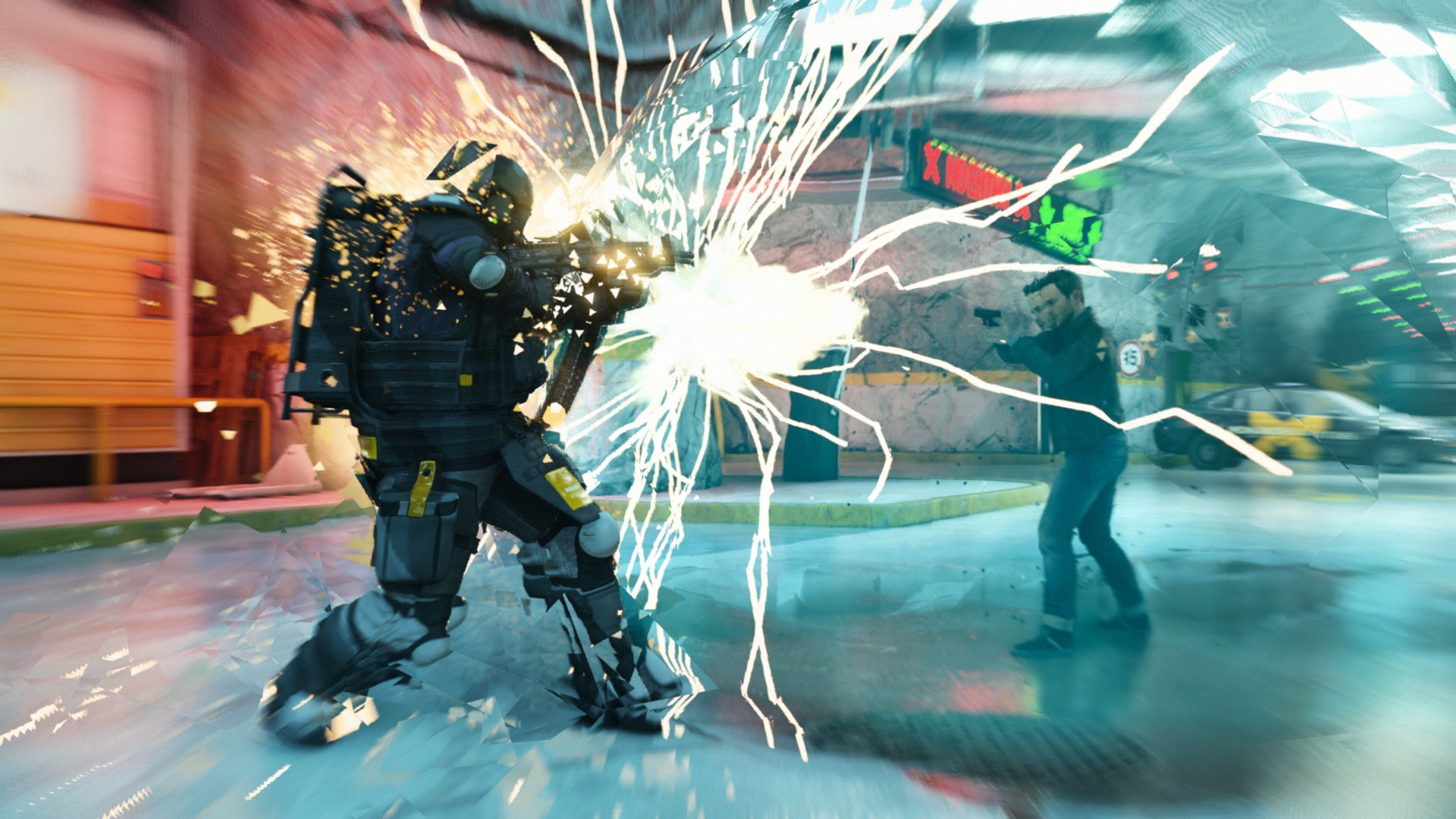
A bridge sequence turns the time crisis into a traversal objective: Jack must get past Monarch surveillance to rendezvous with Beth Wilder. The exposed route asks him to observe the patrols and time his movement, rather than simply advance through another gunfight. Beth gives the destination a human purpose, too. She is working to understand the fracture from outside Jack’s immediate struggle with Paul, and reaching her brings another perspective into the search for a way forward. The sequence shows how a specific place can use enemy presence and a meeting objective to change the pace of the third-person campaign.
- Developer
- Remedy Entertainment
- Genre
- Third-person action-adventure shooter