
About Project Warlock
Project Warlock is a retro-styled first-person shooter about a lone Warlock fighting through five worlds of monsters, secrets and bosses. Its 60 levels mix key hunting and hidden routes with fast gunplay, spells, weapon upgrades and character perks, letting players shape a growing arsenal and skill set between stages.
Project Warlock casts the player as a solitary, gun-toting spellcaster on a mission to eradicate evil. Across 60 levels arranged into five worlds, the route moves through distinct settings that include an Antarctic base, Egyptian sands, medieval castles and graveyards, before descending into Hell. The presentation uses deliberately old-school first-person shooter conventions: move through connected spaces, watch for threats, search side passages and keep weapons ready. The campaign is built as a succession of authored stages rather than an open world. Each setting gives the journey a different visual and enemy context, while the recurring rhythm of exploration and combat makes the Warlock’s advance legible. The story premise stays broad and direct, leaving the levels, enemies and progression systems to carry most of the experience.
Navigation asks players to pay attention to the architecture. Keys open passages, lifts carry the Warlock to different elevations, and hidden buttons can reveal routes that are easy to miss when simply charging forward. Secret caches reward searching with ammunition and gold, giving exploration a practical link to the combat that follows. A corridor may branch toward an optional stash or fold back toward the main route; identifying which doorway is locked and locating its key gives each level a small objective within the larger campaign. The spaces are described as vast levels across varied worlds, with concealed areas and mechanisms supplementing the straightforward goal of reaching the end. This makes the shooter’s movement through the environment part of its challenge, rather than treating each stage as only a sequence of enemy rooms.
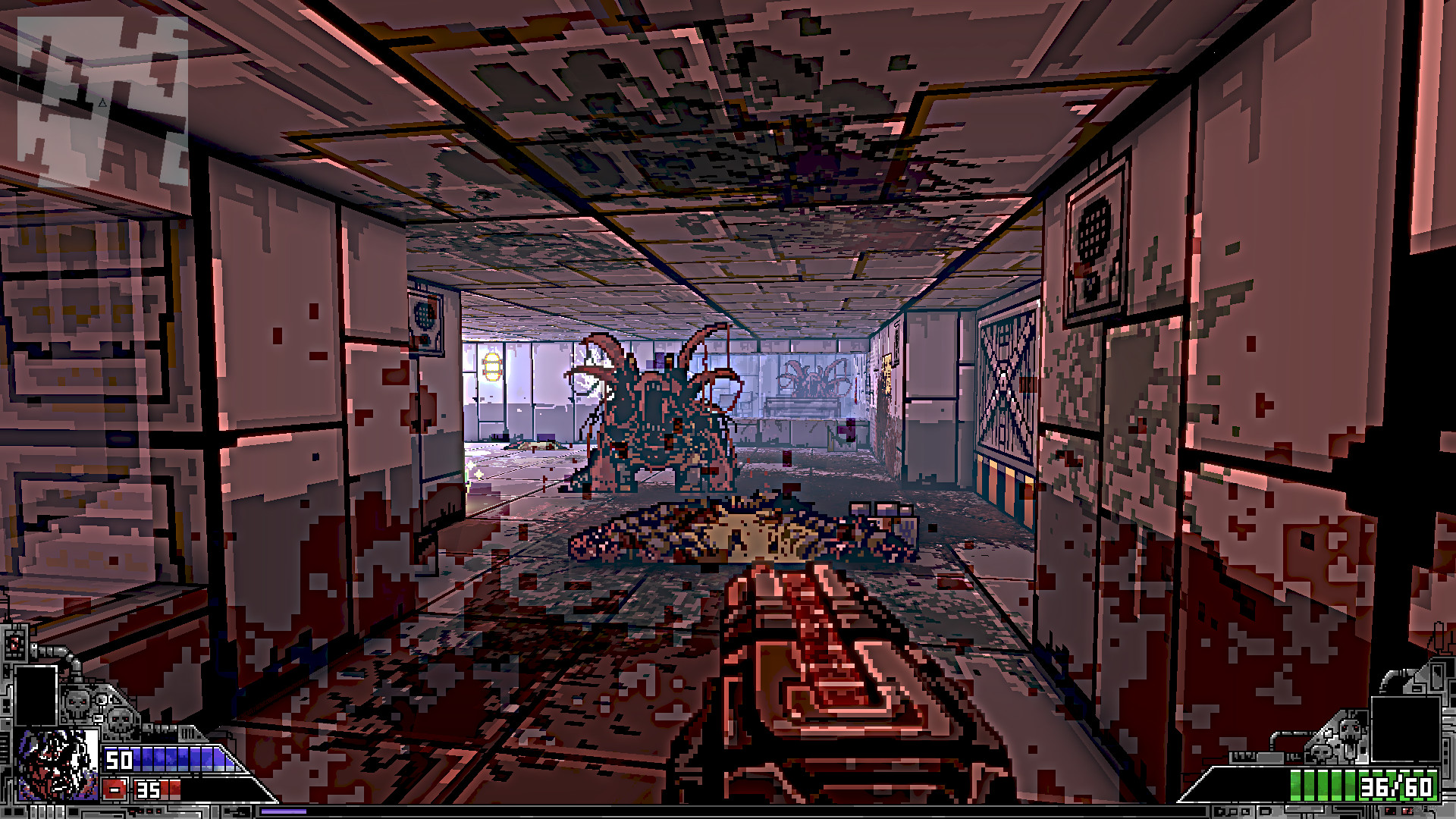
Combat brings a large enemy roster into those spaces, ranging from flying demons to enormous mechanical opponents. The game asks players to dodge incoming bullets and projectiles, learn how different villains behave and choose weapons that suit the threat. Enemies can crowd a room or attack from different angles, so movement and target selection matter alongside raw damage. Large bosses anchor the ends of worlds in expansive arenas, changing the scale of a fight from skirmishes through corridors to a focused confrontation. The violence is exaggerated and graphic, with defeated enemies splashing blood across floors and walls. Rather than a tactical cover shooter, Project Warlock is built around sustained forward motion, quick reactions and switching between a broad collection of attacks as the opposition changes.
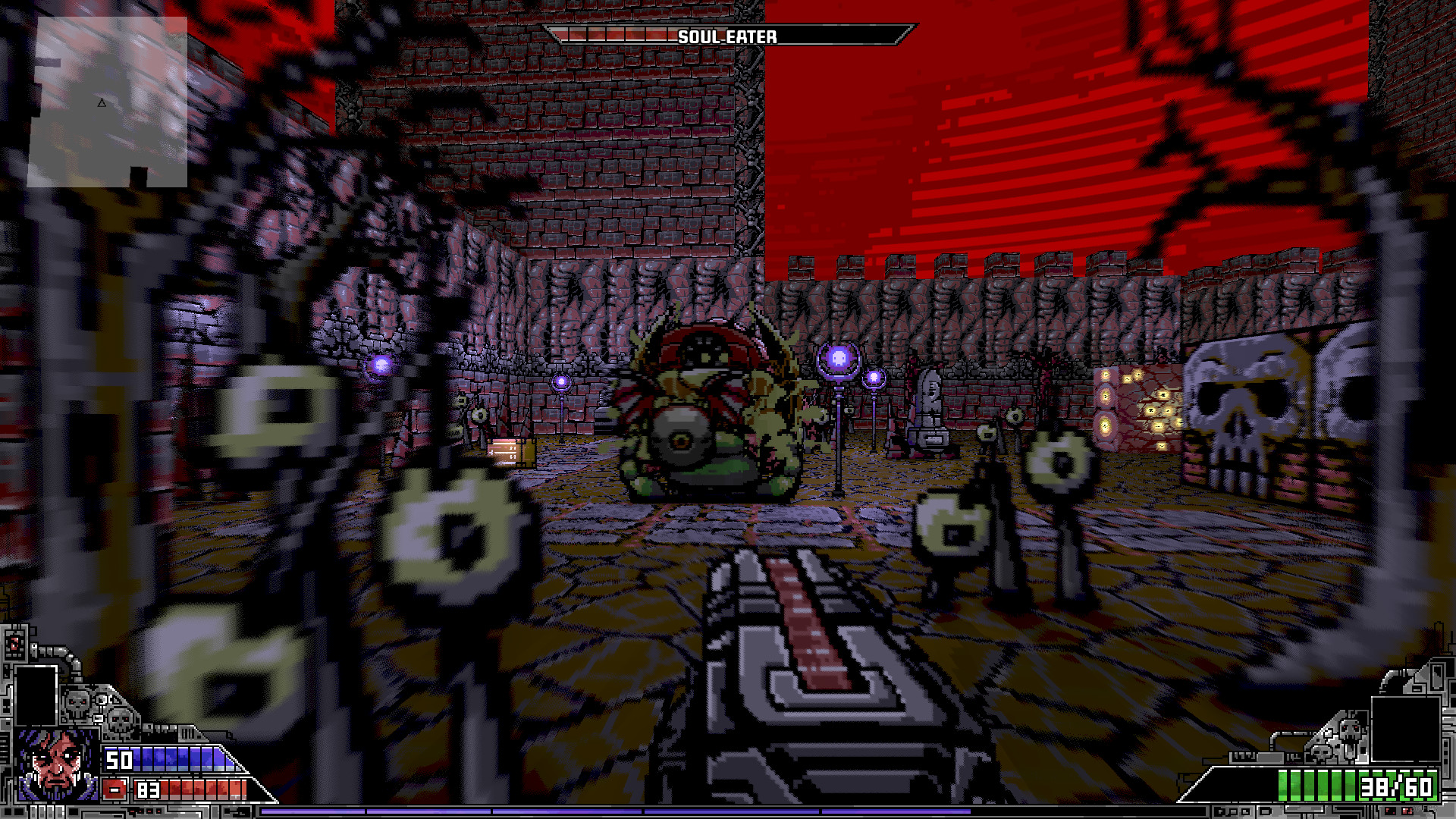
The arsenal grows as the campaign proceeds. Project Warlock lists 38 weapon types, spanning powerful blades and heavy firearms as well as tools that launch bullets, walls of flame or magical projectiles. Ammunition remains important: a weapon’s strength is useful only while the player has rounds for it, so collecting supplies and choosing when to spend them are part of moving through a level. Weapons can be developed, and the game encourages learning their distinct tricks instead of relying on one attack for every enemy. That variety gives the combat a repeatable decision: use the tool that best handles the current target, conserve scarce resources where possible, then adapt when a new enemy or boss demands a different approach. The game also includes eight spells, adding supernatural attacks to its conventional firearms and blades.
Character development happens between levels, where the player can assign upgrade points and perks to preferred skills. This creates a second layer of choice alongside the equipment picked up during a stage. Perks shape the hero toward selected strengths, while weapon and spell upgrades improve the tools used in later encounters. Gold found in secret caches supports this longer arc of collecting and developing gear. These systems let players make the Warlock feel more suited to their preferred approach without changing the campaign’s basic structure: explore, fight, gather resources, and prepare for the next level. There are 12 perks in the listed feature set, and higher difficulty modes give those character and equipment choices continued relevance as enemies become more demanding.
The level structure ties the game’s older shooter influences to a steady sense of forward progress. Five worlds divide the 60-stage campaign into manageable stretches, each culminating in a major boss encounter. Within a level, the search for keys and secret areas interrupts the pace of combat just enough to make observation useful; once a route opens, the player can return to the faster business of fighting through the next section. The design repeatedly balances aggression with awareness: move quickly when a room is clear, dodge when projectiles fill the space, and look around when an unexplained lift, locked door or hidden switch suggests another route. It is a focused single-player campaign centered on weapon mastery, monster fights, environmental navigation and incremental character growth. The official feature list counts 72 enemy types across the campaign. That scale means a loadout cannot be judged against one familiar opponent alone: a choice that helps against a crowd may matter less when a larger boss or a different projectile pattern appears. The Warlock’s upgrades sit inside that changing sequence of fights.
- Developer
- Buckshot Software
- Genre
- First-person shooter; action